Our verdict
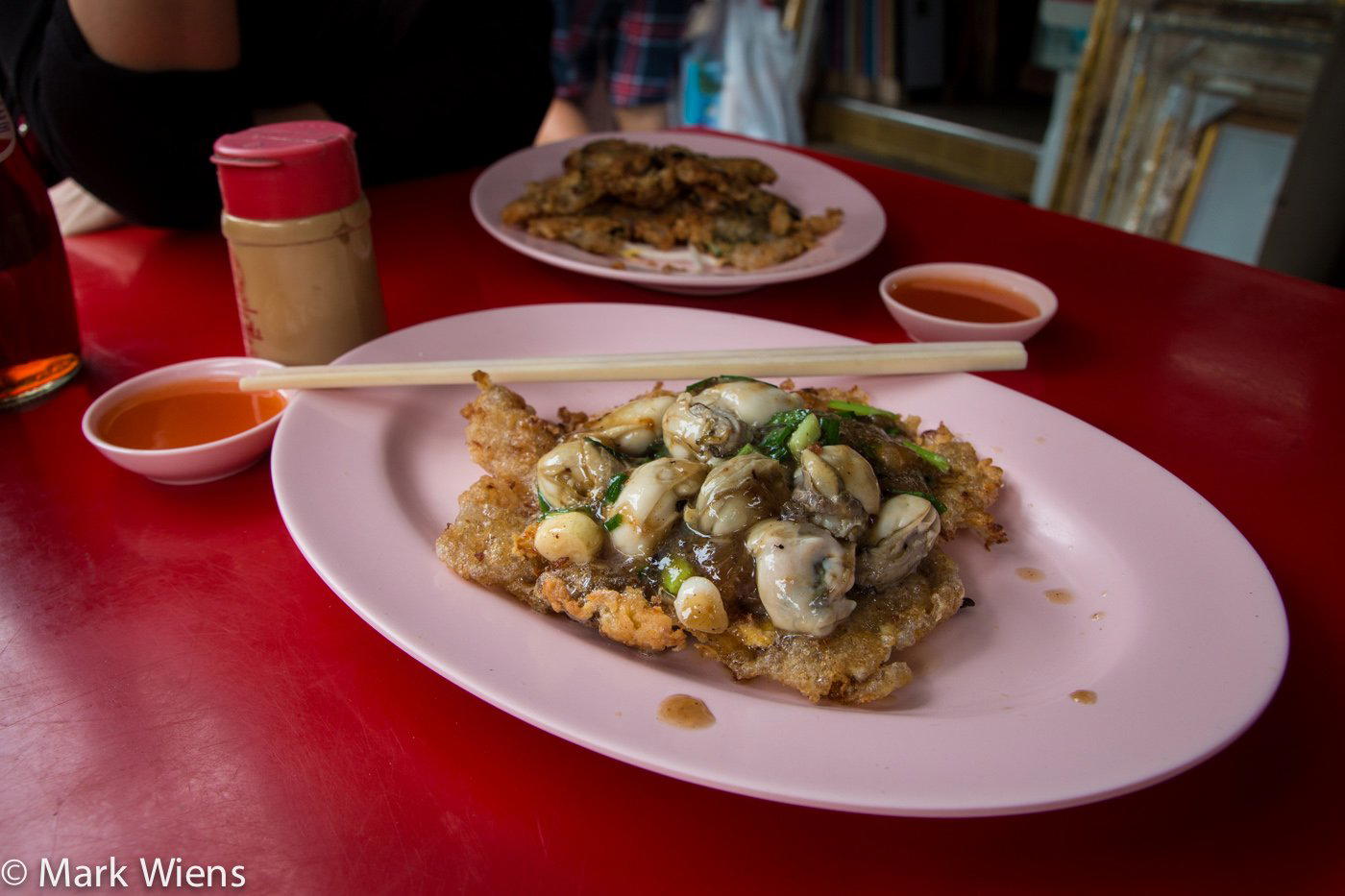
Nai Mong Hoi Thod serves Thai Crispy Oyster Omelette at 539 Phlap Phla Chai Rd in Bangkok, with Crispy Oyster Omelette and Crab Fried Rice as signatures for a quick lunch or dinner stop.

Pearl is the En Primeur Club membership app — saves, bookings, and concierge access live there. Same editors, same standards.
- Address
- 539 Phlap Phla Chai Rd, Pom Prap, Pom Prap Sattru Phai, Bangkok 10100, Thailand
- Phone
- +66897733133
- Hours
- Mon–Thu ClosedFri 10 AM–4 PMSat–Sun 10 AM–7 PM
- Website
- facebook.com
- Directions
- Get directions
Where the Street Finds Its Counter
Pom Prap Sattru Phai is not the Bangkok that appears in hotel concierge printouts. The district occupies the older, denser quarter of the city, where shophouse rows compress the street and the cooking happens in the open, indifferent to ambient noise or foot traffic. Nai Mong Hoi Thod operates inside this environment, on Phlap Phla Chai Road, at an address that requires genuine intent to reach. The physical container is not designed to impress: tiled surfaces, metal-legged tables arranged in close proximity, fluorescent overhead light. What it offers instead is the concentrated logic of a single-dish operation refined across decades, which is a different kind of discipline from the tasting-menu rooms that occupy the opposite end of Bangkok's dining range.
The Architecture of a Hoi Thod Counter
Bangkok's street-food tradition has always split between the roving cart and the fixed address. The fixed address carries the longer memory: families who claim a corner, a pan, a technique, and hold it. Nai Mong belongs to that fixed category, and the space reads accordingly. The cooking station functions as the room's organizing principle — the wok and flat iron griddle are visible from most seats, and what happens on that surface determines the rhythm of the meal. Seating is communal and compact, with tables arranged to absorb the maximum number of covers into a modest footprint. There is no staging, no ambient playlist, no interior design brief. The room communicates one thing: the food is the transaction, and the food is the point.
That design logic — where the cooking surface is the architectural feature, is common across Southeast Asia's great single-specialty houses, from Penang's char kway teow stalls to the oyster-pancake shops of Tainan. The constraint of one technique, executed at volume and speed, produces a kind of counter theater that no tasting room replicates. At Nai Mong, the hoi thod itself, oyster pancake, arrives as either the crisp, lace-edged version or the softer, egg-heavy 'or suan' style, a distinction worth understanding before you order.
Reading the Menu Through the Category
Hoi thod as a category is older than its current reputation in Bangkok food culture. The dish traces back to Teochew Chinese immigrant communities who settled in coastal Thailand, carrying a tradition of frying shellfish in tapioca or rice-flour batter on a flat iron surface. The crisp version depends on an extremely hot, well-seasoned griddle and a batter thin enough to form irregular, crunchy edges while the interior stays tender with fresh oysters. The softer 'or suan' requires more egg, lower heat, and a different handling of the mussel or oyster load. These are not interchangeable preparations, they suit different preferences, different moments, and a specialist house is the only venue where both exist in their most resolved form.
Nai Mong has earned sustained recognition as one of the addresses where this distinction is handled with consistent discipline. That reputation pulls a cross-section of Bangkok's eating population: early-morning regulars, office workers on a short break, and out-of-city visitors who have done their research. Timing matters here. Mid-morning and early lunch represent the highest-volume period, and the gap between placing an order and receiving food compresses or expands depending on which side of the rush you arrive.
Bangkok's Street-Food Tier and Where This Sits
Bangkok's dining range now spans a distance that few cities match. At the formal end, rooms like Sorn (Southern Thai) and Baan Tepa (Thai contemporary) occupy a price bracket comparable to European fine dining, while Côte by Mauro Colagreco (Mediterranean, Modern Cuisine), Gaa (Modern Indian, Indian), and Sühring (German) have pushed the city's international fine-dining credentials beyond what most Southeast Asian capitals can claim. Nai Mong operates in a register so different from those rooms that the comparison almost misses the point. But the point is worth making: the city's eating credibility does not rest on its tasting menus. It rests on the depth of its street-level specialists, and Nai Mong is part of that argument.
For reference on the broader Thai street-food spectrum, Hoy Tord Chao Lay (หอยทอดชาวเล) in วัฒนา represents a comparable single-dish format in a different Bangkok district, offering a useful point of comparison for those tracking the category across the city. Further afield, AKKEE in Pak Kret and Cherng Doi Roast Chicken (ไก่ย่างเชิงดอย) in Chiang Mai illustrate the same single-specialty logic applied to different proteins across Thailand. See our full Bangkok restaurants guide for broader orientation across categories and neighbourhoods.
Getting There and Planning the Visit
The address on Phlap Phla Chai Road places Nai Mong in a part of central Bangkok that sits between the Old City and Chinatown, accessible by MRT from Hua Lamphong station or by taxi from the riverside hotel cluster. The neighbourhood itself rewards walking: the surrounding blocks contain shophouse traders, morning market remnants, and the kind of ambient commercial density that has been displaced from most other central Bangkok districts by development. Arriving before the midday peak gives you the leading chance of a seat without waiting, and the leading opportunity to see the griddle work at its most focused. As with most fixed street-food addresses in this city, the operation runs on a finite daily supply of fresh shellfish, which means the question of when to arrive has practical consequences, not just experiential ones. There is no website or booking channel, arrival in person is the only method.
For those building a Thailand itinerary beyond Bangkok, PRU in Phuket, Loet Rot in Mueang Chiang Mai, and Little Edo Suratthaniリトル江戸 in Mueang Surat Thani represent the range of what serious eating outside the capital looks like. The coastal end of that list connects through The Spa in Lamai Beach and DEVASOM BEACH GRILL in Takua Pa. For reference points outside Thailand entirely, the specialist counter format finds its most rigorous international expressions at venues like Le Bernardin in New York City and Atomix in New York City, different categories, different price register, but the same underlying commitment to a focused format executed at depth.
Frequently asked questions
Where do I go for Nai Mong Hoi Thod?
Nai Mong Hoi Thod is located at 539 Phlap Phla Chai Rd, Pom Prap, Pom Prap Sattru Phai, Bangkok 10100, Thailand, Bangkok.
How does Nai Mong Hoi Thod compare to other hoi thod counters in Bangkok's Chinatown area?
Nai Mong's address on Phlap Phla Chai Road places it on the edge of the Pom Prap district, adjacent to Bangkok's Chinatown corridor where Teochew food culture has the deepest roots in the city. What separates fixed-address counters like Nai Mong from the broader category is generational continuity — a single location accumulates technique and a returning customer base that roving carts cannot replicate. Among Bangkok food writers and long-term residents, the counter is treated as a reference point for the soft-style preparation rather than a discovery.
What should I eat at Nai Mong Hoi Thod?
The focus is hoi thod — the Teochew-derived oyster pancake that defines the counter on Phlap Phla Chai Road. The dish comes in two forms across Bangkok: a crispier version cooked until the batter fractures at the edges, and a softer, wetter preparation closer to the original Teochew style. Nai Mong is associated with the latter. Order that, and little else.
Do I need a reservation for Nai Mong Hoi Thod?
Nai Mong operates as a street-counter format in Pom Prap Sattru Phai, and fixed-address stalls at this level in Bangkok do not typically accept advance bookings. Arriving early — before the midday rush or at opening — is the practical strategy. Queue length is a direct signal of timing.
What's the signature at Nai Mong Hoi Thod?
The signature is the soft-style hoi thod: oysters folded into a starch-heavy batter that stays yielding rather than crisped through. This preparation style traces to Teochew Chinese cooking, which shaped Bangkok's street-food counter tradition in Pom Prap and the adjacent Chinatown corridor. It is the dish that draws people specifically to this address rather than to the broader category.
Can Nai Mong Hoi Thod accommodate dietary restrictions?
Hoi thod is built around shellfish — oysters or mussels — and egg, so the dish is structurally unsuitable for shellfish allergies or egg-free diets. The counter format at Phlap Phla Chai Road does not lend itself to significant modifications. Visitors with strict dietary requirements should confirm directly on arrival, as no menu alternatives are documented.
Is Nai Mong Hoi Thod overpriced or worth every penny?
Nai Mong sits within Bangkok's street-food tier, where a plate of hoi thod at a well-regarded fixed-address counter typically costs a fraction of what the same city charges at formal restaurants like Sorn or Baan Tepa. The value calculus is straightforward: you are paying street-food prices for a dish the counter has refined over years at the same Pom Prap address. Overpriced is not a charge that fits the format.
Cuisine and Recognition
Comparable venues nearby, for context on price, style, and recognition.
| Venue | Cuisine | Price | Awards | Notes |
|---|---|---|---|---|
| Nai Mong Hoi ThodThis venue — the venue you are viewing | Thai Crispy Oyster Omelette | $1–10 | Not listed | Not listed |
| Krua Pa & Ma Restaurant | Authentic Thai | $10–20 | Not listed | Bom Phrap Satru Pai Khwaeng |
| Guay Jub Ouan Pochana | Thai Guay Jub (Rolled Noodle Soup) | $1–10 | Not listed | Samphanthawong Khwaeng |
| Cross da Fence Noodles Shop | Thai Noodle Shop | Not listed | Not listed | Bangkok |
| Khao Tom Pla Kimpo | Teochew-Style Fish Porridge | $10–20 | Not listed | Bang Kholaem Khwaeng |
| Ruenros | Traditional Chinese with Herbal & Medicinal Focus | $30–50 | Michelin Plate | Bang Phong Phang |