Cherng Doi Roast Chicken (ไก่ย่างเชิงดอย)
On Suk Kaseme Road in Chiang Mai, Cherng Doi Roast Chicken represents the grilled chicken tradition that defines Northern Thai street eating: whole birds cooked over charcoal, served with sticky rice and nam jim jaew dipping sauce. The format is built for communal eating, unhurried and direct. For visitors mapping Northern Thai food beyond khao soi, this is a key reference point.
Pearl is the En Primeur Club membership app — saves, bookings, and concierge access live there. Same editors, same standards.
- Address
- 2/8 Suk Kaseme Rd, เมืองเชียงใหม่, เชียงใหม่ 50200
 Saves & bookings on Pearl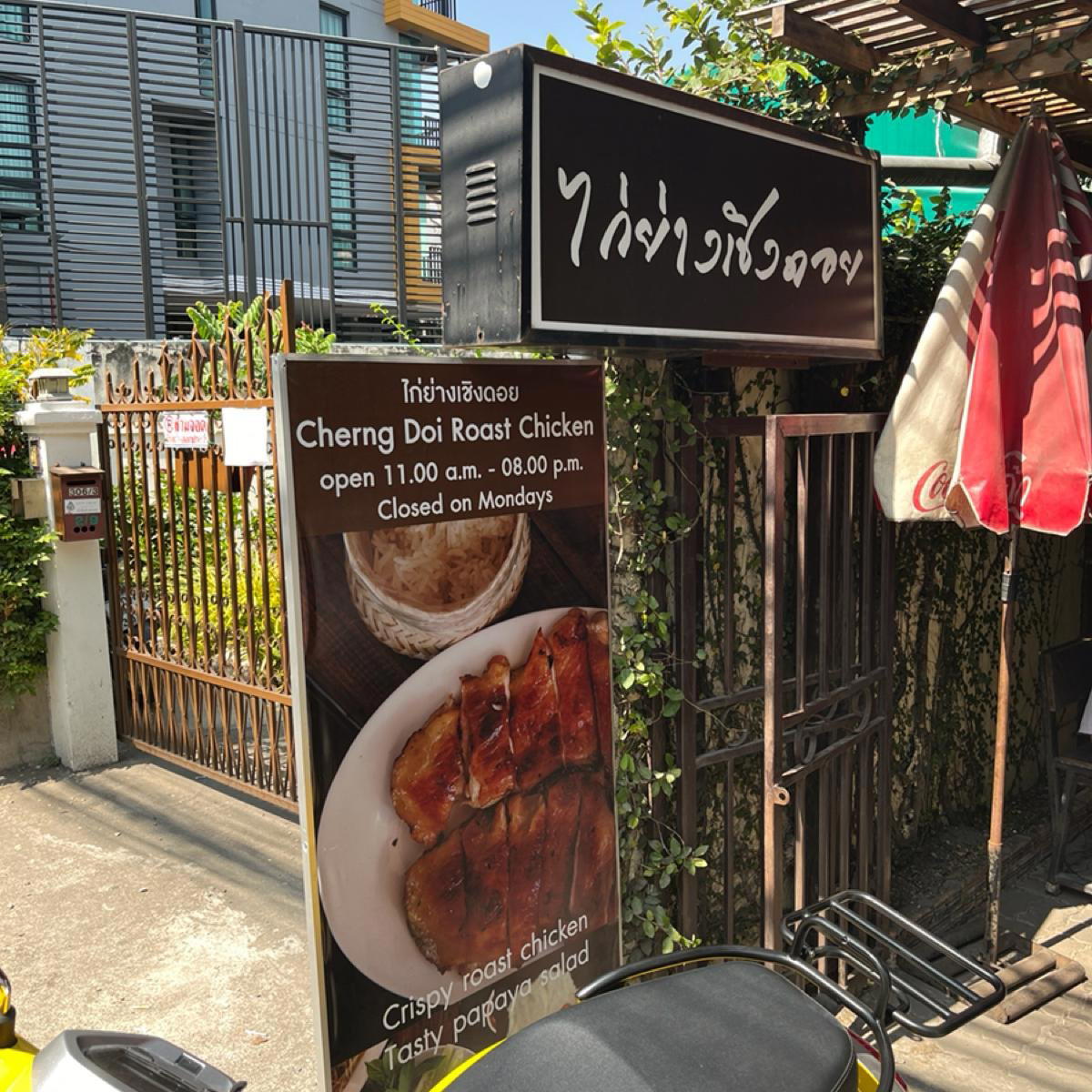
The Ritual of the Grill: Northern Thai Roast Chicken in Chiang Mai
Approach almost any roast chicken stall in Chiang Mai and you encounter the same choreography: whole birds splayed on bamboo skewers, rotating slowly over live coals, smoke drifting across the footpath, a stack of banana-leaf parcels filled with sticky rice waiting nearby. This is not fast food in the Western sense. It is a food ritual with its own pacing, its own etiquette, and its own order of operations that has remained largely unchanged across generations of Northern Thai cooking. Cherng Doi Roast Chicken is a restaurant at 2/8 Suk Kaseme Rd in Chiang Mai, serving Northern Thai Roast Chicken. It is casual, walk-in friendly, and priced at about $5 per person.
The grilled chicken category in Chiang Mai splits broadly between two registers. The first is the high-volume roadside format, where whole chickens move quickly and the focus is throughput. The second is the considered specialist, where the bird is the product and everything else, including the fire management, the marinade, and the accompaniments, is calibrated around it. Cherng Doi Roast Chicken occupies the second register. Its address on Suk Kaseme Road places it in a part of the city that draws both local regulars and visitors who have done enough research to look past the tourist-facing dining strip.
How the Meal Actually Works
The dining ritual at a roast chicken specialist like this one follows a structure that Thai diners understand instinctively but that first-time visitors sometimes miss. You do not sit and wait for a menu. The product on the grill is the menu. Chickens come whole or in portions, and the default assumption is that you are eating with at least one other person, pulling meat apart with your hands and eating it alongside sticky rice. The sticky rice arrives in a small woven basket, and the correct move is to pinch a small ball of it, press it slightly flat, and use it to scoop or accompany the chicken rather than treating it as a side dish to be eaten separately.
Dipping sauce, nam jim jaew, is the structural counterpart to the chicken. Made from tamarind, fish sauce, toasted rice powder, dried chilli, and shallots, it provides the acidity and heat that cuts through the fat of a properly grilled bird. At the better Chiang Mai roast chicken spots, the jaew is house-made and consistent, not poured from a commercial bottle. The interplay between charcoal-kissed skin, fatty meat, glutinous rice, and sharp dipping sauce is what defines the category, and it is the reason roast chicken remains among the more democratic and satisfying formats in the Northern Thai repertoire.
Pace of this kind of meal runs slower than a Western lunch but faster than a multi-course dinner. Arrive, point, wait a few minutes while the chicken is portioned, eat communally at a shared table, pay, leave. There is no theatre of presentation, no coursing, no formality of service. The meal rewards directness and punishes overthinking.
Chiang Mai's Roast Chicken Tradition in Context
Northern Thailand's grilled chicken tradition shares lineage with Lao-influenced cooking from the northeast, where gai yang (ไก่ย่าง) is equally central to daily eating. But Chiang Mai's version tends to run slightly different in seasoning, with lemongrass and galangal working into the marinade more prominently than the garlic-and-coriander-root base common in Isan-style birds. The charcoal method, by contrast, is common across both traditions: slow heat, frequent basting, skin rendered to a dark lacquer before the interior finishes cooking. Getting this balance right is what separates the specialists from the volume operators.
The category as a whole is not well represented on international food media relative to its importance in local eating culture. While khao soi has become the shorthand for Chiang Mai's food identity abroad, roast chicken and sticky rice represents a larger share of what residents actually eat on a daily basis. Venues like Aunt Aoy Kitchen and Baan Landai approach Northern Thai cooking from a more sit-down, multi-dish frame, while the roast chicken specialist occupies a different but equally important position: a single product, executed with focus, eaten quickly and without fuss.
Busarin Cuisine addresses Northern Thai cooking with a fuller menu and a slightly higher price point. Dan Chicken Rice (San Sai), at the single-baht tier, occupies one stripped-back end of the chicken-and-rice format. Cherng Doi's positioning on Suk Kaseme Road, with a reputation that draws repeat visitors rather than passing foot traffic, suggests it sits in the middle of that spectrum: more deliberate than a basic stall, less elaborate than a full Northern Thai restaurant.
Planning Your Visit
Suk Kaseme Road is in central Chiang Mai's Mueang district, accessible by songthaew or short ride from the Old City. The format is walk-in; there is no reservation system for a venue of this type, and a useful time to arrive is either at lunch or in the early dinner window before particularly popular items sell out. Roast chicken specialists in Chiang Mai frequently operate until sold out rather than until a fixed closing time, which means late arrivals risk finding a limited selection. Coming with a group is the more efficient approach: the communal format of the meal is designed for sharing rather than solo eating, and ordering a whole bird between two or three people is the standard play.
No website or phone contact is listed for Cherng Doi Roast Chicken, which is standard for venues at this tier in Chiang Mai. The address, 2/8 Suk Kaseme Road, is especially reliable navigation anchor. If you are building a broader Northern Thai food itinerary, pairing a roast chicken lunch here with an evening meal at a more structured Northern Thai table, such as Baan Landai on Phra Pok Klao Road or Aquila for contrast, covers a meaningful range of what Chiang Mai's food scene actually delivers.
For visitors using Chiang Mai as a base while exploring Thailand's broader regional cooking, the roast chicken specialist fills a gap other venues do not: immediate, affordable, and grounded in the kind of daily-eating tradition that many restaurants interpret rather than replicate.
Where It Fits
Comparable venues nearby, for context on price, style, and recognition.
| Venue | Cuisine | Price | Notes |
|---|---|---|---|
| Cherng Doi Roast Chicken (ไก่ย่างเชิงดอย)This venue — the venue you are viewing | Northern Thai Roast Chicken | $ | Not listed |
| Lim Lao Ngow Fishball | Traditional Thai Fishball Noodles | $ | Chiang Mai Old City |
| Sirichai Khao Man Gai | Northern Thai Khao Soi & Khao Man Gai | $ | Chiang Mai Old Town |
| Guay Jab Nam Khon | Thai Guay Jab Noodle Soup | $ | Si Phum |
| Tubtim-Krob J'Auan | Northern Thai Lanna Desserts | $ | Chang Khlan |
| ศิริชัย ข้าวมันไก่ตอน | Hainanese Chicken Rice & Khao Soi | $ | near Suan Dok Gate Monument |
Continue exploring
More in Chiang Mai
Restaurants in Chiang Mai
Browse all →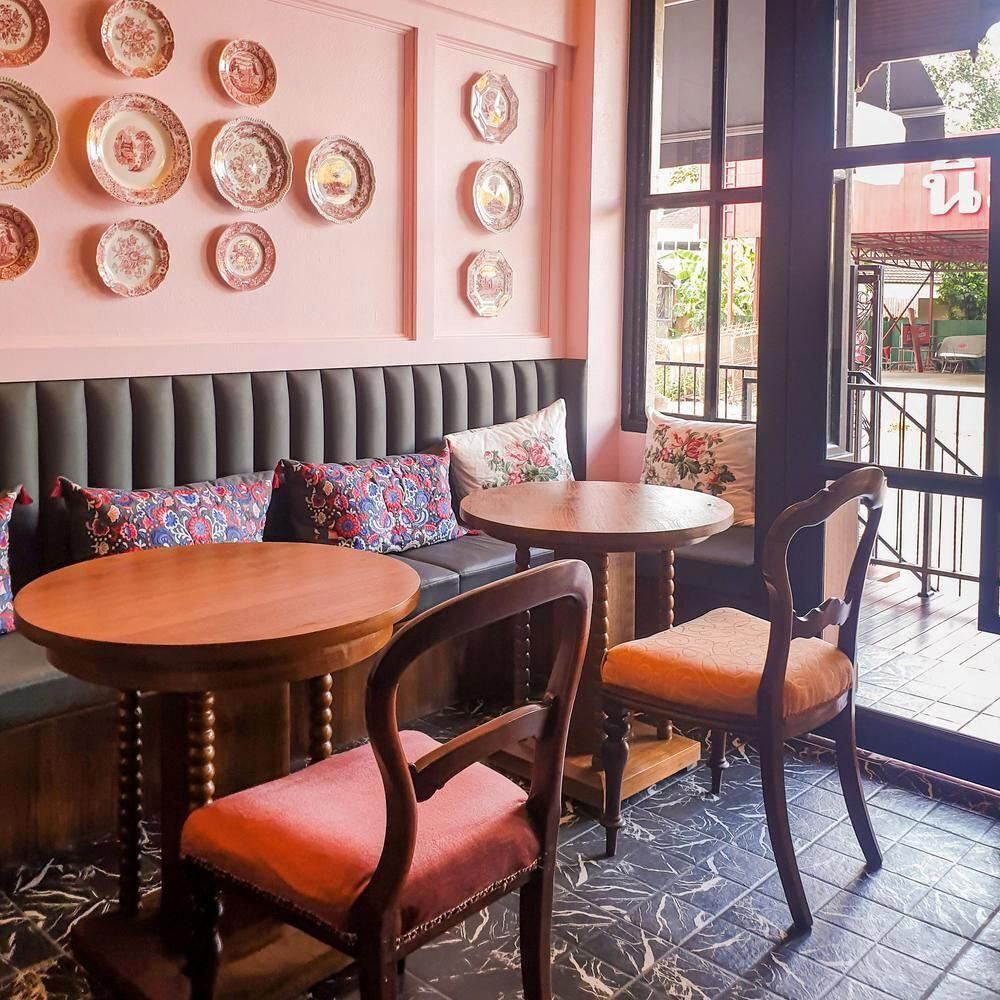
Bars in Chiang Mai
Browse all →

At a Glance
- Cozy
- Lively
- Trendy
- Casual Hangout
- Family
- Group Dining
- Garden
- Garden
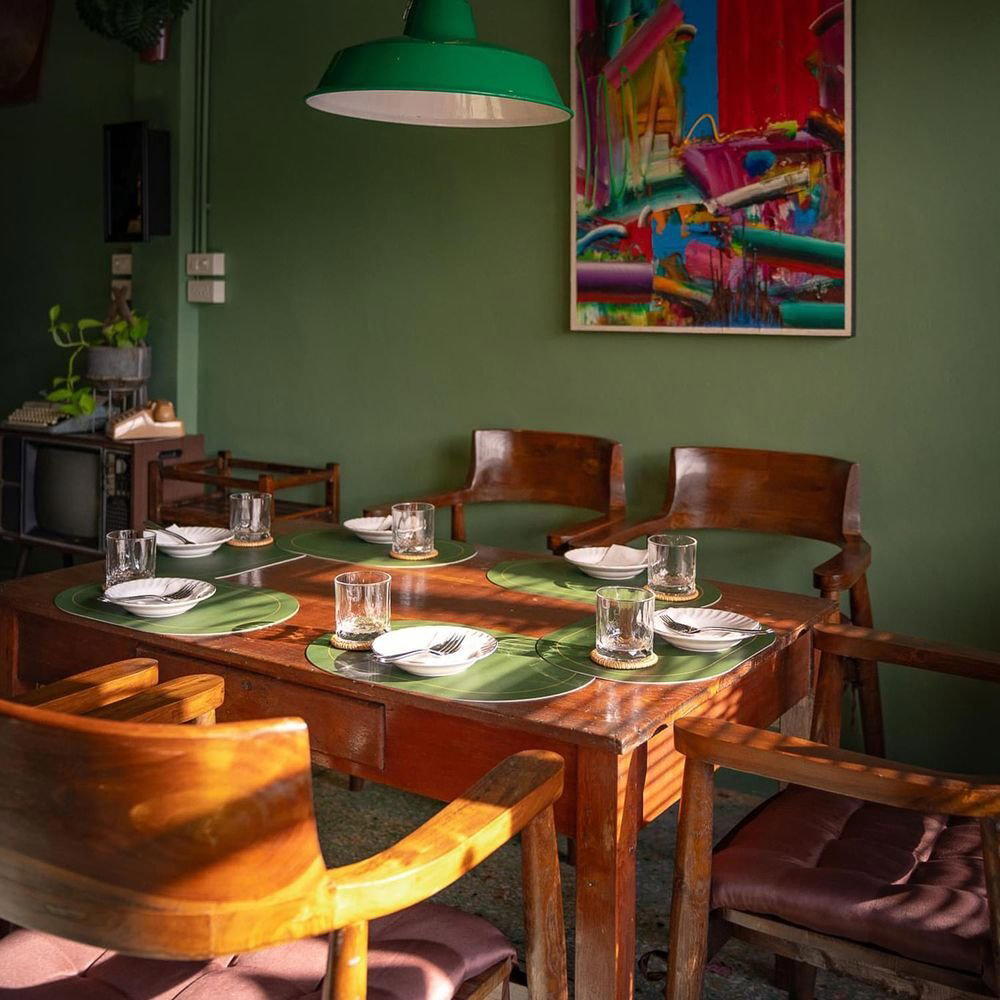
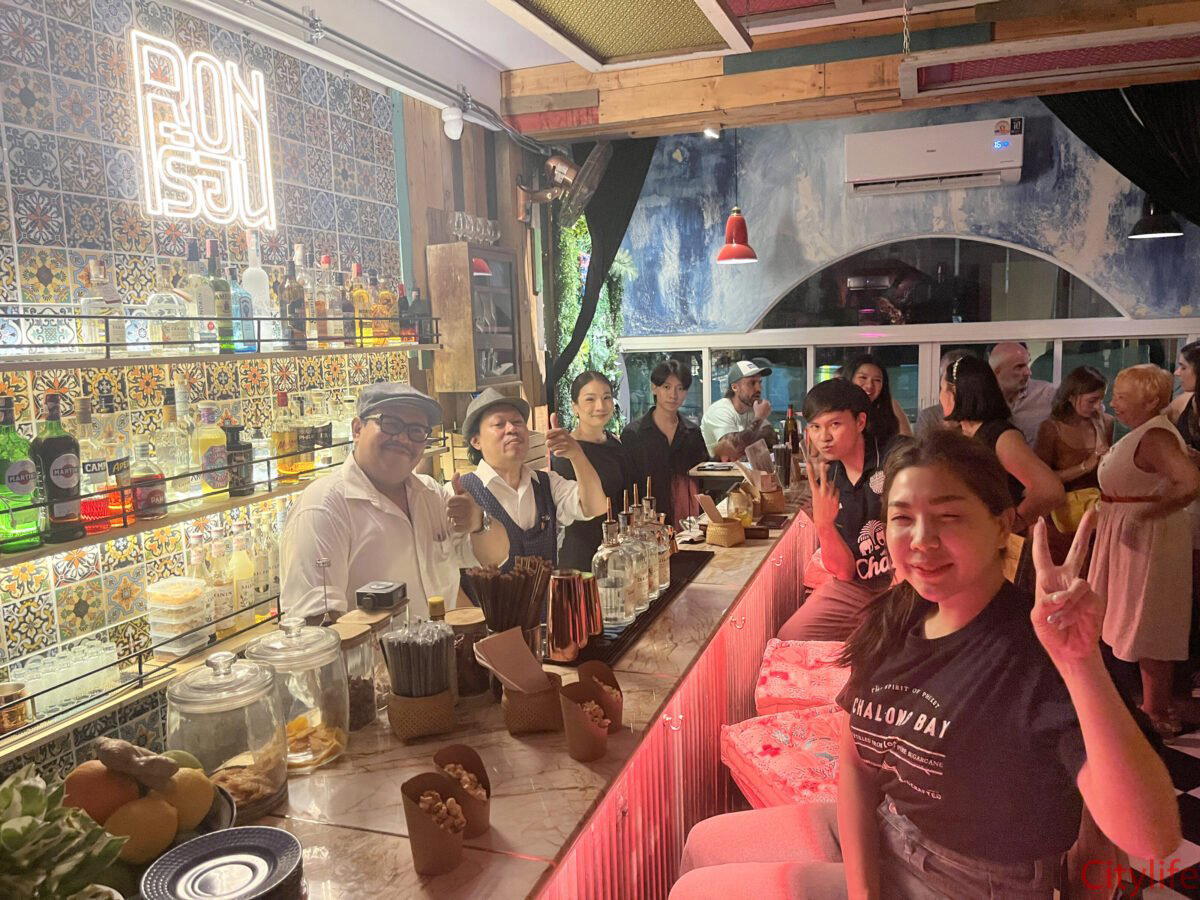
Cozy garden setting with bright, colorful, quirky decor that's casual, friendly, and well-suited for Instagram photos.