
Mr. Gyoza puts Kyoto’s everyday dumpling culture into a compact, counter-led setting rather than the city’s kaiseki frame. The draw is not ceremony but specialization: gyoza, ramen and kara-age at a casual price tier, with Tabelog 100 Dumplings selections in 2019, 2021 and 2024 giving the address a clear trust signal for travellers who usually plan Kyoto around temples and tasting menus.
Pearl is the En Primeur Club membership app — saves, bookings, and concierge access live there. Same editors, same standards.
- Address
- 42 Karahashi Takadacho, Minami Ward, Kyoto, 601-8464, Japan
- Phone
- +81 75-691-1991
- Website
- mr-gyo-za.com
 Saves & bookings on Pearl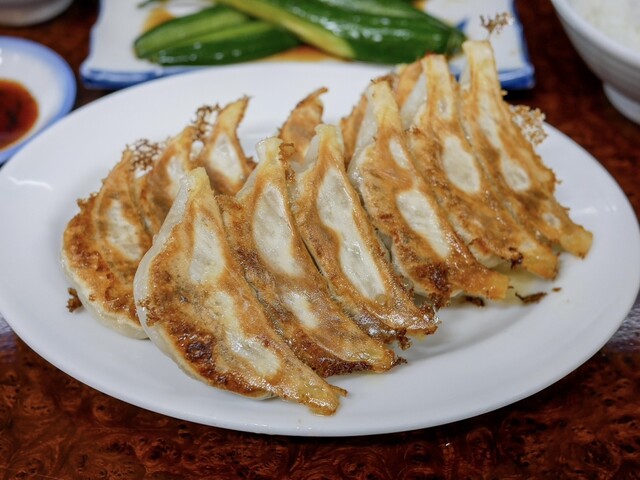
Approaching the Karahashi side of Minami Ward, Kyoto feels less like a postcard than a working city: traffic lights, errands, station-side routines and small restaurants built for repeat use, not theatrical arrival. That matters. Gyoza in Japan is not temple or tea-ceremony cuisine; it belongs to the postwar appetite for fast, hot, pan-fired food beside rice, noodles, beer and conversation. Mr. Gyoza sits in that everyday register, making it useful for understanding Kyoto beyond ryotei formality and chef-counter prestige.
Kyoto dining is often flattened into refined seasonal cooking or tourist-market snacking. Dumpling shops complicate that split. They occupy the middle ground, where craft is measured by repetition, turnover and small margins rather than luxury cues. The format rewards a narrow brief: a short casual meal can reveal how a city eats on an ordinary day, especially where residents outnumber visitors.
Kyoto dumplings outside the kaiseki script
Gyoza arrived in Japan through Chinese influence and became absorbed into Japanese popular dining, especially through ramen shops, beer halls and specialist counters. The Japanese version prizes contrast: a seared base, softer upper fold and fillings calibrated for speed and repeat eating. The culture is not spectacle; it is batch control, pan timing and consistency that regulars notice immediately.
Recognition from Tabelog’s Dumplings 100 list in 2019, 2021 and 2024 places Mr. Gyoza in a category rarely given the international attention of sushi, tempura or kaiseki. A dumpling counter should not be judged like a formal tasting menu. Its competitive set is the everyday specialist: narrow menu, quick rhythm, accessible spend and enough identity to justify crossing town rather than settling for the nearest ramen-side plate.
That distinction matters in Kyoto, where value is often misunderstood. A low price tier does not mean filler, just as a high price tier does not guarantee cultural depth. Kyoto’s serious inexpensive meals tend to be specific: noodles, dumplings, sweets, curry, grilled items, set meals. For travellers building a broader itinerary, this is the counterweight to reservations, fixed menus and long dinners. It belongs in the same mental map as other narrow-focus addresses such as 3TOKU6MI Shijo karasuma ten, 551蓬莱, [ki:], Abbesses and Aburi Mochi Honke Nemoto Kazariya, not because they serve the same food, but because each asks the diner to read Kyoto through a specific format rather than a generic checklist.
A small-room format built for repetition
The room’s scale shapes the experience. With 20 seats and counter seating in the mix, this is a compact operation, not a linger-all-evening restaurant; pleasure depends on pace, heat and directness. Take-out is part of the service model, showing the shop functions for local convenience as much as destination eating. Private rooms and private hire are not part of the proposition, keeping the tone closer to a neighborhood specialist than a hospitality production.
The menu categories reinforce that reading: dumplings, ramen and kara-age. In Japan, the trio has a clear logic. Dumplings bring the pan, ramen brings broth and noodles, kara-age brings fried chicken as a shared or side order. None needs ornate language. The appeal comes from sequencing and appetite: gyoza can be the point of the meal, or sit with noodles and fried chicken in the casual Japanese style of mixing staples.
Against Kyoto peers, the positioning is clear. KOBUSHI Ramen and Kaidashi Men Kitada speak to the city’s noodle economy at accessible spend; Arata and Yoshida Yama Seseri sit at a higher dinner bracket; MERCY Vegan Factory KYOTO STATION serves a different travel need near the station. Mr. Gyoza occupies the dumpling-specialist lane, where the question is not luxury but whether the format has enough focus to earn a detour. The repeated Tabelog Dumplings 100 selections answer more persuasively than decorative adjectives.
How to place it in a Kyoto itinerary
This is a smart meal when the day is built around movement: temples, transit, shopping, or a route south or west of the tourist core. Minami Ward rarely gets the romantic framing of Gion, Higashiyama or the Kamogawa corridor, which is part of its value for food-minded travellers. It shows Kyoto as a lived-in city, with practical restaurants serving residents first and visitors second.
The planning logic is simple: treat the meal as a compact casual stop, not the anchor dinner of a grand Kyoto night. The no-reservations format favors flexibility and patience over rigidity, and the small seat count means timing matters. Cash planning also matters, since card and electronic payments are not part of the listed payment setup. These details define the genre rather than reduce the appeal: serious everyday restaurants in Japan often prioritize speed, habit and familiarity over visitor-facing smoothness.
For a broader Kyoto food plan, pair this address with different registers across the trip: a sweets specialist, a noodle counter, a seasonal Japanese meal, a bar with a defined drinks program, and at least one hotel or experience that changes the day’s pace. The city rewards range. Start with Our full Kyoto restaurants guide, then cross-reference Our full Kyoto hotels guide, Our full Kyoto bars guide, Our full Kyoto wineries guide and Our full Kyoto experiences guide to avoid treating every meal as the same occasion.
Travellers continuing through Japan can read this address as part of a wider casual-dining pattern, where specialization often matters more than polish. Compare focused everyday formats with -Grilled beef Sukiyaki- KAMAKURA TANUKIAN 鎌倉 たぬき庵 in Kamakura. 鮪と炭火焼き うお炭 秋葉原店 in Tokyo.cafe in Osaka.know in Kumamoto, (Shoku) Vietnam in Kawasaki and [Curry Senmon Ten] Maruyama Kyoju. in Sapporo. For Japanese comfort food abroad, Jōdo Saké Bar in Los Angeles and Onigiri Time in Pasadena show how these formats travel, adapt and shed some original neighborhood context.
The editorial case for the restaurant is not that it turns dumplings into fine dining. It is stronger: it keeps dumplings in their proper cultural lane and does the work there. In Kyoto, where visitors often chase refinement until the city feels airless, a focused gyoza counter restores appetite, price realism and everyday rhythm.
Cost Snapshot
Comparable venues to place this listing in its category.
| Venue | Cuisine | Price |
|---|---|---|
| Mr. GyozaThis venue — the venue you are viewing | Minami, Gyoza & Chinese comfort food | $ |
| Shinrin Shokudo | Nakagyō, Japanese curry house | $ |
| Hitsuji | Nakagyō, Donut & coffee shop | $ |
| Curry Senmon Ten Biyanto | Sakyō, Japanese Curry | $ |
| Croa | Kita, Artisanal Bakery | $ |
| GOKKEI Ichijouji honten | Sakyō, Ultra-rich chicken paitan ramen | $ |
Recognition history
Dated appearances from independent guides and award organizations, with the underlying list record or original source where available.
Tabelog 100 #59 · No. 59
Tabelog · Tabelog 100 - Dumplings - 2024
Continue exploring
More in Kyoto
Restaurants in Kyoto
Browse all →


Bars in Kyoto
Browse all →

Hotels in Kyoto
Browse all →
Wineries in Kyoto
Browse all →
At a Glance
- Classic
- Lively
- Solo
- Casual Hangout
- After Work
- Standalone
- Beer Program
Current opening hours
- Monday
- 11:30 AM–8:30 PM
- Tuesday
- 11:30 AM–8:30 PM
- Wednesday
- 11:30 AM–8:30 PM
- Thursday
- Closed
- Friday
- 11:30 AM–8:30 PM
- Saturday
- 11:30 AM–8:30 PM
- Sunday
- 11:30 AM–8:30 PM
Hours can change for holidays and private events. Last verified .
A compact, old‑school Kyoto chuka-style joint with counter and a few tables, bright and bustling when busy, focused on quick plates of gyoza, ramen, and karaage rather than decor.