
GOKKEI Ichijouji honten belongs to Kyoto’s serious ramen circuit in Ichijoji, a district where noodle shops draw as much attention as temples do elsewhere in the city. Its repeated selection for Tabelog Ramen WEST “Tabelog 100” from 2017 through 2025 gives it a reputation built on sustained local scrutiny rather than guidebook gloss.
Pearl is the En Primeur Club membership app — saves, bookings, and concierge access live there. Same editors, same standards.
- Address
- 29-7 Ichijoji Nishitojikawaracho, Sakyo Ward, Kyoto, 606-8123, Japan
- Phone
- +81 75-711-3133
- Website
- gokkei.co.jp
 Saves & bookings on Pearl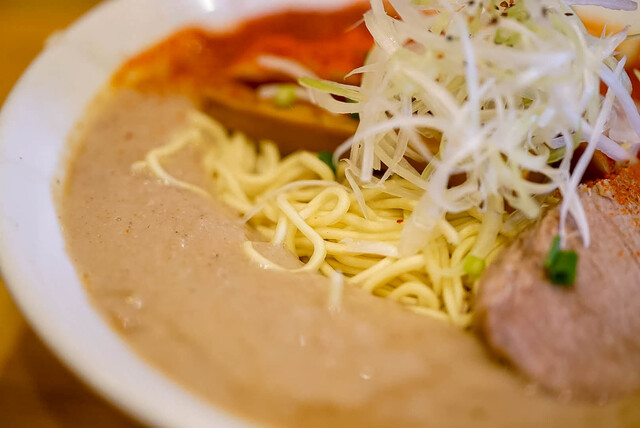
Ichijoji changes Kyoto dining’s rhythm. North of the central tourist corridors, streets feel more residential, queues more local, and the meal more focused: a ticket, a counter, a bowl, then back into the Sakyo Ward evening. Here ramen is less casual fallback than competitive craft, with repeat diners judging broth weight, noodle structure, and pacing across the neighbourhood’s dense ramen map.
GOKKEI Ichijouji honten sits inside that world. Its reputation is not built on luxury cues, chef mythology, or Kyoto nostalgia, but on critical persistence: selection for Tabelog Ramen WEST “Tabelog 100” in 2017, 2018, 2019, 2020, 2021, 2022, 2023, 2024, and 2025. In a fast-moving category with unforgiving regional loyalty, that continuity matters. It places the shop among western Japan’s repeatedly recognised ramen addresses, with Kyoto diners measuring it against Ichijoji peers such as Jukou Gundan, Chuka Soba Takayasu, Ramen Jiro Kyoto ten, and Ramen Touhichi rather than downtown kaiseki rooms.
Ichijoji ramen culture rewards repeat precision, not ceremony
Kyoto’s food reputation often defaults to restraint: tea cuisine, seasonal kaiseki, temple-adjacent vegetarian cooking, and polished counter dining. Ichijoji pulls the other way. Its ramen scene is dense, direct, and relatively inexpensive by Kyoto standards, shaped by students, residents, and obsessive repeat customers who treat small differences between shops as meaningful. The point is not theatre; it is whether the bowl has enough identity to survive comparison.
That context matters because GOKKEI Ichijouji honten is easy to misread as a destination restaurant in the usual premium-travel sense. The format is compact, the service functional, and the emphasis on turnover rather than lingering. Recognition from Tabelog’s Hyakumeiten system gives it a measurable place in Japan’s user-driven restaurant culture, where high-volume public assessment carries particular weight for ramen, curry, tonkatsu, and other democratic categories. A Tabelog score of 3.74 in this field is not decoration; it reflects a shop competing where small consistency shifts are quickly punished.
The room also frames ramen as neighbourhood infrastructure. Counter seats and tatami seating put solo diners, friends, and families in the same orbit, typical of serious ramen shops serving both enthusiasts and everyday customers. That balance explains the appeal: enough critical recognition to justify a Kyoto detour, yet still rooted in the quick, practical grammar of the ramen house.
Recognition across nine selections gives the bowl its critical weight
A single award listing can mark a moment; repeated selection across nearly a decade says more about durability. From 2017 through 2025, GOKKEI Ichijouji honten has appeared in Tabelog Ramen WEST “Tabelog 100,” a span covering changing ramen trends across western Japan. During that period, Kyoto ramen has had to hold attention against Osaka’s volume, Kobe’s range, and broader Kansai experimentation. This Ichijoji address remains in that conversation because it keeps clearing the same public-recognition threshold.
For travellers, that matters because ramen research is noisy. Kyoto has queues, social-media favourites, and nostalgic neighbourhood shops, but repeated Hyakumeiten selection narrows the field. It does not guarantee universal preference, and ramen rarely works that way. It identifies a shop tested against category peers over time. For a visitor with limited Kyoto meals, this is the difference between chasing a viral bowl and choosing durable category standing.
The comparison set clarifies the decision. Jukou Gundan, Chuka Soba Takayasu, and Ramen Jiro Kyoto ten sit in the lower casual band, while Hatsuda occupies a different dining register entirely. Ramen Touhichi is another Kyoto ramen reference point. The restaurant belongs with the ramen specialists: fast, focused, and judged on the narrow but demanding terms of the bowl. It is not for a long dinner, wine-led evening, or Kyoto formality. It is for seeing how a recognised Ichijoji ramen shop performs inside its own competitive lane.
How to place it within a Kyoto food itinerary
A stronger Kyoto itinerary separates categories rather than forcing every meal into refinement. A day can move from temple districts and old confectionery traditions to a ramen counter without contradiction. That range is part of the city’s appeal: Kyoto preserves formal dining traditions while supporting tightly specialised casual rooms where locals argue over broth styles with the seriousness other cities reserve for tasting menus.
For broader planning, the restaurant works as the Sakyo Ward ramen anchor, not a replacement for central Kyoto dining. Nearby or citywide planning can branch toward contemporary restaurants such as 3TOKU6MI Shijo karasuma ten, casual staples like 551蓬莱, and more idiosyncratic Kyoto addresses including [ki:], Abbesses, and Aburi Mochi Honke Nemoto Kazariya. For the wider city edit, use Our full Kyoto restaurants guide alongside Our full Kyoto hotels guide, Our full Kyoto bars guide, Our full Kyoto wineries guide, and Our full Kyoto experiences guide.
Japan-wide readers comparing casual and specialist dining can also cross-reference -Grilled beef Sukiyaki- KAMAKURA TANUKIAN 鎌倉 たぬき庵 in Kamakura. 鮪と炭火焼き うお炭 秋葉原店 in Tokyo.cafe in Osaka.know in Kumamoto, (Shoku) Vietnam in Kawasaki, and [Curry Senmon Ten] Maruyama Kyoju. in Sapporo. The same casual-specialist logic extends beyond Japan at Jōdo Saké Bar in Los Angeles and Onigiri Time in Pasadena, where narrow formats likewise depend on clarity rather than breadth.
The editorial read is simple: this is a recognised ramen address in a ramen-heavy Kyoto district, with enough repeat awards history to justify the trip north if the itinerary has room for one serious casual bowl. Its appeal lies in category credibility, compactness, and neighbourhood context. Kyoto has grander meals, but Ichijoji offers a sharper lesson in how the city eats when ceremony drops away.
A Pricing-First Comparison
Comparable venues to calibrate price, style, and recognition.
| Venue | Cuisine | Price | Notes |
|---|---|---|---|
| GOKKEI Ichijouji hontenThis venue — the venue you are viewing | Sakyō, Ultra-rich chicken paitan ramen | $ | Not listed |
| Ryokujuan Shimizu | Sakyō, Japanese Traditional Sweets | $ | Not listed |
| Aburi Mochi Honke Nemoto Kazariya | Not listed | $ | Kita, Traditional Kyoto Japanese sweets (Aburi Mochi) |
| Seabura no Kami Mibu honten | Nakagyō, Back-fat niboshi ramen | $ | Not listed |
| Fuka Fuchomae honten | Not listed | $ | Kamigyō, Traditional Kyoto Japanese sweets & nama-fu shop |
| Kissa Madrague | Not listed | $ | Nakagyō, Japanese Kissaten / Café |
Recognition history
Dated appearances from independent guides and award organizations, with the underlying list record or original source where available.
Tabelog 100 #79 · No. 79
Tabelog · Tabelog 100 - Ramen - WEST - 2025
Continue exploring
More in Kyoto
Restaurants in Kyoto
Browse all →
Bars in Kyoto
Browse all →
Hotels in Kyoto
Browse all →
Wineries in Kyoto
Browse all →
At a Glance
- Lively
- Cozy
- Well Known
- Solo
- Casual Hangout
- After Work
- Late Night
- Standalone
Current opening hours
- Monday
- Closed
- Tuesday
- 11:30 AM–10 PM
- Wednesday
- 11:30 AM–10 PM
- Thursday
- 11:30 AM–10 PM
- Friday
- 11:30 AM–10 PM
- Saturday
- 11:30 AM–10 PM
- Sunday
- 11:30 AM–10 PM
Hours can change for holidays and private events. Last verified .
A compact house-style ramen shop with counter and a few small tables and tatami seats, typically busy and energetic, focused on delivering a single intensely flavored bowl rather than lingering dining.