
Momo Ramen has held a Michelin Plate in both 2024 and 2025, placing it among a small group of ramen-focused kitchens in Germany to earn that level of recognition. Located on Margaretenstraße in Hamburg's Eimsbüttel district, it occupies the affordable end of the city's dining register, a single euro sign against peers charging four, while matching them on scrutiny and consistency.
Pearl is the En Primeur Club membership app — saves, bookings, and concierge access live there. Same editors, same standards.
- Address
- Margaretenstraße 58, 20357 Hamburg, Germany
- Phone
- +49 40 57226024
- Website
- momo-ramen.de
- Directions
- Get directions
 Saves & bookings on Pearl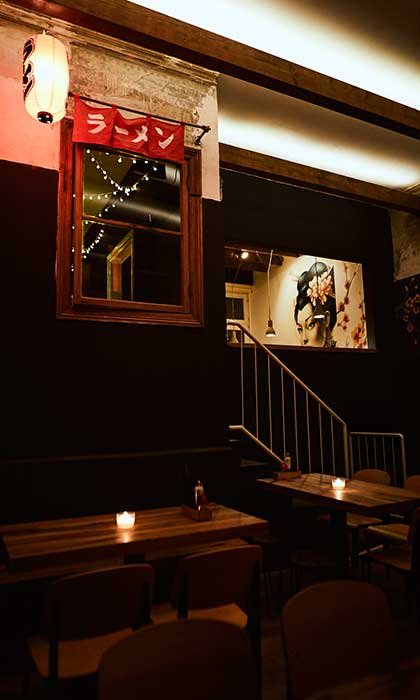
Where Ramen Discipline Meets Northern Germany
Step onto Margaretenstraße on a weekday evening and the queue outside number 58 tells you something about how Hamburg has absorbed Japanese ramen culture. The street is residential Eimsbüttel, all pre-war brick and neighbourhood grocers, and the contrast with the steaming bowls being passed inside is part of what makes the scene legible: this is not a concept transplanted into a tourist corridor. Ramen in this part of the city is a local habit, and Momo Ramen sits at the centre of it.
German cities have been slower to develop the category, which makes the Michelin Plate recognition Momo Ramen received in both 2024 and 2025 carry more weight than it might in a more crowded field. A Michelin Plate is not a starred distinction, but in the context of casual ramen in Hamburg, it marks a kitchen that insists on consistency rather than coasting on demand.
The Ritual Inside the Bowl
Japanese ramen carries a structure that serious practitioners treat as seriously as any tasting menu format. The broth is the foundation: hours of reduction, fat content calibrated, seasoning tare added at the last moment so the bowl lands with a coherence that only falls apart if timing or temperature slips. The noodles are a separate variable entirely, with thickness and alkalinity chosen to hold up under specific broth weights. Toppings arrive in a sequence that rewards the diner who eats without interruption rather than pausing to photograph. This is the ritual that defines ramen at its most deliberate, and it is the standard against which any kitchen earning Michelin attention will be measured.
Momo Ramen's price point, at about €20 per person, positions it against the informal Japanese dining norm rather than against the city's higher-ticket restaurants. Compare this to The Table Kevin Fehling, bianc, or Lakeside, all operating at the €€€€ tier, and the accessibility gap is obvious. What the Michelin recognition does is bridge the quality signal: a kitchen at this price level does not earn repeated guide attention through volume alone.
Hamburg's Dining Range in Perspective
Hamburg's restaurant scene clusters at the high end with considerable force. Restaurant Haerlin carries the weight of the city's creative French tradition, while 100/200 Kitchen represents the kind of ambitious progressive format that has defined Northern European fine dining over the past decade. These restaurants ask a different kind of commitment from the diner, in time, in cost, in the willingness to hand control to the kitchen. Ramen operates on different terms. The bowl arrives complete; the ritual is briefer; the investment is measured in minutes of queue rather than weeks of waiting for a reservation.
That contrast is not a hierarchy. It is a reminder that Hamburg's dining identity is broader than its Michelin-starred upper tier suggests.
Ramen in Germany: A Broader Context
The category sits differently in Germany than in Japan or in cities like London, where ramen shops have long been part of the dining landscape. German ramen culture is more recent, and the kitchens doing it at a serious level are still establishing their reference points. For comparative context, Afuri in Tokyo operates in an environment where ramen criticism is a distinct discipline with its own vocabulary and its own guide infrastructure, a benchmark that any European kitchen implicitly measures itself against. Afuri's Portland outpost illustrates how the category travels internationally, adapting to local supply while maintaining technique.
At that volume, a rating does not drift upward through selection bias; it reflects a consistent result across a wide and varied audience. The number also suggests a kitchen that is genuinely busy, which has its own implications for broth quality: high-turnover ramen kitchens that replenish stock continuously tend to produce more consistent results than low-volume operations that are rebuilding from scratch each service.
Germany's Wider Fine Dining Geography
Schwarzwaldstube in Baiersbronn and Vendôme in Bergisch Gladbach anchor the classical end of the spectrum. Aqua in Wolfsburg and ES:SENZ in Grassau represent newer high-precision formats. CODA Dessert Dining in Berlin operates in a category of its own. JAN in Munich shows how the southern city has built its own distinct fine dining register. None of these are direct comparisons to the restaurant, but they establish the landscape in which the Michelin Plate at a single-euro-sign ramen kitchen carries meaning: the guide is not simply rewarding ambition at the high end. It is tracking quality wherever it appears.
Planning Your Visit
The restaurant is on Margaretenstraße 58 in Hamburg's Eimsbüttel district, west of the Schanzenviertel and accessible by U-Bahn. The price bracket makes it viable as a standalone meal or as a lower-cost counterpoint within a multi-day Hamburg itinerary that might also include higher-ticket evenings at the city's starred restaurants. Given the review volume and the queue patterns typical of well-regarded casual ramen spots, arriving before peak service, early lunch or the first hour of evening service, tends to reduce wait times. The restaurant is open daily from 12 to 10 PM. Reservations are recommended.
What to Order at Momo Ramen
What the Michelin Plate signals is that the kitchen has a defined approach and executes it with enough consistency to earn repeated recognition. In practical terms, that means ordering from the core of the menu rather than periphery additions: the broth-forward bowls are the reason the guide is paying attention. At a kitchen awarded a Michelin Plate in consecutive years, the house ramen is the reference point. Toppings and supplementary formats are secondary to that central judgment. If a special or seasonal variant is listed on the day, it is worth asking whether it represents the kitchen's current focus or simply inventory management, at a serious ramen counter, those two things are usually distinguishable.
The Quick Read
Comparable venues nearby, for context on price, style, and recognition.
| Venue | Cuisine | Price | Notes |
|---|---|---|---|
| Momo RamenThis venue — the venue you are viewing | Eimsbuttel, Japanese Ramen | $$ | Not listed |
| Henssler Henssler | Altona-Altstadt, Modern Japanese Sushi | $$$ | Not listed |
| Kokomo Noodle Club | Not listed | $$ | St. Pauli, Authentic Japanese Ramen |
| CARLS Brasserie an der Elbphilharmonie | Not listed | $$$ | HafenCity, French Brasserie with North German Accents |
| Katana Sushi | Neustadt, Traditional Japanese Sushi | $$ | Not listed |
| Brook | Not listed | $$$ | Hamburg-Altstadt, Modern German Fine Dining with Fusion Influences |
Recognition history
Dated appearances from independent guides and award organizations, with the underlying list record or original source where available.
Michelin Plate
Michelin · 2026 Michelin Plate
Michelin Plate
Michelin
Michelin Plate
Michelin
Continue exploring
More in Hamburg
Restaurants in Hamburg
Browse all →
At a Glance
- Cozy
- Trendy
- Casual Hangout
- Group Dining
- Open Kitchen
- Sake Program
Current opening hours
- Monday
- 12–10 PM
- Tuesday
- 12–10 PM
- Wednesday
- 12–10 PM
- Thursday
- 12–10 PM
- Friday
- 12–10 PM
- Saturday
- 12–10 PM
- Sunday
- 12–10 PM
Hours can change for holidays and private events. Last verified .
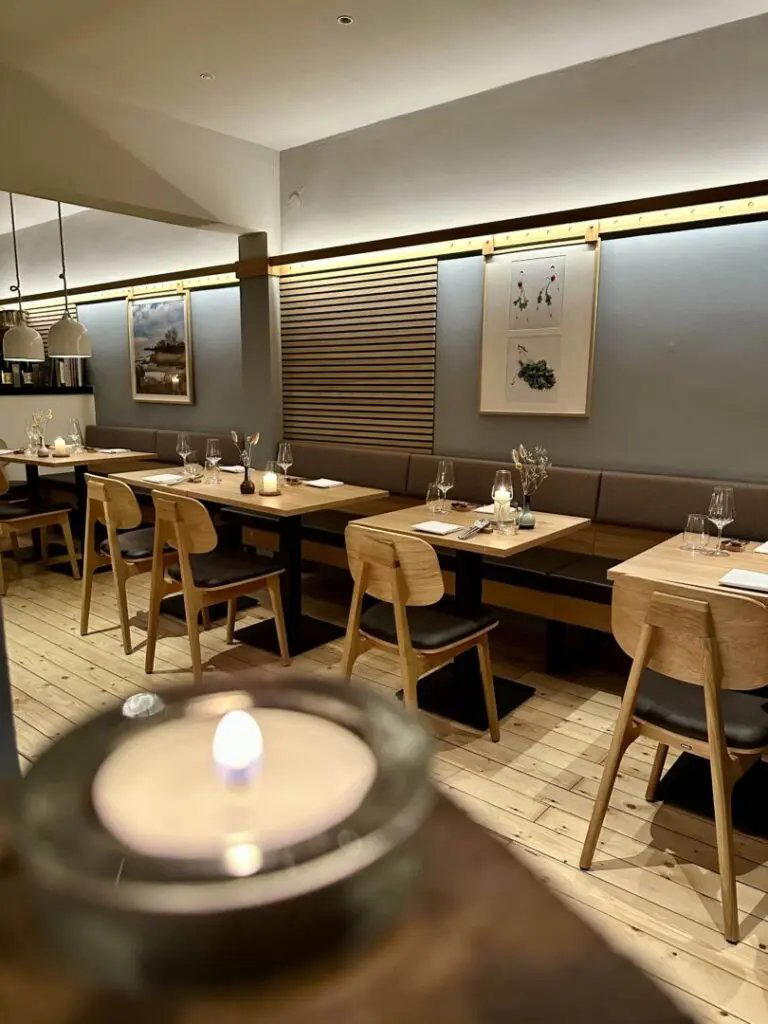
Cozy and authentic Japanese atmosphere with hip laid-back vibe, though cramped and tight seating.