
Positioned directly beside the Elbphilharmonie on Hamburg's HafenCity waterfront, CARLS Brasserie holds consecutive Michelin Plate recognition (2024 and 2025),600 reviews. The kitchen operates in the German brasserie register, a mid-tier price point in a neighbourhood where fine-dining neighbours price significantly higher, making it one of the more accessible addresses on Am Kaiserkai.
Pearl is the En Primeur Club membership app — saves, bookings, and concierge access live there. Same editors, same standards.
- Address
- Am Kaiserkai 69, 20457 Hamburg, Germany
- Phone
- +49 40 300322400
- Website
- carls-brasserie.de
- Directions
- Get directions
 Saves & bookings on Pearl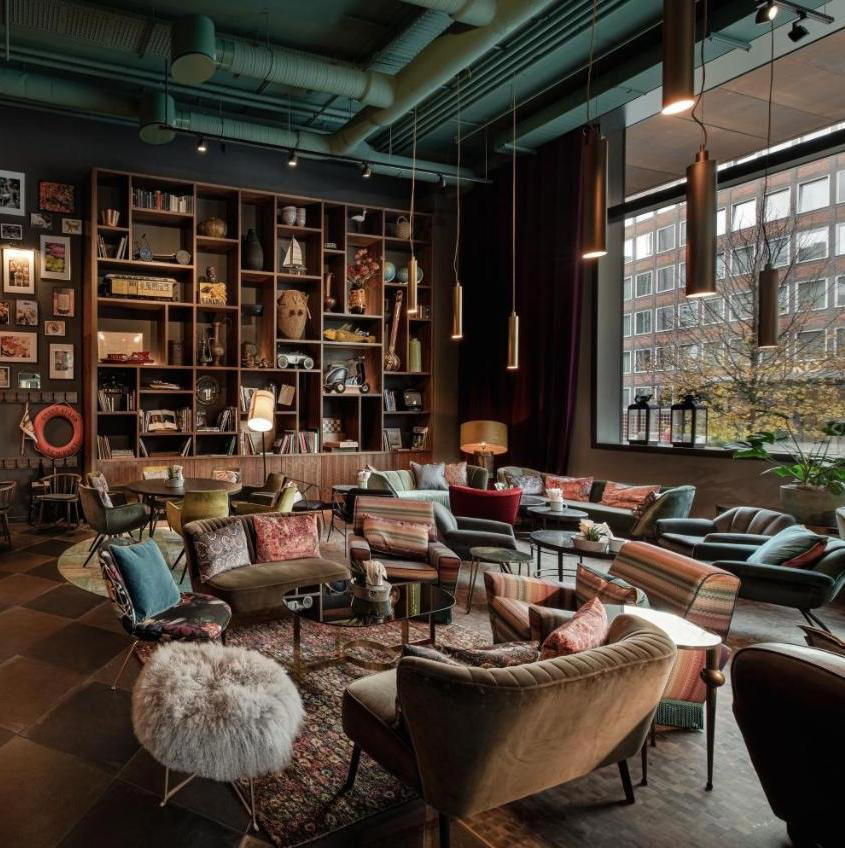
Where the Concert Hall Meets the Table
CARLS Brasserie an der Elbphilharmonie is a restaurant in Hamburg serving French brasserie cooking with North German accents. The approach to Am Kaiserkai 69 does most of the work before you reach the door. The Elbphilharmonie's wave-form glass facade rises directly overhead, the Elbe opens out to the south, and the converted red-brick warehouses of HafenCity frame the waterfront in both directions. Arriving at CARLS Brasserie in this context is less a restaurant entrance than a positioning statement about Hamburg itself: a city that has spent the last two decades staking serious civic identity on this stretch of reclaimed harbour land.
That context matters when reading CARLS against the dining tier it occupies. The Table Kevin Fehling operates at three Michelin stars and €€€€ pricing. bianc holds two stars in the same price band. Lakeside is similarly positioned at two stars and upper-tier pricing.
The Brasserie Format in a Fine-Dining Neighbourhood
The German brasserie format occupies a specific and often undervalued niche in the country's dining culture. It sits between the traditional Gasthaus, rooted in regional specificity and often resistant to occasion dining, and the tasting-menu-driven, white-tablecloth tier that draws the majority of critical attention. Brasserie cooking at its most coherent offers precision without theatre, a menu that rewards reading across multiple visits rather than committing to a single set progression, and a service register calibrated for conversation rather than choreography.
CARLS operates in that space, with Michelin Plate recognition in both 2024 and 2025 confirming a level of kitchen consistency the inspectors consider worth flagging, even if the format sits below starred territory. Back-to-back Michelin Plate recognition points to a kitchen that is consistent rather than novelty-led.
Schwarzwaldstube in Baiersbronn, Aqua in Wolfsburg, and Vendôme in Bergisch Gladbach anchor the country's highest-starred German cooking. CARLS makes no claim to that territory. Its comparable set is more accurately the confident brasserie-register operations that offer skilled cooking at accessible prices in architecturally significant settings.
Service as a Team Structure
In brasseries that sustain consistent recognition over multiple years, the front-of-house and kitchen relationship tends to define the experience more visibly than in tasting-menu formats, where the kitchen exerts near-total control over pacing and content. At the brasserie register, guests choose their own rhythm, order from a broader selection, and often revisit specific dishes across multiple visits. This means the floor team must carry genuine food knowledge rather than relying on a recitation of a fixed menu progression, and the sommelier or drinks-focused staff must advise across a wider price and style range than a curated pairing programme requires.
CARLS sits in a high-traffic, high-visibility location where service teams face the dual pressure of tourist footfall from Elbphilharmonie visitors and the expectations of Hamburg regulars who have dined at the city's upper-tier addresses, including Restaurant Haerlin and 100/200 Kitchen. Managing that range well, without letting the volume of covers erode attentiveness, is the operational challenge that separates brasseries with sustained recognition from those that drift into tourist-trap patterns over time.
The two consecutive Michelin Plates suggest the team dynamic at CARLS has held that balance across at least two inspection cycles. For comparison, German-cuisine restaurants at a creative and ambitious level elsewhere, ES:SENZ in Grassau, JAN in Munich, or CODA Dessert Dining in Berlin, operate in lower-volume formats where managing the guest experience is structurally easier. The brasserie model demands a different discipline.
German Cuisine in the Brasserie Register
German cooking at the brasserie level draws on a broader tradition than the fine-dining interpretation of the cuisine tends to project internationally. The Sühring twins in Bangkok and Dröppelminna in Bergisch Gladbach represent different ends of how German culinary identity travels and transforms. At the brasserie tier, the expectation is different: the cuisine should be legible, seasonal in cadence, and honest about its reference points without requiring a tasting-menu format to communicate them.
HafenCity's development over the past decade has created an audience for exactly this kind of cooking: a mix of international visitors, local professionals, and pre- or post-concert diners who want quality without the commitment of a full tasting progression. CARLS's position at €€ in a neighbourhood where the starred competition prices at €€€€ fills that gap in a way that a second fine-dining address in the same location would not.
Planning Your Visit
CARLS Brasserie is located at Am Kaiserkai 69, directly adjacent to the Elbphilharmonie in Hamburg's HafenCity district. The €€ price positioning makes it one of the more accessible options in the immediate area, particularly for pre-concert dining before an Elbphilharmonie performance, though the combination of a landmark concert hall and a well-reviewed brasserie on the same block means tables on performance evenings move quickly. Checking availability in advance rather than arriving without a reservation is advisable, especially on weekends or during the Elbphilharmonie's busier programming periods.
The Minimal Set
Comparable venues nearby, for context on price, style, and recognition.
| Venue | Cuisine | Price | Notes |
|---|---|---|---|
| CARLS Brasserie an der ElbphilharmonieThis venue — the venue you are viewing | German | $$$ | Not listed |
| Cox | Not listed | $$$ | St. Georg, Modern German Bistro |
| Whiskyplaza | Not listed | $$$ | Hamburg-Altstadt, Modern Classic Gastropub |
| La Maison d'Avignon | Ottensen, Southern French Bistro | $$$ | Not listed |
| Wallter's Bistro & Kontor | Neustadt, Modern French-German Bistro | $$$ | Not listed |
| Félix | Muehlenberg, Classic French Bistro | $$$ | Not listed |
Recognition history
Dated appearances from independent guides and award organizations, with the underlying list record or original source where available.
Michelin Plate
Michelin · 2026 Michelin Plate
Michelin Plate
Michelin
Michelin Plate
Michelin
Continue exploring
More in Hamburg
Restaurants in Hamburg
Browse all →
Bars in Hamburg
Browse all →
Hotels in Hamburg
Browse all →
Wineries in Hamburg
Browse all →
At a Glance
- Elegant
- Sophisticated
- Lively
- Modern
- Date Night
- Business Dinner
- Special Occasion
- Waterfront
- Terrace
- Extensive Wine List
- Waterfront
Current opening hours
- Monday
- 12–3 PM, 4:30–10 PM
- Tuesday
- 12–3 PM, 4:30–10 PM
- Wednesday
- Closed
- Thursday
- 12–3 PM, 4:30–10 PM
- Friday
- 12–3 PM, 4:30–10 PM
- Saturday
- 4:30–10 PM
- Sunday
- 12–3 PM, 4:30–10 PM
Hours can change for holidays and private events. Last verified .
Classy, bright, and elegant brasserie atmosphere with port views, cozy seating, and lively yet relaxed vibe.