Momiji occupies a quietly considered address on Bleibtreustraße in Charlottenburg, where Berlin's Japanese dining scene finds one of its more restrained expressions. The venue sits in a neighbourhood that skews toward a seasoned, internationally minded clientele rather than the louder currents of Mitte or Prenzlauer Berg. For those moving through the city's better Japanese options, it belongs in the same conversation as the capital's other precision-focused eastern kitchens.
Pearl is the En Primeur Club membership app — saves, bookings, and concierge access live there. Same editors, same standards.
- Address
- Bleibtreustraße 52, 10623 Berlin, Germany
- Phone
- +493055201884
- Website
- mo-mi-ji.com
- Directions
- Get directions
 Saves & bookings on Pearl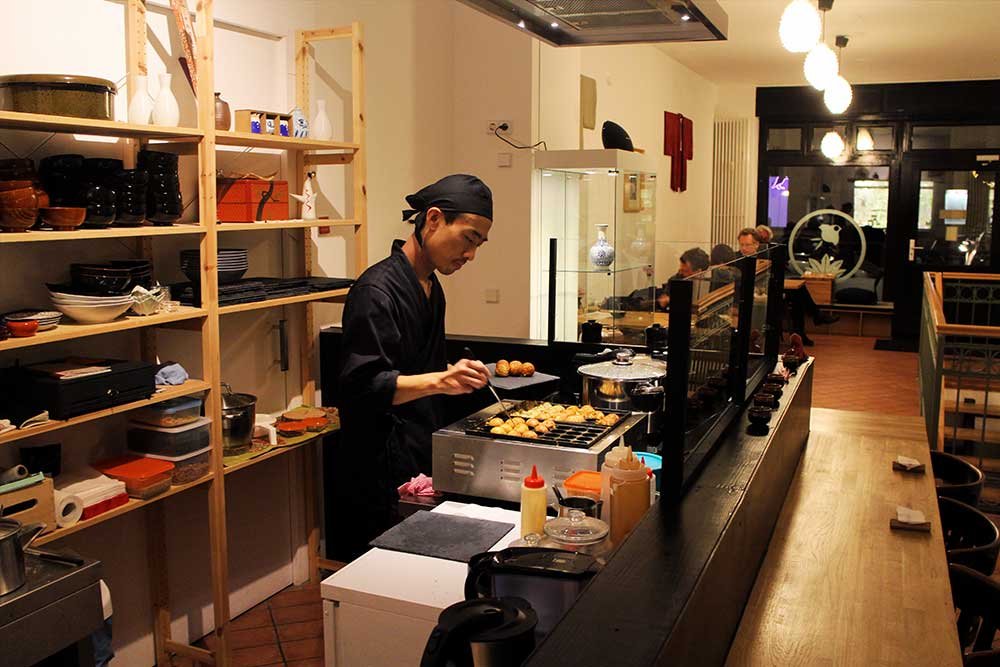
Charlottenburg's Quieter Register
The city now supports a recognisable upper tier of precision-focused Japanese kitchens, a broader mid-market of ramen and izakaya formats, and a growing category of fusion addresses pulling from both traditions. Momiji, at Bleibtreustraße 52 in Charlottenburg, operates in territory that resists easy categorisation, which is, in its own way, an editorial point worth making. The address places it in a district historically associated with West Berlin's cosmopolitan residue: wide pavements, older apartment stock, a clientele that tends toward the established rather than the trend-chasing. That neighbourhood character shapes the dining register before you walk through the door.
Charlottenburg positions itself differently from the Japanese dining clusters forming in Mitte. Where those areas attract venues built around social visibility, Bleibtreustraße rewards deliberate choice from diners who know the city well. Momiji reads as a considered local rather than a destination address for visiting food tourists, and that distinction matters when you are thinking about when and how to go.
The Lunch and Dinner Divide
Across Berlin's more serious Japanese kitchens, the lunch-dinner gap operates as a structural feature of the format, not merely a scheduling convenience. At the upper end, venues comparable in ambition to the capital's Michelin-cited tables like FACIL or Rutz, lunch typically offers a compressed version of the evening's editorial ambition at a meaningfully lower price point. The same sourcing discipline and kitchen craft appear, but the format moves faster and the ceremonial weight of the evening drops away.
That split has particular relevance for a venue like Momiji, where the surrounding neighbourhood feeds a genuine lunch trade from local offices, residents, and the gallery-adjacent professional class that characterises central Charlottenburg. Evening service, by contrast, tends to attract a more deliberate visit: guests who have made a specific choice to be in that room on that night. The two services are not simply shorter and longer versions of the same experience, they carry different social contracts, different pacing expectations, and often different value calculations. For a visitor with limited time in Berlin, the lunch window frequently offers the more efficient read of what a kitchen actually does.
This lunch-dinner dynamic often shapes how Japanese restaurants in mid-European cities define themselves. The pressure to perform for evening service can push kitchens toward safer, more legible choices; the more compressed lunch format sometimes reveals a more confident, less calculated hand. Whether Momiji's kitchen makes that argument as clearly as other Japanese addresses in the city is best judged by visiting both services on the same day.
Where Momiji Sits in Berlin's Japanese Dining Order
Berlin is not Tokyo, and it is not London or Paris either when it comes to the depth of its Japanese dining tier. The city's serious Japanese addresses remain relatively few, so reputation travels quickly here. The top end of Berlin's Japanese dining is occupied by a small group of omakase and kaiseki-adjacent formats; below that sits a larger category of well-executed everyday Japanese that services the city's international population. Momiji's Charlottenburg address places it closer to the latter cohort in geography and probable audience, though geography is not destiny in a city where dining choices increasingly cross borough lines.
For context on where Berlin's premium restaurant energy currently concentrates, the city's Michelin-starred tier includes CODA Dessert Dining, Nobelhart & Schmutzig, and Restaurant Tim Raue, whose Chinese-influenced kitchen sits in a comparable set that intersects with what serious Japanese dining addresses are doing on technique. None of those are direct comparators for Momiji, but they define the ambition level against which Berlin dining addresses are assessed. Across Germany more broadly, the Michelin-starred circuit extends to destinations like Aqua in Wolfsburg, Schwarzwaldstube in Baiersbronn, and Vendôme in Bergisch Gladbach, a reminder that Germany's serious dining energy is distributed across the country rather than concentrated in the capital in the way Paris dominates France.
For visitors comparing Japanese-influenced precision cooking to formats from other cuisines at a similar price tier, international reference points are worth keeping in mind. Atomix in New York City represents what happens when Korean fine dining absorbs Japanese kaiseki discipline at the highest level; Le Bernardin shows how French technique applied to seafood with Japanese-influenced restraint produces something categorically distinct. Those comparisons are not meant to position Momiji in that tier, but to illustrate the range of outcomes when precision cooking from the eastern tradition meets a non-Japanese dining culture.
Planning a Visit
Bleibtreustraße 52 is in the Charlottenburg district of Berlin, reachable via S-Bahn to Savignyplatz or a short walk from Kurfürstendamm. The surrounding neighbourhood has independent restaurants and wine bars nearby. Those extending their trip across Germany might also consider JAN in Munich, Restaurant Haerlin in Hamburg, or Schanz in Piesport for a broader read of the country's current restaurant register.
Know Before You Go
- Address: Bleibtreustraße 52, 10623 Berlin, Germany
- District: Charlottenburg
- Nearest transit: S-Bahn Savignyplatz (short walk)
- Booking: Reservations recommended
- Leading approach: Lunch service typically offers a more accessible entry point into a kitchen's actual capabilities; consider visiting both services if itinerary allows
Awards and Standing
Comparable venues nearby, for context on price, style, and recognition.
| Venue | Cuisine | Price | Notes |
|---|---|---|---|
| momijiThis venue — the venue you are viewing | Authentic Japanese Street Food & Izakaya | $$ | Not listed |
| Sasaya | Traditional Japanese Sushi | $$ | Prenzlauer Berg |
| Udagawa | Japanese | $ | Steglitz |
| Sachiko Sushi | Creative Japanese Sushi | $$$ | Charlottenburg |
| XXX Ramen | Japanese Ramen | $$ | Charlottenburg |
| Iimori Ramen | Japanese Ramen | $$ | Mitte |
Continue exploring
More in Berlin
Restaurants in Berlin
Browse all →
Bars in Berlin
Browse all →
Hotels in Berlin
Browse all →


At a Glance
- Cozy
- Intimate
- Minimalist
- Casual Hangout
- Solo
- Open Kitchen
- Sake Program
Current opening hours
- Monday
- Closed
- Tuesday
- 12–3 PM, 5:30–10 PM
- Wednesday
- 12–3 PM, 5:30–10 PM
- Thursday
- 12–3 PM, 5:30–10 PM
- Friday
- 12–3 PM, 5:30–10 PM
- Saturday
- 12–10 PM
- Sunday
- Closed
Hours can change for holidays and private events. Last verified .
Intimate minimalist setting with clean lines, warm wooden accents, and subtle lighting creating a soothing atmosphere; can become quite loud during busy hours.