On Kantstraße, one of Berlin's most culturally layered dining streets, XXX Ramen occupies a stretch where Japanese food culture has long found serious footing. The bowl here is the argument, direct, regional, and worth the detour from the city's louder dining quarters. For those tracking Berlin's mid-register Japanese scene, this address belongs on the list.
Pearl is the En Primeur Club membership app — saves, bookings, and concierge access live there. Same editors, same standards.
- Address
- Kantstraße 130, 10625 Berlin, Germany
- Phone
- +493098458600
- Directions
- Get directions
 Saves & bookings on Pearl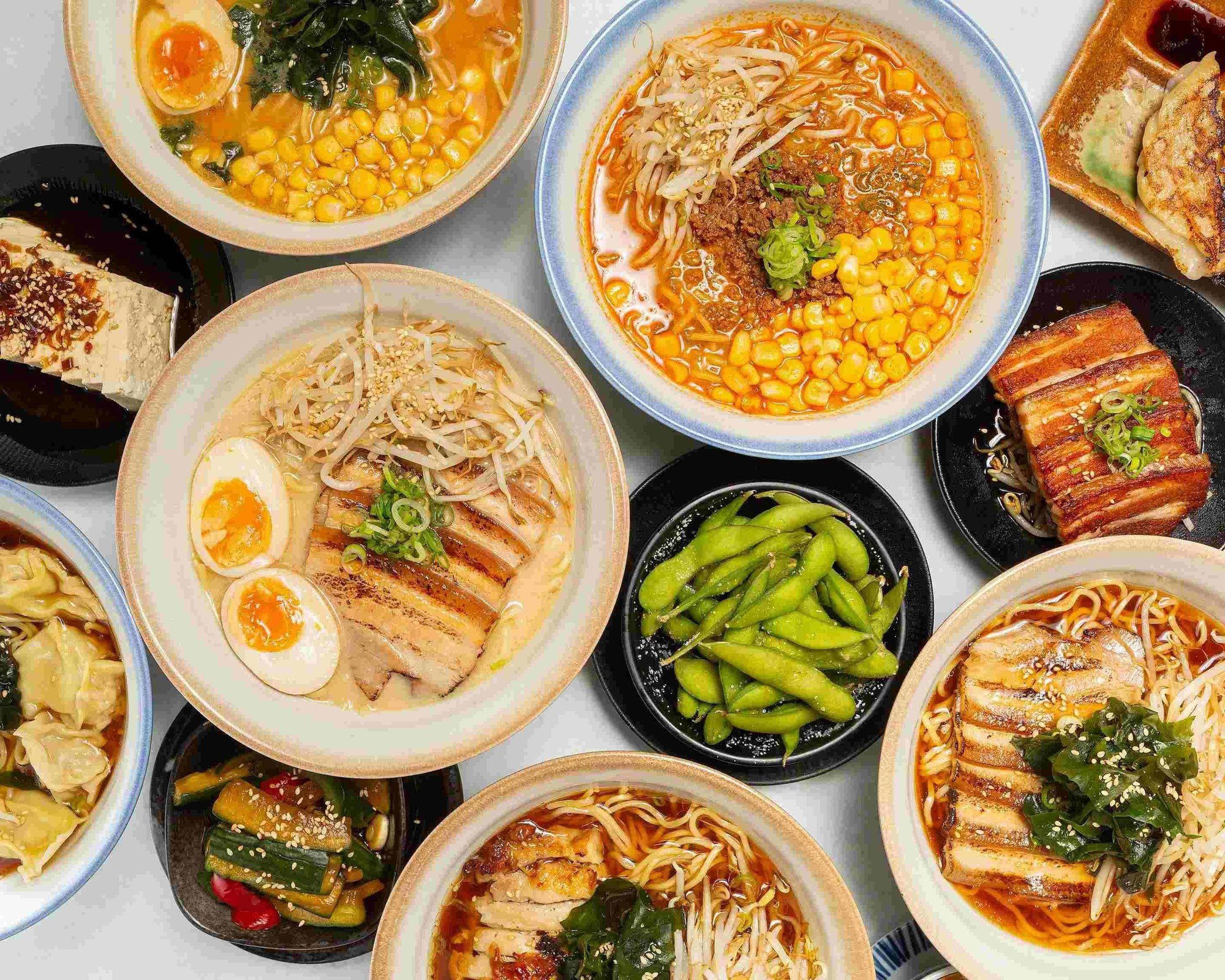
Kantstraße and the City's Japanese Dining Thread
Kantstraße has been Berlin's most quietly cosmopolitan dining corridor for decades. Running through Charlottenburg, it concentrates a density of Japanese restaurants that has no real parallel elsewhere in the city, a legacy of the postwar West Berlin period, when the neighbourhood attracted international residents and the food supply followed. That heritage means the street operates differently from Mitte's newer restaurant wave: less attuned to trends, more anchored in craft repetition. XXX Ramen sits on this street at number 130, which places it inside a tradition rather than apart from it.
Ramen as a category has undergone a significant reappraisal in European capitals over the past decade. What was once treated as casual import food, a bowl you ordered for speed and price, has moved, in certain rooms, toward something closer to a technical discipline. Broth construction, noodle hydration ratios, tare concentration, and topping sequencing are now discussed in the same register as sauce-making in classical European kitchens. Berlin has been part of this shift, and Kantstraße has been its axis.
The Room and What It Signals
The physical character of a ramen counter in this neighbourhood tends toward the spare: counter seating, close quarters, minimal decoration that would distract from the bowl. This format is not accidental. It mirrors the logic of the Japanese ramen-ya, where the relationship between the cook and the customer is mediated entirely by the food. There is no ambient theatre to compensate for a weak broth. The room at Kantstraße 130 operates within this same economy of attention.
Charlottenburg as a broader district has undergone a quieter rehabilitation than its more photographed eastern counterparts. While Kreuzberg and Neukölln absorbed the bulk of Berlin's post-reunification dining energy, the western neighbourhoods retained a steadiness that suits certain kinds of cooking, the kind that does not require a crowd to validate itself. Ramen fits that register. The bowl is either well-made or it is not, and repeat customers on a street like Kantstraße are not driven by novelty.
Where XXX Ramen Sits in Berlin's Japanese Scene
Berlin's Japanese restaurant tier has a clear internal structure. At the leading end, omakase counters and premium kaiseki formats compete with the city's Michelin-tracked European kitchens, addresses like CODA Dessert Dining, Rutz, Nobelhart & Schmutzig, and FACIL set the formal benchmark for what Berlin's tasting-menu tier looks like. Restaurant Tim Raue, with its serious engagement with East Asian flavour logic, shows how that influence operates at the highest price point in the city.
XXX Ramen operates well below that tier by design. Its competitive set is the mid-register Japanese category: places where the argument is made entirely through a specific bowl, not through a multi-course format or a wine list. In Berlin, this is a more contested space than it appears from the outside, and Kantstraße is where that contest is most concentrated.
For comparison points outside Berlin, the standard for technically serious ramen in a European context is set by a handful of addresses in London, Paris, and Amsterdam. Within Germany, the mid-register Japanese scene is thinner, the country's fine-dining energy tends toward European formats, as the rosters at Aqua in Wolfsburg, JAN in Munich, and Schwarzwaldstube in Baiersbronn illustrate. That makes Kantstraße's Japanese cluster more significant, not less: it is filling a gap that the rest of the country largely ignores.
What the Neighbourhood Means for the Experience
Arriving at Kantstraße 130 places you in a part of Berlin that does not perform for visitors. The street has pharmacies, Turkish bakeries, long-established electronics shops, and restaurants that have been in the same family for twenty years. The ramen counter fits this texture. There is no queue management system, no social media optimisation in the room design, no concept beyond the bowl. For a certain kind of diner, one who has grown tired of the theatrics that have colonised Berlin's newer quarters, this is the point.
The broader Charlottenburg context also shapes the customer profile. The neighbourhood draws an older, more settled resident population than Prenzlauer Berg or Mitte, which means lunchtime trade is real and the evening crowd is less driven by occasion-dining logic. For ramen, this matters: the format suits the quick, focused meal as much as the slow one, and a room that functions at both tempos is more versatile than it looks.
Germany's Dining Scene Beyond Berlin
Understanding where a bowl of ramen on Kantstraße sits requires some sense of what Germany's serious dining culture looks like at a national scale. The country's most decorated addresses, Vendôme in Bergisch Gladbach, Victor's Fine Dining by Christian Bau in Perl, Waldhotel Sonnora in Dreis, ES:SENZ in Grassau, and Schanz in Piesport, are almost all rooted in classical European frameworks. Japanese influence, where it appears, tends to surface as technique rather than format. Ramen as a standalone discipline sits outside this axis entirely, which is part of why Berlin's Kantstraße concentration matters as a cultural document.
Comparable city-level reference points exist at Restaurant Haerlin in Hamburg for European fine dining, and internationally at Le Bernardin in New York City and Atomix in New York City for what serious Asian-rooted cooking can achieve in a Western capital. The ramen tier is a different conversation, but it is not a lesser one, it is a more specialised one, and Kantstraße is where Berlin has that conversation most fluently. Regional German addresses like Bagatelle in Trier also illustrate how German dining outside the major capitals maintains its own serious register.
Planning Your Visit
Kantstraße 130 is in Charlottenburg, accessible from the Savignyplatz S-Bahn stop, which puts it within walking distance of the neighbourhood's core. Ramen counters on this street tend to fill quickly at peak lunch and dinner hours, particularly on weekends. Arriving early in the service is advisable.
Cuisine and Credentials
Comparable venues nearby, for context on price, style, and recognition.
| Venue | Cuisine | Price | Notes |
|---|---|---|---|
| XXX RamenThis venue — the venue you are viewing | Japanese Ramen | $$ | Not listed |
| MIYO Sushi Experience | Modern Japanese Sushi | $$$ | Charlottenburg |
| Sachiko Sushi | Creative Japanese Sushi | $$$ | Charlottenburg |
| Udagawa | Japanese | $ | Steglitz |
| Iimori Ramen | Japanese Ramen | $$ | Mitte |
| momiji | Authentic Japanese Street Food & Izakaya | $$ | Charlottenburg |
Continue exploring
More in Berlin
Restaurants in Berlin
Browse all →
Bars in Berlin
Browse all →
Hotels in Berlin
Browse all →

At a Glance
- Modern
- Industrial
- Trendy
- Casual Hangout
- Solo
- Group Dining
- After Work
- Open Kitchen
- Standalone
Current opening hours
- Monday
- 12–10 PM
- Tuesday
- 12–10 PM
- Wednesday
- 12–10 PM
- Thursday
- 12–10 PM
- Friday
- 12–10 PM
- Saturday
- 12–10 PM
- Sunday
- 12–10 PM
Hours can change for holidays and private events. Last verified .