Metzgerei Klobeck occupies a storied address at Viktualienmarkt 2 in central Munich, placing it inside one of Germany's most historically loaded market squares. Against a Munich fine-dining tier dominated by multi-course tasting menus at venues like Tantris and Atelier, Klobeck operates in a different register, rooted in the butchery and charcuterie traditions that gave Viktualienmarkt its original identity.
Pearl is the En Primeur Club membership app — saves, bookings, and concierge access live there. Same editors, same standards.
- Address
- Viktualienmarkt 2, 80331 München, Germany
- Phone
- +494989265999
- Website
- landmetzgerei-klobeck.de
- Directions
- Get directions
 Saves & bookings on Pearl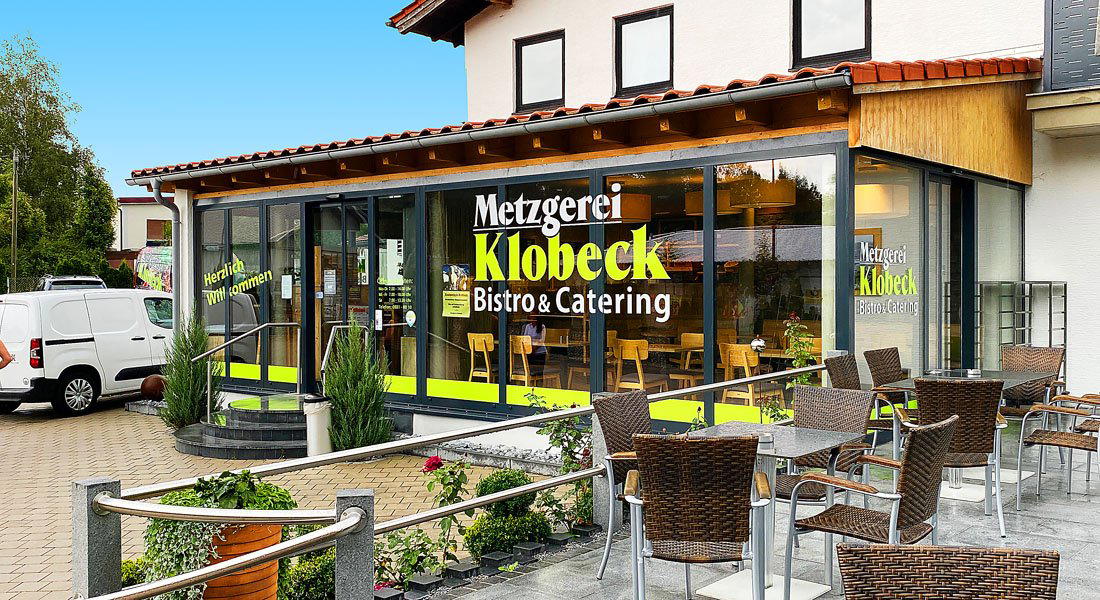
A Market Address With Centuries of Context
Metzgerei Klobeck is a traditional Bavarian butcher shop at Viktualienmarkt 2 in Munich. The square has operated as the city's central provisions market since 1807, and the address at number 2 sits at the edge of that tradition. Metzgerei Klobeck holds a position defined by the market square's original purpose: the sourcing, preparation, and sale of quality meat and charcuterie.
That positioning matters more than it might first appear. Germany's butchery tradition, particularly in Bavaria, carries the same regional specificity that wine appellations do in France. The cuts, the curing methods, the sausage formulations, these are not generic but carry identifiable regional markers. A Metzgerei (butcher shop) at Viktualienmarkt is therefore not simply a retail operation; it is a participant in a conversation about Bavarian food identity that has been running for over two centuries at this specific address.
The Viktualienmarkt Tier: What the Address Signals
Munich's market square has long attracted specialist vendors whose tenure reflects genuine craft standing. The second category is harder to occupy and slower to build. Proximity to the market's established specialty stalls, including long-running cheese, fish, and delicatessen vendors, creates a comparative context that tests quality claims daily. In that environment, reputation accumulates or erodes through repeat local custom rather than through press cycles.
Against Munich's broader dining geography, Klobeck occupies a niche outside the city's fine-dining tier. Where Tohru in der Schreiberei or JAN build menus around creative synthesis and multi-course progression, the butchery format demands a different kind of discipline: consistency at the product level, day over day, without the cover of technique-led transformation. The craft is in the sourcing and processing, not in the finishing.
Bavarian Charcuterie as a Regional Lens
Germany's charcuterie traditions are among the more codified in Europe, with Bavarian regional styles forming a distinct subset. Weisswurst, Leberkäse, and various dried and cured preparations carry specific production conventions tied to this part of southern Germany, conventions that distinguish them from what you would find in Baden-Württemberg or the Rhineland. At the premium end of the Munich butchery trade, these distinctions become meaningful buying signals: the ratio of veal to pork in a Weisswurst, the spice balance in a Leberkäse, the fat-to-lean ratio in a cured preparation each tell a practised buyer something about the producer's orientation.
This is the register in which Viktualienmarkt's established meat and charcuterie vendors compete, not against each other on price, but on product differentiation within a shared regional vocabulary. It is a format that draws parallels to how village producers in Burgundy or the Jura position their offering: the geography anchors the product, and reputation within that geography is the primary value signal.
Pairing Bavarian Charcuterie: The Wine Angle
The wine question around Bavarian charcuterie is more interesting than it first appears. The instinctive pairing in Munich is beer, and for good reason, the city's brewing tradition has evolved alongside its food culture in ways that produce genuine complementarity. But a serious charcuterie purchase from a market butcher opens a different set of pairing possibilities, particularly around German whites.
Franken Silvaner, produced roughly 200 kilometres north of Munich, has a mineral salinity and mid-weight body that works with cured pork in much the same way that Chablis functions alongside charcuterie in France. Mosel Riesling, particularly from the lower alcohol, high-acid Kabinett and Spätlese styles, cuts through fat and amplifies the spice register in preparations like smoked sausage. The pairing logic running through these combinations is acidity as counterpoint to salt and fat, a principle that applies whether the charcuterie in question comes from Bavaria or Alsace.
For context on how Germany's serious wine and food culture intersects at the restaurant level, the country's leading tables, from Aqua in Wolfsburg and Vendôme in Bergisch Gladbach to Victor's Fine Dining by Christian Bau in Perl and Waldhotel Sonnora in Dreis, have all built significant German wine programs around this pairing logic. The broader German fine-dining tier, including Schwarzwaldstube in Baiersbronn, Restaurant Haerlin in Hamburg, Schanz in Piesport, ES:SENZ in Grassau, and Bagatelle in Trier, treats domestic whites as a primary rather than a secondary consideration, a posture that reflects how well the country's wine output maps onto its food traditions.
For comparison at the international level, the structured approach to food-and-wine alignment at Le Bernardin in New York City or Atomix in New York City or CODA Dessert Dining in Berlin demonstrates how seriously the top tier treats pairing as a craft in its own right, a standard that begins, in simpler form, at the level of knowing what to open alongside a well-chosen piece of charcuterie.
Planning a Visit
Viktualienmarkt operates on market hours rather than restaurant hours, which means the practical visit window is weighted toward morning and midday. The square is at its most active before noon on weekday mornings, when the vendor mix is fullest and produce quality is at its peak. Weekend visits bring heavier tourist traffic, which shifts the character of the market considerably.
Munich's old town is accessible by U-Bahn and S-Bahn to Marienplatz, from which Viktualienmarkt is a short walk south.
Know Before You Go
- Address: Viktualienmarkt 2, 80331 München, Germany
- Getting there: U-Bahn / S-Bahn to Marienplatz, then a short walk south to the market square
- Ideal time to visit: Weekday mornings before noon for full vendor range and peak product quality
- Format: Market butcher and charcuterie shop; purchase-and-take or on-site consumption depending on market format
- Hours: Standard Viktualienmarkt trading hours; confirm directly with the market vendor
- Booking: Walk-in format
Compact Comparison
Comparable venues nearby, for context on price, style, and recognition.
| Venue | Cuisine | Price | Notes |
|---|---|---|---|
| Metzgerei KlobeckThis venue — the venue you are viewing | Not listed | $ | Not listed |
| Wurstimbiss Teltschik | Not listed | $ | Altstadt, Traditional Bavarian Sausage Stand |
| Ayinger am Platzl | Altstadt, Bavarian Wirtshaus | $$ | Not listed |
| Klinglwirt | Haidhausen, Organic Bavarian Tavern | $$ | Not listed |
| bodhi | Neuhausen, Vegan Bavarian Comfort Food | $$ | Not listed |
| malzraum | Neuhausen, Bavarian Home-Style | $$ | Not listed |
At a Glance
- Rustic
- Classic
- Casual Hangout
- Solo
- After Work
Current opening hours
- Monday
- 8 AM–7 PM
- Tuesday
- 8 AM–7 PM
- Wednesday
- 8 AM–7 PM
- Thursday
- 8 AM–7 PM
- Friday
- 8 AM–7 PM
- Saturday
- 8 AM–6 PM
- Sunday
- Closed
Hours can change for holidays and private events. Last verified .