A counter-service sausage stand at Viktualienmarkt 3V, Wurstimbiss Teltschik occupies one of Munich's most storied market settings. The stall format places it squarely within the Viktualienmarkt's tradition of open-air, ingredient-led eating, a tradition that predates the city's current fine-dining scene by more than a century. For visitors calibrating between the market's casual registers and Munich's broader restaurant spectrum, it represents a grounded entry point.
Pearl is the En Primeur Club membership app — saves, bookings, and concierge access live there. Same editors, same standards.
- Address
- Viktualienmarkt 3V, 80331 München, Germany
- Phone
- +494989265262
- Directions
- Get directions
 Saves & bookings on Pearl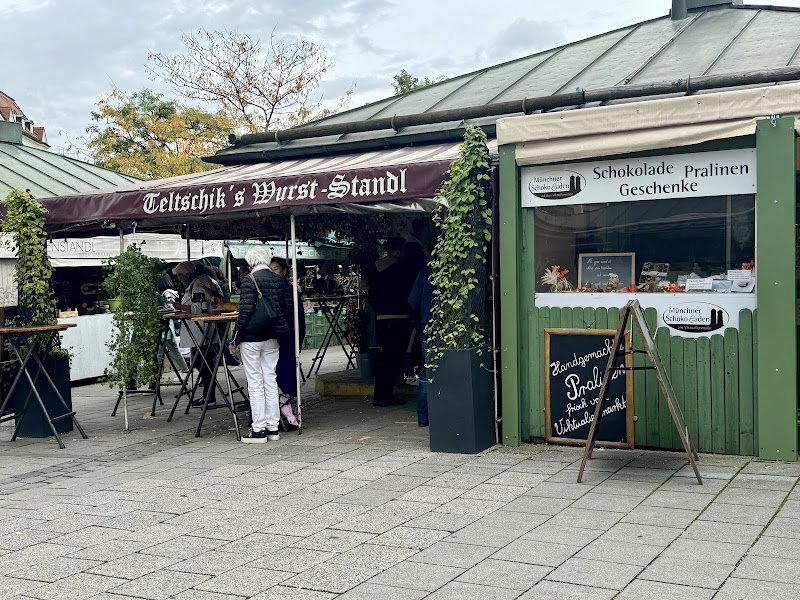
The Market Stall as Eating Tradition
Viktualienmarkt is not simply a food market. It is a historic public market where Munich has sourced, prepared, and consumed food for over two centuries. Established in 1807 under a Napoleonic-era decree that moved produce trading out of the city's central squares, the market has since evolved from a utilitarian provisioning ground into one of Germany's most referenced open-air food destinations. The stalls that line it today occupy a spectrum from artisan cheese and regional butchery to prepared food counters where standing and eating is the format, not a compromise, but the point.
Wurstimbiss Teltschik sits at Viktualienmarkt 3V within that prepared-food register. The Imbiss format, a counter-service stand focused on sausage and fast preparation, is a classic part of Bavarian urban life. At markets like the Viktualienmarkt, these counters have historically functioned as the connective tissue between producers selling raw goods and citizens eating on their feet between errands. Understanding Teltschik means understanding that lineage first.
Sustainability in the Market Setting
The Imbiss format has attracted renewed editorial attention in recent years partly because its structural logic aligns with principles that contemporary dining now actively promotes. Portion-controlled, ingredient-focused, low-waste by design: the sausage stand wastes nothing that a fine-dining kitchen might plate as a composed terrine. Offcuts, secondary cuts, and cased preparations have been the operational grammar of the Wurstimbiss for generations before zero-waste became a restaurant marketing category.
Viktualienmarkt itself reinforces this framing. The market has long maintained a mix of regional and artisan suppliers, butchers, and food producers. For a counter positioned within that ecosystem, proximity to primary producers is structural rather than aspirational. The sausage that arrives at a stand like Teltschik passes through fewer logistics layers than the same protein would in a centrally sourced restaurant supply chain. That compression matters in an era when provenance transparency has become a differentiating criterion across dining categories.
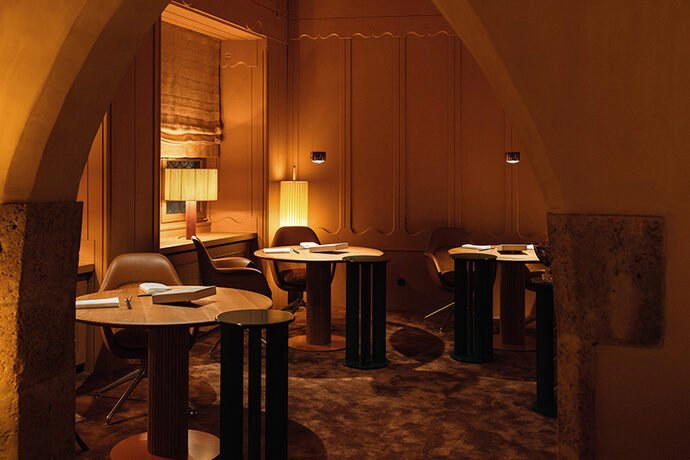
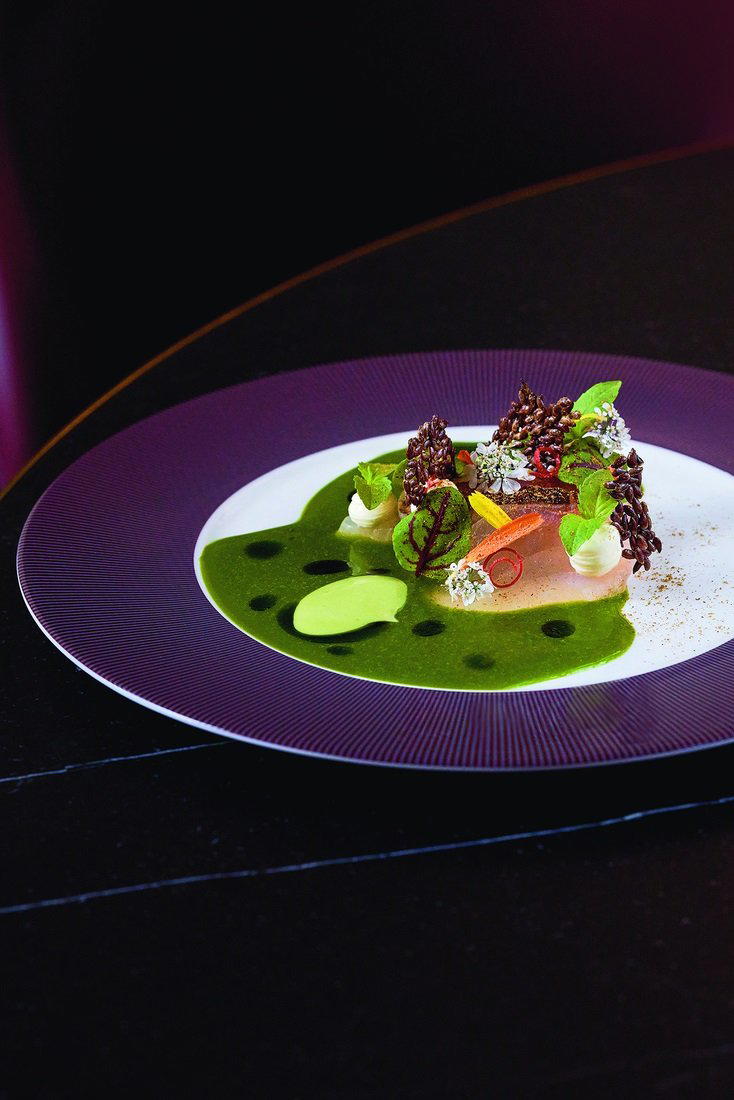
The contrast with Munich's upper dining tier is instructive. Restaurants like Atelier and Alois - Dallmayr Fine Dining operate within creative fine-dining frameworks. The market stall achieves a version of the same outcome through format rather than curation: the supply chain is short because the operation is small, and the menu is narrow because the craft demands focus. Neither approach is superior; they serve different functions in the same city's food system.
Where Teltschik Sits in Munich's Eating Spectrum
Munich's restaurant scene spans considerable range. At the upper end, Michelin-recognised addresses like Tantris and Tohru in der Schreiberei operate multi-course formats with significant price commitments and advance booking requirements. JAN occupies the creative end of the same tier. These are planned experiences requiring advance reservations.
The Viktualienmarkt counter exists at a different coordinate entirely. It is accessible without booking, priced at about $7 per person, and designed for a quick meal. That is not a lesser version of the fine-dining experience, it is a structurally different practice with its own history and its own criteria for quality. For visitors to Munich, the market stand represents Bavarian sausage craft, outdoor eating culture, and market sociability in a single transaction.
Across Germany, this kind of standing-counter institution has produced some of the country's most debated food addresses. The country's wider dining architecture, which includes destinations like Aqua in Wolfsburg, Schwarzwaldstube in Baiersbronn, and Vendôme in Bergisch Gladbach, represents one pole. The Imbiss represents another. Both are German food culture; they simply operate on different frequencies.
Planning Your Visit
Viktualienmarkt operates on market hours, and the stalls within it follow rhythms tied to produce delivery and foot traffic rather than dinner service. Morning and midday are the active windows; late afternoon sees reduced selection at many stands. The market is reachable from Marienplatz U-Bahn and S-Bahn. The address is Viktualienmarkt 3V, 80331 München.
No booking is required. The format is walk-up, order, eat. The crowd is mixed: local workers on lunch breaks, tourists navigating the market, and regulars who have been using the same stand for years. That mix is part of what makes the Viktualienmarkt function as a social document of the city rather than a curated visitor attraction.
Logistics at a Glance
| Venue | Format | Booking | Price Range | Setting |
|---|---|---|---|---|
| Tantris | Tasting menu | Advance reservation | €€€€ | Indoor, formal |
| Atelier | Creative French tasting | Advance reservation | €€€€ | Indoor, formal |
| Alois - Dallmayr Fine Dining | Creative fine dining | Advance reservation | €€€€ | Indoor, formal |
A Pricing-First Comparison
Comparable venues nearby, for context on price, style, and recognition.
| Venue | Cuisine | Price | Notes |
|---|---|---|---|
| Wurstimbiss TeltschikThis venue — the venue you are viewing | Not listed | $ | Not listed |
| S' Maillinger | Not listed | $ | Neuhausen, Traditional Bavarian & Austrian |
| Café Ludwig | Milbertshofen, German Café | $$ | Not listed |
| Schinken-Peter | Au, Traditional Bavarian | $$ | Not listed |
| Metzgerei Klobeck | Not listed | $ | Altstadt, Traditional Bavarian Butcher Shop |
| Wirtshaus Hohenwart | Au, Traditional Bavarian | $$ | Not listed |
At a Glance
- Lively
- Rustic
- Casual Hangout
- Standalone
- Beer Program
- Street Scene
Current opening hours
- Monday
- Closed
- Tuesday
- 10 AM–3 PM
- Wednesday
- 10 AM–3 PM
- Thursday
- Closed
- Friday
- 10 AM–3 PM
- Saturday
- 9 AM–3 PM
- Sunday
- Closed
Hours can change for holidays and private events. Last verified .
Bustling open-air market atmosphere with quick-service counter amid market stalls and crowds.