
Menya Takei Honten puts Kyoto ramen value in sharp focus: a compact Joyo shop built around tsukemen and ramen rather than temple-district polish. Its repeated Tabelog Ramen WEST 100 selections from 2017 through 2025 give it a clear credential in a category where serious cooking often remains casual, cash-minded, and queue-driven.
Pearl is the En Primeur Club membership app — saves, bookings, and concierge access live there. Same editors, same standards.
- Address
- 京都府城陽市観音堂甲田48-2
- Phone
- +81774550900
- Website
- menya-takei.com
 Saves & bookings on Pearl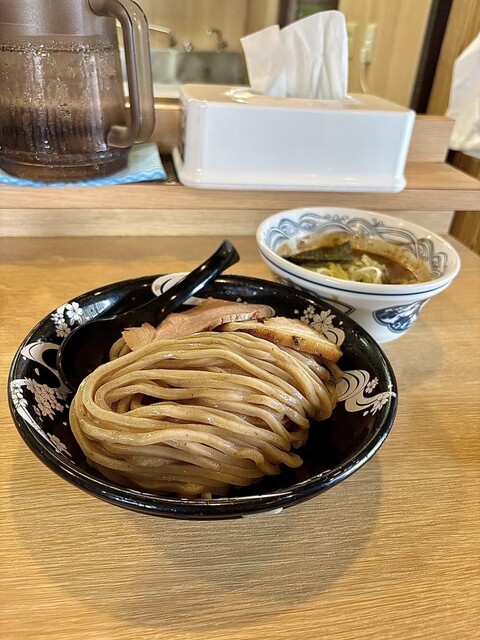
Approaching the house-style shop in Joyo, the signal is ramen pragmatism, not Kyoto theatre: a waiting tent, ticket machine, five-seat counter, and raised-platform tables. The setup says more about Kansai noodle culture than decoration. Serious ramen around Kyoto often rewards diners who leave the central sightseeing corridor for fewer comforts, tighter capacity, and sharper value.
Menya Takei Honten fits that equation. Listed for tsukemen and ramen, its Tabelog Ramen WEST 100 place across successive years from 2017 to 2025 gives it durable recognition in a fast-moving field. This is not a tasting-menu commitment or reservation-led evening, but a focused noodle stop where spending stays everyday and the trade-off is time, movement, and tolerance for a compact room.
Kyoto ramen value sits outside the postcard districts
Kyoto dining is often judged through kaiseki, wagashi, tea, and counter sushi, but ramen has its own map beyond Gion and Kawaramachi. Joyo, south of central Kyoto, shifts the frame from visitor convenience to local repetition. A shop here competes less on atmosphere than on whether the bowl justifies the trip, especially when nearby alternatives such as Ore no Ramen Appare Ya sit in a similar low-price ramen bracket, while Seikou Udoku occupies an even leaner casual-noodle tier.
Value in Japanese ramen is rarely just the ticket price. It is specialization, turnover, noodle quality, and whether the format feels disciplined rather than generic. The shift from thick noodles associated with Shin no Aji Shokuhin and Chinese Soba Tomita to homemade whole-wheat noodles is the production detail that separates a destination ramen counter from a standard local lunch room. It also frames the owner’s training at the Chinese Soba Tomita chain not as biography, but as lineage in a tsukemen tradition where noodle texture matters.
Within Kyoto’s casual dining field, the comparison is useful. Nakamura Tokichi Honten Uji honten sits in another register, with Uji tea culture and higher dinner spend, while Mogu Mogu Bakery represents the city’s sub-¥1,000 everyday rhythm. Menya Takei Honten sits between them: more specialized than a grab-and-go bakery, less ceremonial than a tea institution, with craft concentrated into a short service window.
Tsukemen discipline, not dining-room ceremony
Tsukemen changes the pace of ramen. Instead of a bowl meant to be eaten before noodles soften, dipping noodles put chew, temperature, and broth concentration at the center. Kyoto ramen includes shoyu, chicken-paitan, pork-based, and hybrid styles, but tsukemen asks a narrower question: can the noodles hold attention before each dip into the sauce? A small counter-and-tatami room suits that question, keeping focus on rhythm rather than ceremony.
The shop’s Tabelog score of 3.64 and repeated Ramen WEST 100 selections place it in consistent regional recognition, not luxury dining. That helps travellers calibrate expectations. This is not the same decision as booking a polished modern Kyoto table such as 3TOKU6MI Shijo karasuma ten, a French-leaning address like Abbesses, or a concept-driven room such as [ki:]. It is closer to a dedicated stop, as Kyoto visitors might treat Aburi Mochi Honke Nemoto Kazariya for a specific local tradition or 551蓬莱 for a fast regional craving.
The room also tells diners what not to expect. Private rooms and private use are not part of the format, and the seating mix suits solo diners, friends, and families rather than formal occasions. Children are welcomed, more meaningful here than in many luxury settings because raised-platform tables broaden use beyond counter-only ramen. Non-smoking status also helps mixed groups.
The trade-off is access, not expense
Menya Takei Honten’s strongest argument is the imbalance between recognition and spend. A ramen shop repeatedly selected for a regional Tabelog 100 list while staying in a low everyday budget band offers a different Kyoto reward from reservation-heavy counters. The cost is not financial escalation; it is logistics. The shop sits outside the usual hotel-and-temple circuit, reservations are unavailable, and the ticket system means quick decisions once inside.
That makes it better for travellers building a day around southern Kyoto, Uji, or JR Nara Line movement than for anyone squeezing lunch between central temple visits. The parking allocation, with spaces in front and a second lot nearby, also signals a local customer base arriving by car. In Kyoto, that is a meaningful clue: central dining often assumes walking, taxis, or short subway hops, while outer-area ramen rewards treating the meal as a small excursion.
For planning, use Our full Kyoto restaurants guide to separate central polished dining from outer-neighbourhood specialists. Travellers building a larger itinerary can pair it with Our full Kyoto hotels guide, Our full Kyoto bars guide, Our full Kyoto wineries guide, and Our full Kyoto experiences guide. For contrast beyond Kyoto, the Japanese casual-dining spectrum runs from -Grilled beef Sukiyaki- KAMAKURA TANUKIAN 鎌倉 たぬき庵 in Kamakura to. 鮪と炭火焼き うお炭 秋葉原店 in Tokyo.cafe in Osaka.know in Kumamoto, (Shoku) Vietnam in Kawasaki, and [Curry Senmon Ten] Maruyama Kyoju. in Sapporo. The international edges of the same casual-specialist conversation appear at Jōdo Saké Bar in Los Angeles and Onigiri Time in Pasadena.
The verdict: this is a value-led ramen detour for diners who care about regional recognition, noodle specialization, and direct format more than central convenience. Kyoto has grander rooms and elaborate rituals, but this kind of shop shows why Japan’s everyday dining categories can carry serious critical weight without becoming expensive.
A Credentials Check
Comparable venues by cuisine and price in the same metro.
| Venue | Cuisine | Price | Notes |
|---|---|---|---|
| Menya Takei HontenThis venue — the venue you are viewing | Japanese Tsukemen / Ramen | $ | Not listed |
| Okonomiyaki Yoshino | Traditional Okonomiyaki & Teppanyaki | $ | Higashiyama |
| Amaguri no Shinise Hayashi Mansho Do Honten | Traditional Japanese chestnut sweets & cafe | $ | Nakagyō |
| Chuka Soba Takayasu | Kyoto tonkotsu ramen shop | $ | Sakyō |
| Keihan Uji Ekimae Surugaya | Japanese Sweets / Matcha Confectionery | $ | Uji |
| Daigokuden Honpo Rokkaku ten | Japanese Sweets Cafe | $ | Nakagyō |
Recognition history
Dated appearances from independent guides and award organizations, with the underlying list record or original source where available.
Tabelog 100 #77 · No. 77
Tabelog · Tabelog 100 - Ramen - WEST - 2025
Continue exploring
More in Kyoto
Restaurants in Kyoto
Browse all →
Bars in Kyoto
Browse all →
Hotels in Kyoto
Browse all →
Wineries in Kyoto
Browse all →
At a Glance
- Cozy
- Classic
- Solo
- Casual Hangout
- Group Dining
- Late Night
- Standalone
- Beer Program
Casual, bustling ramen-shop atmosphere focused on quick, satisfying bowls rather than a formal dining setting.