
A Kyoto Kawaramachi sweets counter focused on amaguri, the roasted chestnut tradition that sits apart from temple-side wagashi and café dessert culture. Recognition in Tabelog’s 2023 Japanese traditional sweets and sweets café WEST 100 places it within a selective regional conversation, while the take-out format keeps the experience compact, urban, and rooted in everyday Kyoto shopping rhythms.
Pearl is the En Primeur Club membership app — saves, bookings, and concierge access live there. Same editors, same standards.
- Address
- Japan, 〒600-8003 Kyoto, Shimogyo Ward, Otabimiyamotocho, 3番地
- Phone
- +81 75-221-0258
- Website
- hayashi-mansyodo.jp
 Saves & bookings on Pearl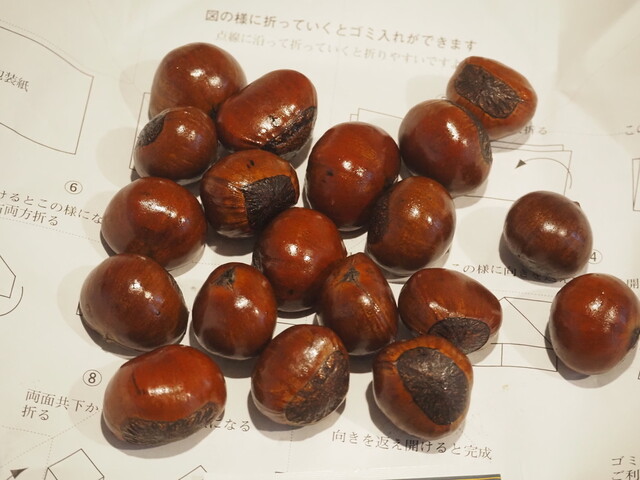
Shijo-dori shows how Kyoto eats between appointments: department-store basements, tea houses, and small sweets counters for people moving through Kawaramachi with no plan to sit down. Here, roasted chestnuts read differently from formal wagashi. Portable, seasonally minded even beyond autumn, and tied to the street rather than the tearoom, Amaguri no Shinise Hayashi Mansho Do Honten belongs to an older Kyoto register: a shop built not for a long meal, but for a narrow craft judged quickly by aroma, texture, and consistency.
That brevity matters. Kyoto’s sweet culture can feel ceremonious to outsiders when framed only through matcha service, temple approaches, or kaiseki endings, but its everyday confectionery economy is broader and practical. Chestnuts, mochi, bean sweets, café cakes, and souvenir boxes compete for the same short attention span around transport hubs and shopping streets. Recognition in Tabelog’s 2023 Japanese traditional sweets and sweets café WEST 100 places this shop in a regional list about repeatable craft, not luxury dining, in a category where small flaws are obvious.
Roasted chestnuts occupy Kyoto's street-sweets lane, not its dessert-menu lane
Amaguri, sweet roasted chestnuts, occupy a distinct place in Japanese confectionery. They lack plated dessert’s drama and formal wagashi’s seasonal symbolism, yet reward precision immediately. Shelling, heat, and handling must preserve natural sweetness without dryness or heaviness. The category is unforgiving: no elaborate plating, sauce, or tea pairing can distract from the core product.
In Kyoto, that distinction helps. A visitor can spend heavily on counter sushi or kaiseki and miss the smaller food rituals that define the city between meals. Sweets shops such as Aburi Mochi Honke Nemoto Kazariya show one side of the tradition, shrine-adjacent and ritualized; a Kawaramachi chestnut shop shows another, commercial, compact, and built for takeaway. Neither needs to behave like a restaurant to carry culinary weight.
The Tabelog 100 selection is useful because it frames the shop among Japanese traditional sweets and sweets café addresses across western Japan, not Kyoto restaurants generally. That keeps expectations honest. This is not the same choice as a tasting-menu room, ramen counter, or hotel dining room. The relevant comparison is a smaller class of specialists where narrow focus is the argument.
Recognition means more in a category where the format stays deliberately small
Critical attention often favors expensive rooms because they supply narrative: chef, cellar, counter, service choreography. Sweets specialists have less theatre to hide behind. A listing in Tabelog’s 2023 WEST 100 for Japanese traditional sweets and sweets cafés signals consistency in a field often bought quickly and judged without ceremony. It also places the shop outside Kyoto dining’s usual tourist hierarchy, where prestige is too often measured by reservation pressure alone.
That makes the reputation more interesting. Kyoto Kawaramachi has a dense food circuit: quick snacks, department-store gifts, coffee stops, izakaya, and destination dining overlap within a short radius. At the casual end, places such as 551蓬莱 serve the city’s appetite for portable, high-turnover food. At another register, 3TOKU6MI Shijo karasuma ten, [ki:], and Abbesses show the area’s broader restaurant spread. A chestnut specialist occupies neither lane. Its appeal is the single-purpose stop before a train, after shopping, or between larger meals.
Comparison venues around Kyoto underline the point. koe donuts Kyoto ten sits in a higher casual sweets spend band, while Mendokoro Janomeya belongs to ramen; Matsumoto and Yanagikoji TAKA move into more substantial dining budgets. Against those formats, Amaguri no Shinise Hayashi Mansho Do Honten is a precision snack address, not a substitute for lunch or dinner. The value is not breadth, but the confidence to remain narrow.
How to fit it into a serious Kyoto food day
For travellers building a Kyoto itinerary, treat this as punctuation rather than centrepiece. Kawaramachi and Shijo reward grazing, and a chestnut stop works especially well between formal bookings or museum-and-shopping time. The area also keeps a visitor close to other food styles, useful in a city where reservations, queues, and weather can quickly reshape a day.
That practical role does not make the shop minor. Kyoto’s food culture is often misunderstood when only its ceremonial side is photographed. Its sweets tradition also lives in counters, wrappers, gift boxes, and short storefront exchanges. Take-out specialists preserve that rhythm in a way a dining room cannot. The absence of a long seated format is the point: the product must make its case immediately.
Readers planning Kyoto can use Our full Kyoto restaurants guide for the wider dining map, then add category-specific stops rather than stacking only formal meals. The surrounding trip may also call for Our full Kyoto hotels guide, Our full Kyoto bars guide, Our full Kyoto wineries guide, and Our full Kyoto experiences guide. For broader Japan context beyond Kyoto, compare compact specialist formats across cities, from -Grilled beef Sukiyaki- KAMAKURA TANUKIAN 鎌倉 たぬき庵 in Kamakura and. 鮪と炭火焼き うお炭 秋葉原店 in Tokyo to.cafe in Osaka,.know in Kumamoto, (Shoku) Vietnam in Kawasaki, and [Curry Senmon Ten] Maruyama Kyoju. in Sapporo. Even outside Japan, focused casual formats carry across places such as Jōdo Saké Bar in Los Angeles and Onigiri Time in Pasadena.
The editorial case is simple: Kyoto’s serious eating does not begin and end at reserved counters. A small chestnut shop with regional sweets recognition offers different evidence, less theatrical but no less revealing. In a neighbourhood built on movement, the takeaway format feels exactly right.
Budget and Context
Comparable venues at the same tier for side-by-side context.
| Venue | Cuisine | Price | Awards | Notes |
|---|---|---|---|---|
| Amaguri no Shinise Hayashi Mansho Do HontenThis venue — the venue you are viewing | $ | , | ||
| Yamamoto Mambo | $ | , | Shimogyō, Kyoto-style okonomiyaki & teppanyaki | |
| Housen Dou Honten | $ | , | Sakyō, Japanese Sweets / Wagashi | |
| Men Dokoro Toritani | Ukyō, Kyoto chicken ramen | $ | , | |
| Ramen Jiro Kyoto ten | Sakyō, Jiro-style ramen | $ | , | |
| Sukesama (ぎょうざ処 亮昌) | Gion, Kyoto Gyoza Specialist | $ | , |
Continue exploring
More in Kyoto
Restaurants in Kyoto
Browse all →

Bars in Kyoto
Browse all →

Hotels in Kyoto
Browse all →
Wineries in Kyoto
Browse all →
At a Glance
- Classic
- Iconic
- Solo
- Family
- Casual Hangout
- After Work
- Historic Building
- Standalone
- Street Scene
Bright, casual storefront along busy Shijo-dori with a traditional long-established wagashi shop feel; more of a bustling takeout-oriented sweets shop than a sit-down cafe, with simple indoor counter seats and constant foot traffic.