
Tokyo ramen at this level is a study in compression: tight rooms, fast sequencing, and bowls judged on broth clarity, noodle timing, and repeatable discipline. Menya Sho Honten belongs to that serious Shinjuku tier, with counter-only seating, sub-¥1,000 listed pricing, and repeated selection for Tabelog’s Ramen TOKYO 100 from 2017 through 2025.
Pearl is the En Primeur Club membership app — saves, bookings, and concierge access live there. Same editors, same standards.
- Address
- Japan, 〒160-0023 Tokyo, Shinjuku City, Nishishinjuku, 7 Chome−22−34 新宿東海ビル 101A
- Phone
- +81 3-3364-5787
- Website
- menya-sho.co.jp
 Saves & bookings on Pearl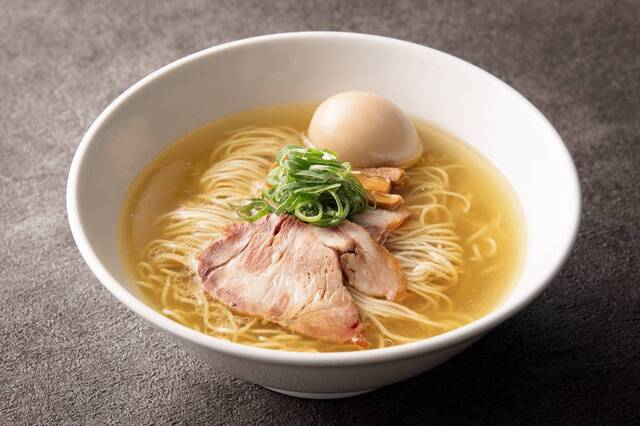
West of Shinjuku’s main rail crush, Nishi-Shinjuku shifts from department-store spectacle to narrower restaurant streets, office blocks, and compact counters built for efficient eating. Menya Sho Honten fits that rhythm: an 18-seat, counter-only ramen room where the meal is measured less by ceremony than by sequence, pace, and concentration. Tokyo ramen does not need linen, long menus, or theatrical plating to signal seriousness. In this category, reputation is built by how consistently a shop moves from ticket to seat to bowl without losing focus.
That matters in Shinjuku, where ramen sits beside curry shops, izakaya, yakiniku rooms, and late-night drinking routes competing for the same commuter traffic. A sub-¥1,000 listed price places Menya Sho Honten in the democratic end of Tokyo dining, but its repeated Tabelog Ramen TOKYO 100 selections from 2017 through 2025 put it in a more scrutinised bracket than the price suggests. The gap between casual cost and serious evaluation is exactly why ramen remains one of Tokyo’s sharpest dining formats.
Chicken-led ramen in a city of narrow specialisms
Tokyo’s ramen culture rewards specialisation. Some shops build identity around niboshi, others around pork, miso, spice, or regional quotation. Menya Sho Honten’s public positioning is chicken flavour, a useful marker in a city where broth style often determines the entire meal before the first order is placed. The point is not variety for its own sake. The point is a controlled arc: broth first, noodle texture second, toppings as punctuation rather than distraction.
That progression is why counter ramen can feel closer to a short tasting menu than to a quick snack. The opening impression comes from the broth, then the noodles test timing and temperature, and the final third of the bowl reveals whether the seasoning remains balanced as richness accumulates. In Tokyo’s serious ramen rooms, the bowl has to hold attention across that entire span. A shop selected repeatedly for Tabelog’s Ramen TOKYO 100 is being judged in that context, not simply as a convenient place near a station.
The restaurant’s score of 3.77 on Tabelog gives another signal, though Japanese review culture should be read differently from Western star aggregation. Scores above the mid-threes can indicate heavy local approval in competitive categories, especially ramen, where high-volume scrutiny and repeat custom shape reputation. In practical terms, the recognition places the shop within Tokyo’s specialist ramen conversation rather than the broad tourist-dining circuit.
Shinjuku's value equation: speed, seats, and serious bowls
Shinjuku is not one dining district; it is several overlapping systems. East-side nightlife, department-store dining floors, station-adjacent chains, and Nishi-Shinjuku’s office-fed counters all produce different expectations. The restaurant sits in the latter register, where the room has to work for solo diners, small groups, and regulars who value precision over lingering. Counter-only seating reinforces the format: there is little buffer between kitchen pace and guest experience.
Compared with nearby casual options such as FISH Shinjuku ten or Spicy Curry House Hangetsu, the appeal is narrower and more technical. Curry and broader casual dining give diners more elasticity; ramen asks for commitment to a single bowl and a shorter dwell time. Compared with Ramen Nagi, another Tokyo ramen reference point in the comparison set, the restaurant reads through a different broth identity, with chicken rather than a broader ramen-house framing doing the work.
The sub-¥1,000 listed price is not a signal of low ambition. In Tokyo, ramen has long carried a demanding value contract: a specialist kitchen, fast turnover, and a complete meal at a price that remains accessible by local standards. That contract is harder to maintain when a shop accrues awards attention. The better reading is to see the restaurant as part of the city’s high-discipline low-ticket tradition, where the seriousness sits in repetition rather than luxury cues.
Readers building a wider Tokyo food itinerary can place this meal as the compact, technical counter stop between longer formats. For broader planning, use Our full Tokyo restaurants guide, then calibrate the day around neighbourhood density rather than chasing isolated addresses. Shinjuku pairs easily with other casual and specialist stops, including 12/10 Shinjuku ten and 2D Cafe, while other Tokyo entries such as . 鮪と炭火焼き うお炭 秋葉原店, 124. KAGURAZAKA (Yakitori), and 3 Chome no Curry Ya San show how quickly the city changes register by district and format.
Know Before You Go
- Format: Ramen, with 18 counter seats and no private rooms.
- Recognition: Selected for Tabelog Ramen TOKYO 100 in 2025, with selection history listed back to 2017.
- Price signal: Listed average price is under JPY 999; review-based spending is listed at JPY 1,000 to JPY 1,999.
- Reservations: Reservations are unavailable, so timing matters more than advance planning.
- Access: The address is in Nishi-Shinjuku, with Seibu Shinjuku identified as the nearest station and JR Shinjuku West Exit listed as a nine-minute walk.
- Payment: Credit cards, electronic money, and QR code payments are listed as not accepted.
- House rules: Non-smoking, children welcome, parking unavailable.
For travellers mapping the wider trip, Tokyo’s dining scene connects cleanly with other EP Club city rails: Our full Tokyo hotels guide, Our full Tokyo bars guide, Our full Tokyo wineries guide, and Our full Tokyo experiences guide. Outside Tokyo, the same casual-specialist thread runs through -Grilled beef Sukiyaki- KAMAKURA TANUKIAN 鎌倉 たぬき庵 in Kamakura.cafe in Osaka.know in Kumamoto, (Shoku) Vietnam in Kawasaki, [Curry Senmon Ten] Maruyama Kyoju. in Sapporo, [ki:] in Kyoto, Jōdo Saké Bar in Los Angeles, and Onigiri Time in Pasadena.
A Tight Comparison
Comparable venues for orientation by cuisine and category.
| Venue | Cuisine | Price | Notes |
|---|---|---|---|
| Menya Sho HontenThis venue — the venue you are viewing | Shinjuku, Chicken shio ramen shop | $ | Not listed |
| Tempura Takashichi | Shinjuku, Traditional Tempura | $ | Not listed |
| Katei Saien Sasaki | Not listed | $ | Shinjuku, Japanese home-style fish teishoku cafeteria |
| UCHOUTEN | Not listed | $ | Toshima, Yoshoku (Japanese-style Western) hamburger steak |
| Murghee | Shibuya, Classic Japanese curry house | $ | Not listed |
| Miyabi An | Not listed | $ | Meguro, Traditional Japanese Wagashi Shop |
Recognition history
Dated appearances from independent guides and award organizations, with the underlying list record or original source where available.
Tabelog 100 #73 · No. 73
Tabelog · Tabelog 100 - Ramen - TOKYO - 2025










At a Glance
- Lively
- Cozy
- Well Known
- Solo
- After Work
- Casual Hangout
- Late Night
- Chefs Counter
- Standalone
Current opening hours
- Monday
- 11 AM–3 PM, 6–10 PM
- Tuesday
- 11 AM–3 PM, 6–10 PM
- Wednesday
- 11 AM–3 PM, 6–10 PM
- Thursday
- 11 AM–3 PM, 6–10 PM
- Friday
- 11 AM–3 PM, 6–10 PM
- Saturday
- 11 AM–3 PM, 5–10 PM
- Sunday
- 11 AM–3 PM, 5–9 PM
Hours can change for holidays and private events. Last verified .
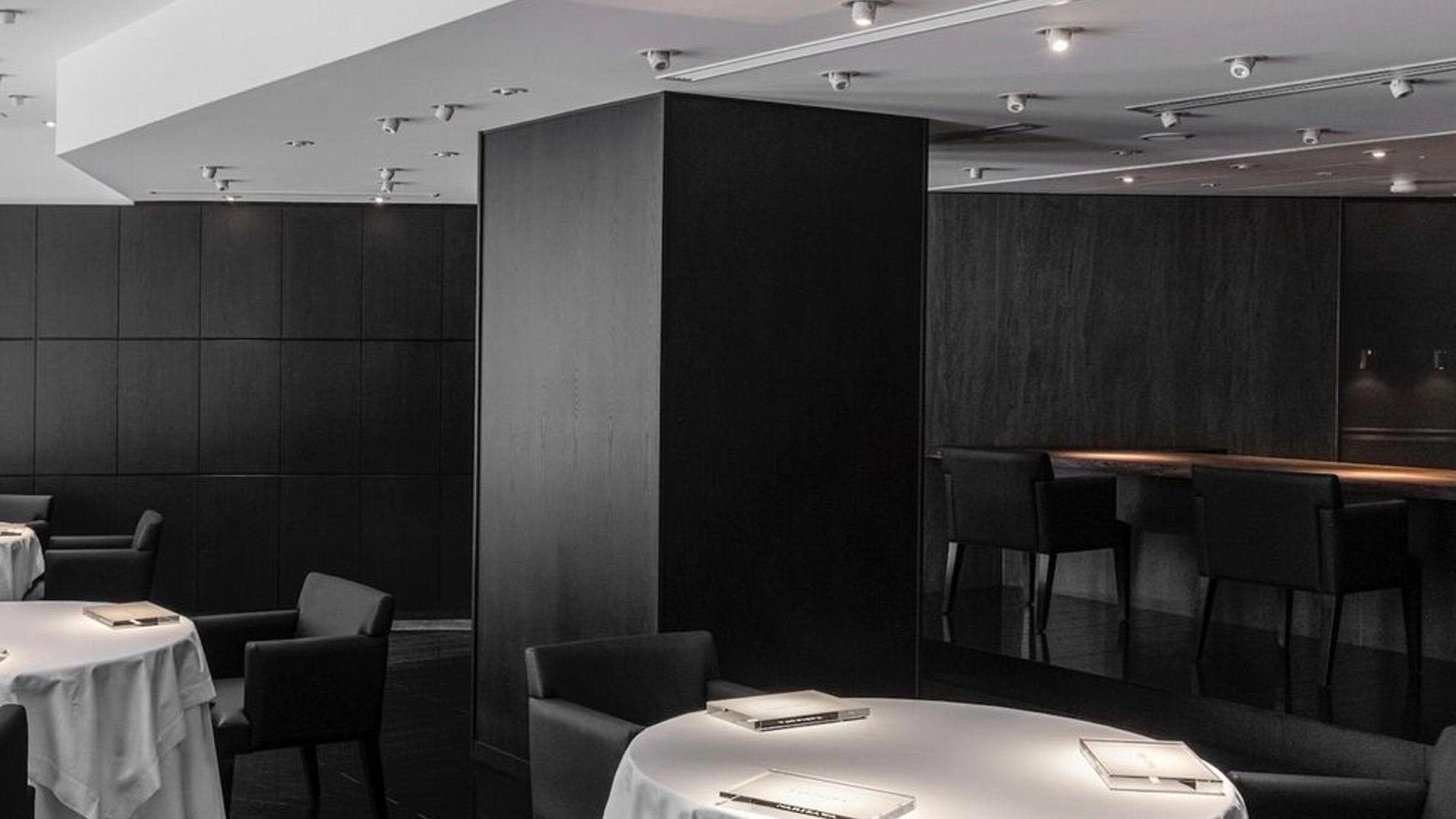
Tight, counter-focused ramen shop with a casual and energetic atmosphere, simple decor, and the sounds and aromas of ramen being prepared right in front of guests.