
Miyabi An belongs to Tokyo’s quieter wagashi circuit, where daytime sweets buying carries more cultural weight than a long evening meal. Its selection for Tabelog’s Japanese traditional sweets and sweets-cafe 100 list in Tokyo for 2023 places it among a serious specialist group, while its take-out format makes it better read as a planned daytime stop than a conventional restaurant booking.
Pearl is the En Primeur Club membership app — saves, bookings, and concierge access live there. Same editors, same standards.
- Address
- 1 Chome-13-4 Higashiyama, Meguro City, Tokyo 153-0043, Japan
- Phone
- +81 3-3793-1769
- Website
- wagashi-miyabian.com
 Saves & bookings on Pearl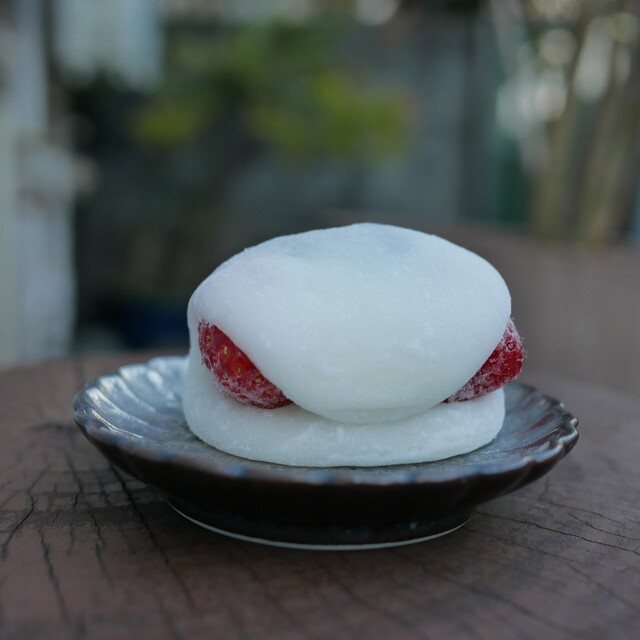
Higashiyama, on the Meguro side of the city’s café-and-boutique belt, changes pace by the hour. Morning and early afternoon bring the practical rhythm of errands, station walks, school runs, and small purchases; after dark, the area tilts toward restaurants and drinking rooms. Wagashi belongs firmly to the first register. The appeal is not a long table or a chef’s counter but the discipline of a small sweets specialist, where the decision is made at the case, the purchase travels with the customer, and the occasion often happens elsewhere.
That matters for understanding Miyabi An. Tokyo’s dessert culture is split between several economies: hotel patisserie, convenience-store seasonality, café spectacle, and wagashi shops whose work is tied to tea, gifting, and the calendar. This address sits in the last category. Its recognition on Tabelog’s 2023 Tokyo selection for Japanese traditional sweets and sweets cafés gives it a credible place in a field where reputation is built less through tasting menus than through repeat local use, presentation, and consistency across small purchases.
Wagashi as a daytime purchase, not an evening performance
The lunch-versus-dinner divide is unusually clear here because the format is not organized around dinner at all. In Tokyo, many high-end food experiences become theatrical after sunset: sushi counters, yakitori sequences, kappo rooms, cocktail bars. Wagashi works differently. It is a daytime ritual, often aligned with tea, host gifts, family visits, or a quiet pause between errands. The value is measured in precision and timing rather than duration.
That gives the shop a different kind of usefulness for travelers. A sweets stop in Meguro can sit between a neighborhood walk and a later reservation, especially for readers using Our full Tokyo restaurants guide to structure the day around more formal meals. It also helps separate Tokyo’s sweets culture from the city’s café-photo economy. Compare the graphic novelty of 2D Cafe with a traditional wagashi specialist and the distinction is plain: one trades on visual play, the other on a craft category with older rules and a more domestic tempo.
Lunch hours, in this context, do not mean a set meal; they mean availability, freshness, and the chance to fold a small purchase into the day before dinner claims the schedule. Evening-led travelers miss part of Tokyo if every plan starts at a counter seat. The city’s daytime food culture includes curry shops such as 3 Chome no Curry Ya San, coffee-led spaces, bakeries, depachika counters, and wagashi shops. Miyabi An belongs to that daytime map, not the late-service circuit.
Meguro's quieter food geography rewards small specialists
Naka-Meguro and Higashiyama sit close to polished dining but are not interchangeable with Ginza, Akasaka, or Shibuya. The area rewards smaller stops and mixed itineraries: a sweets purchase, a coffee break, a walk along the river, then a more formal table elsewhere. Nearby comparison venues underline the range. Higashiyama Muku operates in a Japanese dining lane with a higher spend profile, while STARBUCKS RESERVE ROASTERY TOKYO represents the large-format café spectacle that has become part of the neighborhood’s visitor circuit. A traditional sweets shop answers a different question: what does Tokyo taste like when the occasion is modest, local, and daytime?
The Tabelog 100 recognition is useful because wagashi is difficult for visitors to rank by instinct. A sushi counter signals itself through price, scarcity, and chef lineage; a sweets shop may look almost too modest to telegraph seriousness. Selection in a Tokyo-wide Japanese traditional sweets and sweets-cafe category functions as a sorting signal. It does not turn the visit into a ceremony. It tells the reader that this is a specialist address within a city that has deep competition in the category.
For a broader eating day, the contrast can be productive. Pairing a wagashi stop with later grill, sushi, or yakitori plans keeps the palate from being trapped in one register. Tokyo’s dining range covers casual seafood such as . 鮪と炭火焼き うお炭 秋葉原店, structured izakaya-style nights like 12/10 Shinjuku ten, and skewered cooking at 124. KAGURAZAKA (Yakitori). Wagashi works because it does not compete with those meals. It occupies the space before them.
How to place it in a Tokyo itinerary
The practical reading is simple: treat this as a sweets-focused daytime stop in Meguro rather than a full restaurant occasion. Its take-out orientation favors planning around movement through the neighborhood, and the format suits solo travelers, couples, and families better than groups seeking a seated meal. The category also has seasonal logic. Japanese confectionery is closely tied to the calendar, from spring’s floral mood to autumn’s chestnut and sweet-potato associations, though individual items should be checked at the counter rather than assumed in advance.
Tokyo visitors often overbuild dinner and underplan the hours before it. That is where addresses like this earn their place. A morning or afternoon in Meguro can connect naturally to hotel returns, bar plans, or a later table elsewhere. Readers building a full trip can cross-reference Our full Tokyo hotels guide, Our full Tokyo bars guide, Our full Tokyo wineries guide, and Our full Tokyo experiences guide to keep the day balanced rather than dinner-heavy.
There is also a national context. Japan’s casual and specialist food culture travels across cities without becoming uniform: compare a Kamakura meal at -Grilled beef Sukiyaki- KAMAKURA TANUKIAN 鎌倉 たぬき庵 in Kamakura, café culture at.cafe in Osaka, regional dining at.know in Kumamoto, Vietnamese cooking at (Shoku) Vietnam in Kawasaki, curry in Hokkaido through [Curry Senmon Ten] Maruyama Kyoju. in Sapporo, and Kyoto’s contemporary small-format dining at [ki:] in Kyoto. Even outside Japan, the appeal of compact Japanese formats appears at Jōdo Saké Bar in Los Angeles and Onigiri Time in Pasadena. Miyabi An is part of that wider lesson: the small purchase can carry as much cultural information as the long reservation.
- 季節の生菓子
- 麩まんじゅう
- わらび餅
- 豆大福
- どら焼き
- 本生塩羊羹
Same-City Peers
Comparable venues to calibrate price, style, and recognition.
| Venue | Cuisine | Price | Notes |
|---|---|---|---|
| Miyabi AnThis venue — the venue you are viewing | Traditional Japanese Wagashi Shop | $ | Not listed |
| Meguro Hiiragi Himonya kouen doori ten | Taiyaki & Japanese Wagashi Shop | $ | Meguro |
| Grill F | Classic Yoshoku (Japanese Western-style) Grill | $ | Shinagawa |
| FISH Shinjuku ten | Japanese curry house | $ | Shinjuku |
| Mitsuru Akebonobashi honten | Japanese neighborhood bakery | $ | Shinjuku |
| Heckeln | Classic Japanese kissaten & pudding café | $ | Minato |
Recognition history
Dated appearances from independent guides and award organizations, with the underlying list record or original source where available.
Tabelog 100 #59 · No. 59
Tabelog · Tabelog 100 - Japanese traditional sweets / Japanese sweets cafe - TOKYO - 2023














At a Glance
- Classic
- Cozy
- Casual Hangout
- Family
- Solo
- After Work
- Standalone
- Local Sourcing
Current opening hours
- Monday
- 10 AM–6 PM
- Tuesday
- Closed
- Wednesday
- Closed
- Thursday
- 10 AM–6 PM
- Friday
- 10 AM–6 PM
- Saturday
- 10 AM–6 PM
- Sunday
- 10 AM–5 PM
Hours can change for holidays and private events. Last verified .
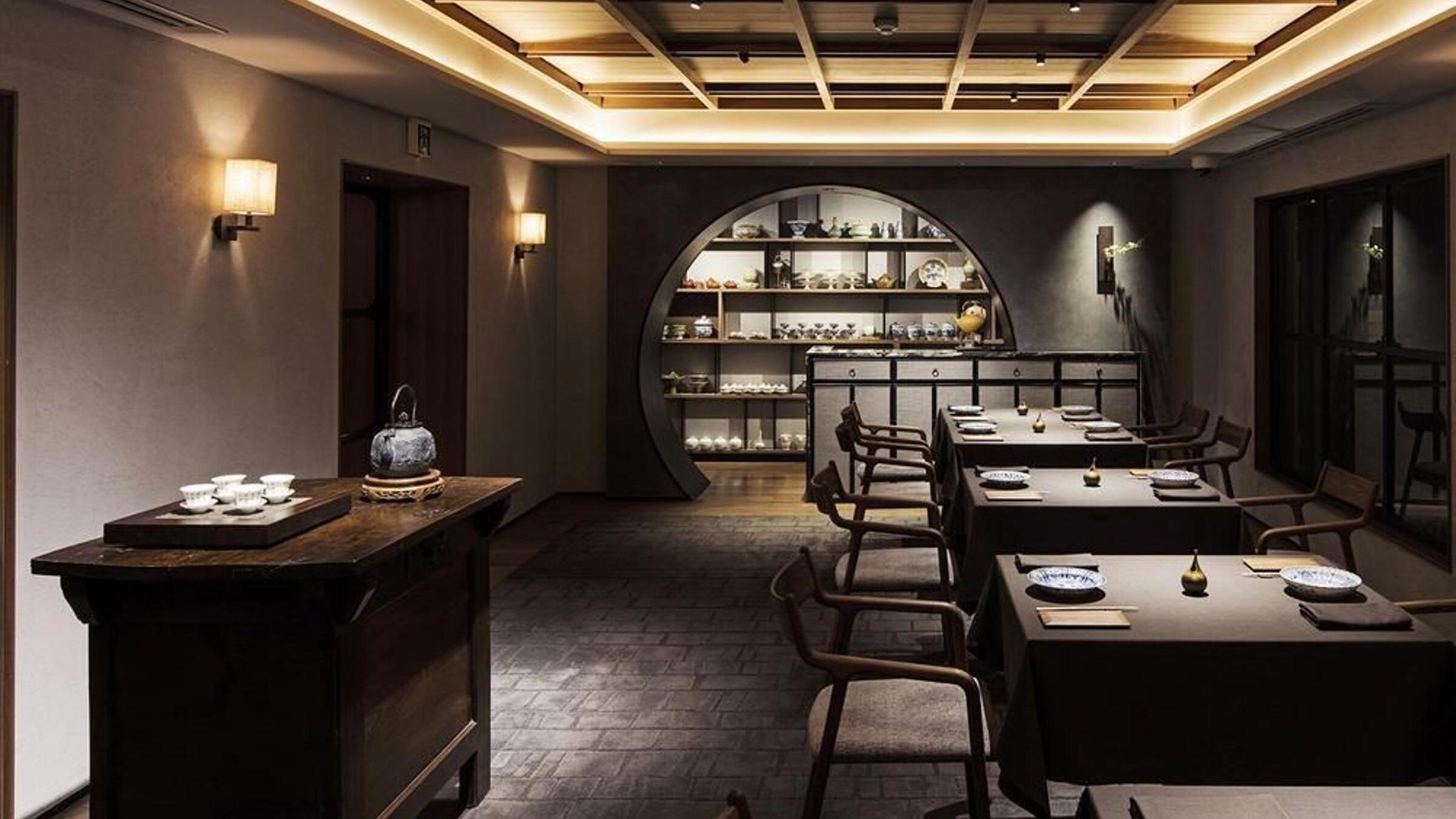
A small, classic Japanese wagashi shop with a calm neighborhood feel; display cases of confections, natural daylight, and a quiet, low-key atmosphere focused on takeout rather than lingering.