Our verdict
Marusho Gyoza is an Osaka gyoza specialist operating in a city that treats its street-level eating culture as seriously as its Michelin-rated dining rooms. For visitors charting a course through Osaka's broader food scene, it represents the neighbourhood-counter end of the spectrum: casual in format, focused in execution, and rooted in the kind of daily-ritual dining that defines how the city actually eats.

Pearl is the En Primeur Club membership app, where members save venues, book tables and use the concierge.
The menu
What to order
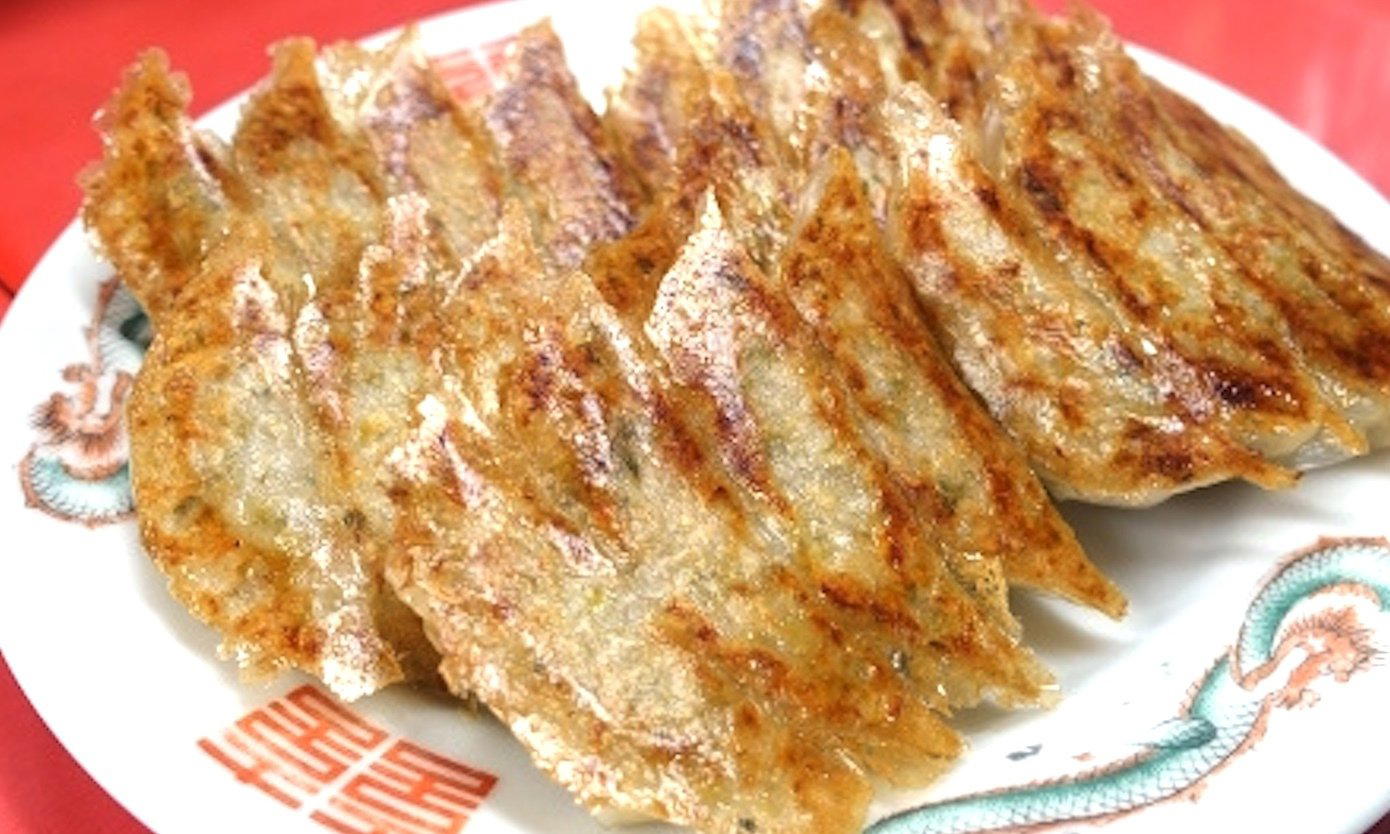
- Pan-fried thin-skinned gyoza
Osaka's Counter Culture and Where Gyoza Fits
Osaka has always operated on a culinary logic that other Japanese cities don't quite share. The local expression kuidaore, eat until you drop, captures something real about how the city prioritises spending on food above almost everything else. While three-Michelin-star kaiseki rooms like Taian and the Franco-Japanese precision of HAJIME anchor the city's formal dining tier, Osaka's eating identity is just as seriously shaped by its counter-level specialists: the gyoza houses, kushikatsu stalls, and takoyaki shops that fill the gaps between those destination rooms. Marusho Gyoza belongs to that specialist counter tier, a focused gyoza operation in a city that understands deeply why specialism matters.
Gyoza in Japan carries a different cultural weight than its Chinese dumpling origins might suggest. The Japanese version, particularly the pan-fried yaki-gyoza, developed its own grammar over decades: thin skins crimped to order, a skirt of crisp latticed starch from the pan, fillings kept restrained rather than maximised. Osaka's gyoza scene runs alongside Kyoto's quieter version and Tokyo's more varied output, but it shares the national preference for craft repetition over novelty. In that context, a specialist like Marusho Gyoza operates where focus is the strategy, not the limitation.
The Logic of the Specialist Format
Japan's leading small-format restaurants work on a model that rewards specialisation over range. Consider how the gyoza counter functions in practice: a kitchen optimised around a single core item, a service rhythm built on speed and accuracy, and a room where the team's collaboration is visible in real time. This is the opposite of a restaurant where the kitchen, the floor, and the drinks program operate as separate fiefdoms. At a counter specialist, the dynamic between whoever is folding and frying, whoever is moving plates, and whoever is managing the room has to be tight, because there is nowhere for inefficiency to hide.
This team coherence is what separates the counters that attract regulars from those that cycle through tourists. The leading gyoza operations in Osaka have the quality of a well-rehearsed performance: the sizzle of the pan, the lifting of the lid at exactly the right moment, the plate that arrives with the crisped base intact rather than steamed soft from sitting. That timing and coordination is not a feature of the food alone; it is a product of a front-back relationship where the floor reads the room and the kitchen responds. Marusho Gyoza sits in the Osaka tradition that prizes exactly this kind of focused collaboration.
How Marusho Gyoza Sits in Osaka's Broader Dining Map
Osaka's dining map segments more clearly than it might appear from the outside. At the formal end, venues like La Cime and Fujiya 1935 compete in the ¥¥¥¥ tier, requiring advance booking and bringing a level of culinary architecture that frames an evening as an event. One step down, Kashiwaya Osaka Senriyama anchors a more traditional kaiseki register. Marusho Gyoza operates in a different register entirely, where the criteria shift from choreography and seasonal precision to consistency, speed, and the particular satisfaction of a single dish executed repeatedly and well. These are not lesser values in Osaka's food culture; they are simply different ones, and the city makes room for both without ranking one above the other.
That said, the gyoza specialist tier in any Japanese city is not without its own competitive pressure. A good gyoza counter earns its reputation through the accumulation of daily judgement: skins that hold without tearing, fillings that don't weep excess liquid, a crunch-to-chew ratio that stays in balance across service. Osaka diners, habituated to eating well and doing so regularly, are not forgiving audiences for a counter that stops caring about the details.
Getting There and Planning a Visit
Osaka's central wards are dense with dining options at every price point. Visitors who have already locked in reservations at the city's formal rooms, whether that means the kaiseki intensity of Taian or the French-leaning modernism of HAJIME, will find that a gyoza counter makes a different kind of sense: lunch, a quick early dinner, or a stop between destinations. The city's subway network is efficient enough that moving between Osaka's neighbourhoods rarely takes more than fifteen to twenty minutes. For those extending a broader Kansai itinerary, Gion Sasaki in Kyoto and akordu in Nara represent alternative dinner anchors within day-trip range. Domestically, Harutaka in Tokyo and Goh in Fukuoka offer reference points for how specialist Japanese dining operates in other major cities. Beyond Kansai, there are further regional specialists worth noting: 一本木 泰川製 in Nanao, 夕仙山乃 in Sapporo, and 湖畔荘 in Takashima each reflect how Japan's counter tradition plays out across different geographies. For context outside Japan, the New York dining scene offers its own high-precision parallel: Atomix demonstrates how Korean fine dining operates at the top tier of that city, while Le Bernardin remains the reference point for specialisation at scale. See our full Osaka restaurants guide for a broader map of the city's dining options across all tiers.
Additional regional discoveries for those building out a Japan itinerary include 庄羽屋 in Nishikawa Machi, Birdland in Sakai, and Bistro Ange in Toyohashi, each representing the kind of regional specialist that rewards itinerary-building beyond the major city hubs.
Frequently asked questions
Is Marusho Gyoza suitable for children?
Gyoza counters in Osaka generally operate in a compact, often standing or close-seated format, which suits older children comfortable with that kind of environment. The food itself, pan-fried or steamed dumplings, translates well for younger diners. That said, the counter setting at a specialist venue like Marusho Gyoza is better suited to adults or children who are at ease in focused, no-frills dining rooms.
How would you describe the vibe at Marusho Gyoza?
Marusho Gyoza fits the Osaka model of functional, counter-led dining where the food does the talking. Expect a focused, no-ceremony atmosphere more aligned with a serious local regular crowd than a tourist-facing dining room. This is Osaka's kuidaore logic in practice: the priority is what arrives in front of you, not the room surrounding it.
How does a gyoza-only counter in Osaka differ from gyoza served at a general izakaya?
At a specialist counter like Marusho Gyoza in Osaka, every decision, the dough thickness, the filling ratio, the fat used for frying, is optimised around a single product rather than balanced against a broad menu. An izakaya treats gyoza as one item among thirty; a dedicated counter treats it as the entire brief. The result is a consistency and depth of execution that a multi-dish kitchen rarely prioritises. Osaka's dining culture has long supported this kind of specialisation precisely because the city's eaters notice the difference.
What do people recommend at Marusho Gyoza?
At a single-product specialist, the menu centres on gyoza in its various forms, typically pan-fried, steamed, or both, and the recommendation is simply to order what comes out of the kitchen in its intended sequence or style. Regulars at Osaka gyoza counters tend to favour the yaki (pan-fried) version for its contrast of crisp base and yielding filling.
Should I book Marusho Gyoza in advance?
Specialist counters in Osaka's central wards frequently run at capacity during peak lunch and dinner hours, particularly on weekends. Walking in during off-peak hours, mid-afternoon or early evening, is the most reliable strategy when advance booking isn't possible.
What has Marusho Gyoza built its reputation on?
In Osaka's dining culture, specialist venues earn their standing by doing one thing to a standard that generalist restaurants can't match. Marusho Gyoza operates within this tradition: a single-product format in a city where kuidaore, the appetite for serious eating at every price point, creates a demanding local audience. That local accountability, rather than award recognition, is the foundation of a gyoza specialist's credibility in this market.
Budget and Context
A compact comparison to help you place this venue among nearby peers.
| Venue | Cuisine | Price | Awards | Notes |
|---|---|---|---|---|
| Marusho GyozaThis venue (the venue you are viewing) | Japanese Gyoza Specialist | $10–20 | Not listed | Not listed |
| HAJIME | Avant-Garde Japanese Fine Dining | $300–500 | 3 Michelin Stars · World's 50 Best #83 | French, Innovative |
| La Cime | Modern French with Japanese Ingredients | $150–200 | 2 Michelin Stars · World's 50 Best #13 | French |
| Kashiwaya Osaka Senriyama | Seasonal Kaiseki Omakase | $200–300 | 3 Michelin Stars · La Liste Top Restaurants | Japanese |
| Taian | Traditional Japanese Kaiseki Omakase | $150–200 | 3 Michelin Stars · La Liste Top Restaurants | Kaiseki, Japanese |
| Fujiya 1935 | Modern Japanese with European influences | $100–150 | 2 Michelin Stars · La Liste Top Restaurants | Innovative |
Continue exploring
More in Osaka
Restaurants in Osaka
All restaurants in Osaka →


Bars in Osaka
All bars in Osaka →

Hotels in Osaka
All hotels in Osaka →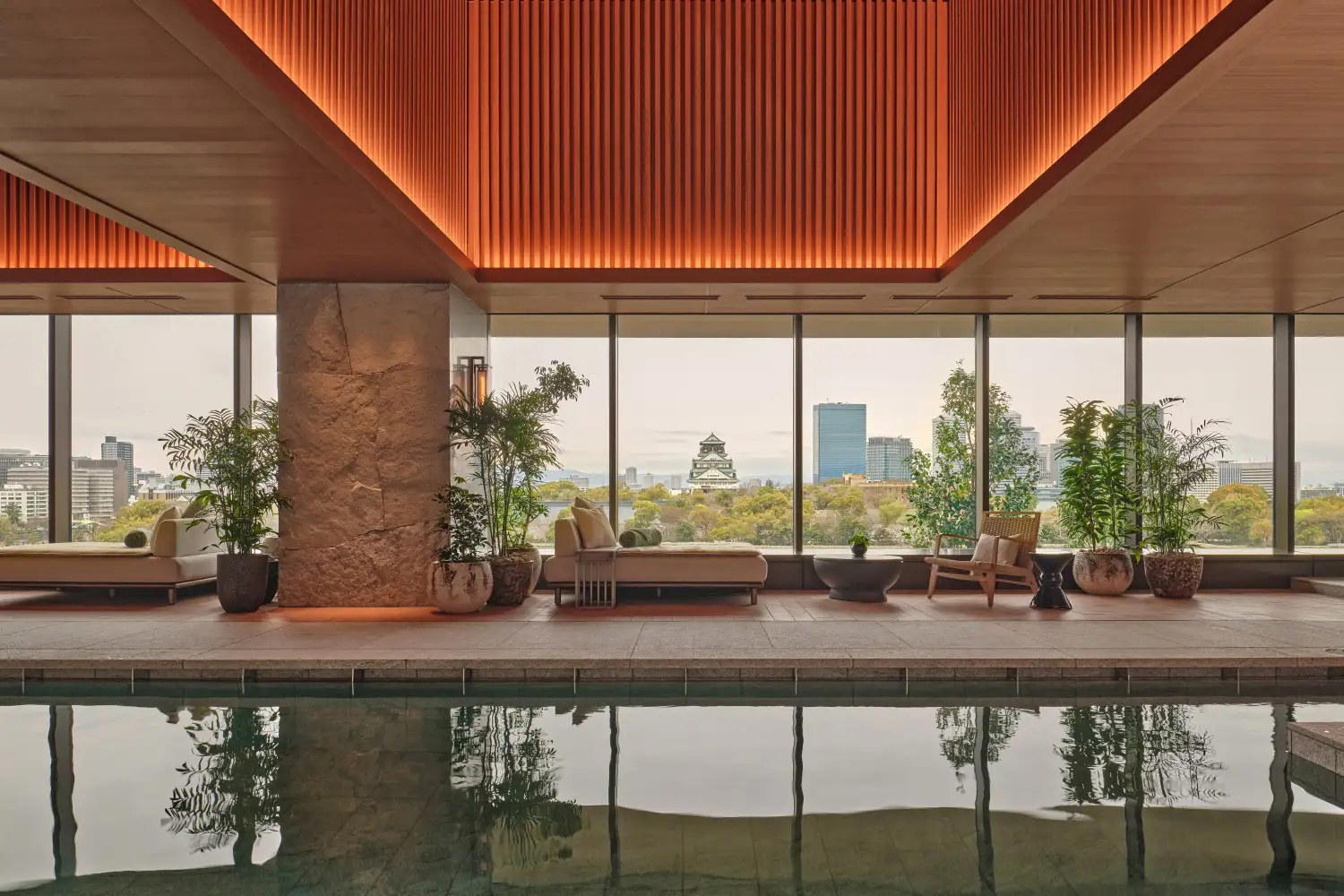



Wineries in Osaka
Browse all →
Details
- Lively
- Classic
- Intimate
- Casual Hangout
- Solo
- After Work
- Standalone
- Beer Program
- Local Sourcing
- Counter Dining
- A La Carte
- Beer
Casual, lively, and compact, with a counter-focused atmosphere suited to gyoza and beer rather than leisurely formal dining.