
Menya Saisai Shouwa chou honten is a compact Showacho counter in Osaka’s serious ramen circuit, selected for Tabelog Ramen OSAKA “Tabelog 100” 2025 after repeated appearances across the ramen lists since 2017. The draw is not luxury theatre but precision: ramen and tsukemen in a nine-seat, counter-led format that rewards solo diners, small groups, and anyone reading Osaka through its everyday noodle culture.
Pearl is the En Primeur Club membership app — saves, bookings, and concierge access live there. Same editors, same standards.
- Address
- 1 Chome-46-8 Hannancho, Abeno Ward, Osaka, 545-0021, Japan
- Phone
- +81 6-6628-5999
- Website
- menya-saisai.co.jp
 Saves & bookings on Pearl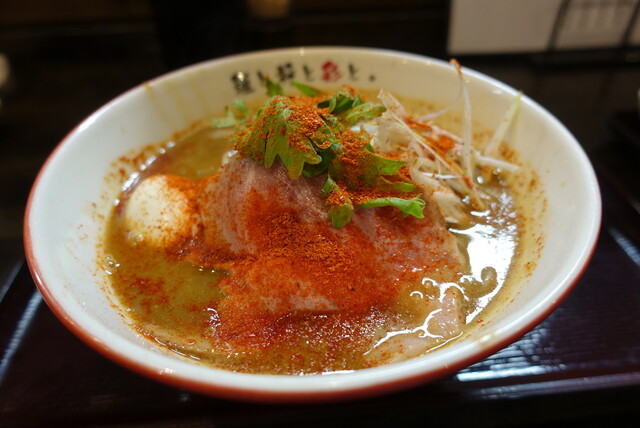
Showacho puts ramen back at street level. South of Osaka’s louder visitor circuits, the approach is less about spectacle than compression: a counter, a short exchange, a bowl built for speed but judged on discipline. Menya Saisai Shouwa chou honten belongs to that Osaka category where the room is modest, the format is narrow, and the scrutiny is high. In a city fluent in flour, broth, sauce, and late-night appetite, ramen here competes with takoyaki, kushikatsu, okonomiyaki, udon, soba, and gyoza for the same local claim: everyday food can carry serious technique.
The useful way to read this shop is through Osaka’s ability to absorb outside methods without losing its own appetite for directness. Ramen is a national Japanese form shaped by Chinese noodle ancestry, regional broth preferences, and postwar urban eating patterns; Osaka’s version often favours approachability over ceremony. At this counter, the categories are ramen and tsukemen, a split that already says something about modern noodle culture. Soup noodles test balance in a single bowl. Dipping noodles slow the rhythm down, separating noodle texture from broth concentration and making technique harder to hide.
A Showacho counter in Osaka's serious ramen tier
Osaka’s ramen scene does not behave like Tokyo’s. It sits inside a broader cheap-eats city, where casual food has to defend itself against strong competition from bakeries, coffee shops, pork buns, standing counters, and neighbourhood specialists. That makes recognition in the Tabelog Ramen OSAKA “Tabelog 100” 2025 list a meaningful signal, not because it turns a bowl into fine dining, but because it marks consistency in a crowded, price-sensitive field. Menya Saisai Shouwa chou honten has appeared across Tabelog ramen selections from 2017 through 2025, moving from WEST listings into the OSAKA category as the guide’s framing became more localised.
The nine-seat counter matters as much as the award badge. Ramen rewards small rooms because timing is part of the craft: noodles soften, broth cools, and toppings lose their definition quickly. A counter-led shop reduces the distance between cooking and eating, and in Osaka that intimacy reads as functional rather than precious. There is no need to inflate the experience into restaurant drama. The format is closer to a workshop: focused, quick, and built around repeatable execution.
Compared with nearby Osaka casual specialists, the distinction is format rather than price theatre. Gyoza no Mise Momo sits in the dumpling lane, Usagi to Boku in the low-key café register, while Soba Kiri Kamonohashi pushes toward a more deliberate soba outing. Tempura Kozaki and Sumisho Kishimoto belong to different spending and pacing categories. The ramen counter competes on turnover, heat, and noodle handling; it asks less time from the diner but gives less margin for error.
Local appetite, imported technique, and the ramen-tsukemen divide
The local-ingredient question in Osaka ramen is rarely a simple farm-to-table claim. The city’s strength is practical adaptation: wheat noodles, stocks, tare, oils, and condiments are assembled through methods that travelled across borders and then became deeply Japanese. That is why the ramen-tsukemen pairing is useful here. Ramen folds everything into one temperature curve, while tsukemen foregrounds chew and concentration. The choice is not just preference; it changes the meal’s physics.
For travellers, this is where Osaka’s dining culture becomes more legible. The city often gets reduced to snack food, but its casual counters can be technically severe. The bowl has to land immediately. There is no long tasting-menu arc, no sommelier explanation, no decorative pause. At a place selected repeatedly for a specialist ramen list, the editorial interest lies in how much technique is compressed into a low-friction meal. That compression is a defining Osaka pleasure.
It also explains why this address fits better into a day of neighbourhood eating than into a grand evening plan. Showacho and Abeno reward moving between small formats: noodles, coffee, bakery shelves, counters, and quick sweets rather than one long reservation-led itinerary.
How to place it in a wider Osaka eating day
Osaka is easier to understand when meals are treated as a sequence of formats rather than a hierarchy. A ramen counter like this can sit beside a bakery stop at 52CHO-ME BAKERY, a coffee pause at.cafe, the pork-bun institution energy of 551 Horai (551蓬莱), or the Italian craft register at 99 Pizza Napoletana Gourmet and a canto (Italian). The point is not to rank them against one another. The point is that Osaka’s eating culture gives equal seriousness to speed, dough, broth, and counter work.
Readers building a Japan-wide casual-food itinerary can use the same lens elsewhere: regional specificity at [Curry Senmon Ten] Maruyama Kyoju. in Sapporo, compact craft at [ki:] in Kyoto, seafood-and-charcoal pacing at. 鮪と炭火焼き うお炭 秋葉原店 in Tokyo, Vietnamese-Japanese neighbourhood dining at (Shoku) Vietnam in Kawasaki, and local counter formats at.know in Kumamoto. The international comparison is not about sameness, but about how small specialist rooms translate place through repetition and restraint.
The editorial verdict is simple: Menya Saisai Shouwa chou honten is for diners who want Osaka without a scripted luxury frame. Its value lies in the gap between modest format and sustained specialist recognition. Treat it as a precision stop in a neighbourhood eating day, not as a ceremonial destination. For broader context beyond Japan, compare the casual-specialist logic with Jōdo Saké Bar in Los Angeles, Onigiri Time in Pasadena, or a more formal Japanese beef register at -Grilled beef Sukiyaki- KAMAKURA TANUKIAN 鎌倉 たぬき庵 in Kamakura. The common thread is format discipline: a narrow promise, executed with little room for disguise.
Price Lens
Comparable venues at the same tier.
| Venue | Cuisine | Price | Notes |
|---|---|---|---|
| Menya Saisai Shouwa chou hontenThis venue — the venue you are viewing | Not listed | $ | Not listed |
| Men no Youji | Chūō, Japanese Ramen | $ | Not listed |
| New Tonsuke | Not listed | $ | Suminoe, Yoshoku Japanese-style Western diner specializing in tonkatsu and hamburger steak |
| Curry Ya Dekkao | Chūō, Sri Lankan-style Curry Shop | $ | Not listed |
| Bumble Bee | Not listed | $ | Nishi, Spice-forward Japanese curry house |
| Ichifuji Shokudo | Not listed | $ | Kita, Osaka shokudo with udon and oyakodon |
Recognition history
Dated appearances from independent guides and award organizations, with the underlying list record or original source where available.
Tabelog 100 #46 · No. 46
Tabelog · Tabelog 100 - Ramen - OSAKA - 2025
Continue exploring
More in Osaka
Restaurants in Osaka
Browse all →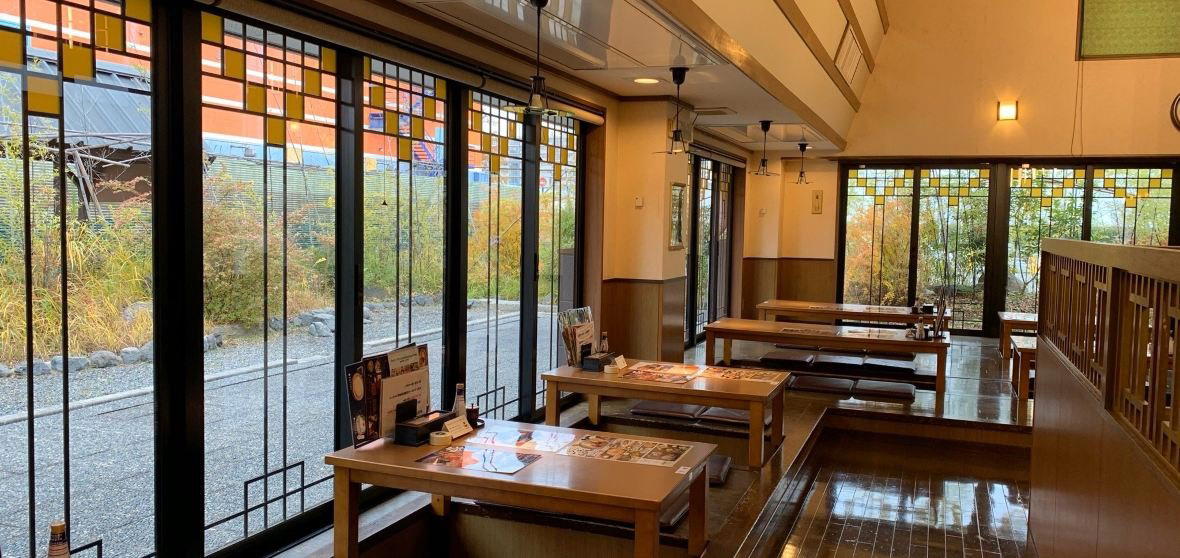

Bars in Osaka
Browse all →
Hotels in Osaka
Browse all →


Wineries in Osaka
Browse all →
At a Glance
- Lively
- Cozy
- Solo
- Casual Hangout
- After Work
- Late Night
- Family
- Chefs Counter
- Standalone
- Beer Program
Current opening hours
- Monday
- 8 AM–2:15 PM, 5:30–7:30 PM
- Tuesday
- 8 AM–2:15 PM, 5:30–7:30 PM
- Wednesday
- 8 AM–2:15 PM, 5:30–7:30 PM
- Thursday
- Closed
- Friday
- 8 AM–2:15 PM, 5:30–7:30 PM
- Saturday
- 8 AM–2:15 PM, 5:30–7:30 PM
- Sunday
- 8 AM–2:15 PM, 5:30–7:30 PM
Hours can change for holidays and private events. Last verified .
Compact counter-only ramen shop with a casual, bustling atmosphere, bright functional lighting, and the energetic feel of a neighborhood favorite where guests sit side by side at the counter watching bowls being prepared.