
Menya Issou belongs to Osaka’s compact, counter-led ramen culture rather than the city’s polished dining circuit. Its seven-seat format, sub-¥1,000 pricing, and Tabelog Ramen OSAKA 100 selections from 2023 through 2025 place it in a serious local tier where pacing, turnover, and bowl-to-bowl consistency matter more than ceremony.
Pearl is the En Primeur Club membership app — saves, bookings, and concierge access live there. Same editors, same standards.
- Address
- 4 Chome-8-21 Suehirocho, Yao, Osaka 581-0001, Japan
- Phone
- +81 72-944-9123
- Website
- twitter.com
 Saves & bookings on Pearl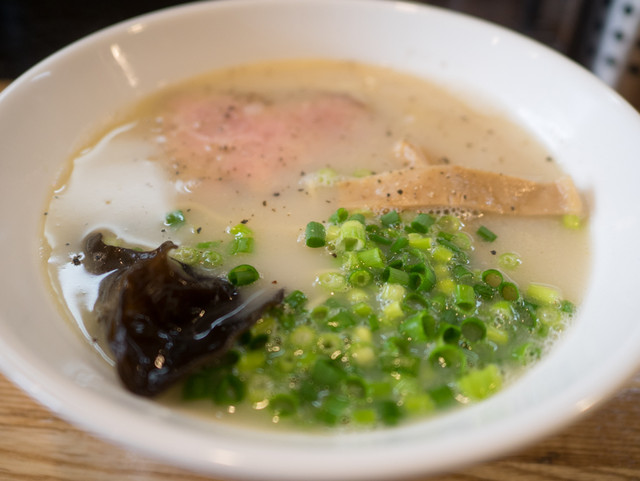
Approaching a small ramen counter in Osaka changes a meal before the first bowl arrives. The room is built for concentration: a short line of seats, little margin for lingering, and the quiet choreography of a kitchen serving each diner in sequence. Here, ramen feels less like a casual stopgap than a compressed tasting progression, with broth, noodles, seasoning, and toppings doing the work of multiple courses.
Menya Issou fits that Osaka grammar with unusual discipline. It is categorized simply as ramen, but the format is sharper: seven counter seats, no private rooms, no reservations, and a price band under JPY 999. That puts it closer to the city’s specialist noodle shops than broader Japanese dining rooms, where comfort, booking systems, and beverage programs can soften the experience. The value proposition is narrow and demanding. The meal succeeds or fails inside one bowl.
A seven-seat ramen counter where the bowl has to carry the whole arc
Ramen is often discussed through style labels, yet a compact counter is better read through progression: first the broth’s temperature and aroma, then noodle texture, then how seasoning and fat change the middle of the bowl, and finally whether the last spoonful holds after the noodles release starch. A tasting menu can reset between plates; ramen has to evolve while staying coherent.
That is why tiny counters matter in Osaka ramen. A seven-seat room shortens the distance between cooking and eating, removing slack that can dull noodles or flatten heat. It also changes the diner’s role. This is not for a long table, extended conversation, or grazing through side dishes. The counter rewards solo dining and quick attention, a pattern common to serious ramen culture across Japan and especially visible in Osaka’s working neighborhoods outside the hotel-and-department-store core.
Osaka’s ramen scene supports different spending tiers. Menya Issou shares a sub-JPY 999 bracket with Ramen Kobo RISE and Menya Seiryu, while Sanukiya Masajiro and Teramae sit in the JPY 1,000 to JPY 1,999 range. In ramen, those small differences signal expectations around portioning, additions, and whether a shop positions itself as an everyday counter or a planned detour. Menya Issou’s reputation belongs to the latter despite the low spend.
Recognition supports that reading. Selection for Tabelog Ramen OSAKA 100 in 2023, 2024, and 2025 places the shop within a curated Osaka ramen cohort rather than a generic noodle listing. Tabelog scores should not be read like Western star systems, but a 3.69 score in Japan’s review culture is meaningful, especially where local repeat diners dominate. The signal is not luxury; it is consistency under pressure.
Osaka ramen beyond the central dining circuit
Yao is not the Osaka first-time visitors usually organize around. The city’s international dining map tends to cluster around Namba, Umeda, Kitashinchi, and Tenma, where bar-hopping, department-store basements, and late-night eating create easy itineraries. A ramen shop in Suehirocho, near Kyuhojiguchi, asks for different planning. The reward is not scenery or convenience; it is a clearer view of how Osaka residents use small specialist counters in daily eating life.
That matters because Osaka is too often reduced to takoyaki, okonomiyaki, and neon. The better food map is more granular. Tonkatsu specialists such as Manger, ramen counters, bakeries, kissaten-style cafés, and compact Italian rooms all occupy distinct lanes. Readers building a broader route can cross-reference Our full Osaka restaurants guide, then contrast this noodle-focused stop with .cafe, 52CHO-ME BAKERY, 551 Horai (551蓬莱), 99 Pizza Napoletana Gourmet, and a canto (Italian).
The restaurant opened in 2016, giving it enough history to be judged beyond a launch-year wave. Three consecutive Tabelog Ramen OSAKA 100 selections are more useful than one burst of attention because ramen audiences are unforgiving about drift. A small shop with limited seats cannot hide inconsistency behind décor, pacing, or service theatre. Repeat approval usually means the core bowl still justifies the trip.
There is also a seasonal footnote worth taking seriously. Cold menu items have been associated with summer availability, especially around weekends and holidays, with more limited weekday timing after the lunch rush when capacity allows. That detail belongs to Japanese ramen shop culture: specials can depend on season, timing, and room flow rather than a fixed restaurant-menu logic. Go for the core ramen first; treat seasonal variation as a bonus, not the reason to structure the visit.
How to read the experience before committing the detour
This is a compact, cash-oriented ramen counter with counter seating only, so the fit is clear. It suits solo diners, pairs comfortable with a focused meal, and travelers who value a small specialist format over central convenience. It is less suited to groups, long lunches, or anyone needing advance reservations. Payment limitations and no private rooms reinforce the point: the experience is built around a fast, concentrated bowl, not hospitality flexibility.
The strongest editorial case for the restaurant is not that it transforms Osaka dining. It preserves a demanding version of it: low price, tiny capacity, local recognition, and a format where the meal must deliver its full narrative in minutes. In a city where premium dining often means omakase counters, kappo rooms, and high-demand sushi seats, rigor can also sit below JPY 1,000.
For wider trip planning, pair the restaurant research with Our full Osaka hotels guide, Our full Osaka bars guide, Our full Osaka wineries guide, and Our full Osaka experiences guide. Readers comparing Japanese specialist formats beyond Osaka can also look at -Grilled beef Sukiyaki- KAMAKURA TANUKIAN 鎌倉 たぬき庵 in Kamakura. 鮪と炭火焼き うお炭 秋葉原店 in Tokyo.know in Kumamoto, (Shoku) Vietnam in Kawasaki, [Curry Senmon Ten] Maruyama Kyoju. in Sapporo, [ki:] in Kyoto, Jōdo Saké Bar in Los Angeles, and Onigiri Time in Pasadena.
A Quick Peer Check
Comparable venues by category and price.
| Venue | Cuisine | Price | Notes |
|---|---|---|---|
| Menya IssouThis venue — the venue you are viewing | Japanese Ramen Shop | $ | Not listed |
| Menya Seiryu | Ramen & Tsukemen Shop | $ | Nagase |
| Gyoza no Mise Momo | Osaka gyoza counter | $ | Abeno |
| Kotikaze | Japanese cafe with traditional sweets | $ | Tennōji |
| Chuka Soba Kaminari Wantan | Traditional Japanese ramen / chuka soba | $ | Sumiyoshi |
| Yotsubashi Cafe | Japanese yoshoku-style cafe specializing in hamburg steak | $ | Nishi |
Recognition history
Dated appearances from independent guides and award organizations, with the underlying list record or original source where available.
Tabelog 100 #17 · No. 17
Tabelog · Tabelog 100 - Ramen - OSAKA - 2025
Continue exploring
More in Osaka
Restaurants in Osaka
Browse all →




Bars in Osaka
Browse all →


Hotels in Osaka
Browse all →



Wineries in Osaka
Browse all →
At a Glance
- Cozy
- Solo
- Casual Hangout
- After Work
- Standalone
- Chefs Counter
Current opening hours
- Monday
- 11:30 AM–2:30 PM
- Tuesday
- 11:30 AM–2:30 PM
- Wednesday
- Closed
- Thursday
- 11:30 AM–2:30 PM
- Friday
- 11:30 AM–2:30 PM
- Saturday
- 11:30 AM–2:30 PM
- Sunday
- 11:30 AM–2:30 PM
Hours can change for holidays and private events. Last verified .