Our verdict
On Weyerstraße in Cologne's Neustadt-Süd, Malz-Bierbrauerei Gerhard Fischenich occupies a place in the city's enduring Brauhaus tradition, where malt, local brewing culture, and the rhythms of loyal regulars set the tone. For visitors trying to understand Cologne beyond its fine-dining circuit, this address offers a grounded entry point into the neighbourhood's drinking and gathering culture.

Pearl is the En Primeur Club membership app, where members save venues, book tables and use the concierge.

The menu
What to order
- Grilled Pork Knuckle
- Guppes (Goulash with Coleslaw)
- Potato Soup
Where Cologne's Brewing Culture Settles In
Weyerstraße cuts through Neustadt-Süd in a way that rewards those who walk it slowly. The street sits south of the Altstadt proper, far enough from the cathedral's tourist orbit to attract a crowd that actually lives here. Brewpubs and Brauhäuser along this stretch operate according to a logic that predates the current restaurant boom: the Kölsch arrives before you ask, the tables fill early, and the same faces reappear Tuesday after Tuesday. Malz-Bierbrauerei Gerhard Fischenich, at number 71, belongs to that pattern.
Cologne's brewing identity is among the most codified in Germany. Kölsch is a protected designation under European law, meaning it can only be produced within the city and its immediate environs, a status that makes local brewing not just a commercial fact but a point of civic pride. The brewpubs that survive in this environment do so not through novelty but through consistency: a clear Kölsch served in the traditional 0.2-litre Stange, a kitchen that leans on regional staples, and an atmosphere shaped more by returning customers than by passing tourists.
What Regulars Actually Come Back For
In Cologne's Brauhaus circuit, the distinction between a destination and a local institution is often invisible from the outside. Both may look similar, dark wood, long tables, a zinc-topped bar, but the interior logic differs considerably. A local institution runs on regulars who have, over time, negotiated their own unwritten terms: a preferred corner, a standing order, a Köbes (the traditional waiter who circulates with a tray of fresh Stangen without being flagged down) who knows when to refill without being asked.
That rhythm defines what draws people back to addresses like this one on Weyerstraße. The appeal is not a rotating seasonal menu or a headline chef, it is the reliability of a place that performs the same social function week after week. Cologne's Brauhaus culture has historically resisted the kind of reinvention applied to gastropubs in London or bistrots in Paris. The format is considered largely complete, and regulars treat any deviation with suspicion. What changes, slowly, is the quality of execution and the character of the crowd.
For context, Cologne also has a functioning fine-dining tier that sits in a different register entirely. Venues like Ox & Klee (Modern Cuisine), La Cuisine Rademacher (Modern French), and La Société (Modern Cuisine) operate in the €€€€ bracket with tasting menus and reservation lead times measured in weeks. The brewpub tradition on Weyerstraße is not competing with that tier; it is answering a different question about how a city eats and drinks when it is not performing for an occasion.
The Brauhaus Format in Germany's Broader Dining Picture
Germany's serious dining scene has moved significantly in the past decade. Houses like Schwarzwaldstube in Baiersbronn, Aqua in Wolfsburg, and Vendôme in Bergisch Gladbach have built international reputations at the Michelin three-star level, while Berlin's CODA Dessert Dining and Munich's JAN represent the ambitious middle tier. Cologne contributes its own entry points to that national conversation through Le Moissonnier Bistro (French) and maiBeck (Modern Cuisine).
None of that trajectory touches the brewpub category, which has remained essentially parallel, not refined, not diminished, simply operating in its own lane. Venues like Victor's Fine Dining by christian bau in Perl, ES:SENZ in Grassau, Schanz in Piesport, Waldhotel Sonnora in Dreis, and Restaurant Haerlin in Hamburg anchor one end of the German dining spectrum. The Brauhäuser of Cologne anchor the other. Both ends are legitimate; they serve different functions and draw different commitments from their guests.
Internationally, the community-dining format that Cologne's brewpubs represent finds analogues in places as different as Lazy Bear in San Francisco, communal tables, a fixed experiential logic, and the long-tabled tradition at Le Bernardin in New York City, where consistency over decades is itself the credential. The comparison is loose, but the underlying principle holds: certain dining rooms earn loyalty not by changing constantly but by being exactly what they are, reliably.
Planning a Visit to Weyerstraße 71
Neustadt-Süd is accessible from Cologne's central rail network, with the Rudolfplatz and Barbarossaplatz U-Bahn stops placing visitors within comfortable walking distance of Weyerstraße. The neighbourhood's dining options extend across multiple registers, meaning an evening here can move logically from a brewpub to one of the area's more formal rooms depending on appetite and timing. Walk-in culture is historically the norm in Cologne's Brauhaus circuit, but this is not a guarantee at any specific address. For a broader map of where to eat and drink across the city, the full Cologne restaurants guide covers the range from neighbourhood institutions to tasting-menu rooms.
Frequently asked questions
What's the address for Malz-Bierbrauerei Gerhard Fischenich?
Malz-Bierbrauerei Gerhard Fischenich is located at Weyerstraße 71, 50676 Köln, Germany, Cologne.
Is Malz-Bierbrauerei Gerhard Fischenich a brewpub that produces its own beer on-site in Cologne?
The name Malz-Bierbrauerei suggests a malting and brewing focus at the Weyerstraße 71 address in Cologne, positioning it within the city's tradition of production-oriented brauereien rather than purely hospitality-led brauhouses.
What dish is Malz-Bierbrauerei Gerhard Fischenich famous for?
In Cologne's brauhaus tradition, kitchens of this type typically anchor their offer around hearty regional plates built to accompany the house beer, think slow-cooked pork, pickled vegetables, and rye bread, though the exact programme here should be confirmed directly with the venue.
Do they take walk-ins at Malz-Bierbrauerei Gerhard Fischenich?
No booking policy is publicly documented for Malz-Bierbrauerei Gerhard Fischenich. Cologne's neighbourhood brauhouses in Neustadt-Süd generally operate on a walk-in basis, particularly outside weekend peak hours, but it is worth contacting the venue on Weyerstraße 71 directly to confirm current practice.
What's the standout thing about Malz-Bierbrauerei Gerhard Fischenich?
The address, Weyerstraße 71, well south of the tourist-heavy Altstadt, places this brauerei inside a genuinely local Cologne neighbourhood rather than on the city's main brauhaus circuit. That geographic remove from the centre is itself the signal: venues here draw regulars rather than passing visitors, which tends to shape both the atmosphere and the pace of service.
Cuisine and Credentials
| Venue | Cuisine | Price | Awards | Notes |
|---|---|---|---|---|
| Malz-Bierbrauerei Gerhard FischenichThis venue (the venue you are viewing) | Traditional Cologne Brewpub | $20–30 | Not listed | Not listed |
| maximilian lorenz | Modern German Fine Dining | $200–300 | 1 Michelin Star | French Brasserie, Modern Cuisine |
| NeoBiota | Modern European Fine Dining | Not listed | 1 Michelin Star | Modern German, Modern Cuisine |
| ZEN Japanese Restaurant | Modern Japanese Omakase & Sushi | $30–50 | Michelin Plate | Japanese |
| Ox & Klee | Modern European Fine Dining with Six-Sense Concept | $200–300 | 2 Michelin Stars · La Liste Top Restaurants | Modern Cuisine |
| La Cuisine Rademacher | Modern French Fine Dining | $150–200 | 1 Michelin Star | Modern French |
Continue exploring
More in Cologne
Restaurants in Cologne
All restaurants in Cologne →
Bars in Cologne
All bars in Cologne →

Details
- Rustic
- Cozy
- Classic
- Well Known
- Casual Hangout
- Group Dining
- After Work
- Historic Building
- Beer Program
- A La Carte
- Counter Dining
- Päffgen Kölsch
- Vegetarian Friendly
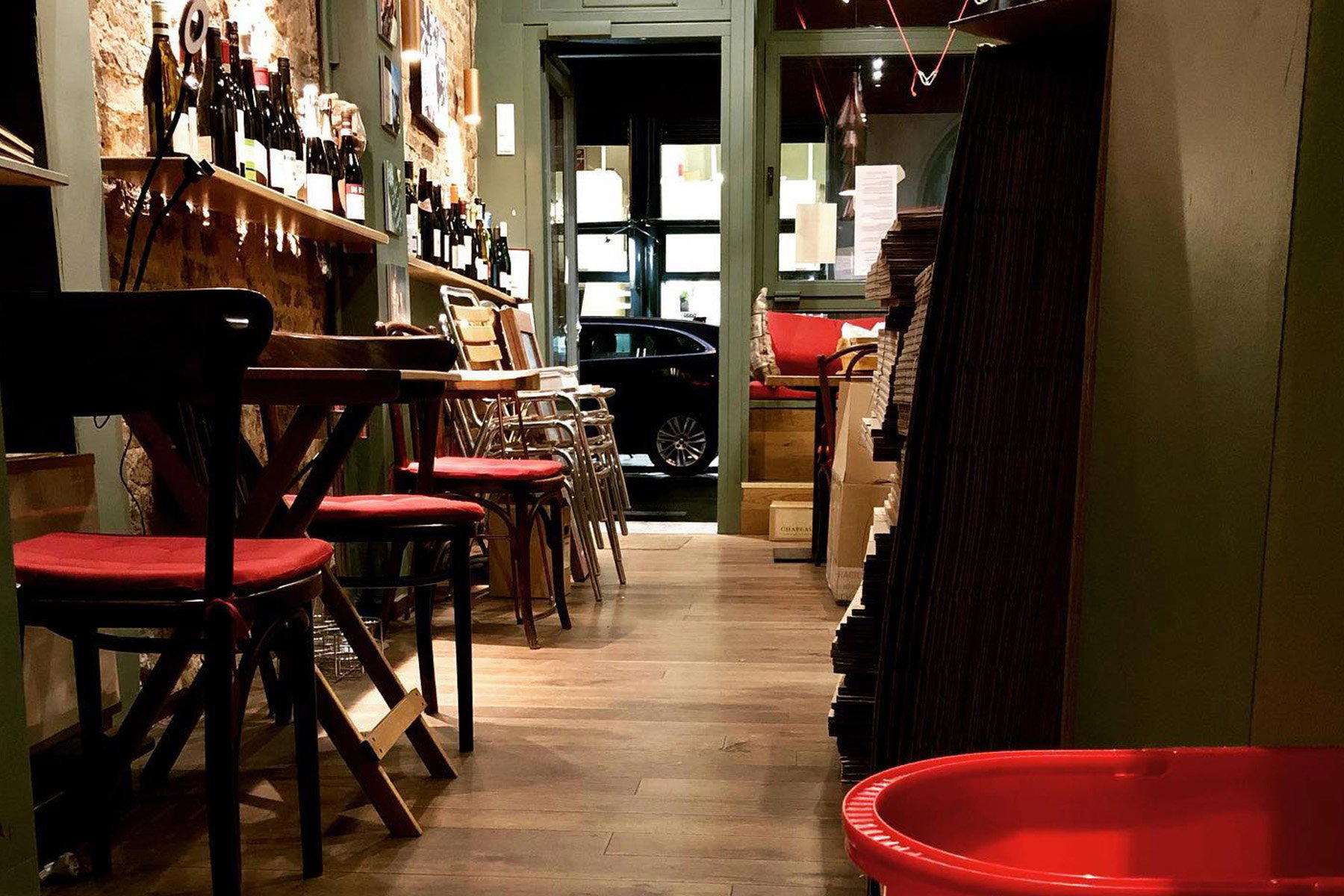
Dimly lit by historic gas lanterns and period lighting, with wood-paneled walls, bare wooden tables, and wooden chairs creating a suspended-in-time atmosphere that faithfully recreates the establishment's 1925 aesthetic.