Makai Market
Our verdict
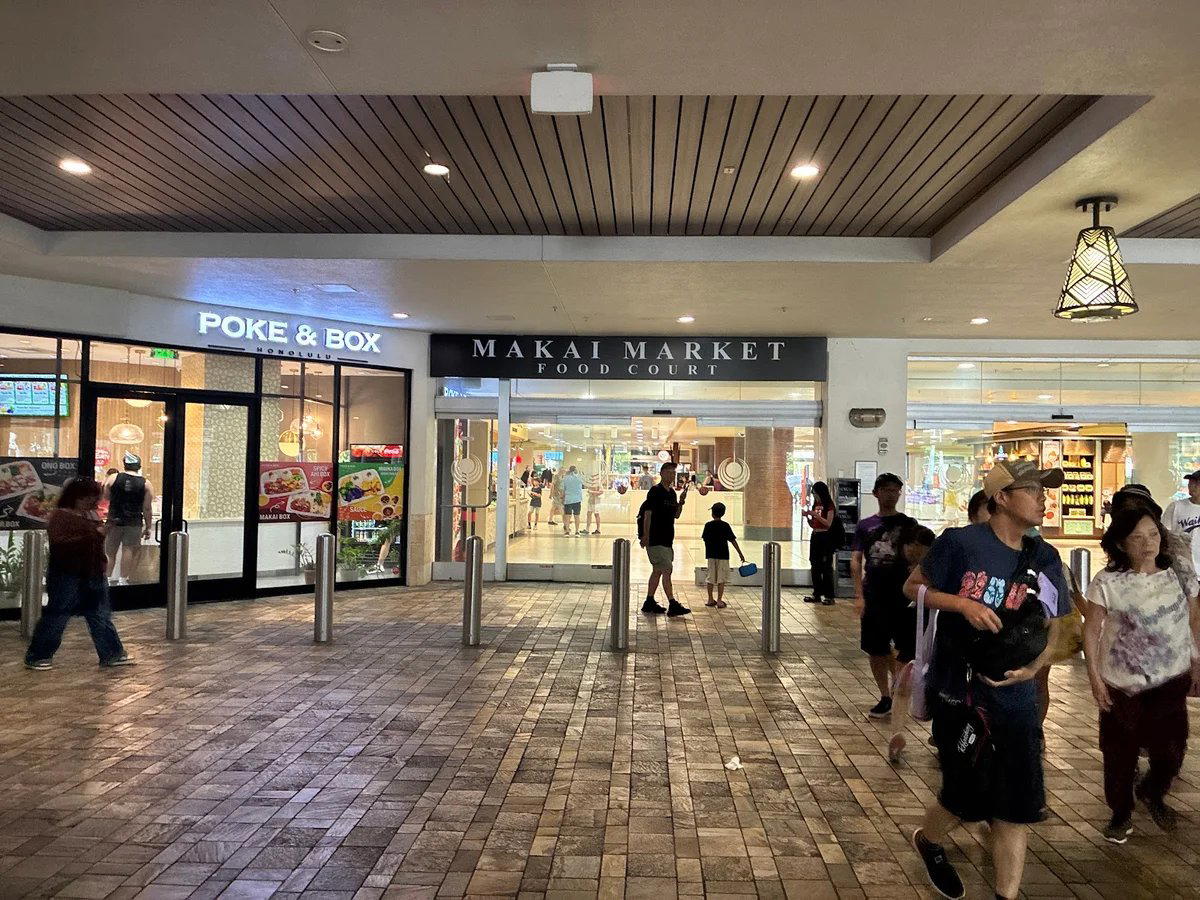
Makai Market sits inside the Ala Moana Center, Honolulu's largest retail complex, and represents the city's food court format at its most commercially evolved. Where the format once meant pre-packaged mediocrity, Honolulu's version has quietly absorbed the influence of the islands' multicultural food culture, making it a useful lens on how Hawaiian casual dining has shifted over the past two decades.

Pearl is the En Primeur Club membership app — saves, bookings, and concierge access live there. Same editors, same standards.
- Address
- 1450 Ala Moana Blvd, Honolulu, HI 96814
- Phone
- (808) 955-9517
- Hours
- Daily 11 AM–8:30 PM
- Website
- alamoanacenter.com
- Directions
- Get directions
The menu
What to order
- Chicken katsu curry
- Kalbi ribs
- Plate lunch
- Garlic shrimp
The Food Court Reimagined: Honolulu's Shifting Casual Dining Register
Step into Ala Moana Center on a weekday lunch hour and the scene at Makai Market reads less like a conventional American mall food court and more like a compressed cross-section of Honolulu's multicultural food culture. The noise level is immediate: the overlap of Mandarin, Japanese, Korean, Tagalog, and Hawaiian pidgin from neighboring tables. The smell moves from char siu pork to fresh poke to something fried and sweet. This is a space where the city's demographic complexity is most legibly on display, and understanding it means understanding how Honolulu's casual dining segment has evolved over the past two decades.
At 1450 Ala Moana Blvd, the market occupies a significant footprint within what remains one of the largest open-air shopping centers in the United States. That geography matters. Ala Moana draws both local residents and visitors in roughly equal measure, and Makai Market has historically had to serve both audiences simultaneously — a tension that has shaped how the space has developed and what vendors it attracts.
From Generic to Granular: The Evolution of the Format
The food court as a format has undergone a measurable shift across American cities since the early 2000s. In most mainland contexts, the trajectory has been consolidation toward national chains and standardized offerings. Honolulu's version at Makai Market has tracked a different course. The islands' food culture — built on Japanese bento traditions, Filipino adobo, Hawaiian plate lunch conventions, and Chinese dim sum influences, made a purely chain-dominated model commercially untenable. Local vendors with specific regional specialties held competitive ground that national brands struggled to occupy.
This mirrors a broader pattern visible in other cities with strong regional food identities. Food courts in Singapore's hawker centers, for instance, have long been understood as culturally essential infrastructure rather than mere convenience. Honolulu's version operates closer to that model than to the generic American mall standard, though it sits somewhere between the two. The comparison is instructive precisely because it shows how geography and demographics shape even the most commercial dining formats.
The evolution here has not been dramatic or sudden. It has been incremental: a shift in vendor mix over years, an increasing willingness from the surrounding retail ecosystem to support food-forward tenants, and a gradual acknowledgment that the food court format could carry culinary specificity rather than resist it. For a city that also supports fine dining at the level of 53 By The Sea and the New American ambition of Fête, the casual end of the market has had to hold its own coherence.
What the Menu Mix Reveals About Hawaiian Plate Culture
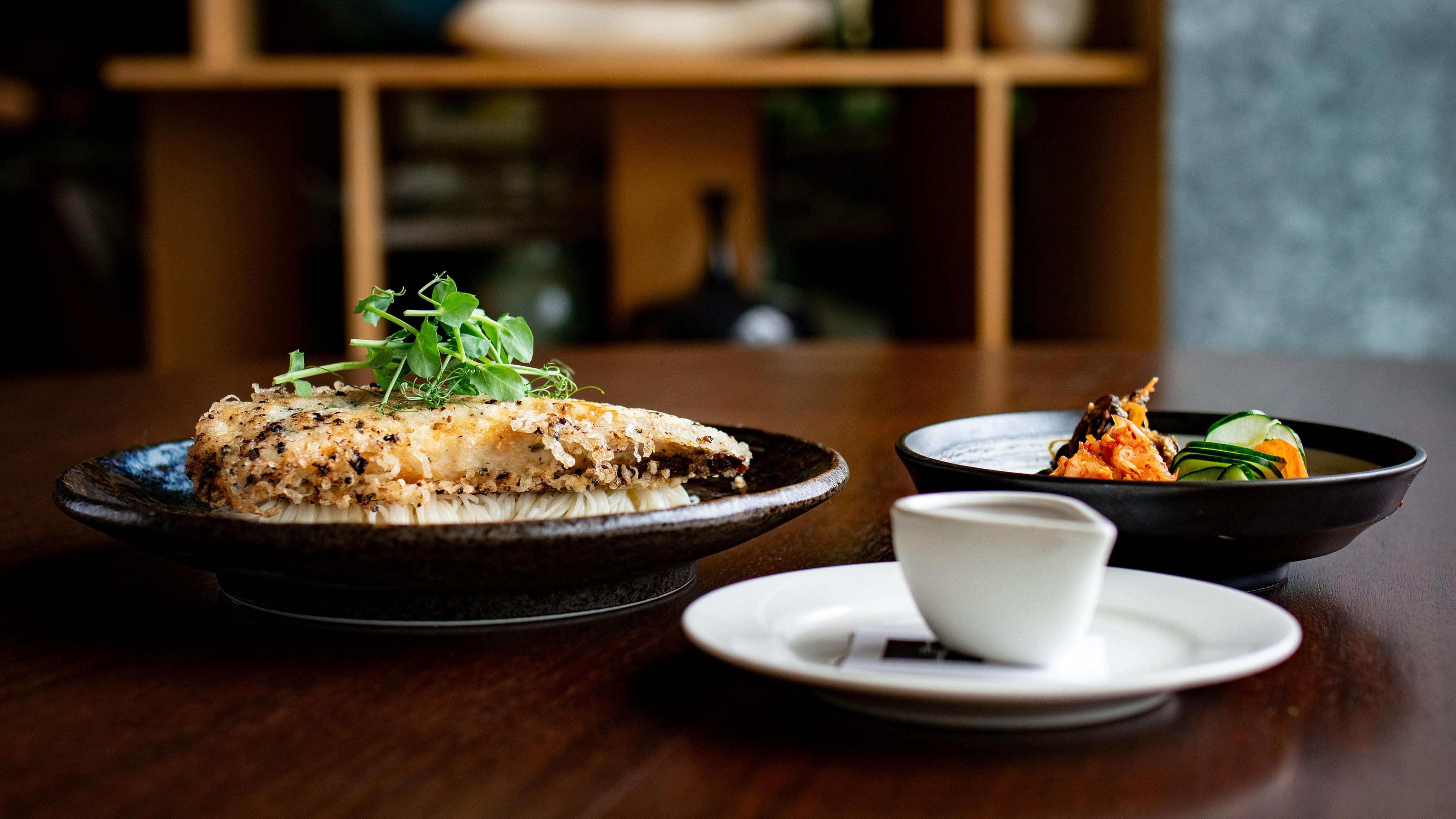
Makai Market's vendor lineup, at any given point in its history, has functioned as a kind of informal index of what Honolulu considers worth eating on a budget. The plate lunch format, two scoops of rice, macaroni salad, a protein, remains a structural constant, though its execution varies. Poke bowls, which moved from local staple to mainland trend over the 2010s, appear here in forms that predate the mainland's discovery of the dish. Korean barbecue, Japanese ramen, Filipino comfort food, and Chinese roast meats all occupy their lanes.
What that mix implies is that Honolulu's casual dining identity was always multicultural by necessity, not by design. The islands absorbed waves of immigrant labor from across Asia and the Pacific, and each community left a food footprint that became part of the general vernacular. A visitor accustomed to the more curated multicultural dining of, say, Atomix in New York City or the farm-driven precision of Blue Hill at Stone Barns in Tarrytown will find Makai Market operating in a register that is deliberately unpretentious, but no less culturally specific for that.
Honolulu's broader restaurant scene spans considerable range. At the high end, venues like 3660 On the Rise and 855-ALOHA represent the city's aspiration toward polished, ingredient-led dining. The Ahaaina Luau occupies a distinct cultural-experience tier. Makai Market sits at the opposite end of the formality spectrum, which is part of its function: it absorbs the volume that more considered dining formats cannot.
Practical Notes for Visiting
Ala Moana Center is accessible from Waikiki via TheBus Route 8 and a number of hotel shuttles, making it one of the more straightforwardly reachable destinations in Honolulu without a rental car. The market operates on shopping center hours, generally running from mid-morning through early evening, though individual vendor hours vary. No reservation is required, the format is walk-in by nature, with seating shared across the common area. Expect peak congestion at midday on weekdays when office workers from the surrounding neighborhood compete with tourists for tables. Arriving before noon or after 1:30 PM makes the experience considerably less pressured. Pricing across vendors reflects the food court register: the format is designed for accessibility, and most full meals fall well below what comparable food would cost at a sit-down restaurant in the same city.
For travelers building a broader Honolulu dining itinerary, the full Honolulu restaurants guide covers the city's range from casual through fine dining. American fine dining at the national level, venues like The French Laundry in Napa, Le Bernardin in New York City, Alinea in Chicago, Lazy Bear in San Francisco, Providence in Los Angeles, Addison in San Diego, Emeril's in New Orleans, The Inn at Little Washington, and Single Thread Farm in Healdsburg, operates in a different tier entirely, but understanding that range helps calibrate what Makai Market is designed to do and what it is not. Even internationally, the contrast with venues like 8 1/2 Otto e Mezzo Bombana in Hong Kong illustrates how far the casual-to-fine-dining spectrum extends in Pacific Rim cities.
Frequently asked questions
What part of town is Makai Market in?
Makai Market is located at 1450 Ala Moana Blvd, Honolulu, HI 96814, Honolulu.
Is Makai Market worth visiting if I'm staying in Waikiki?
For visitors based in Waikiki, Makai Market offers one of the more accessible windows into how Honolulu actually eats day-to-day, rather than the resort-facing dining that dominates the immediate Waikiki strip. TheBus Route 8 runs directly between Waikiki and Ala Moana Center at 1450 Ala Moana Blvd, and several hotel shuttles also cover the route. The food court format means you can sample Hawaiian plate lunch staples at a price point well below most sit-down alternatives in the city.
What should I eat at Makai Market?
Makai Market's vendor mix has historically tracked what Honolulu considers worth eating at the casual register — plate lunches, local-style noodles, and a range of Asian-influenced options that reflect the city's multicultural dining habits. Given the format, the practical move is to walk the full court before committing: the lineup shifts over time, but the throughline is Hawaii's everyday plate culture rather than anything approximating fine dining. It functions as a reliable index of what local office workers and residents actually eat on a weekday.
Do I need a reservation for Makai Market?
No reservation is required. Makai Market operates as a food court within Ala Moana Center at 1450 Ala Moana Blvd, where individual vendor stalls operate on a walk-up basis. Peak lunch hours on weekdays draw significant foot traffic from the surrounding Honolulu business district, so expect a wait at the more popular counters between roughly noon and 1 p.m.
A Tight Comparison
Comparable venues nearby, for context on price, style, and recognition.
| Venue | Cuisine | Price | Notes |
|---|---|---|---|
| Makai MarketThis venue — the venue you are viewing | Hawaiian-Asian Food Court | $10–20 | Not listed |
| Tangö Contemporary Cafe | Scandinavian-Asian Fusion Bistro | $30–50 | Ala Moana, Scandinavian-Asian Fusion Bistro |
| Duc's Bistro | Vietnamese-French Fusion Bistro | $50–100 | Chinatown, Vietnamese-French Fusion Bistro |
| Eating House 1849 by Roy Yamaguchi - Waikiki, Oahu | Modern Hawaiian Plantation Fusion | $50–100 | Kapahulu, Modern Hawaiian Plantation Fusion |
| Arden Waikiki | Contemporary Hawaiʻi Cuisine | $50–100 | Diamond Head, Contemporary Hawaiʻi Cuisine |
| The Mandarin | Northern Chinese | $10–20 | Capitol District, Northern Chinese |