Duc's Bistro
Our verdict
Duc's Bistro occupies a corner of Chinatown's Maunakea Street that regulars have quietly claimed for years. The kitchen draws from Honolulu's layered cultural influences, and the crowd that returns week after week is a reliable indicator of where the neighborhood actually eats. Located at 1188 Maunakea St, it sits in one of the city's most historically textured dining corridors.

Pearl is the En Primeur Club membership app — saves, bookings, and concierge access live there. Same editors, same standards.
- Address
- 1188 Maunakea St, Honolulu, HI 96817
- Phone
- (808) 531-6325
- Hours
- Daily 4–8 PM
- Website
- ducsbistro.com
- Directions
- Get directions
The menu
What to order
- Foie Gras on French Bread
- Duck Breast in Grand Marnier
- Braised Pork Belly in Five Spice Broth
- Spring Rolls
- Green Papaya Salad
- Crab Cakes
Maunakea Street and the Loyalty Economy
Honolulu's Chinatown corridor operates on a different register than the resort strip. The restaurants along Maunakea Street and its immediate neighbors earn their clientele through repetition rather than destination marketing: people come back, often to the same table, often ordering without the menu. Duc's Bistro at 1188 Maunakea St sits inside that loyalty economy. Its address alone signals something about the kind of diner it draws — not the visitor calibrating a one-time splurge, but the resident who has filed it under standing plans.
That distinction matters in Honolulu more than in most American cities of comparable size. The island's dining culture has always separated into two parallel circuits: the oceanfront rooms built around the tourist calendar, and the Chinatown-adjacent tables where the actual city eats. Fête (New American) on Pauahi Street and 3660 On the Rise in Kaimuki both sit in that second circuit, drawing a local following that self-selects away from the resort corridor. Duc's Bistro occupies similar territory on Maunakea, where the block's mixed-use character — wholesale flower vendors, lei shops, older plate-lunch counters, creates a pressure on any restaurant to earn its place through food rather than setting.
What Keeps the Regulars Returning
The regulars' relationship with a place like Duc's Bistro is not sentimental. Chinatown diners are accustomed to genuine options: the corridor has Vietnamese pho houses, Filipino eateries, Japanese izakayas, and enough culinary overlap to make loyalty a considered choice rather than habit. When the same faces appear at the same address week after week, the working assumption is that the kitchen is doing something they cannot replicate anywhere nearby for the same combination of consistency and value.
This is the dynamic that defines Chinatown dining in Honolulu more broadly. Across the city, the contrast between neighborhood regulars and destination visitors shapes how kitchens operate and how menus evolve. At the high-end end of the Honolulu spectrum, venues like 53 By The Sea position themselves explicitly for occasion dining, with views and presentation calibrated for the event meal. The Maunakea Street tier functions differently: occasion is replaced by frequency, and the kitchen's job is to reward return visits rather than overwhelm a first one.
In American dining more broadly, this regulars-first model has produced some of the most durable rooms in any city. Lazy Bear in San Francisco and Smyth in Chicago both built loyal communities before critical recognition arrived, and the community preceded the reputation. On Maunakea, the mechanism is less formal but structurally similar: reputation travels through the people who live and work in the neighborhood, not through press cycles.
Chinatown's Culinary Position in the City
Honolulu's Chinatown is one of the oldest continuously operating Chinatown districts in the United States, and that history accumulates in the dining character of the neighborhood. The food culture here has absorbed successive waves of migration, Chinese, Vietnamese, Filipino, Korean, Japanese, and the result is a block-by-block menu that reflects the city's actual demographic composition rather than a curated version of it. Restaurants that open here do so inside that context, and the ones that survive tend to be those that either anchor themselves within one culinary tradition or find a workable synthesis of several.
The comparison set for a Maunakea Street bistro does not include the white-tablecloth rooms of the resort corridor, any more than Le Bernardin in New York City or The French Laundry in Napa should be measured against a neighborhood brasserie. The relevant peers are the other spots where Honolulu residents eat on ordinary evenings: 855-ALOHA, the izakaya counters of Sushi Izakaya Gaku, and the French-Japanese room at Miro Kaimuki.
Wider afield, the appetite for neighborhood-anchored dining has driven some of the most interesting restaurant stories in American cities. Providence in Los Angeles, Addison in San Diego, and Atomix in New York City all developed distinct local identities before becoming reference points for visiting diners. The trajectory in Honolulu's Chinatown tends to be quieter and less documented, but the underlying dynamic is the same: a place earns a neighborhood before it earns a reputation beyond it.
The Unwritten Menu
In any restaurant that operates on a regulars model, there is a gap between the printed menu and what the regulars actually order. This is the unwritten menu: the dishes that have survived long enough to become default orders, the timing adjustments that experienced visitors know to make, the off-menu requests that the kitchen accommodates without explanation. At Chinatown spots across Honolulu, and across comparable neighborhoods in cities like New Orleans, where Emeril's built its early community, or in Washington, where The Inn at Little Washington has codified a version of local loyalty into a destination format, the unwritten menu is often the better guide.
For first-time visitors to Duc's Bistro, the practical implication is to pay attention to what the occupied tables are eating rather than defaulting to the menu's front page. At Maunakea Street restaurants generally, the kitchen's depth shows in the middle of a regular service, not in a set-piece dish designed for novelty. The diners who have been coming for years are the most reliable guide to what the kitchen does consistently well.
Honolulu's Chinatown also rewards early visits. The block is active through the morning and into midday, when the flower market and lei shops draw foot traffic, and restaurants that operate on a neighborhood schedule often reflect that rhythm in their leading service windows. The evening shift attracts a different crowd, fewer market regulars, more after-work arrivals from downtown Honolulu, and the energy of the room shifts accordingly.
Planning a Visit
Duc's Bistro is located at 1188 Maunakea St, Honolulu, HI 96817, in the heart of the Chinatown corridor. Street parking in the area is limited; the municipal lot on Smith Street is the most practical option for drivers. The neighborhood is walkable from downtown Honolulu and accessible by TheBus from most parts of the city. Given the regulars-first character of the room, visiting on a weekday rather than a weekend evening gives a more representative picture of what the kitchen does on a standard service. For broader context on where Duc's Bistro sits within Honolulu's dining geography, the full Honolulu restaurants guide maps out the city's neighborhoods and price tiers in detail. Other options worth considering in the city include Ahaaina Luau for a different register of Hawaiian hospitality, and Fête (New American) for a more contemporary local dining room. Further afield, the farm-to-table rigor of Single Thread Farm in Healdsburg and the produce-driven approach of Blue Hill at Stone Barns in Tarrytown represent the broader American dining conversation that Honolulu's neighborhood restaurants engage with on their own terms. For those building a comparative sense of how ingredient-led cooking translates across different environments, Atelier Moessmer Norbert Niederkofler in Brunico offers a European reference point.
Frequently asked questions
What is the atmosphere like at Duc's Bistro?
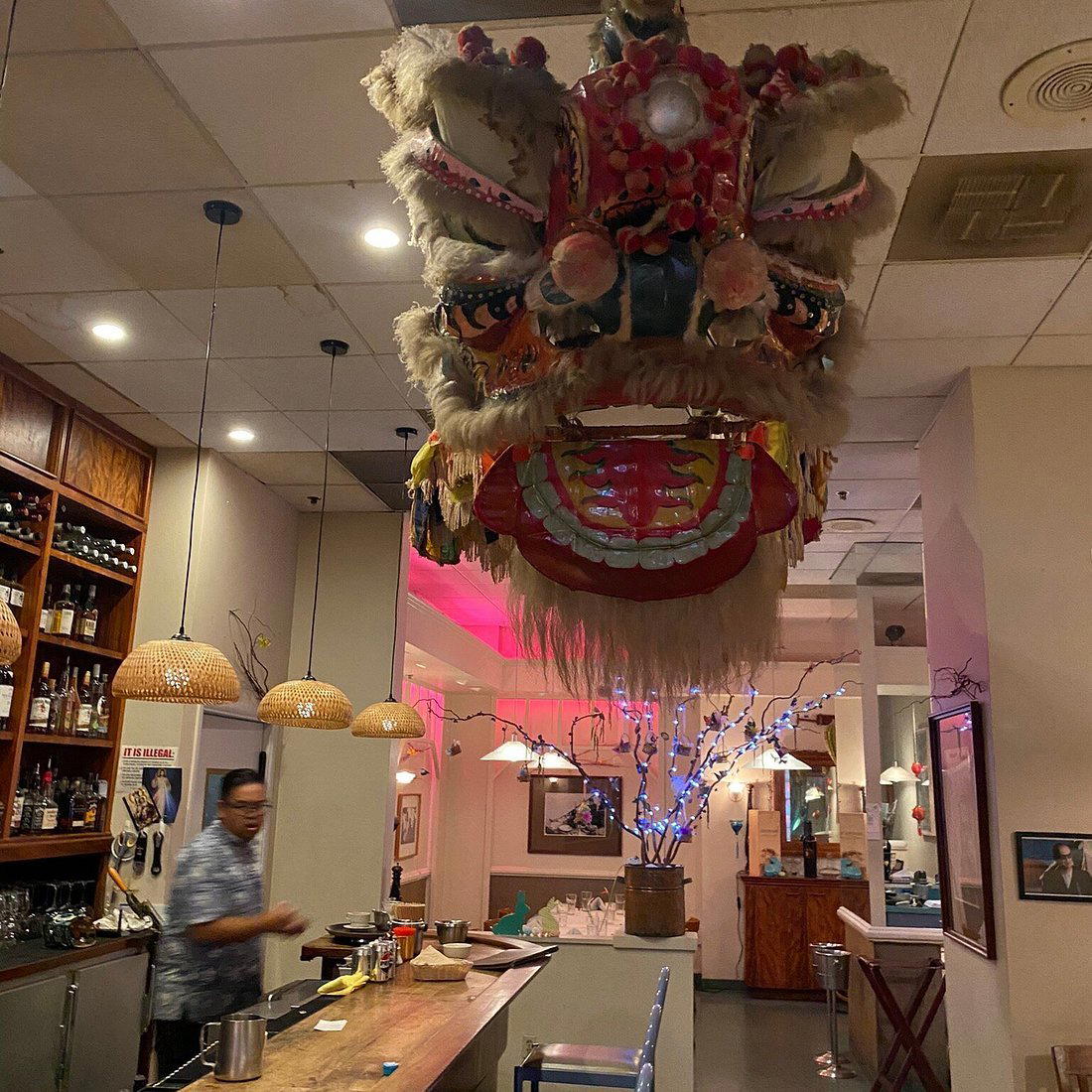
Duc's Bistro occupies the working Chinatown corridor at 1188 Maunakea St, not the resort strip — which sets the tone immediately. The room operates on a regulars economy: tables turn on familiarity rather than spectacle, and the pace reflects a neighborhood that has been feeding Honolulu since the city's oldest Chinatown district took shape. First-time visitors are welcome, but the room is calibrated for people who come back.
How do I find Duc's Bistro?
Duc's Bistro is located at 1188 Maunakea St, Honolulu, HI 96817, Honolulu.
Is Duc's Bistro a good option for dining away from Waikiki in Honolulu?
For anyone looking to step outside the Waikiki and resort corridor, Honolulu's Chinatown — where Duc's Bistro sits at 1188 Maunakea St — is one of the city's oldest and most active dining districts. The neighborhood runs on competition and repeat custom rather than tourist volume, which generally keeps quality honest. It's a short distance from downtown Honolulu and accessible by TheBus, with street parking available but limited.
What should I eat at Duc's Bistro?
The printed menu at a Chinatown bistro like Duc's rarely tells the full story — the corridor's dining culture runs on unwritten regulars' orders that shift by season and supply. Ask what the kitchen is running that day rather than anchoring to a static list. Given the Maunakea Street location in Honolulu's Chinatown, expect the menu to reflect the corridor's cross-cultural pantry, where Vietnamese, Chinese, and local Hawaiian influences overlap in practical, unfussy ways.
Cost Snapshot
| Venue | Cuisine | Price |
|---|---|---|
| Duc's BistroThis venue — the venue you are viewing | Vietnamese-French Fusion Bistro | $50–100 |
| Fête | Modern American Farm-to-Table | $50–100 |
| Liliha Bakery | Not listed | $10–20 |
| Sushi Izakaya Gaku | Authentic Japanese Sushi & Izakaya | $50–100 |
| Miro Kaimuki | French-Japanese Fusion | $100–150 |
| Zigu | Japanese Izakaya with Local Hawaiian Fusion | $50–100 |