Eating House 1849 by Roy Yamaguchi - Waikiki, Oahu
Our verdict
Eating House 1849 by Roy Yamaguchi brings Hawaii Regional Cuisine to the heart of Waikiki at 2330 Kalākaua Ave, placing the culinary tradition that reshaped Hawaii's food identity into a Waikiki dining room where Pacific ingredients and technique-forward cooking meet one of Oahu's most visited thoroughfares. The restaurant sits inside a broader story about how chef-driven concepts have repositioned resort-corridor dining in Honolulu.

Pearl is the En Primeur Club membership app — saves, bookings, and concierge access live there. Same editors, same standards.
- Address
- 2330 Kalākaua Ave #322, Honolulu, HI 96815
- Phone
- (808) 924-1849
- Hours
- Mon–Fri 4–9 PMSat–Sun 10:30 AM–2 PM, 4–9 PM
- Website
- royyamaguchi.com
- Directions
- Get directions
- Booking
- Book on OpenTable
The menu
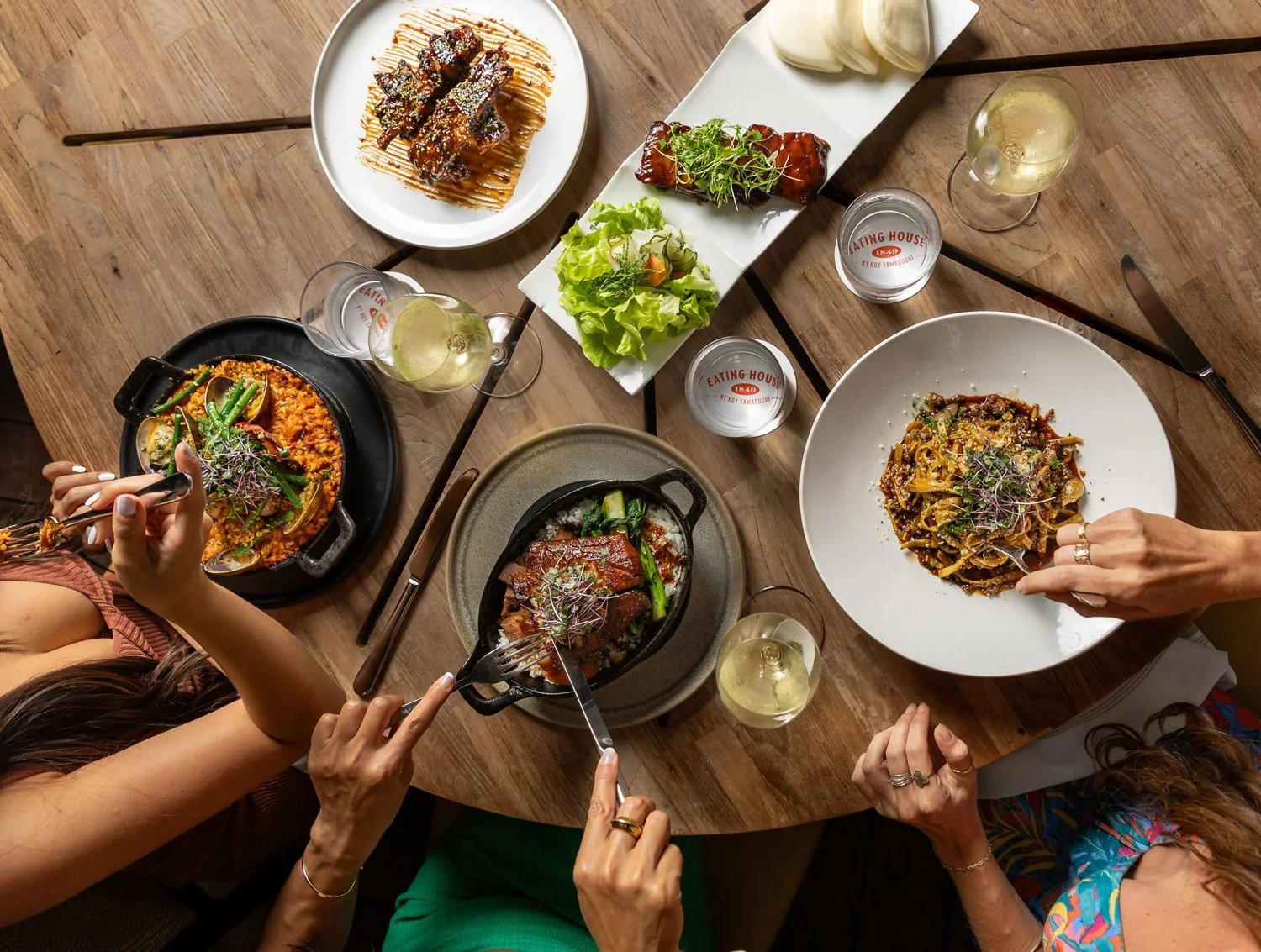
What to order
- Build-Your-Own Catch
- Kampachi Crudo with Three Types of Roe
- Spicy Ahi Roll with Takuan and Truffle Kabayaki Sauce
- Ume-Glazed Pork Belly Bao Buns
- Plantation Paella
A Waikiki Dining Room Built Around a Culinary Argument
Kalākaua Avenue in Waikiki is not where most serious food conversations in Honolulu begin. The boulevard runs through one of the most commercially saturated stretches of real estate in the Pacific, and for decades its restaurants tracked tourist volume rather than kitchen ambition. The arrival of chef-driven concepts along this corridor — and specifically inside the shopping and dining complexes that line it — represents a meaningful shift in how premium dining positions itself in Hawaii's most-visited neighborhood. Eating House 1849 by Roy Yamaguchi, at 2330 Kalākaua Ave, Suite 322, sits inside that shift, functioning as a Waikiki outpost for a cooking tradition that carries considerable historical weight in these islands.
The Architectural Container: Third-Floor Dining Above the Street
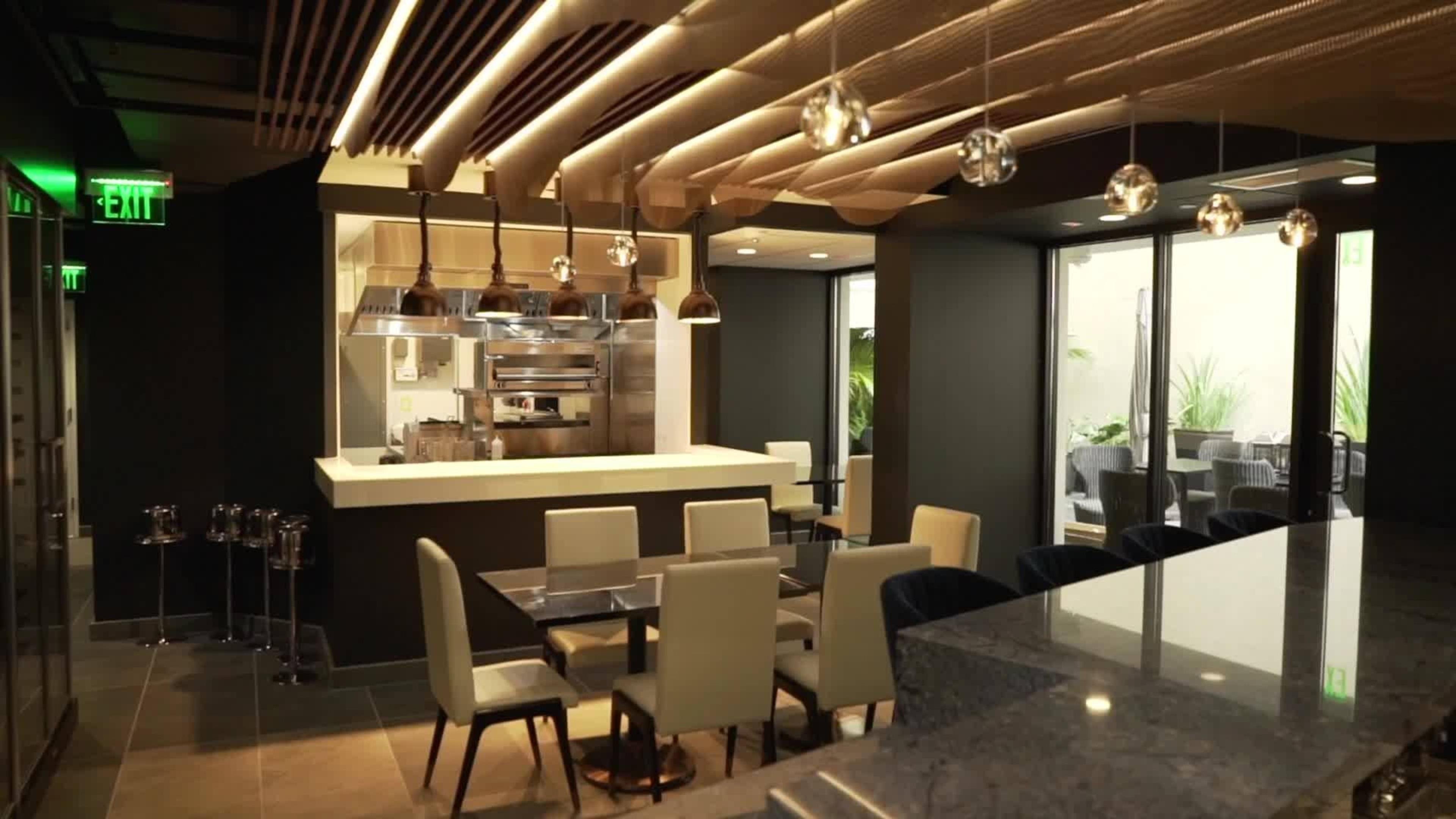
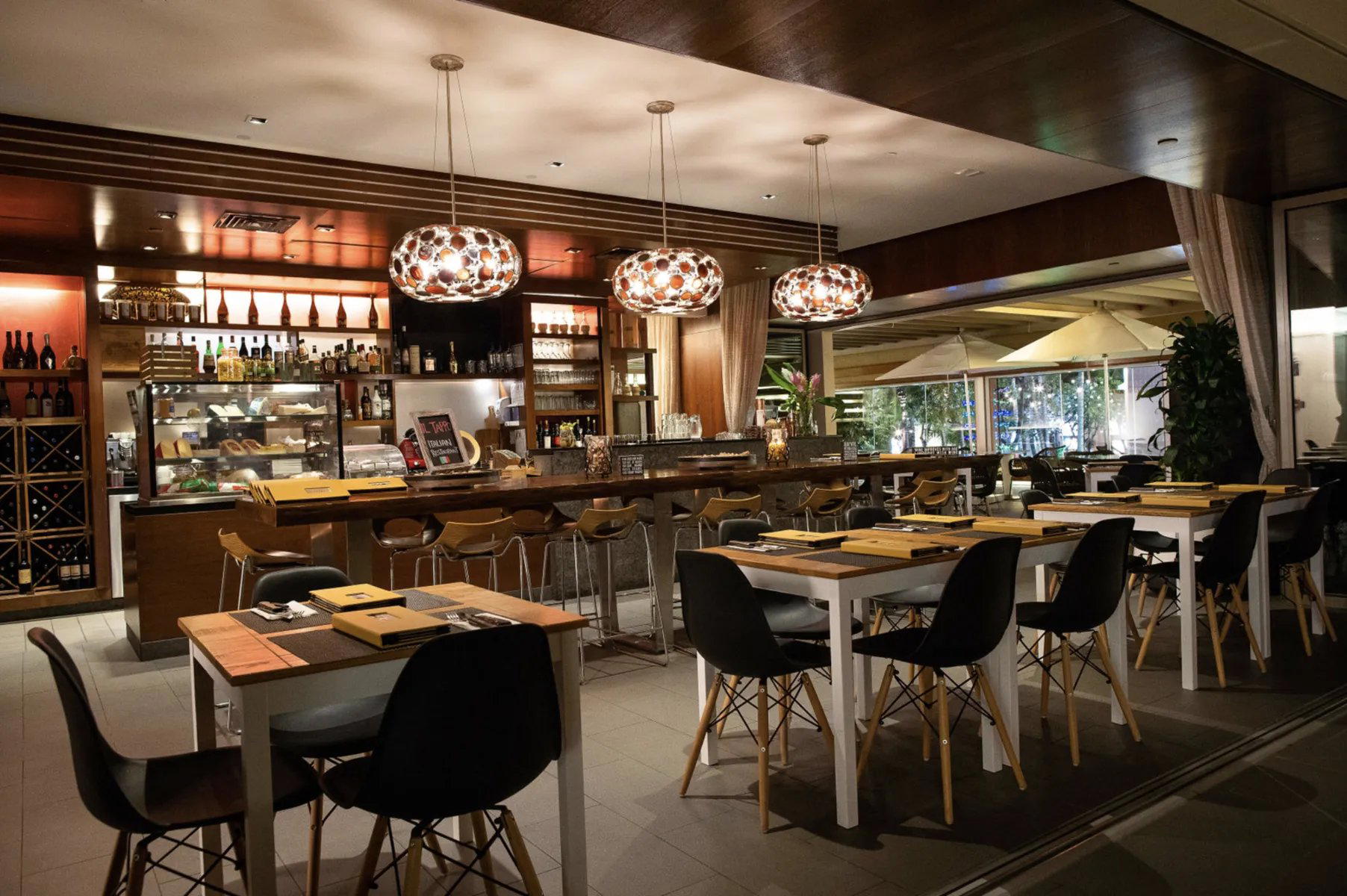
The physical address, a third-floor suite inside a multi-level retail and dining complex on the Kalākaua strip, shapes the experience before a dish arrives. Hawaii Regional Cuisine, the movement that Roy Yamaguchi helped found in 1991 alongside eleven other chefs, was originally conceived in deliberate opposition to the generic continental menus that filled hotel dining rooms across the islands. Placing a restaurant tied to that lineage inside a contemporary mixed-use development in Waikiki carries a certain irony, but it also reflects how the city's dining geography has evolved. The corridors and open-air passages of Waikiki's newer retail complexes function less like malls and more like covered streets, with the transition from avenue to upper-level dining room creating a separation from the sidewalk energy below that more traditional restaurant buildings achieve through facades and entranceways. The suite format means the dining room is defined by its interior decisions rather than by a street presence, a spatial logic that places emphasis on what happens inside the four walls rather than on approach and arrival.
In design terms, this is a known challenge for restaurants in vertical retail: the room must carry the full weight of establishing atmosphere, because there is no forecourt, no canopy, no architectural facade doing preliminary work. Whether through light, material, or seating arrangement, the interior has to orient the diner quickly. For a concept tied to a chef with Roy Yamaguchi's public profile, a James Beard Award winner whose original Roy's in Hawaii Kai opened in 1988 and helped define what Hawaii Regional Cuisine looked like in practice, that interior framing matters as a signal of intent.
Hawaii Regional Cuisine as a Dining Category, Not Just a Menu Style
To understand where Eating House 1849 positions itself in Honolulu's dining scene, it helps to understand what Hawaii Regional Cuisine actually argues. The movement that Yamaguchi and his peers formalized in the early 1990s made a specific claim: that Hawaii had its own pantry, fresh fish from local waters, produce from island farms, ingredients from its plantation-era multicultural heritage, and that serious cooking should draw from that pantry rather than importing continental frameworks wholesale. The 1849 in the name references the year Hawaii's plantation era began, an explicit anchor to the layered culinary inheritance that shapes the islands' food identity. Portuguese, Japanese, Chinese, Filipino, and Native Hawaiian influences all feed into that inheritance, and a restaurant that takes the name seriously carries an obligation to that complexity.
In the current Honolulu dining scene, that tradition has produced a varied field. Fête (New American) represents one version of contemporary island-influenced cooking; 3660 On the Rise holds its own place in the longer arc of Hawaii Regional Cuisine's development; and 53 By The Sea approaches the oceanic setting and local ingredient story from a different register. What distinguishes Eating House 1849's positioning is the explicit historical framing, the plantation-era reference built into the name, which sets expectations for a menu that addresses cultural layering rather than simply featuring local produce.
Waikiki's Chef-Driven Dining Tier
Waikiki's dining tier has fragmented meaningfully over the past decade. At one end, hotel restaurants maintain high-volume operations calibrated to broad tourist demand; at the other, a smaller group of chef-associated concepts operate with a sharper culinary identity, targeting visitors who are specifically seeking that identity alongside Honolulu residents making the trip into the tourist corridor. Eating House 1849 occupies this second position. The Roy Yamaguchi name functions as a credential signal in a neighborhood where credentials are frequently gestured at but rarely substantiated. His James Beard Award for Leading Chef: Pacific Northwest and Hawaii (1993) remains a verifiable benchmark in that credential system, one that places the restaurant in a different competitive register than the average Kalākaua Avenue address.
For context on what that level of recognition implies, it's worth noting that the broader range of chef-driven American dining includes names like Le Bernardin in New York City, The French Laundry in Napa, Lazy Bear in San Francisco, and Providence in Los Angeles, restaurants where the chef's public identity is woven into the dining proposition at every level. In Hawaii, Yamaguchi operates in that same model, where the name attached to the room carries a specific culinary argument. Other US restaurants that operate with comparable chef-identity frameworks include Emeril's in New Orleans, Smyth in Chicago, Single Thread Farm in Healdsburg, Blue Hill at Stone Barns in Tarrytown, Addison in San Diego, The Inn at Little Washington in Washington, and Atomix in New York City, each making a case that the chef's perspective should shape the reader's decision, not just the food category. Internationally, a similar logic applies at places like Atelier Moessmer Norbert Niederkofler in Brunico, where regional identity anchors the entire dining proposition.
Planning Your Visit
Eating House 1849 sits at 2330 Kalākaua Ave, Suite 322, in the heart of Waikiki, reachable on foot from most Waikiki hotels and accessible by the city's bus network along the Kalākaua corridor. Waikiki dining in peak season, particularly December through March and June through August, runs at capacity across the mid-to-upper tier, so advance planning by at least a week or two is a reasonable baseline; restaurants carrying a named chef's identity tend to fill faster than that during holidays. Visitors staying further along the island who want to cover more ground in Honolulu's broader dining scene should also consider 855-ALOHA, Ahaaina Luau, and the wider picture available in our full Honolulu restaurants guide.
Frequently asked questions
Where is Eating House 1849 by Roy Yamaguchi - Waikiki, Oahu located?
Eating House 1849 by Roy Yamaguchi - Waikiki, Oahu is located at 2330 Kalākaua Ave #322, Honolulu, HI 96815, Honolulu.
What's the signature dish at Eating House 1849 by Roy Yamaguchi in Waikiki?
What the restaurant is built around, as a concept, is Roy Yamaguchi's Hawaii Regional Cuisine framework — locally sourced ingredients prepared through a lens shaped by both Japanese technique and global influence. Checking directly with the restaurant at 2330 Kalākaua Ave, Suite 322 will give you the current menu picture.
How far ahead should I plan for Eating House 1849 by Roy Yamaguchi - Waikiki, Oahu?
Reservations are recommended for Eating House 1849 by Roy Yamaguchi - Waikiki, Oahu in Honolulu. Confirm current policy via the venue's official channels.
What has Eating House 1849 by Roy Yamaguchi - Waikiki, Oahu built its reputation on?
Eating House 1849 by Roy Yamaguchi - Waikiki, Oahu is best approached by focusing on the core concept and signature offerings.
Is Eating House 1849 by Roy Yamaguchi - Waikiki, Oahu allergy-friendly?
Dietary accommodations can vary. Flag restrictions in advance via the venue's official channels.
Cuisine and Awards Snapshot
Comparable venues nearby, for context on price, style, and recognition.
| Venue | Cuisine | Price | Notes |
|---|---|---|---|
| Eating House 1849 by Roy Yamaguchi - Waikiki, OahuThis venue — the venue you are viewing | Modern Hawaiian Plantation Fusion | $50–100 | Not listed |
| 855-ALOHA | Modern Hawaiian Fusion Izakaya | $50–100 | Kapahulu |
| Tangö Contemporary Cafe | Scandinavian-Asian Fusion Bistro | $30–50 | Ala Moana |
| Fresco Italian Restaurant | Italian with Hawaiian Fusion | $30–50 | Waikiki |
| Robata JINYA - Honolulu | Japanese Robatayaki Izakaya | Not listed | Ala Moana |
| Basalt | Local Hawaiian Fusion | $30–50 | Waikiki |