Surfjack Hotel & Swim Club

Michelin Selected
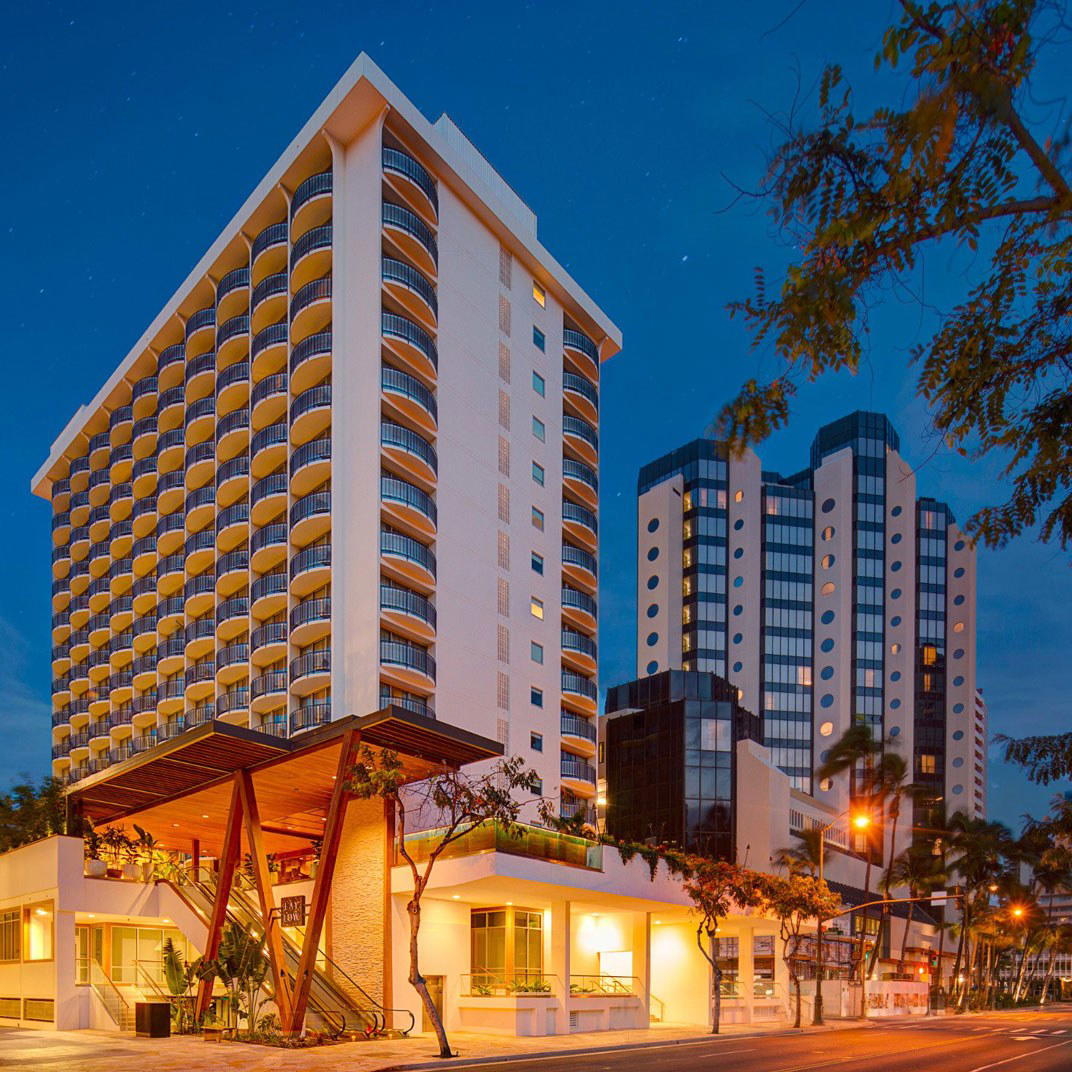
On Lewers Street in the heart of Waikiki, Surfjack Hotel & Swim Club occupies a distinct tier among Honolulu's design-led properties: smaller in scale, sharper in aesthetic, and positioned for travelers who want the neighborhood over the resort corridor. The swim club format and mid-century Hawaiian sensibility set it apart from the larger branded properties along the beach strip.

Pearl is the En Primeur Club membership app, where members save venues, book tables and use the concierge.
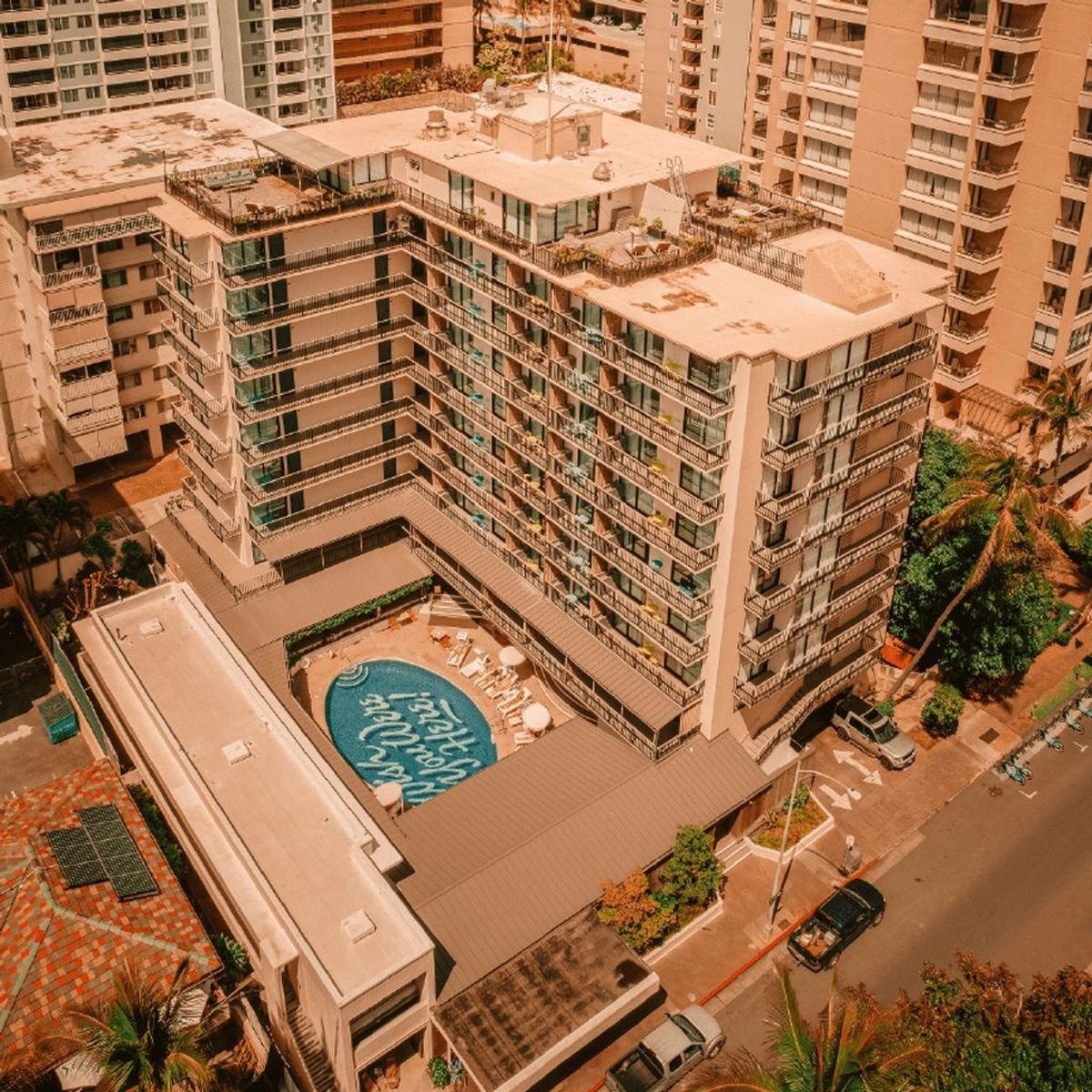
The Case for Staying Off the Resort Corridor
Waikiki's hotel market has long been defined by scale. The major flagged properties along Kalakaua Avenue, including the Hilton Hawaiian Village Waikiki Beach Resort and the Hyatt Regency Waikiki Beach Resort and Spa, operate at a volume and footprint that reflects the mass-market ambitions of Hawaiian tourism's postwar boom. That model delivers consistency and amenity depth, but it also produces a kind of sensory flattening: the same lobby materials, the same breakfast buffets, the same encounter with 400 other guests at the elevator bank. A smaller, design-conscious alternative has emerged alongside it, and Surfjack Hotel & Swim Club at 412 Lewers Street sits squarely in that alternative tier.
Lewers Street runs perpendicular to Kalakaua, pulling you one block inland from the main commercial drag and into a slightly quieter register of Waikiki. The building's mid-century bones and swim club format signal something intentional about the property's positioning: it is drawing on Hawaiian surf culture's pre-resort-era identity rather than the theme-park version that dominates the beachfront. That distinction matters when you consider how many Honolulu properties perform Hawaiian-ness as decorative layer over an otherwise generic hotel template. Here, the aesthetic logic runs deeper than the lobby art.
Swim Club Culture as Organizing Principle
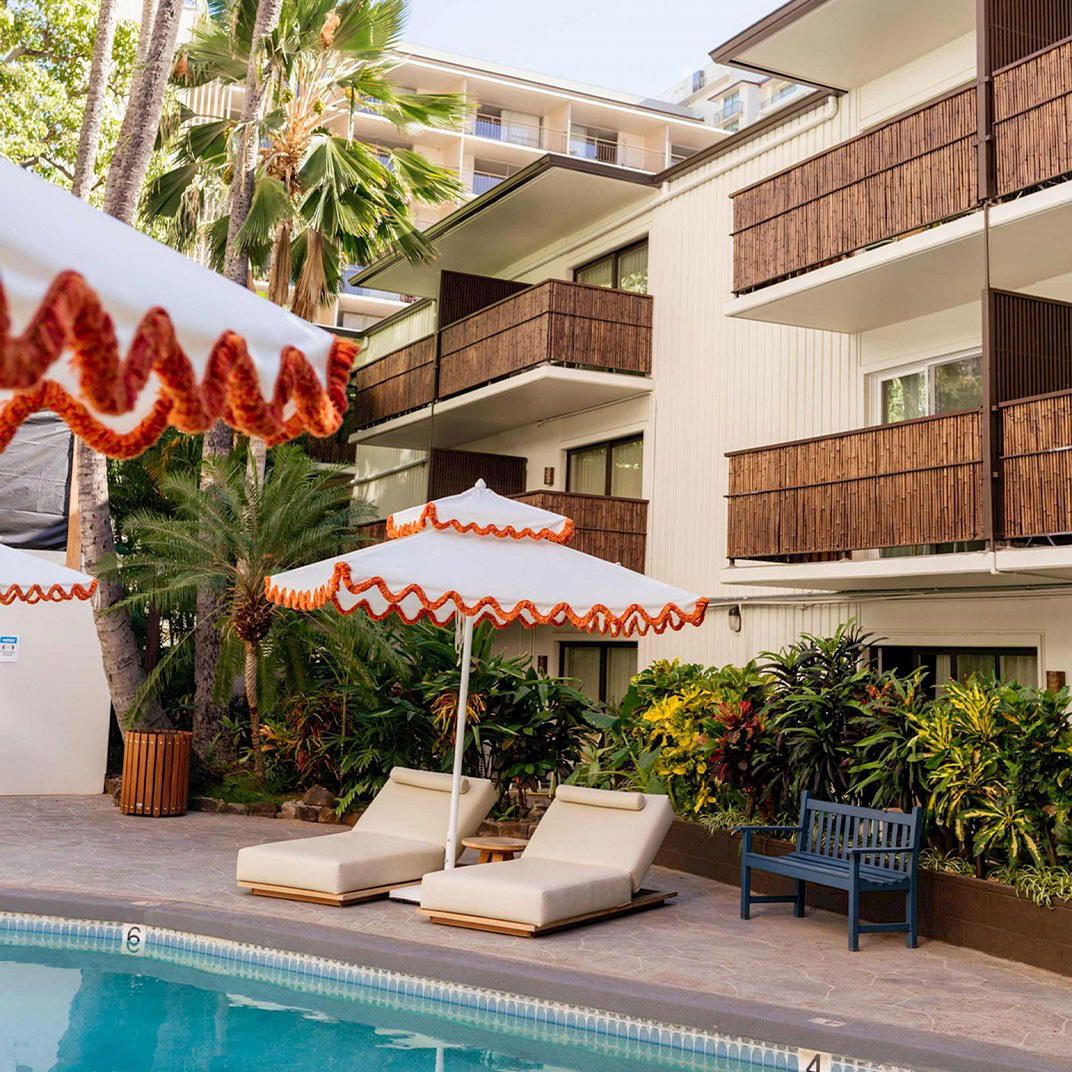
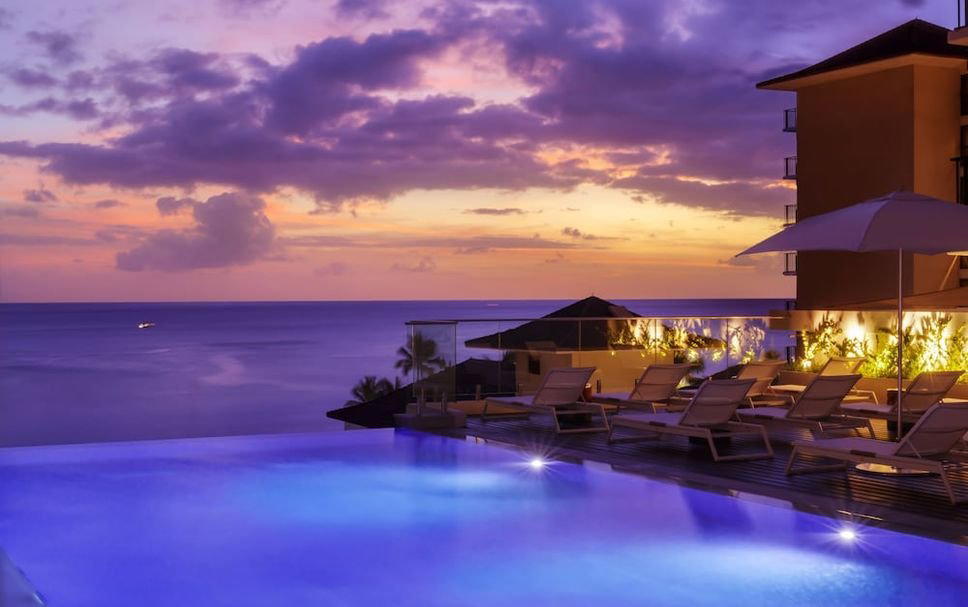
The swim club format is not common in American urban hospitality, and its appearance in Waikiki is worth examining as a broader trend signal. In cities like Los Angeles and Miami, the pool has become a social hub that rivals the bar or restaurant as a primary gathering point for hotel guests and day visitors alike. Properties like the Four Seasons at The Surf Club in Surfside have built their entire identity around a historic pool and club tradition. Surfjack deploys the same logic at a smaller scale and lower price point, making the pool the social center of the property rather than an amenity appended to it.
That framing changes how the property functions day to day. The pool area draws a crowd that mixes hotel guests with local members and neighborhood regulars, which is precisely the kind of community permeability that most large resort properties in Waikiki are structurally unable to produce. The Hilton Vacation Club The Modern Honolulu and comparable properties operate as largely self-contained environments; Surfjack's swim club model operates more like a neighborhood institution that happens to have hotel rooms above it.
Where It Sits in the Honolulu Design-Hotel Conversation
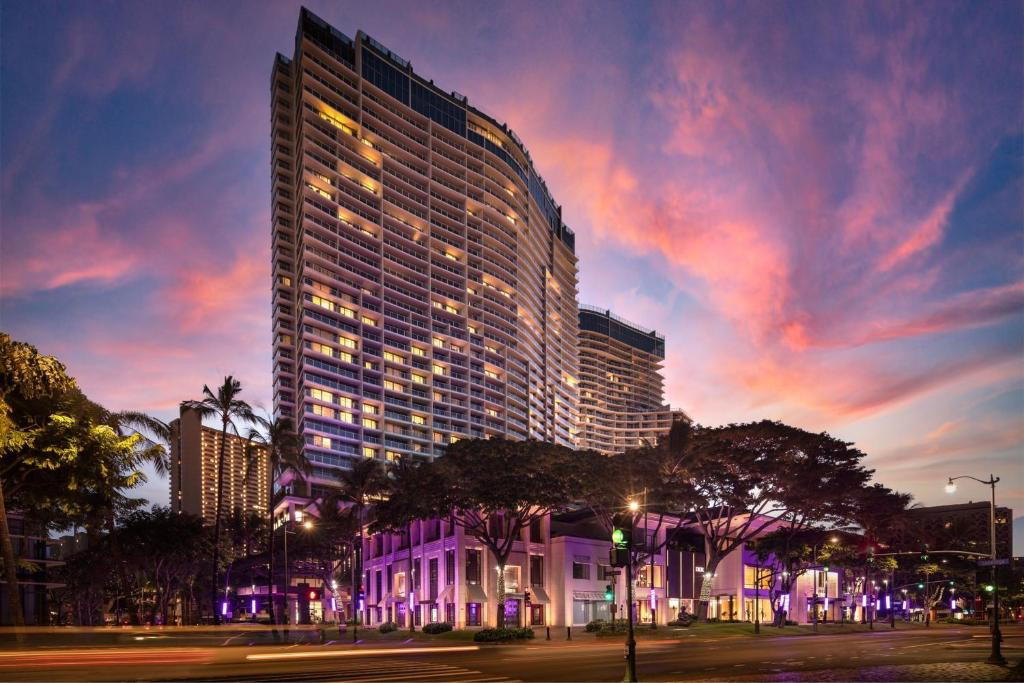
Honolulu's design-led hotel cohort is small but growing. Hotel Renew occupies a similar niche, with a boutique footprint and a considered aesthetic that contrasts with the large branded properties. The Coconut Waikiki Hotel operates at the affordable end of the same spectrum. Surfjack positions itself between those poles: more personality than a standard mid-range property, more accessible than the heritage luxury of the Moana Surfrider, A Westin Resort & Spa, Waikiki Beach or the The Royal Hawaiian, a Luxury Collection Resort, Waikiki.
It is closer to properties like Troutbeck in Amenia or Sage Lodge in Pray: smaller, character-driven properties where the physical environment and community feel are doing the heavy lifting that amenity lists do at larger hotels. The comparison is not geographic but conceptual, pointing to a traveler type who values a coherent sense of place over square footage or points programs.
Sustainability and Community Anchoring in Hawaiian Hospitality
Hawaiian tourism carries a particular weight of environmental responsibility that has no easy parallel in continental American hospitality. The islands' ecological fragility, the pressure that mass tourism places on reef systems and freshwater resources, and the complex political and cultural questions around land use all push the sustainability conversation further than it typically goes in, say, a boutique hotel in Nashville or Austin. Properties that take these pressures seriously tend to operate differently from those that treat sustainability as a marketing posture.
For a property rooted in surf culture, the reef is not an abstract environmental concern. Surfjack's swim club identity ties it to the water in a way that creates a logical through-line between the property's aesthetic identity and responsible environmental practice. Reef-safe sunscreen policies, water conservation measures, and sourcing decisions that reduce the carbon cost of island-based hospitality are the kinds of commitments that make sense within this framing, not as add-ons but as extensions of what the property is already claiming to stand for.
The broader Hawaiian hospitality context is worth noting here. Properties like Kona Village, A Rosewood Resort in Kailua Kona have built significant sustainability commitments into their operating model, partly because the remoteness of their locations demands it and partly because their guest profile expects it. Urban Honolulu properties face different constraints, but the expectations are converging. Travelers who choose a design-led property over a mass-market alternative are increasingly making that choice with environmental reasoning alongside aesthetic preference.
Community connection is the other dimension. Waikiki has a complicated relationship with the neighborhoods surrounding it; decades of resort development have created a hospitality district that can feel disconnected from everyday Honolulu life. The swim club model, by drawing in local members and building a regular crowd that is not solely composed of tourists, pushes against that disconnection in a structural rather than superficial way. You can find similar community-anchoring logic at properties like SingleThread Farm Inn in Healdsburg, where the hotel's relationship to local agriculture and farming community is embedded in the operating model, not layered on as narrative.
How to Approach Your Stay
For travelers comparing options across Waikiki, the decision framework is fairly clear. If proximity to the beach and full-service resort amenities are the priority, the OUTRIGGER Reef Waikiki Beach Resort and its peers on the beachfront are the more direct choice. If the priority is a property with a distinct character, a social environment that extends beyond the hotel guest pool, and a location that puts you in Waikiki's walkable mid-section rather than its most congested stretch, Surfjack's Lewers Street address makes operational sense.
Booking directly through the property's own channels, where available, typically produces the most flexibility on room type and any available rate adjustments. Given the property's smaller scale relative to the major branded hotels, room availability moves faster at peak periods, particularly during winter months when the North Shore surf season draws additional visitor volume to the islands. Planning ahead by six to eight weeks for high-demand dates is a reasonable baseline.
The our full Urban Honolulu restaurants guide covers the dining options within walking distance of Lewers Street, which are considerably more varied than the resort-corridor options suggest. Waikiki's walkable dining and bar scene has developed significantly, and the Surfjack's location puts you within easy reach of it without committing you to the property's own food and beverage offerings for every meal.
For travelers whose broader itinerary extends across the Americas, the design-led independent hotel cohort that Surfjack belongs to has strong representatives elsewhere: Post Ranch Inn in Big Sur, Hotel Bel-Air in Los Angeles, and Little Palm Island Resort & Spa in Little Torch Key each represent the same preference for character and place-specificity over branded scale, even as they operate at quite different price points and in very different environments.
A Pricing-First Comparison
A quick peer list to put this venue’s basics in context.
| Venue | Price | Awards |
|---|---|---|
| Surfjack Hotel & Swim ClubThis venue (the venue you are viewing) | $200–300 | Michelin Selected |
| Hotel Renew | $200–300 | Not listed |
| Hilton Hawaiian Village Waikiki Beach Resort | $300–500 | Not listed |
| Moana Surfrider, A Westin Resort & Spa, Waikiki Beach | $300–500 | Michelin Selected |
Recognition history
Dated appearances from independent guides and award organizations, with the underlying list record or original source where available.
Michelin Selected
Michelin
Continue exploring
More in Honolulu
Hotels in Honolulu
All hotels in Honolulu →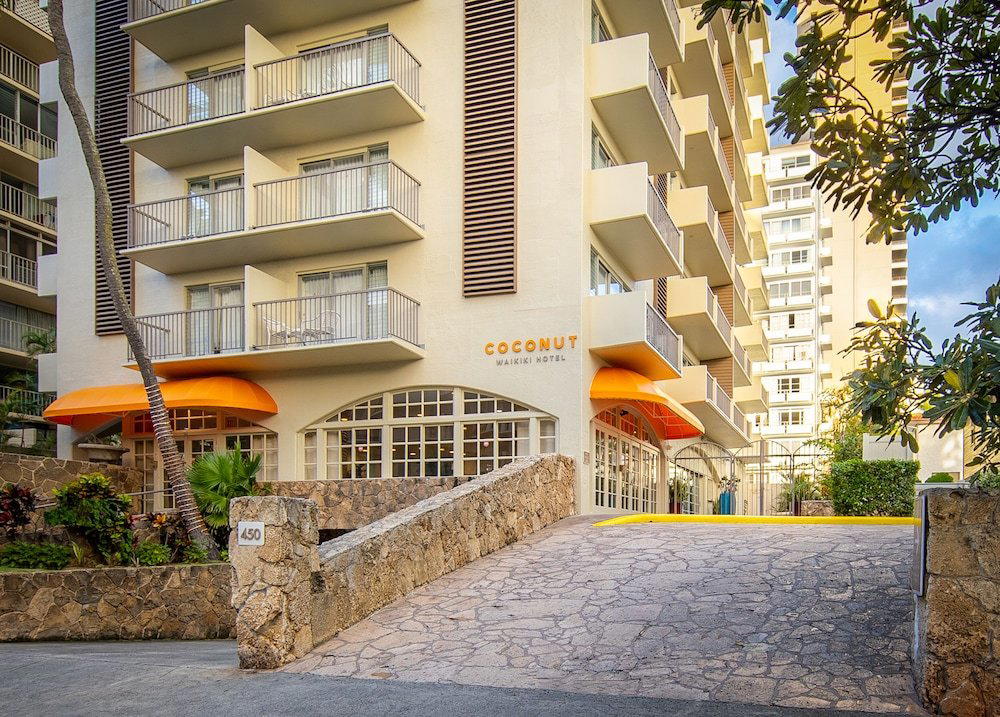
Details
- Trendy
- Lively
- Modern
- Bohemian
- Weekend Escape
- Family Vacation
- Rooftop Pool
- Pool
- Wi Fi
- Restaurant
- Concierge
Laid-back, energetic atmosphere with mid-century modern design, poolside entertainment, DJs, and live music in a retro beach bungalow style.