Our verdict
Lianhu Road runs through the heart of Xi'an's Bell Tower district, where the city's oldest street-food traditions and its contemporary dining ambitions press against each other. The area's food offer spans hand-pulled noodles, lamb skewers over charcoal, and layered flatbreads eaten standing at counters, a condensed argument for why Xi'an's culinary identity is built on grain and smoke rather than refinement.

Pearl is the En Primeur Club membership app, where members save venues, book tables and use the concierge.
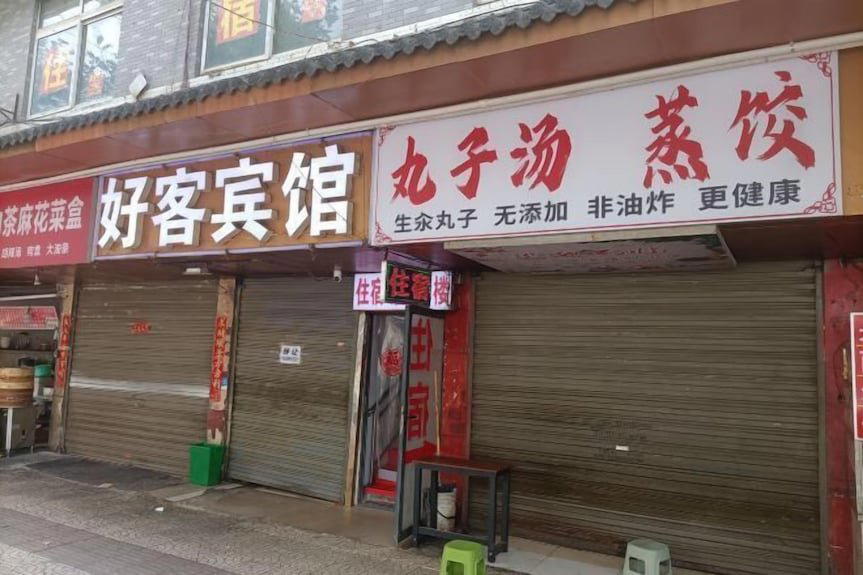
Where Xi'an's Street Food Logic Becomes Legible
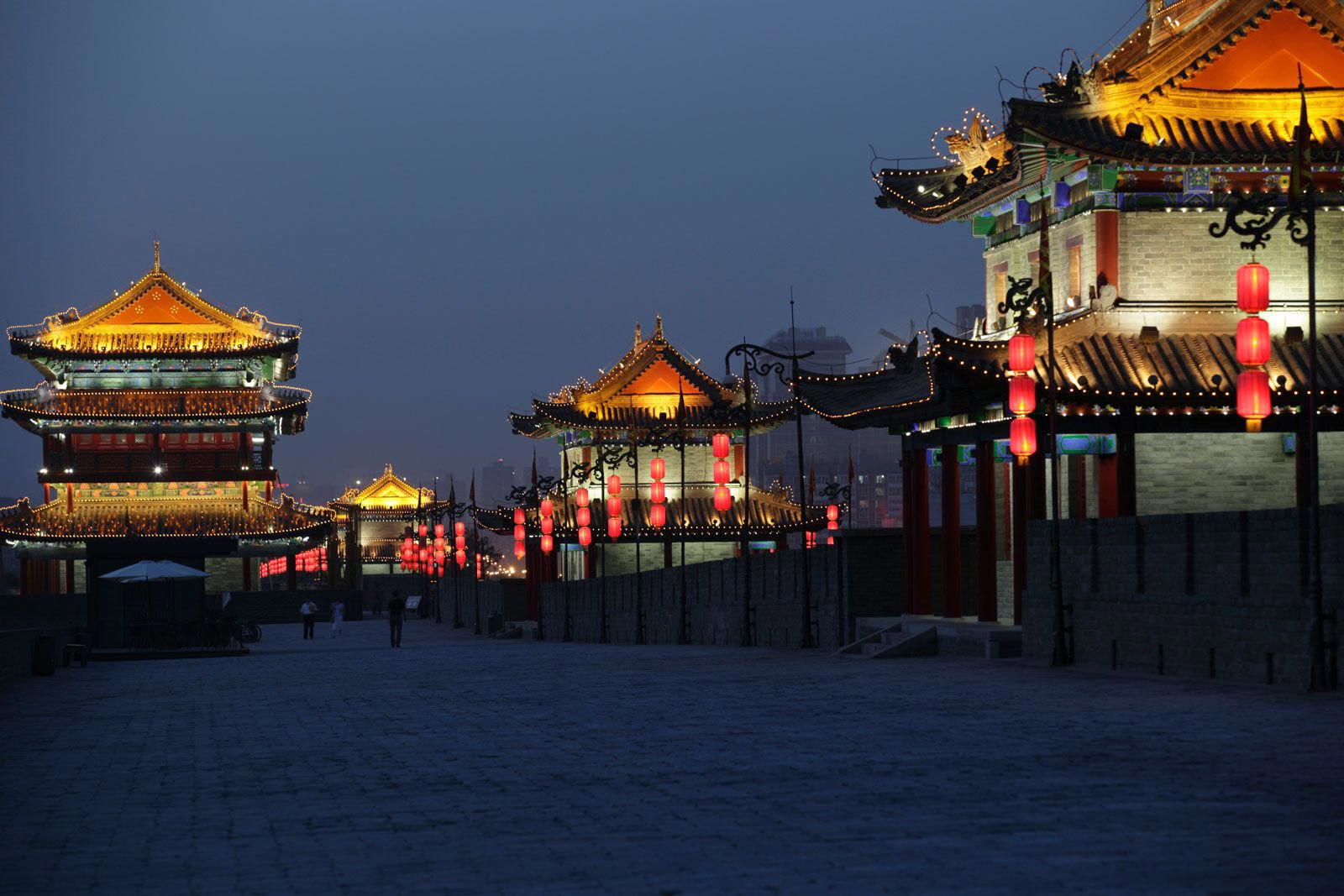
There is a particular quality to Xi'an's food streets that distinguishes them from comparable strip-dining cultures in other Chinese cities. The offer is not organised around novelty or spectacle. It is organised around technique, the same four or five preparations, executed daily for decades, refined by repetition rather than reinvention. Lianhu Road, running through the Lianhu District adjacent to the Bell Tower commercial zone, sits inside that tradition. The street and its immediate surroundings form one of the denser concentrations of Shaanxi food in central Xi'an, where the architecture of what is on offer says as much about the city's culinary history as any single dish.
Xi'an's position on the old Silk Road left a food culture that is genuinely distinct from the rest of northern China's grain-heavy traditions. Central Asian influence shows up in the prevalence of lamb, cumin, and flatbread formats that have no real parallel in Beijing or Tianjin. That influence is not decorative, it is structural, embedded in how the city's food economy was built and what it continues to produce at street level. Lianhu Road operates inside that inherited framework.
The Architecture of What Gets Served
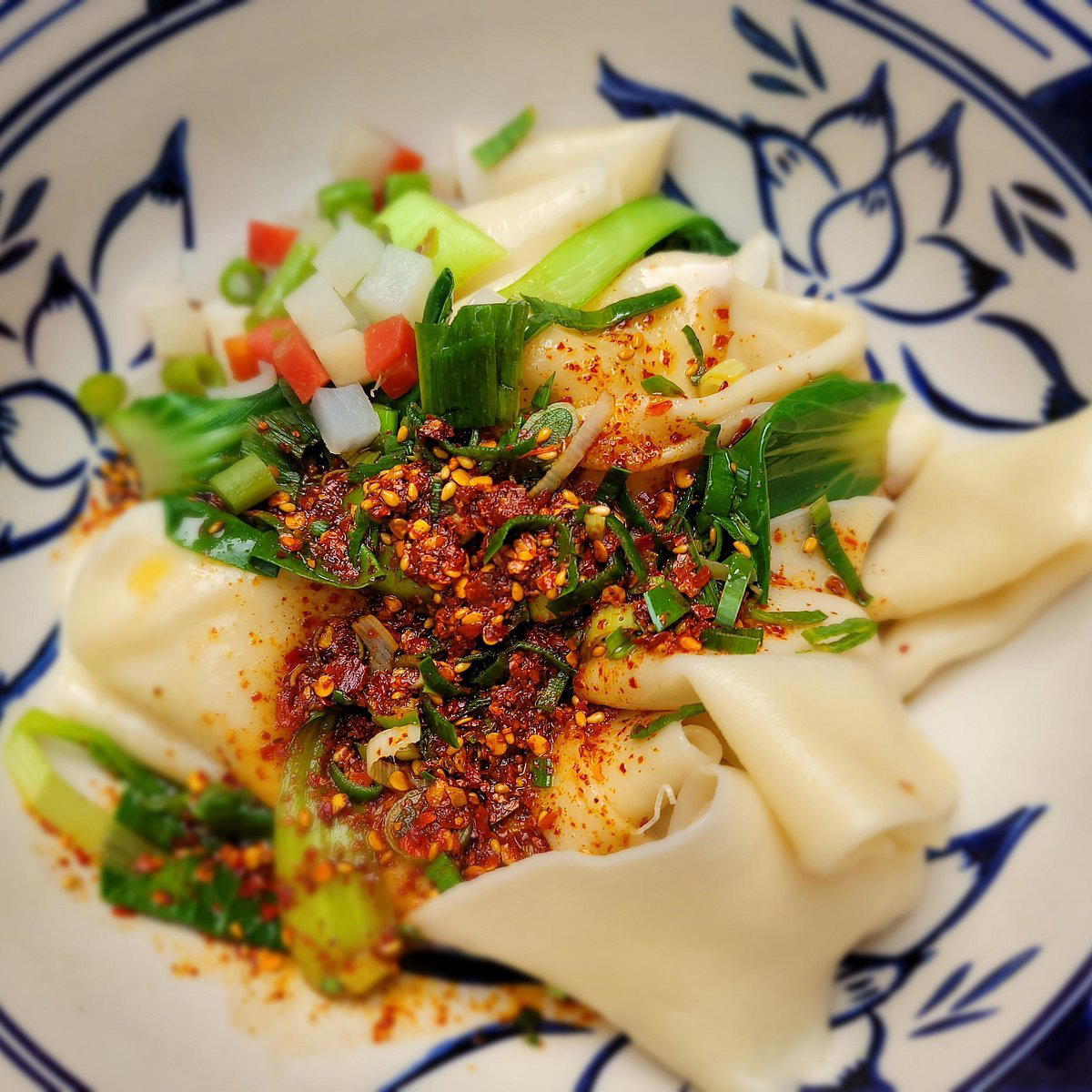
The menu logic of Xi'an's street eating, and Lianhu Road is a fair representative of it, follows a grammar that rewards attention. Dishes here are not composed in the European sense of component-and-protein assembly. They are built around a single carbohydrate base that is then modified by broth, fat, or heat. Biangbiang Mian, the belt-wide noodle that takes its name from the sound of dough being slapped against a counter, illustrates this plainly: the noodle is the dish, and everything else, chilli oil, garlic, vinegar, scallion, is calibration rather than substance.
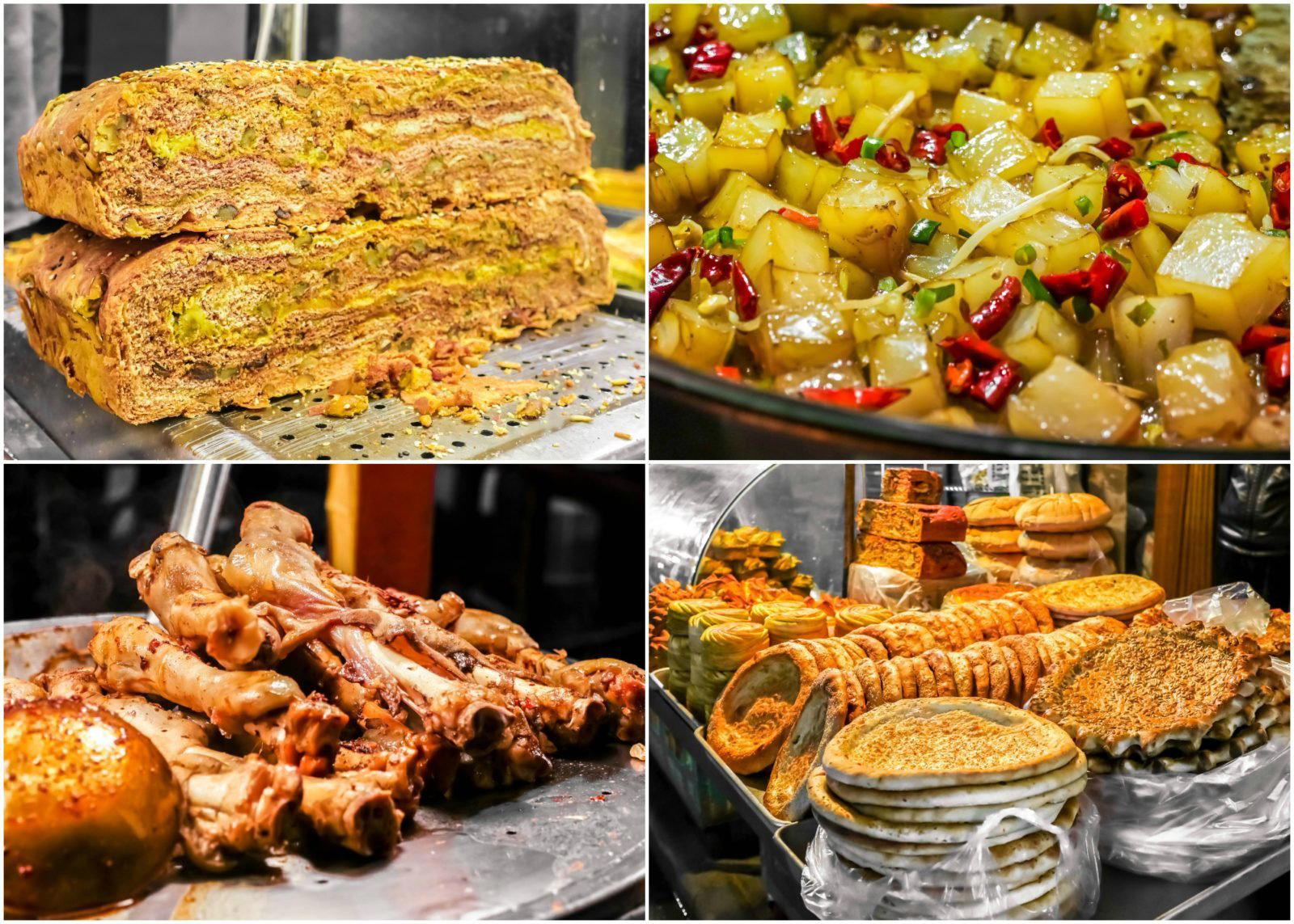
The same logic applies to rou jia mo, Xi'an's slow-braised pork flatbread, sometimes called a Chinese burger by writers reaching for shorthand. The description undersells the bread and overstates the filling. The flatbread itself, baked in a clay oven until it develops a hard outer crust and a soft layered interior, is the technical achievement. The filling is the seasoning. Stalls and small restaurants along corridors like Lianhu Road produce these in volume, which is the leading condition under which to eat them, hot, continuous, repetitive production means the bread never sits.
Yang rou pao mo, the lamb and bread soup that may be Xi'an's most labour-intensive street food, operates on different principles. The diner tears unleavened flatbread into a bowl by hand, and the broth is poured over it. The ratio of bread to broth is a matter of preference, negotiated silently between the diner and the server. Restaurants in this area that serve pao mo are typically open from morning through to early afternoon, when the broth runs out, a practical ceiling that structures the day's eating around early arrival.
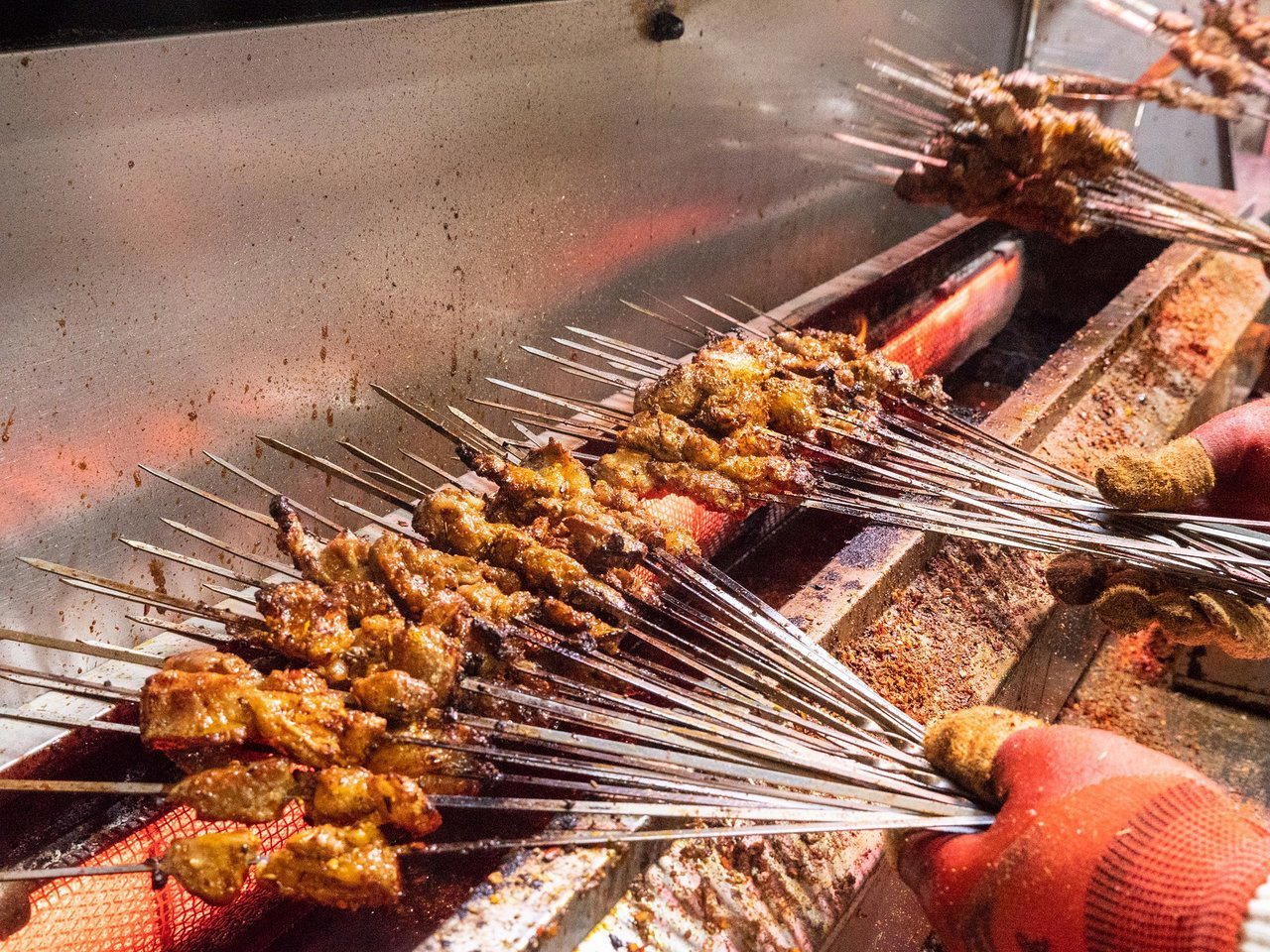
For lamb skewers and open-fire preparations, Xi'an's Muslim Quarter and its surrounding streets have historically operated through Hui Chinese cooking traditions, a cuisine that is halal by practice and Central Asian in its spice logic. Maijia Alabo Barbecue represents that strand in the Xi'an dining offer, while the broader skewer culture visible along Lianhu Road and adjacent streets sits within the same tradition: cumin-heavy, charcoal-driven, served without ceremony.
Where Lianhu Road Sits in Xi'an's Dining Tier
Xi'an's dining scene has a structure that differs from China's tier-one cities. In Shanghai, Beijing, or Chengdu, there is a pronounced separation between street-level eating and formal restaurant dining, with a growing middle tier of modernist Chinese restaurants, venues like Fu He Hui in Shanghai or Xin Rong Ji in Chengdu, operating between those poles. Xi'an's middle tier is thinner. The city's culinary identity is concentrated at the informal end, and the premium end, where you find venues like Chef Tam's Seasons in Macau or Imperial Treasure Fine Chinese Cuisine in Guangzhou, has little local equivalent.
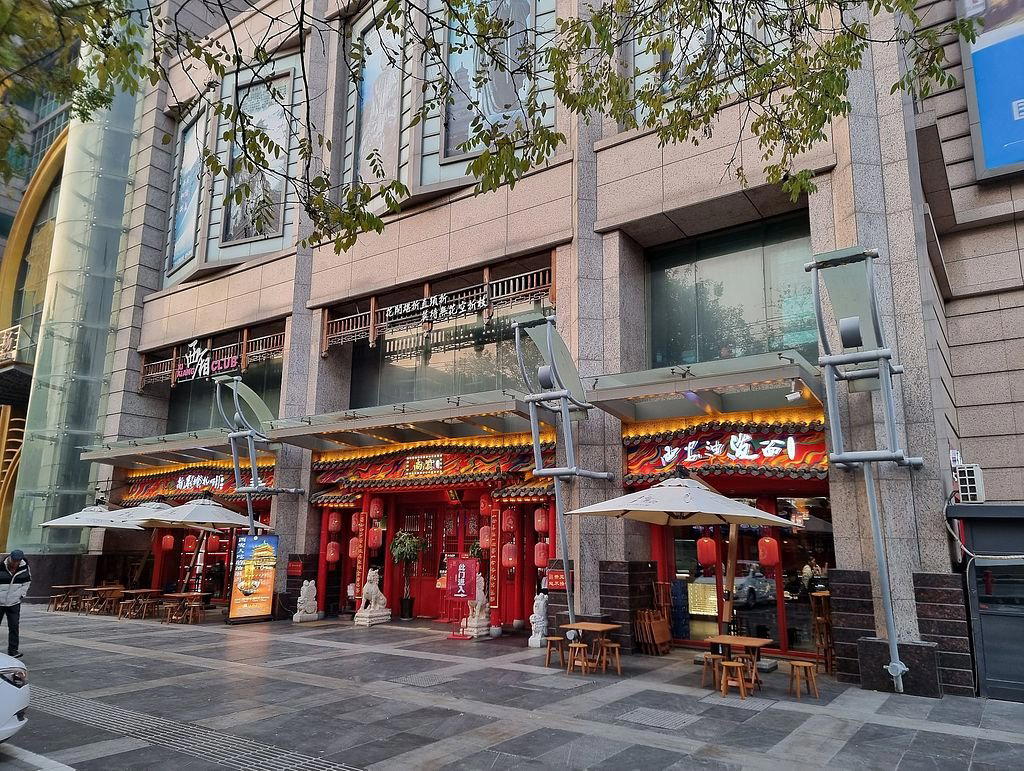
That gap is not a deficit. It reflects what Xi'an's food offer actually does well: it compresses culinary value into accessible formats. The leading eating in the Lianhu District and Bell Tower area does not require a reservation or a spend threshold. It requires orientation, knowing which preparation to prioritise, and at what time of day. Venues like Defachang and Hanyangguan represent the more established, fixed-address end of this ecosystem, with Feng Cheng Ba Lu adding a different format to the area's options.
Compared to more formal Chinese dining contexts, say, Xin Rong Ji on Xinyuan South Road in Beijing or Dai Yuet Heen in Nanjing, eating along Lianhu Road operates on a completely different register. There is no tasting menu architecture, no wine program, no sequence logic. The meal is assembled by walking, choosing, and repeating.
Timing, Approach, and Practical Orientation
Lianhu Road sits within the 710003 postal zone of Xi'an's Bell Tower commercial district, a central location accessible from most of the city's hotel corridor. The area is dense and navigable on foot from the Bell Tower itself. Xi'an's street food culture functions on an early-morning and lunchtime rhythm for hot broth dishes, and an evening rhythm for skewers and flatbreads. Arriving at Lianhu Road in the mid-afternoon places you between those peaks, serviceable, but not optimal.
The area does not require advance planning in the way that a reservation-only tasting counter does. Walk-in access is the norm across the informal dining end of the spectrum here. For visitors comparing Xi'an's street eating against more structured experiences, venues like Ru Yuan in Hangzhou or Fleurs Et Festin in Xiamen, the difference in format is complete. Xi'an at street level is not a structured dining experience in any conventional sense. It is a daily food system that happens to be accessible to visitors who know what they are looking at.
For a fuller map of where Lianhu Road fits within Xi'an's broader dining picture, see our full Hsi An restaurants guide.
Frequently asked questions
Where do I go for Lianhu Road?
Lianhu Road is located at 7W9M+VJ4, Lianhu Rd, 钟楼商圈 Lianhu District, Xi'An, Shaanxi, China, 710003, Hsi An.
How does Lianhu Road compare to the Muslim Quarter (Huimin Jie) for food in Xi'an?
Both Lianhu Road and the Muslim Quarter draw on Hui Chinese cooking and the Shaanxi grain-and-lamb tradition, so the core dishes overlap significantly. The Muslim Quarter carries higher tourist traffic and a broader night-market atmosphere, while Lianhu Road, within the Lianhu District at postal code 710003, functions more as a working food corridor oriented toward local eating patterns. Visitors looking for the same regional food canon with less pedestrian congestion often find Lianhu Road the more navigable option.
What should I order at Lianhu Road?
The Shaanxi grain-based canon is the clearest starting point: biangbiang noodles (wide, belt-like, dressed with chilli oil and vinegar), rou jia mo (braised pork flatbread, sometimes called a Chinese burger), and yang rou pao mo, the lamb-and-flatbread soup that requires the diner to tear their own bread into the bowl before serving. These are not fusion adaptations, they are the dishes Xi'an's cooking is historically built around, and Lianhu Road's stalls and counter restaurants represent the format in which they have always been served.
Should I book Lianhu Road in advance?
No reservation is needed. Lianhu Road's eating offer runs on a walk-in basis across street stalls, flatbread vendors, and small counter restaurants, the format does not support or require advance booking. The area sits within Xi'an's 710003 Bell Tower commercial district, which is centrally located and accessible from most of the city's accommodation clusters, making it a practical stop without planning around a fixed table.
What's the standout thing about Lianhu Road?
The concentration of Shaanxi's core food traditions in a single walkable corridor is the clearest answer. Xi'an's formal dining counterparts elsewhere in China tend to separate cuisines by restaurant category and price tier; here, the full grain-and-lamb grammar of Shaanxi cooking, noodles, flatbreads, Hui-inflected lamb dishes, sits within a few hundred metres and is accessible at street-stall prices. That density, rather than any single dish or vendor, is what makes the road useful as an orientation point for the city's food.
Recognition, Side-by-Side
A quick peer list to put this venue’s basics in context.
| Venue | Cuisine | Price |
|---|---|---|
| Lianhu RoadThis venue (the venue you are viewing) | NorthWestern Chinese | Not listed |
| Biangbiang Mian | Xi'an Hand-Pulled Biang Biang Noodles | $1–10 |
| Defachang | Traditional Shaanxi Dumpling House | $10–20 |
| Feng Cheng Ba Lu | Traditional Shaanxi Street Food | $1–10 |
| Hanyangguan | Korean Restaurant | Not listed |
| Maijia Alabo Barbecue | Chinese Barbecue | Not listed |
Continue exploring
More in Hsi An

Details
- Casual Hangout
- A La Carte
Standard restaurant atmosphere.