Our verdict
Hanyangguan occupies a courtyard address in Xi'an's Yanta District, placing it at the intersection of Tang Dynasty heritage and the city's dense, evolving restaurant scene. The kitchen draws on Shaanxi's grain-forward cooking traditions in a setting that reads more formal than the street-level competition along Muslim Quarter corridors. For visitors moving beyond the obvious food-street circuit, it represents a considered alternative within the same culinary geography.

Pearl is the En Primeur Club membership app, where members save venues, book tables and use the concierge.
Yanta District and the Geography of Xi'an Dining
Xi'an's restaurant scene divides along a fault line that most visitors never consciously register. The Muslim Quarter and Drum Tower corridor absorb the tourist footfall: Biangbiang Mian, Defachang, and the lamb skewer operations of Maijia Alabo Barbecue all concentrate in that northern band where the city performs its culinary identity for arriving travellers. South of the ancient walls, the Yanta District runs on a different register. It is primarily residential and administrative, anchored by the Big Wild Goose Pagoda and the cultural development zones that grew around Tang-era heritage sites through the 2000s and 2010s. Restaurants here address a local clientele with different expectations than those filtering through the Drum Tower souvenir circuit.
Hanyangguan sits within this southern context, at Datang Tongyifang on Yanta West Road. That address is telling. Datang Tongyifang is a pedestrianised commercial district built to evoke Tang Dynasty streetscape, complete with costumed figures and period-referencing architecture. It functions as a softer, more curated version of the Muslim Quarter experience, less about raw street food and more about a packaged sense of historical atmosphere. A restaurant choosing to operate there is making a deliberate positioning decision: it is placing itself inside a heritage-consumption frame while drawing on the residential density and middle-class spending patterns of the surrounding district.
Shaanxi Cooking as a Tradition in Its Own Right
Understanding what any serious Xi'an restaurant is working with requires a short detour into what Shaanxi cooking actually is, outside the biangbiang noodle exports that have become shorthand for the region internationally. The cuisine is built on wheat in a way that distinguishes it sharply from the rice-anchored traditions of the Yangtze Delta or the Pearl River Delta. Hand-torn noodles, flatbreads, and pita-style breads filled with slow-cooked meat form the structural backbone. Lamb is the dominant protein, a legacy of centuries of Silk Road trade and the city's substantial Hui Muslim population. Vinegar, cumin, and dried chilli appear as seasoning pillars rather than flourishes.
This is not a delicate or ingredient-fetishist cuisine in the way that, say, the vegetable-driven tasting menus at Fu He Hui in Shanghai engage with produce sourcing, or the technique-precise Cantonese cooking at Imperial Treasure Fine Chinese Cuisine in Guangzhou does with texture and timing. Shaanxi cooking is frank, grain-forward, and portion-generous. The challenge for any Xi'an restaurant operating above the street-stall tier is to apply enough care and sourcing discipline to justify a sit-down setting without stripping out the directness that makes the food compelling in the first place. Venues that hedge too far toward presentation at the expense of robustness tend to lose the argument. Those that hold to technique within a genuinely traditional repertoire build the more durable reputation.
Other Xi'an addresses like Feng Cheng Ba Lu and Lianhu Road demonstrate how differently individual kitchens interpret the same regional inheritance, from neighbourhood canteen formats to more composed dining rooms.
What the Address Implies for the Experience
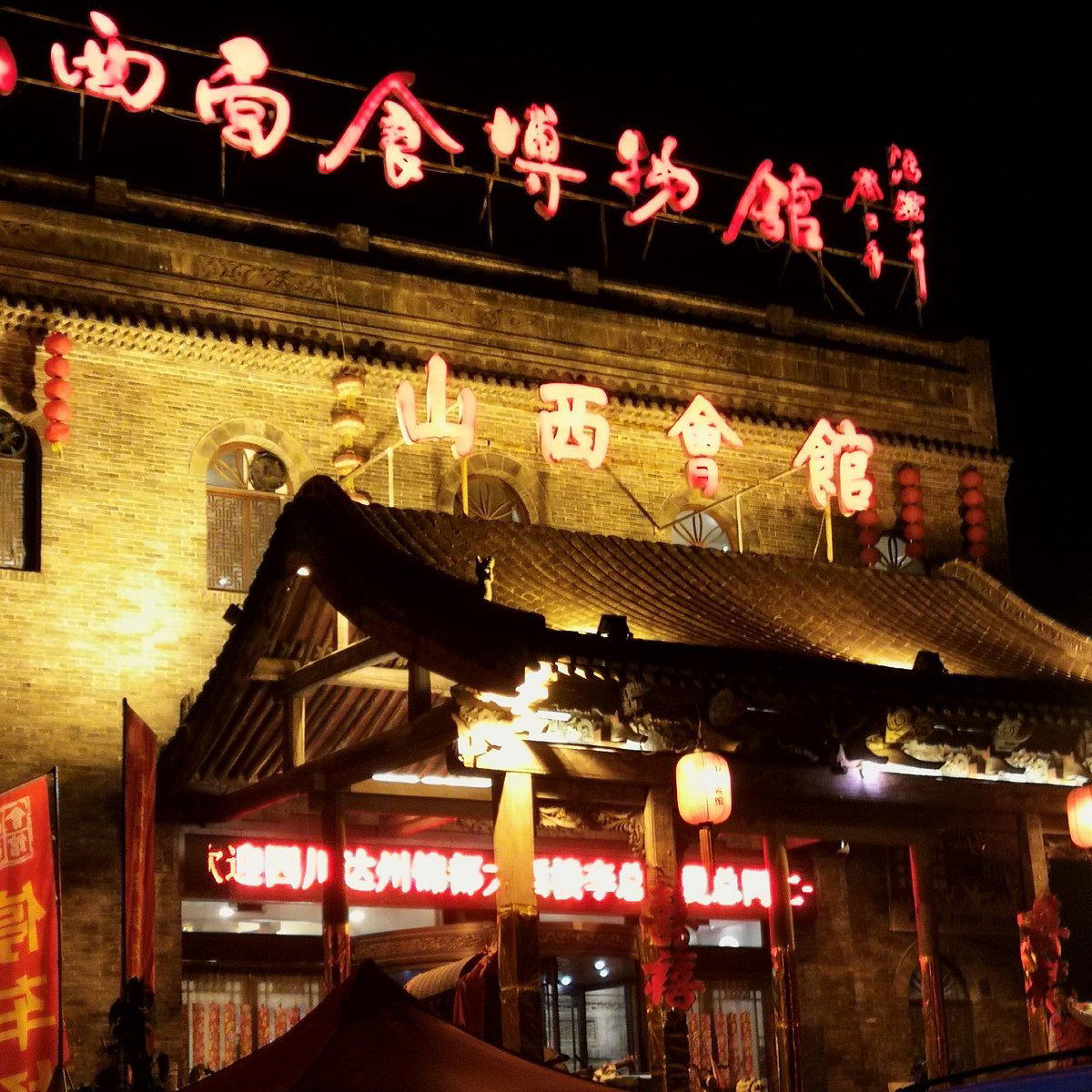
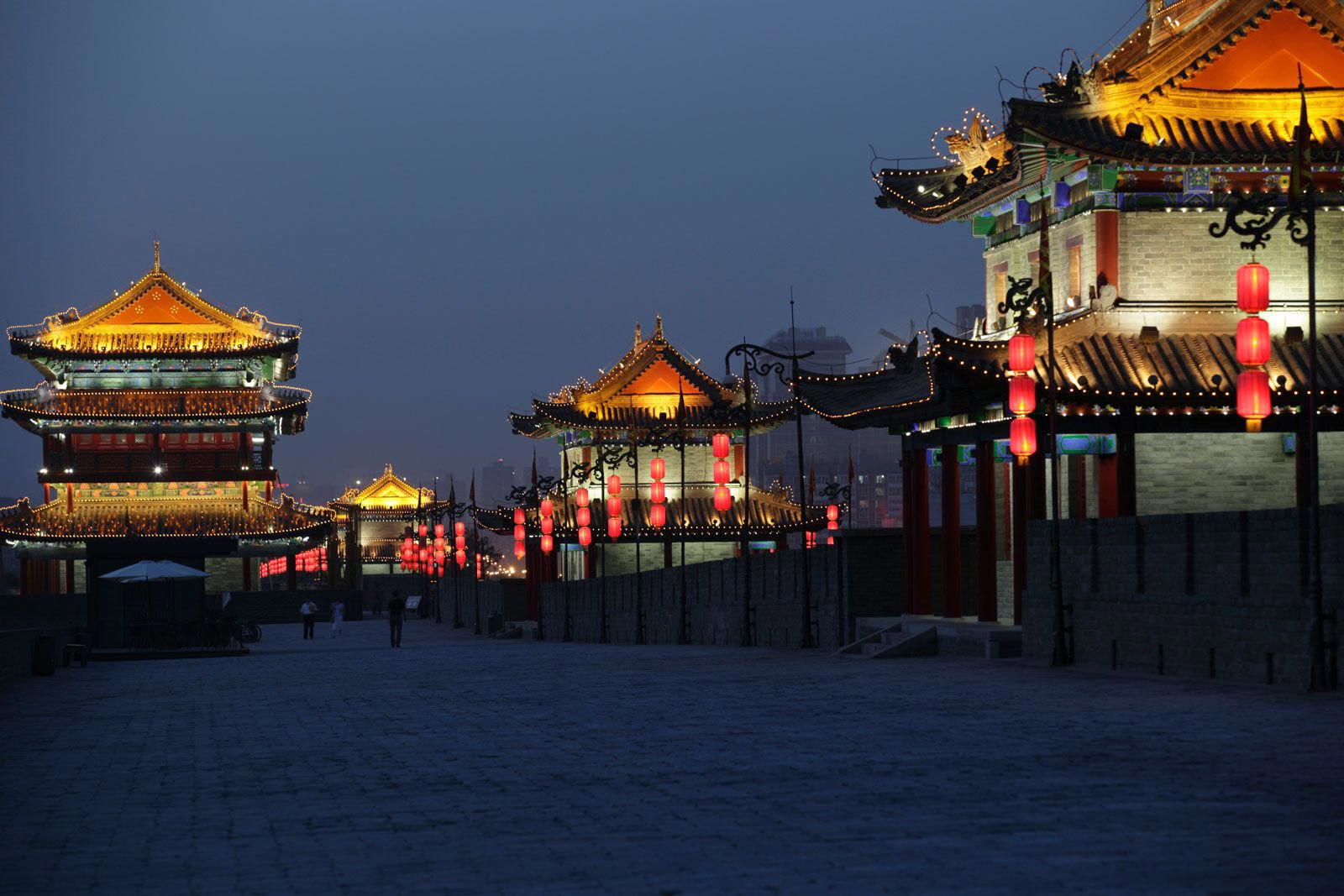
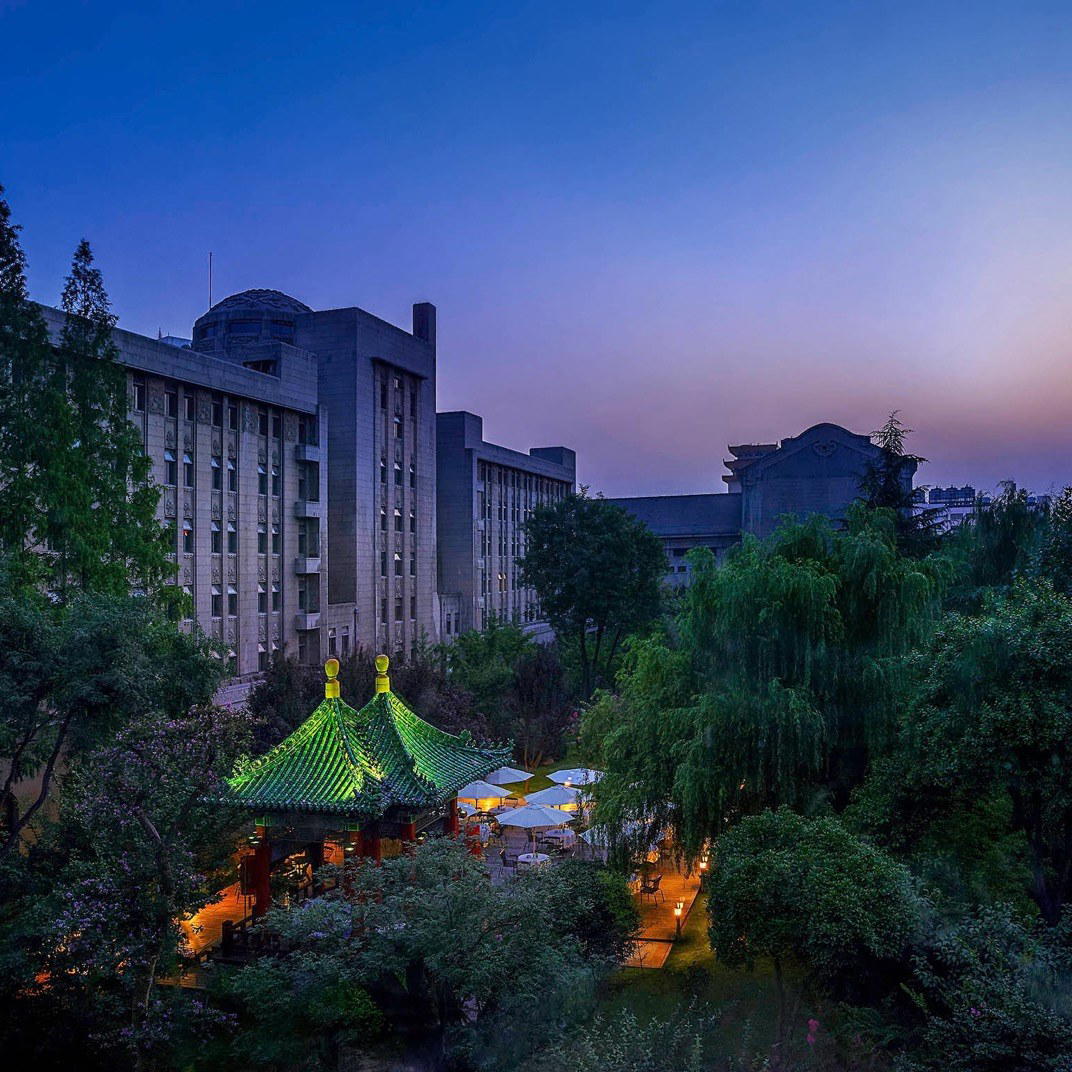
Arriving at Datang Tongyifang on foot from the Big Wild Goose Pagoda, the scale of the development becomes apparent. Wide pedestrianised lanes are lined with two- and three-storey buildings in Tang-period styling, the stone and carved timber detailing done with more budget than many comparable heritage-commercial developments in second-tier Chinese cities. At dusk, when lanterns light and the architectural scale is softer, the setting has genuine atmosphere. This is the physical environment Hanyangguan operates within, and it matters for how the meal reads contextually. Dining here is not the same act as eating at a functional counter in the Muslim Quarter. The surrounding frame is theatrical, curated, and calibrated for a visitor spending pattern that expects a certain amount of visual and atmospheric production alongside the food.
That framing positions Hanyangguan differently from the Xi'an venues that compete primarily on price-per-bowl economics. The relevant comparison is less with noodle counters and more with mid-format restaurants across China's historically anchored tourism districts: places where the food tradition and the place-making exercise operate simultaneously and ideally reinforce each other. Seen in that light, the proximity to Tang Dynasty cultural infrastructure is a feature, not just a detail of address. Visitors arriving from the Pagoda or the Shaanxi History Museum are already in a historicist frame of mind, and a restaurant that can translate that disposition into appetite has a structural advantage.
For travellers assembling a picture of how Xi'an dining has evolved relative to other Chinese cities with serious culinary reputations, the broader national context is instructive. The technique-led regional formalism of Xin Rong Ji in Beijing or the refined Jiangnan precision at Ru Yuan in Hangzhou both represent how regional Chinese kitchens have responded to the Michelin and 50 Best attention cycle of the 2010s. Xi'an has followed a different path, with its culinary identity so strongly readable at street level that the pressure to formalise it into fine-dining structures has been slower to materialise. The venues that have succeeded in the mid-range formal tier here have largely done so by amplifying setting and sourcing rather than restructuring the cuisine itself. Hanyangguan's Yanta District address places it within that middle tier rather than at the raw-street or the aspirationally fine-dining ends of the spectrum.
Planning a Visit
Yanta West Road and the Datang Tongyifang development are most easily reached from the Big Wild Goose Pagoda metro station on Xi'an Metro Line 3, which puts the address within a short walk of one of the city's primary heritage sites. That routing also makes it a logical endpoint for a southern Xi'an day that begins with the Shaanxi History Museum, roughly two kilometres north. Because the surrounding district draws significant foot traffic in the evenings, particularly among domestic tourists and younger Xi'an residents on weekends, arriving early in the dinner window generally produces a more settled atmosphere than arriving peak-hour. For a fuller account of where Hanyangguan sits within Xi'an's dining options, see our full Hsi An restaurants guide.
Frequently asked questions
What's the address for Hanyangguan?
Hanyangguan is located at China, Shaanxi, Xi'An, Yanta District, Yanta W Rd, 雁塔西路大唐通易坊4号 邮政编码: 710064, Hsi An.
Where exactly is Hanyangguan in Xi'an, and how do I get there?
Hanyangguan is at No. 4, Datang Tongyifang, Yanta West Road, Yanta District, a pedestrianised heritage development adjacent to the Big Wild Goose Pagoda in southern Xi'an. The nearest metro stop is Big Wild Goose Pagoda station on Xi'an Metro Line 3, placing the venue within a short walk. This part of the city sits well south of the old walled centre and the Muslim Quarter, so it warrants a dedicated trip rather than a quick detour.
What dish is Hanyangguan famous for?
The Datang Tongyifang address situates it among restaurants serving a local, rather than tourist-facing, clientele. Confirmed menu details are best sourced on arrival or through local aggregators.
Do I need a reservation for Hanyangguan?
Given its position in the Datang Tongyifang development near the Big Wild Goose Pagoda, a high-footfall area, visiting during off-peak lunch hours is a practical hedge against waits. Checking local Chinese platforms such as Dianping ahead of a visit is the most reliable current option.
What's the defining dish or idea at Hanyangguan?
Shaanxi cooking is the lens through which Hanyangguan should be read: a tradition built around wheat rather than rice, with braised meats, vinegar-sharpened sauces, and flour-based staples that bear little resemblance to the Cantonese or Sichuan styles most international visitors default to. The Yanta District address places it in the part of Xi'an that serves the city's own residents rather than the Drum Tower tourist corridor.
Is Hanyangguan good for vegetarians?
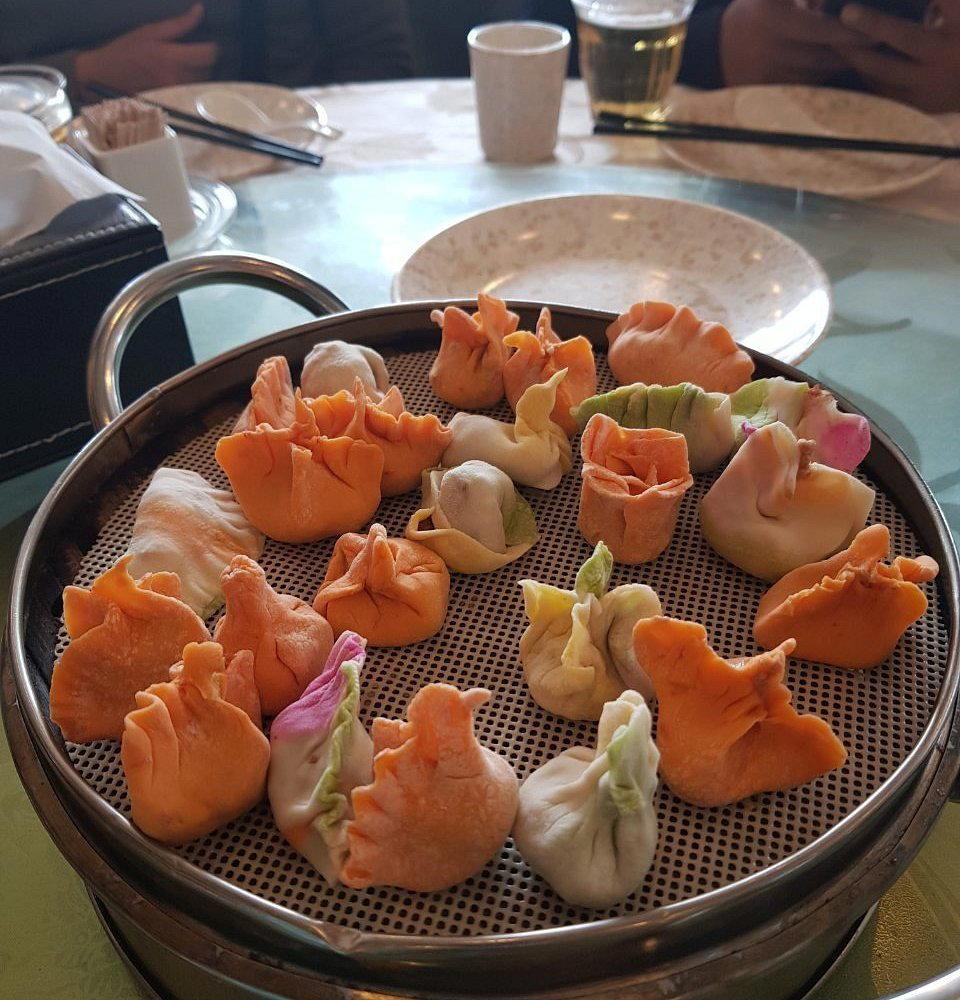
Shaanxi cuisine as a regional tradition leans heavily on mutton, pork, and beef, with flour-based dishes often prepared in meat stocks. That said, cold skin noodles and certain noodle preparations can be vegetarian-friendly depending on preparation.
A Tight Comparison
Comparable venues nearby, for context on price, style, and recognition.
| Venue | Cuisine | Price | Notes |
|---|---|---|---|
| HanyangguanThis venue (the venue you are viewing) | Korean Restaurant | Not listed | Not listed |
| Lianhu Road | NorthWestern Chinese | Not listed | Lianhu District, NorthWestern Chinese |
| Zhiwei Cold Noodle | Shaanxi Cold Noodles | Not listed | Dining |
| Biangbiang Mian | Xi'an Hand-Pulled Biang Biang Noodles | $1–10 | Baishulin, Xi'an Hand-Pulled Biang Biang Noodles |
| Maijia Alabo Barbecue | Chinese Barbecue | Not listed | Hsi-an, Chinese Barbecue |
| 钟楼站 | Traditional Shaanxi Dumplings | $10–20 | 钟鼓楼, Traditional Shaanxi Dumplings |
Continue exploring
More in Hsi An
Restaurants in Hsi An
All restaurants in Hsi An →
Details
- Classic
- Casual Hangout
- A La Carte
Current opening hours
- Monday
- 10 AM–10 PM
- Tuesday
- 10 AM–10 PM
- Wednesday
- 10 AM–10 PM
- Thursday
- 10 AM–10 PM
- Friday
- 10 AM–10 PM
- Saturday
- 10 AM–10 PM
- Sunday
- 10 AM–10 PM
Hours can change for holidays and private events. Hours as of .
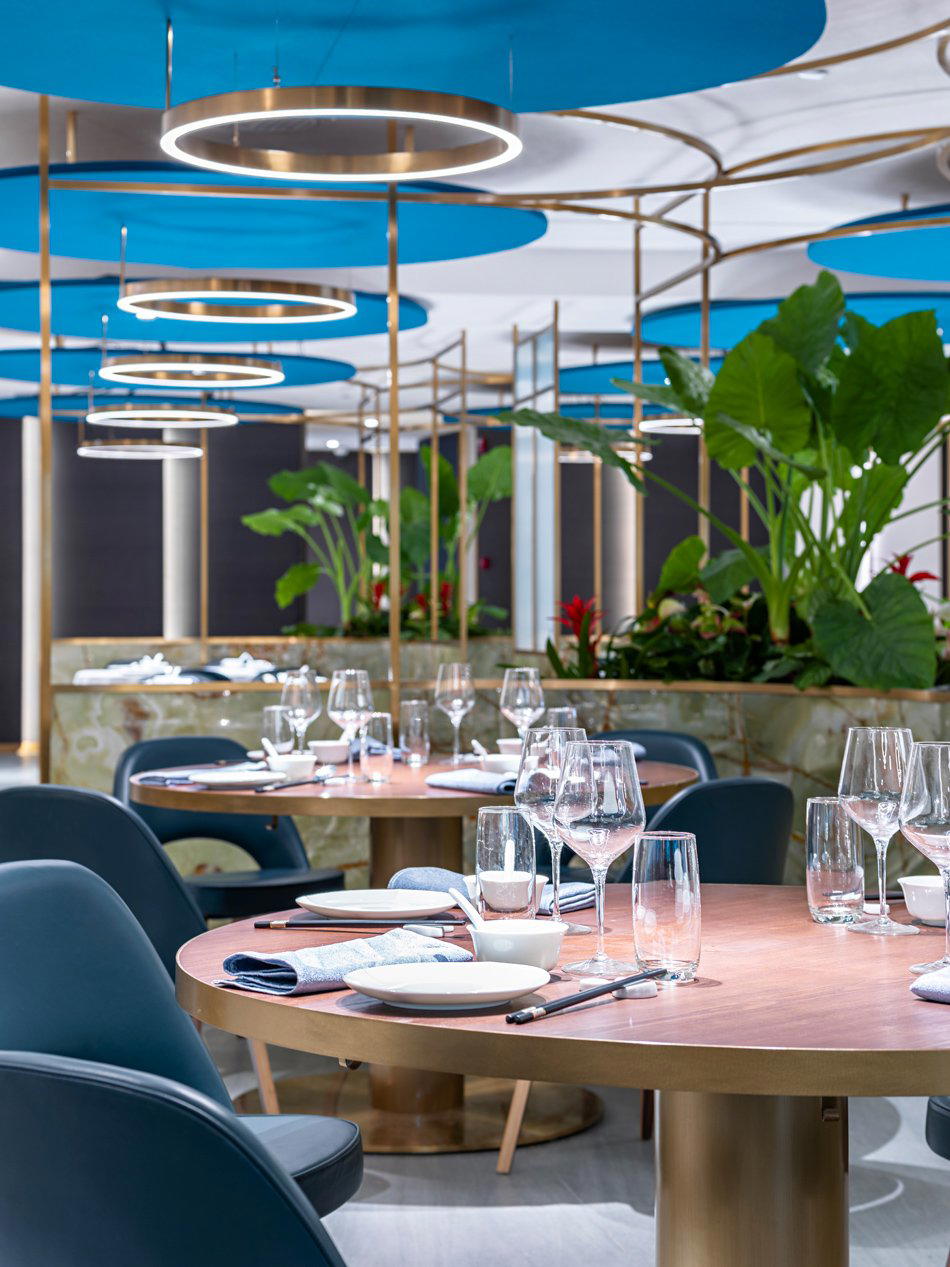
Casual and comfortable atmosphere.