Our verdict
A long-standing presence on College Street's Annex-adjacent strip, Lebanese Garden brings the communal rhythms of Levantine dining to one of Toronto's most walkable restaurant corridors. The kitchen works through the familiar grammar of mezze, grilled meats, and flatbreads that define the Lebanese table. It occupies a price point well below Toronto's fine-dining tier, making it a practical anchor for the neighbourhood.

Pearl is the En Primeur Club membership app, where members save venues, book tables and use the concierge.
The menu
What to order
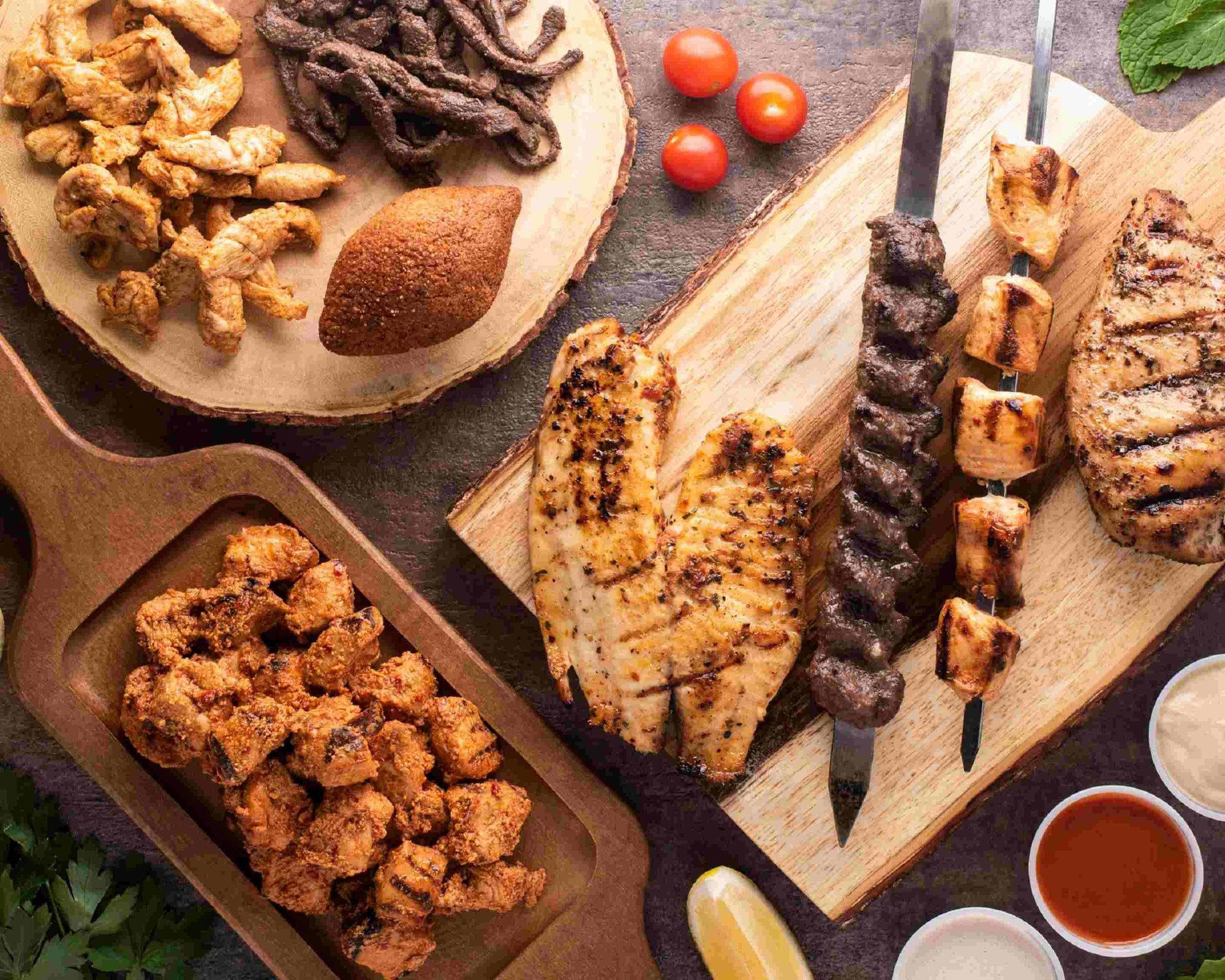
- Grilled Chicken Shawarma Plate
- Grilled Beef Shawarma Plate
- Fattoush Salad
College Street and the Levantine Table
College Street between Bathurst and Spadina has always been one of Toronto's more honest dining corridors: no single cuisine dominates, rents have historically kept independent operators viable, and foot traffic rewards consistency over spectacle. Lebanese Garden at 366 College St sits inside that pattern. The room faces street level, and the approach on a weekday evening carries the low hum of a neighbourhood that eats out regularly and without ceremony. The light through the windows is warm and direct. There is no dramatic threshold moment here, no design concept to decode. What arrives instead is the sensory register of a Lebanese kitchen in full motion: the faint char of flatbread on a hot surface, the herbal brightness that signals a kitchen working with fresh parsley and mint at scale.
Lebanese cuisine operates through a logic of abundance and sharing that puts it at odds with the tasting-menu model that dominates Toronto's fine-dining tier at venues like Alo or Aburi Hana. The mezze format is structurally different: dishes arrive in waves or simultaneously, the table fills, and the meal is shaped by the group rather than the kitchen's prescribed sequence. This is a format with deep roots across the Levant and one that Toronto's Lebanese community has carried into the city's restaurant fabric for decades.
What the Kitchen Signals
The sensory indicators of a competent Lebanese kitchen are legible to anyone who has eaten across the genre. Hummus should carry a specific density and a clean tahini finish rather than the bland creaminess of mass-produced versions. Tabbouleh is primarily parsley, not primarily grain, a proportion that many non-specialist kitchens reverse. Kibbeh, in its various forms, is a marker of technique: the raw version demands fresh lamb and precision in spicing, while the fried version needs a shell thin enough to shatter on contact. Grilled meats, shish taouk, kafta, depend on marinade depth and on heat management at the grill, where the difference between correct char and dryness is a matter of seconds.
These are the reference points against which a kitchen on College Street gets measured by a local clientele that often has generational familiarity with Lebanese home cooking. That familiarity is a harder audience than a tourist trade or a novelty-seeking crowd, and it shapes what a neighbourhood restaurant in this category has to get right to maintain regulars over years.
College Street in the Toronto Dining Map
Toronto's dining geography tends to concentrate its premium addresses in the Financial District, King West, and Yorkville corridors. College Street occupies a different register: the Annex and Little Italy adjacency gives it a residential density that produces consistent midweek covers, while the student and academic population from the University of Toronto keeps the price sensitivity real. Lebanese and Middle Eastern restaurants have found durable footing in this environment precisely because the cuisine's mezze format translates efficiently to groups, the ingredient costs remain manageable at accessible price points, and the flavour profile has broad cross-demographic appeal.
Comparison venues at Toronto's upper tier, including Sushi Masaki Saito, DaNico, and Don Alfonso 1890, operate at the $$$$ tier with tasting-menu formats, advance booking requirements, and a guest experience built around individual courses. Lebanese Garden operates in a categorically different competitive set, where the value proposition is volume of flavour per dollar and the ease of a walk-in or same-day table. These are parallel markets, not direct competitors. For a broader orientation to how these tiers fit together, the full Toronto restaurants guide maps the city's dining range from neighbourhood staples to destination counters.
The Atmosphere as Argument
The atmospheric case for Lebanese Garden is the case for College Street itself as a dining destination. The street works at pedestrian scale: the walk from the nearest transit stop is short, the surrounding blocks have enough complementary venues for a full evening, and the neighbourhood has not yet tipped into the kind of premium positioning that makes spontaneity expensive. A meal at a Lebanese table here operates on the principle that a well-loaded mezze spread and a warm room are sufficient conditions for a good evening. The absence of a theatrical design concept is not a deficit in this context; it is the point.
Across Canada's broader restaurant scene, the neighbourhood Lebanese restaurant occupies a structural role comparable to the neighbourhood Italian trattoria in cities like Montreal or Quebec City: a format that provides consistent, familiar pleasure without demanding occasion-level commitment. Venues like Tanière³ in Quebec City or Jérôme Ferrer - Europea in Montreal represent the destination end of the Canadian dining spectrum; the neighbourhood Lebanese restaurant represents the other end of the same axis, where frequency of visit matters more than singularity of experience.
Planning Your Visit
366 College St places Lebanese Garden within easy reach of the Spadina and Queen's Park subway stations, and the College streetcar stops within a short walk. The College Street corridor is walkable from the Annex and the southern Annex edge. For those planning a wider Toronto evening, the surrounding blocks offer enough variety to build an itinerary around the meal. Given the neighbourhood's casual register, the practical approach for most diners is to arrive without a reservation and assess the room, though groups larger than four during peak dinner hours on weekends would do better with advance contact if a phone or web booking channel is available. Dress is neighbourhood-casual; nothing more formal is expected or required on College Street at this price point. The format suits groups, couples, and solo diners equally well, given that mezze dishes can scale up or down in number to match the table size.
For diners exploring beyond Toronto, the EP Club network covers the broader Canadian scene, including AnnaLena in Vancouver, Restaurant Pearl Morissette in Lincoln, Eigensinn Farm in Singhampton, The Pine in Creemore, Narval in Rimouski, Aux Anciens Canadiens in Quebec, and Barra Fion in Burlington. For US comparisons in the destination-dining tier, Le Bernardin in New York City and Atomix in New York City represent the upper end of how a single cuisine can anchor a major urban dining identity. Bearspaw Golf Club in Calgary rounds out the national picture for members planning cross-country itineraries.
Frequently asked questions
Where do I go for Lebanese Garden?
Lebanese Garden is located at 366 College St, Toronto, ON M5T 1S6, Canada, Toronto.
How does Lebanese Garden fit into Toronto's broader Middle Eastern dining scene?
Toronto's Middle Eastern dining is geographically distributed, with concentrations along Lawrence Avenue West and pockets through the Annex and Little Portugal corridors. Lebanese Garden's address at 366 College St places it in a walkable, mixed-cuisine stretch rather than an ethnic dining enclave, which means it draws from a broader neighbourhood audience rather than a specialist one. That positioning tends to produce a more casual, accessible version of the Levantine table compared to the denser community-driven restaurants further north in the city.
What do regulars order at Lebanese Garden?
At a Lebanese table on College Street, the logic of the order usually follows the mezze before the grill: hummus, fattoush, and whatever the kitchen renders from the charcoal. Regulars at 366 College St tend to build the meal around shared plates rather than a single main, which is the sensible way to read a Levantine menu. Without current menu documentation, specific dish names can change, but the communal structure of Lebanese dining is the standard expectation here. Check the venue's official channels for the latest details.
Can I walk in to Lebanese Garden?
Lebanese Garden at 366 College St is accessible by the College streetcar and sits within range of the Spadina and Queen's Park subway stations, making a walk-in visit logistically straightforward. Arriving earlier in the evening on weeknights generally gives you a better chance at a table without a booking at College Street restaurants of this scale.
What's the defining dish or idea at Lebanese Garden?
The defining idea at Lebanese Garden is the Levantine communal table: a spread of mezze, grilled proteins, and bread that functions as a single shared argument rather than individual plates. College Street has long supported this format, where a meal is measured by the range of the spread rather than the ambition of a single dish. That approach places Lebanese Garden squarely within a Toronto tradition of neighbourhood restaurants that treat sharing as the default architecture of a meal.
Is Lebanese Garden good for vegetarians?
Lebanese cuisine is structurally well-suited to vegetarian eating: hummus, baba ghanoush, tabbouleh, falafel, and fattoush are load-bearing dishes in the Levantine tradition, not afterthoughts. At 366 College St, a vegetarian can typically build a complete meal from the cold and hot mezze sections without compromise. This holds across Lebanese kitchens as a rule, and nothing in Lebanese Garden's positioning suggests a departure from that format.
Awards and Standing
Comparable venues nearby, for context on price, style, and recognition.
| Venue | Cuisine | Price | Notes |
|---|---|---|---|
| Lebanese GardenThis venue (the venue you are viewing) | Authentic Lebanese & Middle Eastern | $10–20 | Not listed |
| Queen of Persia | Authentic Persian | Not listed | Humewood |
| Osmow's | Mediterranean Shawarma | $10–20 | Uptown Yonge |
| Papyrus | Authentic Egyptian | $20–30 | Playter Estates-Danforth |
| California Sandwiches | Italian Sandwiches | $10–20 | Little Italy |
| Porchetta & Co | Italian Porchetta & Fried Chicken Sandwiches | $10–20 | Trinity Bellwoods |