



Michelin Plate · Star Wine List · World's Best Wine Lists Awards WBWL 3-Star
Our verdict
Bar Isabel has anchored Toronto's Spanish dining conversation since it opened on College Street, earning consecutive Michelin Plate recognition in 2024 and 2025. The tapas format here is grounded in Iberian classics done with consistency: patatas bravas, pan con tomate, bone marrow that remains a benchmark order. A Spain-focused wine list and sessionable cocktails make it as much a drinking destination as a dining one.

Pearl is the En Primeur Club membership app — saves, bookings, and concierge access live there. Same editors, same standards.
- Address
- 797 College St, Toronto, ON M6G 1C7, Canada
- Phone
- (416) 532-2222
- Hours
- Mon–Fri 5–11 PMSat 12–11 PMSun 5–11 PM
- Website
- barisabel.com
- Directions
- Get directions
- Booking
- Book on OpenTable
The menu
What to order
- Grilled octopus
- Patatas bravas
- Basque cake with sherry cream
- Sobrasada & foie gras
- Jamón croquetas
The Room Before the Food
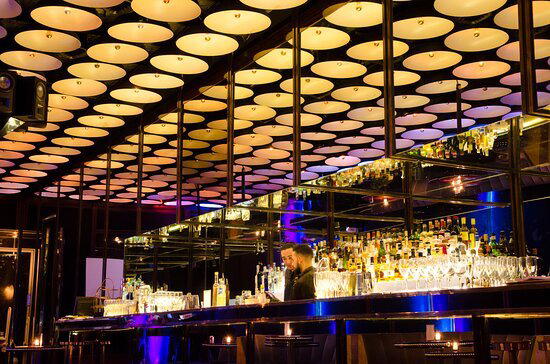
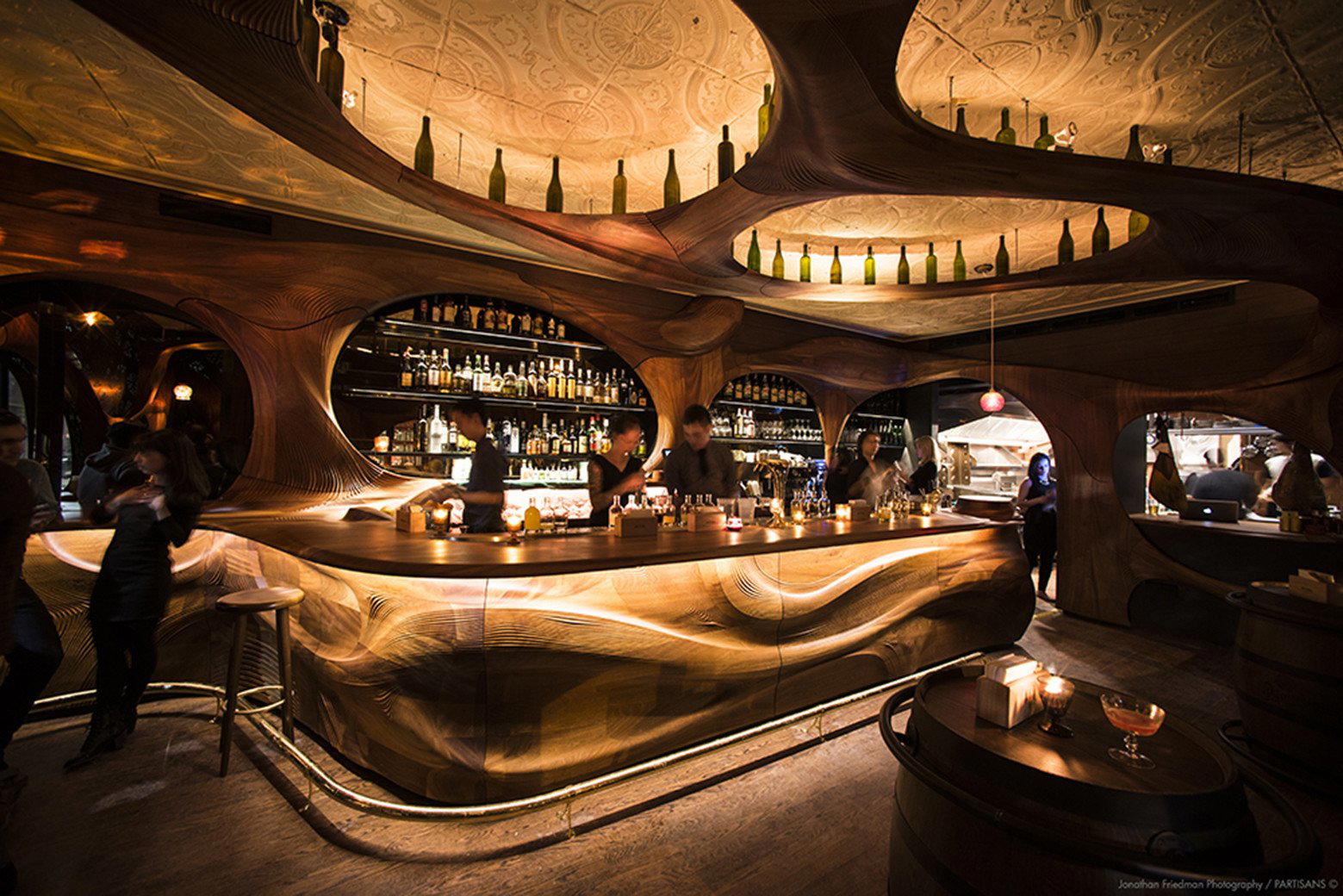
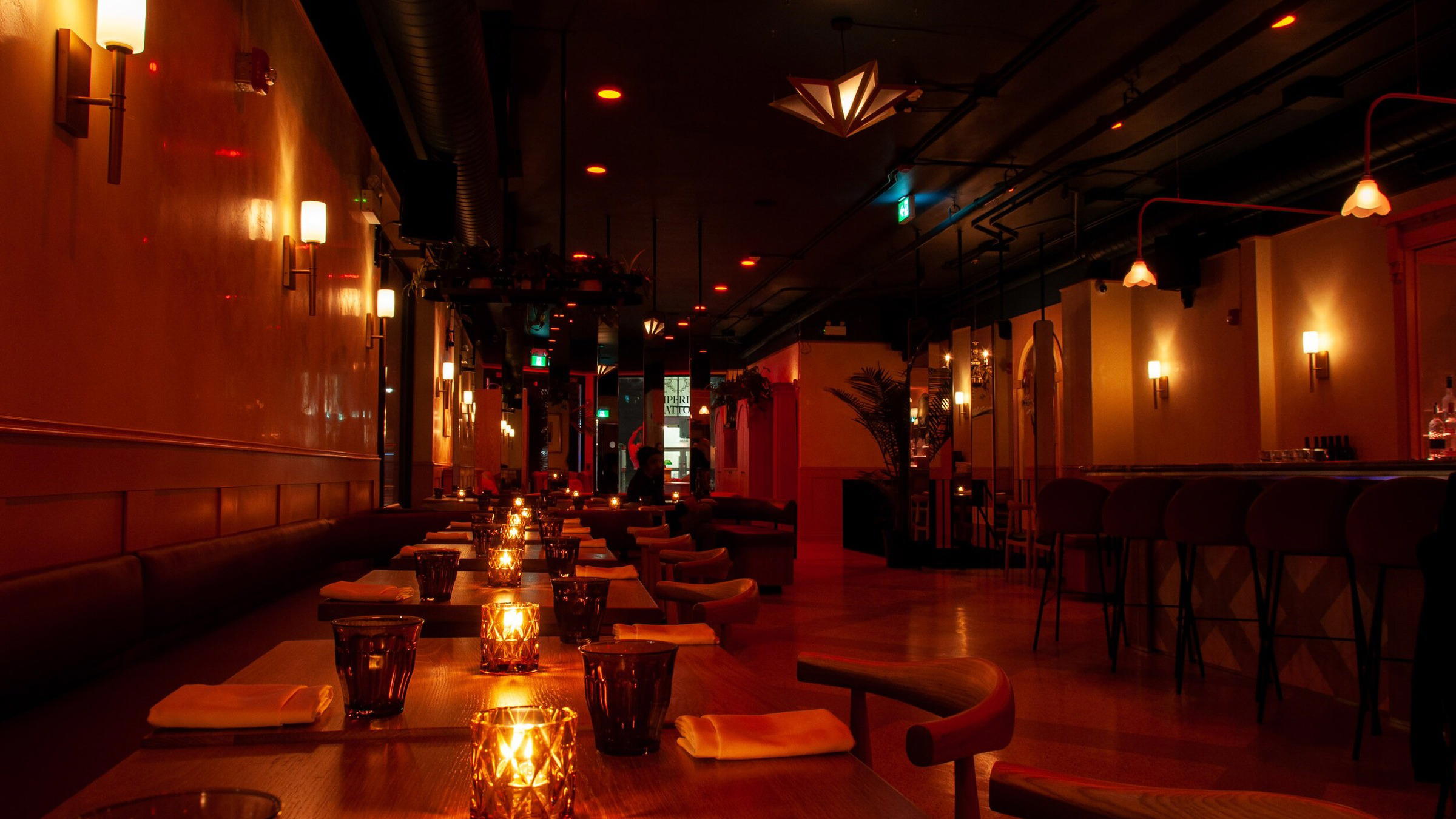
College Street's Little Italy stretch has always attracted a certain kind of restaurant: neighbourhood-rooted, louder than it looks from outside, more serious about what's on the plate than the signage lets on. Bar Isabel sits at the edge of that strip, and the room telegraphs its intentions quickly. Warm wood and coloured glass filter the light into something amber and lived-in. The space is busy in the way that Spanish tavernas are meant to be busy: conversations overlapping, bottles being poured, the counter and tables carrying equal standing. You are not waiting for the evening to begin. It has already begun.
That atmosphere is load-bearing. Iberian dining culture depends on a specific kind of collective energy — the room as part of the offer — and College Street provides a street-level context that reinforces it. This is not a destination tucked into a financial district tower. It is a neighbourhood restaurant that happens to have drawn national attention, which is a harder thing to sustain than it sounds.
A Decade of Critical Recognition
Toronto's Iberian dining moment did not arrive fully formed. Bar Isabel is widely credited as the restaurant that catalysed it, establishing a template for Spanish-inflected cooking on College Street before the broader wave of Spanish-adjacent openings across the city. That origin story matters less now than the question of whether the restaurant has maintained the standard that earned it that reputation, and the answer, across more than a decade of operation, is that it largely has.
Michelin awarded Bar Isabel a Plate in both 2024 and 2025, a signal worth parsing carefully. The Plate designation is not a star, but in Michelin's framework it marks a restaurant the inspectors consider worth eating at: good cooking, consistent execution, a defined point of view. In Toronto's competitive field, where Alo operates at the one-star level and Japanese counters like Sushi Masaki Saito and Aburi Hana hold stars in a different register entirely, Bar Isabel occupies a distinct position: accessible in format and price relative to those tasting-menu peers, but recognised within the same critical framework.
At that volume, a 4.5 is not a soft number inflated by novelty. It reflects a sustained pattern of positive experience across a broad and varied audience, which, for a restaurant in its second decade, is the harder achievement.
What the Menu Argues For
The Michelin inspector notes on Bar Isabel are direct about what the kitchen does well: patatas bravas and pan con tomate with boquerones execute the classics without apology, and the bone marrow is described as still behemoth, a word that implies both scale and continuation. The classics-endure framing from Michelin's own language is significant. Many restaurants in Bar Isabel's age bracket drift: they update menus to chase relevance, thin out what originally worked, or overcomplicate in pursuit of critical notice. The commitment to executing the standards well, cycle after cycle, is its own editorial statement.
Tapas format here aligns Bar Isabel with a broader international conversation about how Spanish food travels. Across cities like New York and London, the question of whether tapas can sustain serious critical attention outside Spain has been largely settled by a handful of addresses. Casa Mono in New York and Barrafina in London both represent the case that Spanish formats, executed with rigour, earn recognition in their own right rather than as ethnic novelty. Bar Isabel belongs to that argument in the Canadian context, and Grant van Gameren's name as chef is the credential that anchors that positioning, not as personal biography but as a signal of the kitchen's lineage and ambition within Toronto's chef-led independent restaurant scene.
Wine and the Drinking Programme
A Spain-centric wine list is not a given in Toronto, where the wine culture at most Spanish-adjacent restaurants defaults to general European selections. The specificity matters here. A list built around Spanish regions positions Bar Isabel alongside the kind of Iberian-focused programmes you find at serious wine bars in Barcelona or Madrid, where sherry, Galician whites, and lesser-known Castilian reds carry equal footing with Rioja. Pair that with cocktails described as sessionable, designed for drinking across a full evening rather than as a single aperitif statement, and the drinking programme functions as a reason to arrive early and stay through multiple rounds.
This dual identity as drinking destination and dining room is characteristic of the leading Spanish taverna formats, and it's one reason Bar Isabel has held relevance while Toronto's dining scene has spun through multiple cycles of opening and closing. A restaurant that earns a second visit for the wine list alone compounds its draw.
Bar Isabel in Toronto's Wider Scene
Toronto's Michelin-recognised restaurants now span a range of formats and price points. At one end, contemporary tasting menus like DaNico and Don Alfonso 1890 anchor the formal end of the spectrum. Bar Isabel operates in a different register, where the $$$ price point and tapas format invite sharing and spontaneity rather than occasion dining. That positioning is not a compromise. It reflects a deliberate format choice that the Spanish dining tradition has always supported.
For readers building a broader Canadian itinerary, the country's French-influenced fine dining tradition runs through addresses like Tanière³ in Québec City and Jérôme Ferrer - Europea in Montreal, while the west coast contemporary scene includes AnnaLena in Vancouver. Within Ontario, Restaurant Pearl Morissette in Lincoln and The Pine in Creemore represent the province's wine-country and rural dining poles. Bar Isabel sits within Toronto's urban independent tier, which remains the most competitive and closely watched segment of Canadian restaurant culture.
For the full picture of where to eat, drink, and stay in the city, see our full Toronto restaurants guide, our full Toronto bars guide, our full Toronto hotels guide, our full Toronto wineries guide, and our full Toronto experiences guide. If Rimouski's emerging food scene interests you, Narval in Rimouski is worth tracking.
Planning Your Visit
Bar Isabel opens Monday through Friday from 5 pm and runs until 11 pm. Saturday extends the window with a noon opening, making it one of the few Spanish-format rooms in the city that accommodates a long weekend lunch. Sunday follows the standard 5 pm start. The address is 797 College Street, on the College Street corridor in the Little Italy neighbourhood, reachable by streetcar on the 506 Carlton line. The $$$ pricing places it in a middle tier for Toronto, more than a casual neighbourhood bar, less than the city's tasting-menu operations, and the format is suited to two to four people ordering across several rounds.
What to Order at Bar Isabel
FAQ: at Bar Isabel?
The Michelin inspector's own language provides the clearest steer: the patatas bravas, pan con tomate with boquerones, and the bone marrow are the dishes cited by name in consecutive years of recognition. In a tapas format, the classics are always the test, a kitchen that executes patatas bravas and pan con tomate with consistency over more than a decade is making an argument about craft that more elaborate dishes often don't sustain. The bone marrow is specifically flagged as still behemoth in scale, which sets a concrete expectation. On the drinking side, the Spain-centric wine list is the anchor: ask for guidance toward the less familiar Spanish regions if the staff are running it well, and treat the cocktail list as a supporting programme for an evening-length session rather than a single drink.
Frequently asked questions
When can I go to Bar Isabel?
Hours at Bar Isabel: Hours: Monday 5–11 pm Tuesday 5–11 pm Wednesday 5–11 pm Thursday 5–11 pm Friday 5–11 pm Saturday 12–11 pm Sunday 5–11 pm.
Comparison Snapshot
A short peer table to compare basics side-by-side.
| Venue | Cuisine | Price | Awards | Notes |
|---|---|---|---|---|
| Bar IsabelThis venue — the venue you are viewing | Spanish Catalan Tapas | Not listed | Michelin Plate · Star Wine List | Not listed |
| Alo | Modern French Fine Dining with Asian Influences | $200–300 | 1 Michelin Star · La Liste Top Restaurants | Contemporary |
| Sushi Masaki Saito | Edomae-Style Omakase | $500+ | 1 Michelin Star · La Liste Top Restaurants | Sushi, Japanese |
| Aburi Hana | Modern Japanese Kyō-Kaiseki | $300–500 | 1 Michelin Star · The Best Chef One Knife | Kaiseki, Japanese |
| Don Alfonso 1890 | Modern Italian Fine Dining | $200–300 | 1 Michelin Star · La Liste Top Restaurants | Contemporary Italian, Italian |
| Edulis | Mediterranean Seafood Tasting Menu | $150–200 | 1 Michelin Star · World's 50 Best #25 | Canadian, Mediterranean Cuisine |
Recognition history
Dated appearances from independent guides and award organizations, with the underlying list record or original source where available.
Michelin Plate
Michelin
Star Wine List
Star Wine List
Canada's 100 Best Restaurants #54
Canada's 100 Best
World's Best Wine Lists Awards WBWL 3-Star
World's Best Wine Lists Awards
Full recognition history (6 entries)
Michelin Plate
Michelin
World's Best Wine Lists Awards WBWL 2-Star
World's Best Wine Lists Awards
Continue exploring
More in Toronto
Restaurants in Toronto
Browse all →
Bars in Toronto
Browse all →
Hotels in Toronto
Browse all →

Bar Isabel
The wine
- Wine program
- Curated wine list
- Craft cocktails
- Beer program
Details
- Intimate
- Lively
- Classic
- Sophisticated
- Well Known
- Date Night
- Group Dining
- Celebration
- Casual Hangout
- After Work
- Standalone
- Craft Cocktails
- Beer Program
- Local Sourcing
- Street Scene
- Small Plates
- Family Style
- A La Carte
- Wine
- Cocktails
- Beer
- Vegetarian Friendly
- Gluten Free Options
Current opening hours
- Monday
- 5–11 PM
- Tuesday
- 5–11 PM
- Wednesday
- 5–11 PM
- Thursday
- 5–11 PM
- Friday
- 5–11 PM
- Saturday
- 12–11 PM
- Sunday
- 5–11 PM
Hours can change for holidays and private events. Last verified .
An intimate, old-world tavern atmosphere with buzzy energy and a cozy, sociable feel.