California Sandwiches has anchored Toronto's Italian-Canadian sandwich tradition from its Claremont Street address for decades, building a following on the kind of veal and sausage combinations that define the city's working-class culinary identity. In a city where fine dining increasingly commands the conversation, this spot holds its ground as a reference point for the genre, unpretentious, direct, and consistent in a way that matters.
Pearl is the En Primeur Club membership app — saves, bookings, and concierge access live there. Same editors, same standards.
- Address
- 244 Claremont St, Toronto, ON M6J 2N2, Canada
- Phone
- +1 416 603 3317
- Website
- eatcalifornia.ca
- Directions
- Get directions
 Saves & bookings on Pearl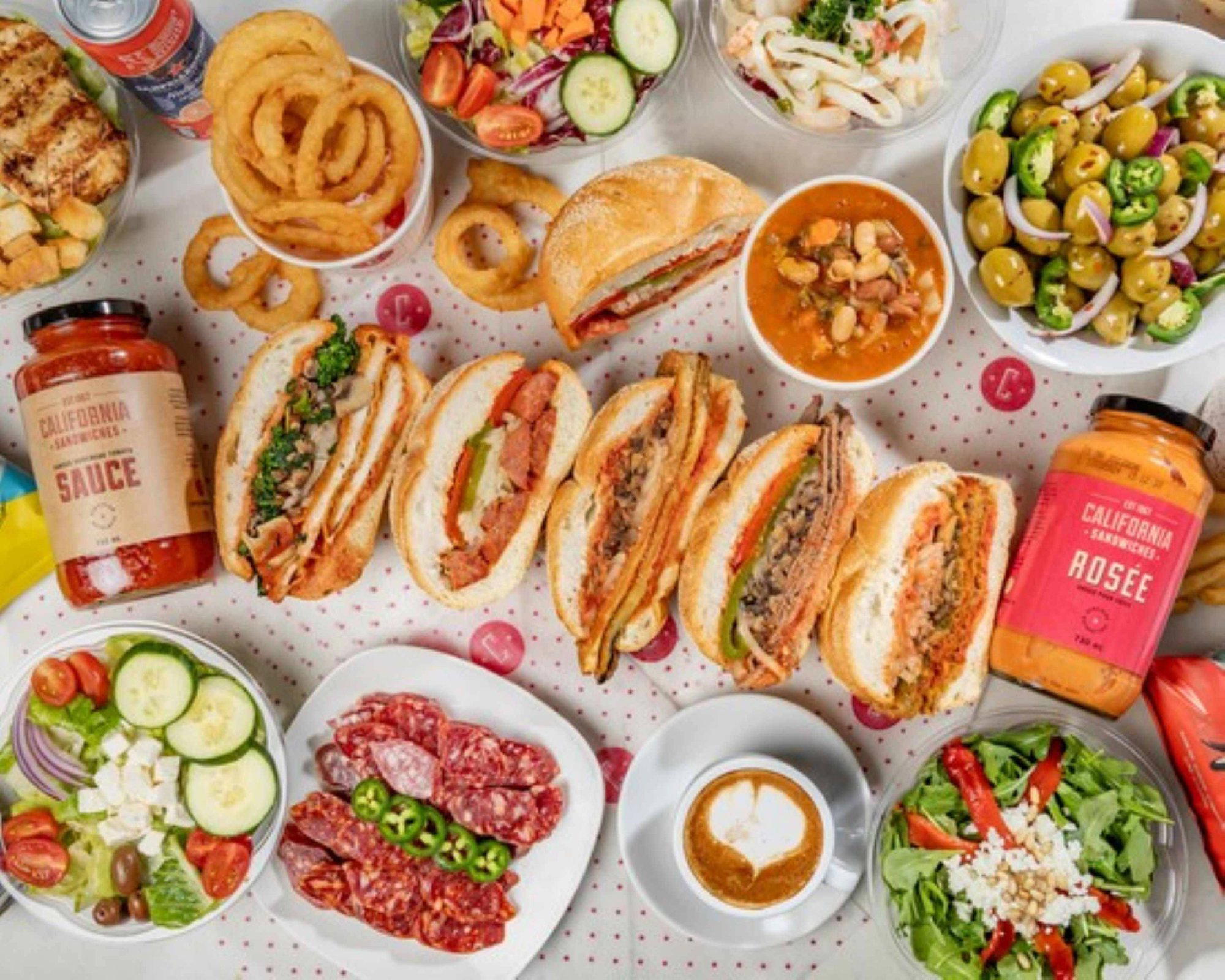
Toronto's Sandwich Tradition, Held in One Address
Walk along Claremont Street in the Trinity-Bellwoods and Dufferin Grove corridor and the physical logic of the neighbourhood becomes clear quickly: low-rise brick, corner stores that have outlasted several rounds of gentrification, and a food culture built on value and volume rather than occasion. California Sandwiches fits that pattern without apology. The storefront communicates continuity, the kind that Toronto's Italian-Canadian west-end communities built through decades of treating a good sandwich as a complete argument, not a prelude to something more serious.
That continuity matters in a city whose dining conversation has shifted dramatically in recent years. Tasting menus at Alo or the ultra-premium omakase experience at Sushi Masaki Saito now represent Toronto's international dining identity. But the city was built on something more plainspoken, and the Italian-Canadian sandwich, braised veal, peppers, hot giardiniera, packed into a torpedo roll, is one of its most durable contributions to North American food culture.
The Italian-Canadian Sandwich as Culinary Tradition
The category California Sandwiches occupies has a specific history in Toronto. Italian immigration to the city's west end accelerated after World War II, and with it came the food habits of regions like Calabria, Sicily, and Lazio, adapted to Canadian ingredients and labour patterns. The braised veal sandwich emerged as a working lunch format: protein-dense, portable, made in volume, and cheap enough to be accessible across a wide income range. It drew on the same peasant logic that produced French dip in Los Angeles or the beef Italian in Chicago, low-cost cuts transformed through slow braising into something that rewards the format.
What distinguishes the Toronto version, and the Italian-Canadian interpretation specifically, is the role of pickled vegetables. Giardiniera, cauliflower, peppers, celery, sometimes carrots, pickled in vinegar and oil, cuts the richness of the braised meat in the same way that a gremolata does in osso buco. The technique is Italian in origin and the logic is classical: acid as a counterweight to fat. The fact that this technique landed in a sandwich shop rather than a white-tablecloth dining room does not make it less considered. In the same way that Tanière³ in Quebec City applies rigorous classical method to indigenous ingredients, California Sandwiches applies an inherited culinary logic to a format built for the street.
That intersection, imported technique, local and working-class context, is exactly what the editorial angle of EA-GN-15 requires us to notice. The global technique here is Italian braising and preservation method. The local product is the city's specific Italian-Canadian culture, shaped by migration patterns, neighbourhood economics, and a preference for directness over ceremony.
Where It Sits in Toronto's Dining Picture
Toronto has developed a wide range of dining formats over the past fifteen years. At one end of the price spectrum, kaiseki-influenced tasting menus like Aburi Hana and Italian fine dining at DaNico or Don Alfonso 1890 cater to occasion-driven spending. California Sandwiches sits firmly in the latter category, a casual, walk-in-friendly restaurant with a price point around $12 per person. At the other end, neighbourhood spots built on volume and regulars hold the city's daily food culture together. The restaurant sits firmly in the latter category, a venue where the transaction is fast, the product is specific, and the repeat customer is the baseline assumption.
That positioning places it in a different category from the destinations above, but not a lesser one. Across Canada, the venues that leading capture a region's culinary identity are often working formats rather than prestige ones: Eigensinn Farm in Singhampton has argued for ingredient-led cooking in Ontario for years; Fogo Island Inn Dining Room in Joe Batt's Arm has turned local seafood into a statement about place. The restaurant makes a version of the same argument with braised veal and a hot pepper spread: this is what this city tastes like, rendered in a format that requires no occasion to justify.
Toronto's broader dining culture has also seen the Italian-Canadian tradition appear in more polished contexts, refined pasta counters, modern trattorias, and wine-bar formats that nod to the same immigrant food heritage but refine it for a different price point. The restaurant has not moved in that direction, which is its own editorial statement. Compare this posture to operations like Cafe Brio in Victoria or AnnaLena in Vancouver, both of which have found ways to embed local culinary identity into a more contemporary format. The contrast is not a hierarchy, it is a demonstration of how many valid registers a food tradition can occupy simultaneously.
Planning a Visit
The Claremont Street address puts the restaurant in a walkable west-end area accessible by transit, roughly between Dufferin and Ossington along Dundas West. The format is counter service, which keeps turnover high and wait times manageable even during lunch peaks. No reservation infrastructure is involved, this is a walk-in operation by design, which suits the weekday lunch crowd and weekend visitors who have heard about it through Toronto food circles and want to assess the tradition firsthand.
For visitors building a wider picture of Toronto's food culture, the west end offers a useful contrast between working-format stops like this one and newer arrivals. The city's Italian-Canadian food belt extends across the Dundas-Dufferin corridor and into College Street, where similar braised sandwich and pasta formats have been operating since the 1970s. Checking our full Toronto restaurants guide will surface one current picture of where these traditions intersect with newer formats.
For context on how regional Canadian cooking is being interpreted at a more formal register elsewhere, Restaurant Pearl Morissette in Lincoln or Jérôme Ferrer - Europea in Montreal represent the refined end of that spectrum. At the international level, the kind of rigorous technique applied to humble formats finds its clearest expression at places like Le Bernardin in New York City or Lazy Bear in San Francisco, though the comparison is useful precisely because it is not one of equivalence. The restaurant does not aspire to that register and does not need to. Its authority comes from somewhere else: decades of the same product, made the same way, in a neighbourhood that has known what it wants for a long time.
Credentials Lens
Comparable venues nearby, for context on price, style, and recognition.
| Venue | Cuisine | Price | Notes |
|---|---|---|---|
| California SandwichesThis venue — the venue you are viewing | Italian Sandwiches | $ | Not listed |
| Porchetta & Co | Italian Porchetta & Fried Chicken Sandwiches | $ | Trinity Bellwoods |
| Pizzeria Via Mercanti | Authentic Neapolitan Pizza | $$ | Kensington |
| Vaticano Restaurant | Traditional Italian | $$ | Yorkville |
| Cantina Mercatto | Modern Italian with Pizza and Pasta | $$ | Church-Yonge Corridor |
| Tulia Osteria | Italian Osteria with Neapolitan Pizza & Fresh Pasta | $$ | Leslieville |
Continue exploring
More in Toronto
Restaurants in Toronto
Browse all →

Bars in Toronto
Browse all →


Hotels in Toronto
Browse all →
Wineries in Toronto
Browse all →
At a Glance
- Classic
- Well Known
- Rustic
- Casual Hangout
- Family
- Group Dining
- Standalone
- Local Sourcing
Current opening hours
- Monday
- 10 AM–8 PM
- Tuesday
- 10 AM–8 PM
- Wednesday
- 10 AM–8 PM
- Thursday
- 10 AM–8 PM
- Friday
- 10 AM–9 PM
- Saturday
- 10 AM–9 PM
- Sunday
- Closed
Hours can change for holidays and private events. Last verified .
Casual neighborhood sandwich shop with a welcoming, family-oriented atmosphere; busy during lunch and dinner service.