Queen of Persia on St. Clair Avenue West brings Persian cooking to one of Toronto's most culturally layered mid-city corridors. Sitting outside the downtown fine-dining circuit, the restaurant draws on Iranian culinary tradition at a neighbourhood scale, where slow-cooked stews, rice techniques, and herb-forward flavours define the kitchen's register. For Toronto diners exploring beyond the Yonge Street axis, it represents a specific and considered Persian option.
Pearl is the En Primeur Club membership app — saves, bookings, and concierge access live there. Same editors, same standards.
- Address
- 672A St Clair Ave W, Toronto, ON M6C 1B1, Canada
- Phone
- +14166515500
- Website
- queenofpersiatoronto.com
- Directions
- Get directions
 Saves & bookings on Pearl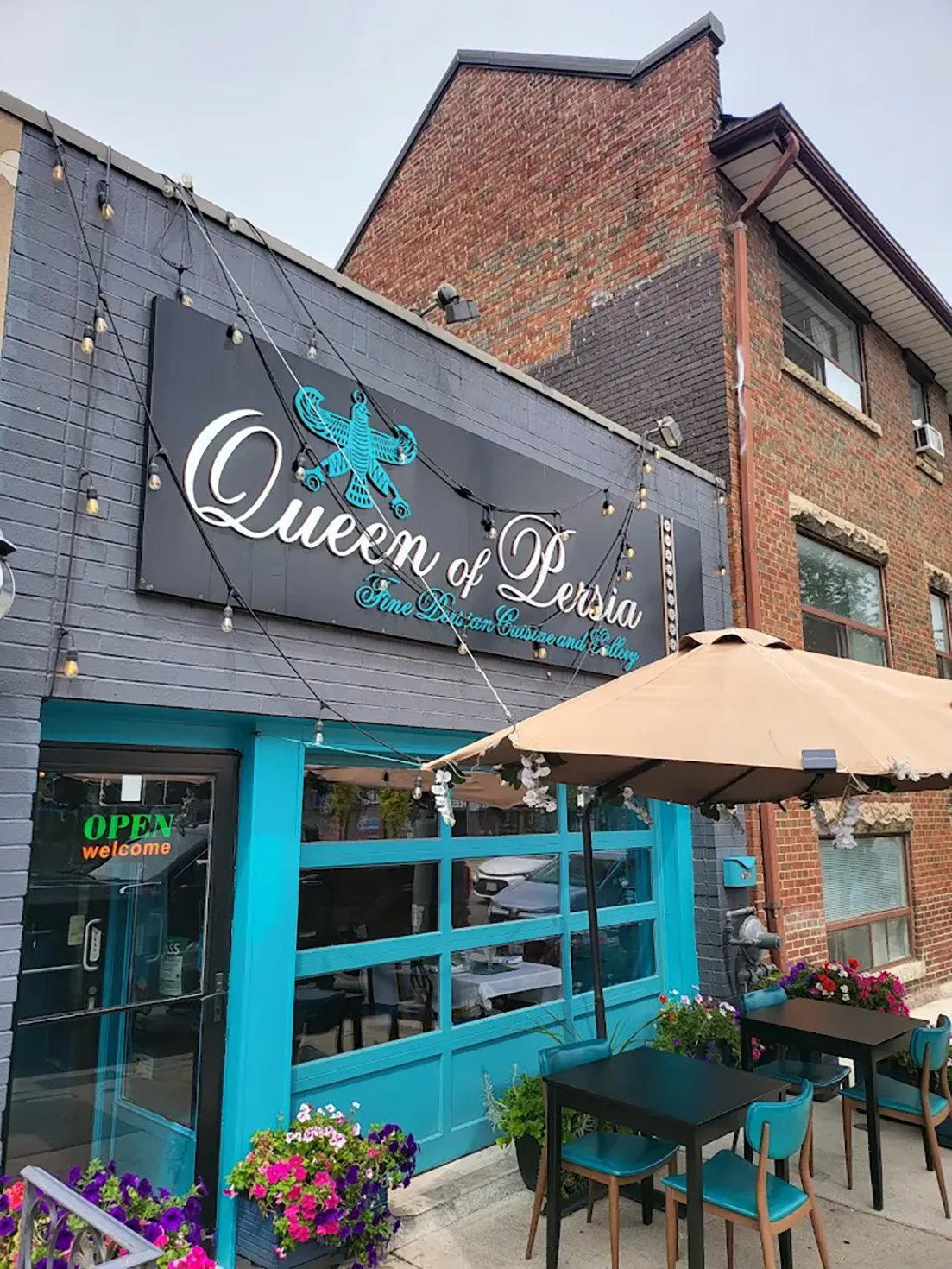
St. Clair West and the Architecture of Neighbourhood Dining
The stretch of St. Clair Avenue West between Dufferin and Oakwood has long operated on a different register than Toronto's downtown dining corridor. Storefronts here are narrower, the foot traffic more residential, and the restaurant propositions shaped by community loyalty rather than destination reviews. Queen of Persia at 672A St. Clair Ave W occupies exactly that kind of space: a room that reads as a neighbourhood fixture rather than a ticketed experience, where the physical container signals familiarity over spectacle. In a city where the premium dining conversation clusters around Alo (Contemporary) or the omakase counters of Sushi Masaki Saito, Queen of Persia operates in a quieter register that Toronto's mid-city dining scene does particularly well.
That physical modesty is not incidental. Persian restaurants across North America tend to occupy interiors that prioritise warmth over architecture: low lighting, textiles, decorative tilework, and the kind of spatial density that makes a room feel inhabited rather than designed. The design tradition reflects the hospitality culture the cuisine comes from, where the table is a social event of duration, not a paced sequence. In Toronto specifically, that format sits comfortably on a street like St. Clair West, where dining rooms are expected to hold a table for the evening rather than turn it in ninety minutes.
Persian Cooking in the Toronto Context
Toronto's relationship with Iranian cuisine is shaped by one of the largest Persian diaspora communities in North America. The Yonge and Sheppard corridor carries the highest concentration of Persian businesses in the city, but the cuisine has distributed broadly enough that pockets exist across multiple neighbourhoods. St. Clair West sits outside the traditional Persian dining geography of North York, which makes Queen of Persia's presence on that street a different kind of offer: Persian food addressed to a mixed neighbourhood audience rather than a diasporic one.
The cooking tradition itself is worth situating. Persian cuisine is built on a small number of foundational techniques applied with considerable precision: long-braised khoresh stews, rice cooked with a crispy tahdig base, herb-heavy dishes like ghormeh sabzi and fesenjān, and grilled kebab formats that depend on protein quality and seasoning discipline. The cuisine does not reward shortcuts. A properly made fesenjān, with its balance of pomegranate molasses and ground walnut, takes hours to develop the right depth. These are dishes where the distance between a considered version and a careless one is immediately legible to anyone who has eaten the cuisine repeatedly. For Toronto diners comparing Persian options across the city, that execution gap tends to be the relevant variable, not décor or format.
The wider Canadian dining scene has room for this kind of specific, tradition-rooted cooking. Elsewhere in the country, restaurants like Jérôme Ferrer - Europea in Montreal and Tanière³ in Quebec City operate at the formal end of tradition-informed cooking, while neighbourhood-scale venues carry the bulk of culturally specific cuisine in any major Canadian city. Queen of Persia belongs to that second tier, where the stakes are different but the specificity of the cooking matters just as much.
The Space as a Frame for the Meal
In Persian restaurant design, the room typically functions as an extension of domestic hospitality rather than a composed aesthetic statement. That approach produces interiors that are layered rather than minimal: patterned surfaces, warm-toned lighting, occasionally ornamental details drawn from Safavid architectural motifs. The effect is a room that encourages lingering, which aligns with how the cuisine itself is meant to be consumed. Persian meals are multi-course in practice even when not structured as such formally, with cold appetisers, rice dishes, stews, and bread arriving in a sequence that builds rather than rushes.
On a street like St. Clair West, where dining rooms tend toward the compact and the personal, this approach to space fits the neighbourhood's overall character. The contrast with the formal, architect-designed dining rooms of Toronto's downtown scene is pronounced. Compare the spatial logic here with the kaiseki counter at Aburi Hana or the Italian precision of DaNico and Don Alfonso 1890, and the difference is not quality but intention. The room at the restaurant is designed for a different kind of evening.
How Queen of Persia Sits in Toronto's Broader Dining Map
Toronto's fine-dining tier has strong representation in contemporary and Japanese formats. The mid-range and neighbourhood tiers carry the city's genuine culinary diversity, and Persian cooking sits firmly in that register. Within that bracket, the relevant comparable set for the restaurant is other Persian and Middle Eastern restaurants across the city, not the tasting-menu venues that dominate EP Club's Toronto coverage.
For readers building a picture of where Toronto's dining actually lives beyond the headline venues, the St. Clair West corridor is worth understanding as a distinct geography. It sits between the downtown core and the North York mid-rises, draws from a mixed residential catchment, and supports a restaurant scene defined by repeat local customers rather than tourist traffic. That context shapes what a restaurant like Queen of Persia needs to deliver: consistent execution on familiar dishes, a room that works for extended family meals, and pricing calibrated to a neighbourhood audience. Those parameters are different from what drives the conversation at Alo or the counter restaurants featured in our full Toronto restaurants guide, but they are not lesser. They reflect a different and equally important part of how the city actually eats.
Elsewhere in Canada, similarly positioned neighbourhood venues doing specific cultural cooking include AnnaLena in Vancouver at a more refined price point, The Pine in Creemore as a rural Canadian counterpart, and Eigensinn Farm in Singhampton as an example of how conviction-driven cooking operates outside city infrastructure. None of these are direct comparisons in cuisine, but each represents a restaurant whose value derives from specificity rather than scale. The restaurant operates by the same logic in its own category.
Planning Your Visit
Current booking information, hours, and pricing for the restaurant are not available.
| Venue | Cuisine | Price Tier | Format |
|---|---|---|---|
| The restaurant | Persian | $$ | Neighbourhood restaurant |
| Alo | Contemporary | $$$$ | Tasting menu |
| Sushi Masaki Saito | Sushi, Japanese | $$$$ | Omakase counter |
| Aburi Hana | Kaiseki, Japanese | $$$$ | Kaiseki counter |
| Don Alfonso 1890 | Contemporary Italian | $$$$ | Fine dining |
The Quick Read
Comparable venues nearby, for context on price, style, and recognition.
| Venue | Cuisine | Price | Notes |
|---|---|---|---|
| Queen of PersiaThis venue — the venue you are viewing | Humewood, Authentic Persian | $$ | Not listed |
| Levant | Not listed | $$ | Dovercourt-Wallace Emerson-Junction, Levantine Sicilian Pizza Fusion |
| Papyrus | Not listed | $$ | Playter Estates-Danforth, Authentic Egyptian |
| Takht-e Tavoos Restaurant | Not listed | $$ | Little Portugal, Traditional Persian Breakfast & Brunch |
| Good Fork | Little Portugal, Modern Turkish Mezes | $$ | Not listed |
| Julie's Cuban Restaurant | Little Portugal, Authentic Cuban | $$ | Not listed |
Continue exploring
More in Toronto
Restaurants in Toronto
Browse all →
Bars in Toronto
Browse all →
Hotels in Toronto
Browse all →

At a Glance
- Cozy
- Warm
- Casual Hangout
- Date Night
Current opening hours
- Monday
- 12–10 PM
- Tuesday
- 5–10 PM
- Wednesday
- 5–10 PM
- Thursday
- 5–10 PM
- Friday
- 12–11 PM
- Saturday
- 12–11 PM
- Sunday
- 12–10 PM
Hours can change for holidays and private events. Last verified .
Warm Middle Eastern atmosphere with cozy dining and original artworks.