Le Tire-Bouchon
On a quiet medieval lane in Strasbourg's Grande Île, Le Tire-Bouchon occupies a half-timbered interior that positions it firmly within the winstub tradition, the Alsatian version of the neighbourhood tavern, built for choucroute and riesling rather than tasting menus and tableside theatre. It sits in a different register from the city's modern fine-dining tier but serves a distinct function in how Strasbourg actually eats.
Pearl is the En Primeur Club membership app — saves, bookings, and concierge access live there. Same editors, same standards.
- Address
- 5 Rue des Tailleurs de Pierre, 67000 Strasbourg, France
- Phone
- +33388221632
- Website
- letirebouchon.fr
- Directions
- Get directions
 Saves & bookings on Pearl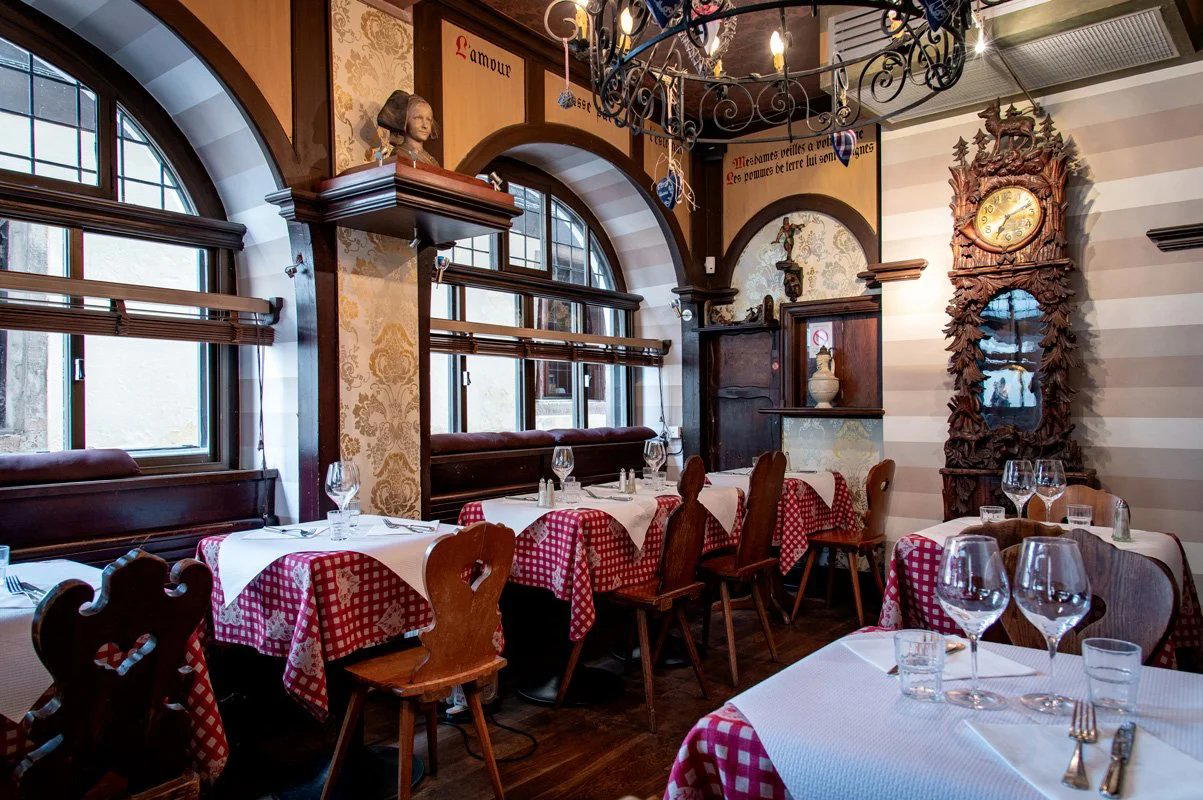
The Winstub as Architecture: How Strasbourg Eats in Its Old Town
The Grande Île, Strasbourg's UNESCO-listed medieval core, contains a specific typology of dining room that exists almost nowhere else in France with the same density or authenticity: the winstub. Le Tire-Bouchon is a traditional Alsatian winstub in Strasbourg, with a casual dress code, reservations recommended, and an average price of about $25 per person. These are low-ceilinged, wood-panelled rooms built for long evenings, shared tables, and a wine list that rarely strays beyond the Alsace AOC. Le Tire-Bouchon, at 5 Rue des Tailleurs de Pierre, occupies one of these interiors. The address alone places it within a neighbourhood where the built environment dictates the kind of cooking that makes sense: strong choucroutes, braised pork knuckle, tarte flambée pulled from wood-fired heat, and carafes of Sylvaner poured without ceremony.
This is not accidental. The winstub format was never designed around chef celebrity or seasonal tasting menus. It was designed around the physical room: communal benches, shared surfaces, the fug of a room that has been warm since October. In that context, Le Tire-Bouchon is doing what its address requires. Comparing it to Au Crocodile or 1741, both operating at the €€€€ fine-dining tier with modern Alsatian ambitions, misses the point entirely. Those rooms are built for precision and ceremony. This one is built for something older and more direct.
Reading the Room: Interior Logic on Rue des Tailleurs de Pierre
The editorial angle that matters most for a place like this is spatial rather than culinary. Alsatian winstubs were constructed during a period when the region's architectural vernacular was shaped by guild culture, the street name itself, Tailleurs de Pierre (stonemasons), is a remnant of that system. The rooms that emerged from this tradition share common features: exposed timber framing, tiled or flagstone floors built to absorb the noise of a full house, and windows that prioritise warmth retention over light admission. Walking into such a space in the colder months, the contrast with the street is immediate and physical.
This interior grammar also disciplines the menu. You cannot convincingly serve a twelve-course degustation in a room with low beams and shared benches. What the space demands instead is cooking that arrives hot, is portioned generously, and benefits from being eaten at pace alongside local wine. Alsace's signature grape varieties, Riesling, Pinot Gris, Gewurztraminer, were developed in this context, not in the context of a modern wine pairing flight. They are food wines, built for acidity and weight that can stand against fermented cabbage and braised meat. The room at the restaurant is, among other things, a sensible argument for drinking them as intended.
Strasbourg's other modern-leaning addresses occupy different containers. de:ja and Les Funambules operate in spaces that have been designed or redesigned for contemporary dining, with the sightlines, lighting, and table spacing that contemporary fine dining requires. Umami takes a different approach again, working across culinary registers that the traditional winstub frame couldn't accommodate. Each of those rooms is asking its kitchen to do something specific. So is this one.
Alsatian Cooking in Its Traditional Register
The cooking tradition that winstubs like Le Tire-Bouchon represent is older than French haute cuisine's codified canon. Alsace sat on a cultural fault line between French and German culinary traditions for centuries, and its food reflects that: choucroute garnie, the region's most discussed dish, is essentially sauerkraut braised with wine and loaded with charcuterie, a dish more comfortable in the winstub format than in any fine-dining context. The same applies to baeckeoffe, the slow-baked meat and potato casserole traditionally assembled by a householder and left at the baker's oven all morning.
This cooking tradition has a different relationship to French fine dining's centre of gravity than, say, the Lyonnais tradition that produced Paul Bocuse - L'Auberge du Pont de Collonges, or the mountain register that drives Flocons de Sel in Megève. It is more closely related to the borderland brasserie culture that produced dishes built for preservation, fermentation, and slow heat, rather than the reduction sauces and butter-mounted finishes of classical French technique. The Auberge de l'Ill in Illhaeusern, roughly 40 kilometres south along the Rhine plain, represents the point at which Alsatian tradition was absorbed into Michelin's fine-dining framework. Places like Le Tire-Bouchon represent the tradition as it functions outside that framework.
France's most technically ambitious restaurants, Mirazur in Menton, Alléno Paris au Pavillon Ledoyen, Bras in Laguiole, or Troisgros - Le Bois sans Feuilles, all operate in conscious dialogue with French regional heritage, but their rooms and their formats are built for abstraction and interpretation. The winstub's relationship to Alsatian cooking is far more literal. It preserves a format rather than interpreting it.
Planning a Visit: Timing and Practical Context
Strasbourg's Grande Île draws significant visitor traffic, and the winstub tier of the market operates at high occupancy during the Christmas market season (late November through December) and during summer months when the city's tourism peaks. For a room on a tight medieval lane in the historic core, arriving without a reservation during these periods carries real risk. One useful window for an unhurried experience is the shoulder season: September through early November, or February through March, when the city operates at a pace closer to its residential rhythm.
Strasbourg is served by a TGV connection from Paris Gare de l'Est, with journey times under two hours. The city is compact and the Grande Île is walkable from the central train station in under fifteen minutes, making it a functional addition to a broader Alsace itinerary that might also take in the wine route villages further south.
The Quick Read
Comparable venues nearby, for context on price, style, and recognition.
| Venue | Cuisine | Price |
|---|---|---|
| Le Tire-BouchonThis venue — the venue you are viewing | Centre, Traditional Alsatian Winstub | $$ |
| Pfifferbriader | Centre, Traditional Alsatian Winstub | $$ |
| La Nouvelle Poste | Centre, French Brasserie | $$ |
| Lisa en Cuisine | Neudorf, French Market Bistro | $$ |
| Saint Sépulcre | Centre, Traditional Alsatian Winstub | $$ |
| Le Bistrot d'Antoine | Centre, Traditional French Bistro | $$ |
Continue exploring
More in Strasbourg
Restaurants in Strasbourg
Browse all →

Bars in Strasbourg
Browse all →


Hotels in Strasbourg
Browse all →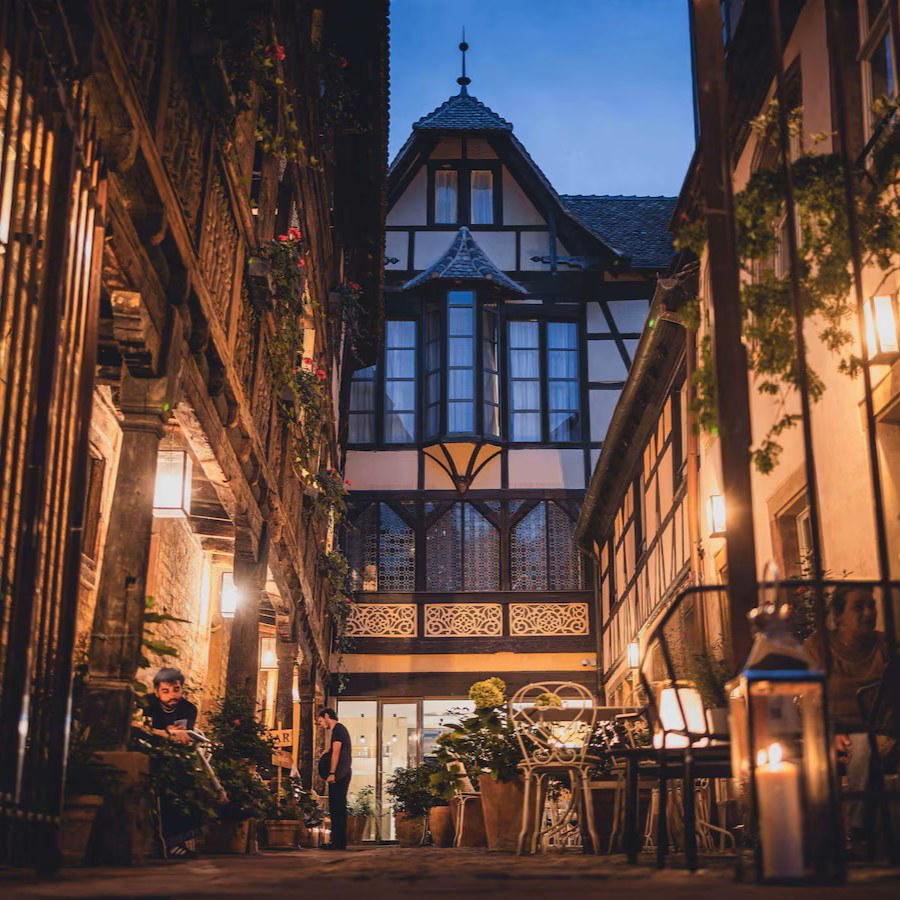
At a Glance
- Classic
- Cozy
- Rustic
- Historic
- Intimate
- Casual Hangout
- Special Occasion
- Historic Building
- Terrace
- Natural Wine
- Local Sourcing
- Street Scene
Current opening hours
- Monday
- 11:30 AM–3 PM, 6:30–10 PM
- Tuesday
- 11:30 AM–3 PM, 6:30–10 PM
- Wednesday
- 11:30 AM–3 PM, 6:30–10 PM
- Thursday
- 11:30 AM–3 PM, 6:30–10 PM
- Friday
- 11:30 AM–3 PM, 6:30–10:30 PM
- Saturday
- 11:30 AM–10:30 PM
- Sunday
- 11:30 AM–10 PM
Hours can change for holidays and private events. Last verified .
Historic stone walls with wood paneling and frescoes, candlelit for a cozy, traditional atmosphere evoking old Alsatian wine houses.