La Nouvelle Poste
Our verdict
La Nouvelle Poste occupies a quietly positioned address on Rue du Parchemin, inside Strasbourg's medieval core. A reservation here is a statement about how you want to read the city.

Pearl is the En Primeur Club membership app, where members save venues, book tables and use the concierge.

A Street That Sets the Register
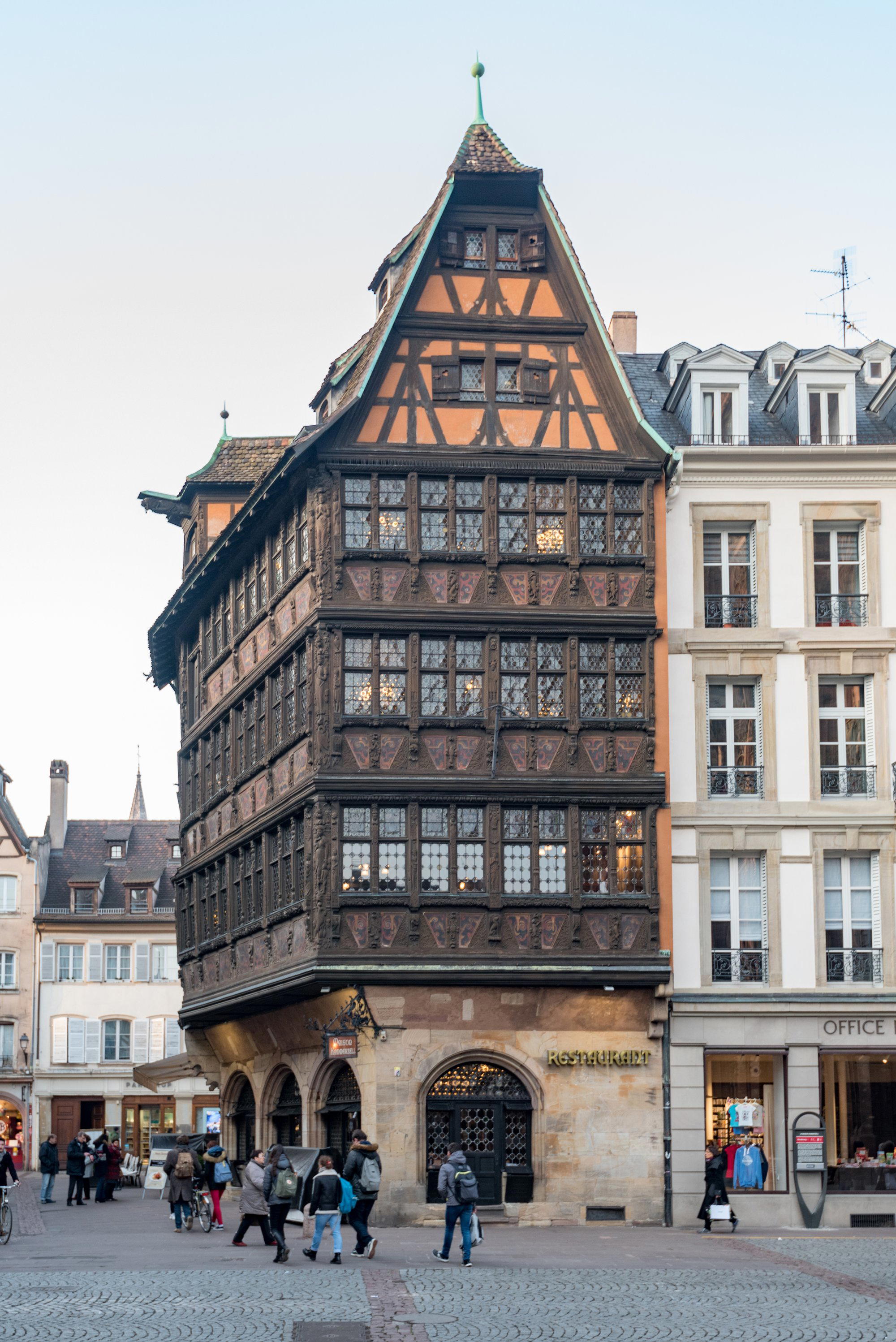
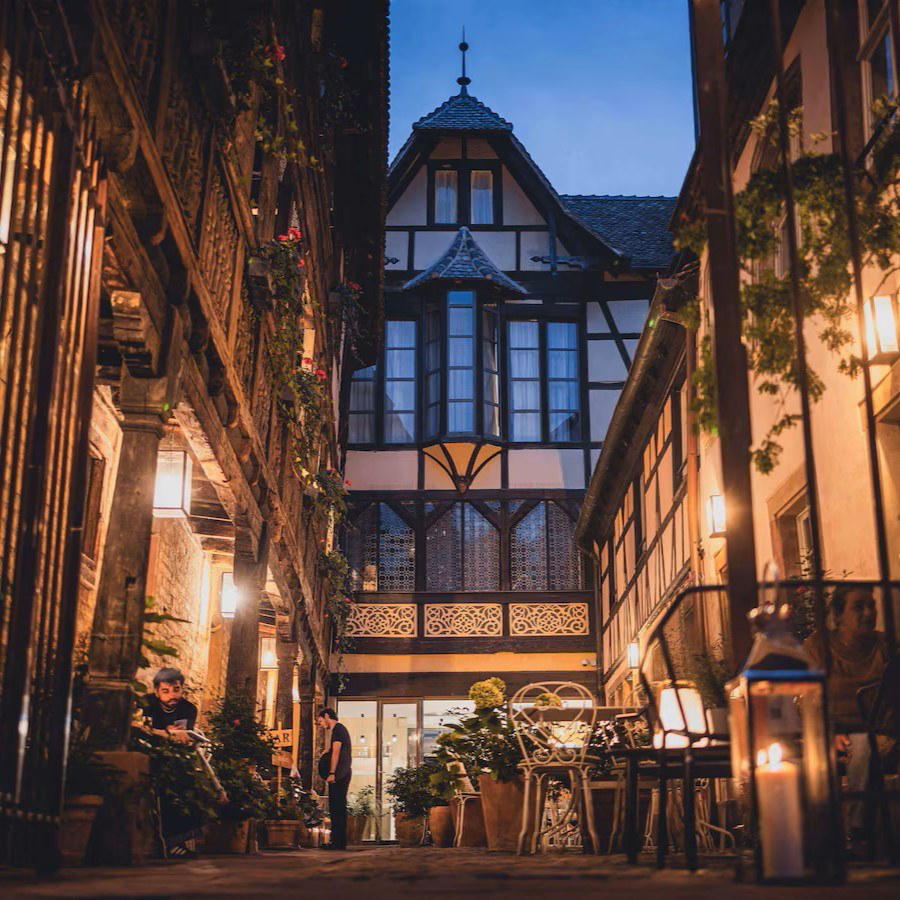
Rue du Parchemin runs through the heart of Strasbourg's Grande Île, the UNESCO-listed island city framed by branches of the Rhine's tributaries. The address alone positions La Nouvelle Poste before a dish arrives: this is a part of the city where the built environment does considerable work, where half-timbered facades and cobbled lanes create a particular kind of gravitational pull on any restaurant willing to inhabit them seriously. The leading tables in this part of Strasbourg understand that the room is already charged, and that the kitchen's job is to meet the architecture rather than compete with it.
That dynamic shapes how a diner should approach a meal here. Strasbourg sits at a crossroads that is more than geographical. Alsace spent centuries alternating between French and German sovereignty, and the cuisine that emerged from that oscillation is among the most distinctive regional traditions in France: choucroute, baeckeoffe, flammekueche, tarte à l'oignon, and a serious wine culture built on Riesling, Pinot Gris, and Gewurztraminer from the slopes of the Vosges. Modern restaurants in the Grande Île work within or against that inheritance, and the address on Rue du Parchemin places La Nouvelle Poste squarely inside that negotiation.
The Alsatian Table in Its Current State
Strasbourg's dining scene has stratified considerably over the past decade. At the upper end, Au Crocodile operates as the city's most formally recognised address for Alsatian-rooted modern cuisine, carrying the weight of the region's fine-dining history. 1741 and de:ja represent a newer creative tier, where tasting menus and experimental formats attract a more internationally mobile clientele. Les Funambules and Umami extend the conversation into modern French and cross-cultural registers.
La Nouvelle Poste enters that field from an address that carries its own argument. A restaurant on Rue du Parchemin is not trying to establish itself in a peripheral neighbourhood or earn credibility through an unlikely location. It is, by placement alone, operating inside the city's most historically loaded dining corridor, which means the editorial question is always what it does with that positioning rather than how it achieved it. See our full Strasbourg restaurants guide for a broader map of how the city's tables are distributed across price tiers and culinary registers.
What the Regional Tradition Demands
Alsatian cooking at its serious end is not a cuisine of minimalism. The tradition runs toward richness, toward preserved and cured ingredients, toward dishes built for cold months and long evenings. When restaurants in this region apply modern French technique to that inheritance, the results tend to fall into two camps: those that treat Alsatian identity as a flavour accent within a pan-French framework, and those that treat it as a structural commitment, where the sourcing geography and the cooking logic are inseparable from the Vosges and the Rhine plain.
That distinction matters at the level of the wine list as much as the plate. Alsace produces some of France's most food-specific whites, built for the kind of fatty, acidic, spiced preparations that define the regional tradition. A restaurant operating inside this geography that ignores its wine region in favour of a conventionally Burgundy-heavy list is making a choice that tells you something about its editorial position. The strongest tables in Strasbourg treat Alsatian vintners, from the grand cru slopes around Ribeauvillé and Riquewihr to the smaller biodynamic producers in the Haut-Rhin, as the natural first choice rather than a regional novelty to be noted and set aside.
France's broader fine-dining reference points are worth holding in view. Houses like Auberge de l'Ill in Illhaeusern, just 40 kilometres south, have defined what Alsatian cooking can achieve at the highest level of classical French tradition, carrying three Michelin stars across generations of a single family. Further afield, the ambition of Mirazur in Menton and the generational depth of Troisgros in Ouches illustrate the range of registers within which serious French regional cooking currently operates. Bras in Laguiole and Flocons de Sel in Megève represent the terrain-driven pole of that conversation, while Alléno Paris au Pavillon Ledoyen and Paul Bocuse in Collonges-au-Mont-d'Or mark the institutional poles. AM par Alexandre Mazzia in Marseille, Assiette Champenoise in Reims, and Auberge du Vieux Puits in Fontjoncouse round out the picture of how deeply regionality still anchors serious French cooking. Internationally, Le Bernardin and Atomix in New York demonstrate how French-trained discipline translates across contexts.
Planning a Visit
La Nouvelle Poste is located at 12 Rue du Parchemin, 67000 Strasbourg, in the Grande Île. The address is walkable from Strasbourg's central tramway network, with the Homme de Fer interchange approximately ten minutes on foot. For visitors arriving by rail, Strasbourg Gare is connected directly to the island city, which is compact enough that most key dining addresses are reachable without a taxi. Given the lack of a confirmed booking platform in the public record, contacting the restaurant directly for reservations is the prudent approach, particularly for weekend evenings when demand across the Grande Île dining corridor runs consistently high. The city's high-traffic periods cluster around the Christmas market season in late November and December, when tables at any address with a serious kitchen become a planning variable rather than a spontaneous option.
Frequently asked questions
How do I find La Nouvelle Poste?
La Nouvelle Poste is located at 12 Rue du Parchemin, 67000 Strasbourg, France, Strasbourg.
Is La Nouvelle Poste a good choice for a traditional Alsatian dinner near Strasbourg Cathedral?
The restaurant sits at 12 Rue du Parchemin on the Grande Île, the UNESCO-listed island that also contains Strasbourg Cathedral, making it genuinely walkable from the city's central landmark. The Alsatian cooking tradition the restaurant draws from, preserved meats, richly constructed braises, regional wine pairings, is well-suited to visitors wanting a grounded, place-specific dinner rather than a generic French menu. Few addresses in the city centre combine this proximity to the Cathedral quarter with a kitchen operating in that regional idiom.
What should I order at La Nouvelle Poste?
The Alsatian tradition at this level leans toward preserved and cured ingredients, rich braises, and dishes with structural depth rather than minimalist plating. At a Grande Île address like 12 Rue du Parchemin, the kitchen is working within a regional canon that prizes choucroute, game preparations, and foie gras treatments. Without a confirmed current menu on record, the safest approach is to ask the floor staff which preparations reflect the day's market sourcing.
Do I need a reservation for La Nouvelle Poste?
Strasbourg's central dining corridors, particularly around the Grande Île, run at high occupancy on weekends and during the city's extended Christmas market season from late November onward. Booking ahead by at least several days is advisable for any seated dinner in this part of the city.
What's the defining dish or idea at La Nouvelle Poste?
The address on Rue du Parchemin places this restaurant squarely inside Strasbourg's historic core, and the Alsatian table at that location carries a specific expectation: richness, preserved ingredients, and cooking that draws on centuries of Franco-German technique. The defining idea here is fidelity to that regional tradition rather than reinvention of it, which puts La Nouvelle Poste in a different register than the more internationally styled rooms further from the Grande Île.
How does La Nouvelle Poste handle allergies?
French law requires restaurants to declare allergens on request, so the kitchen is legally obligated to provide that information. check the venue's official channels before your visit if you have specific requirements.
Is La Nouvelle Poste overpriced or worth every penny?
What the address and context suggest is a mid-to-upper register consistent with serious Alsatian cooking on the Grande Île, where overhead and clientele both support that positioning. Verify current menu pricing directly with the venue before booking.
Where It Fits
Comparable venues nearby, for context on price, style, and recognition.
| Venue | Cuisine | Price | Notes |
|---|---|---|---|
| La Nouvelle PosteThis venue (the venue you are viewing) | French Brasserie | $20–30 | Not listed |
| À la Tête de Lard | Traditional Alsatian Winstub | $20–30 | Centre |
| Les Innocents | Modern French Bistronomic | $20–30 | Tribunal-Gare-Porte De Schirmeck |
| Pfifferbriader | Traditional Alsatian Winstub | $30–50 | Centre |
| Lisa en Cuisine | French Market Bistro | $20–30 | Neudorf |
| La Vignette | French Bistro | $30–50 | Robertsau |