Weingut Friedrich Becker

Falstaff Winery - 5 Stars
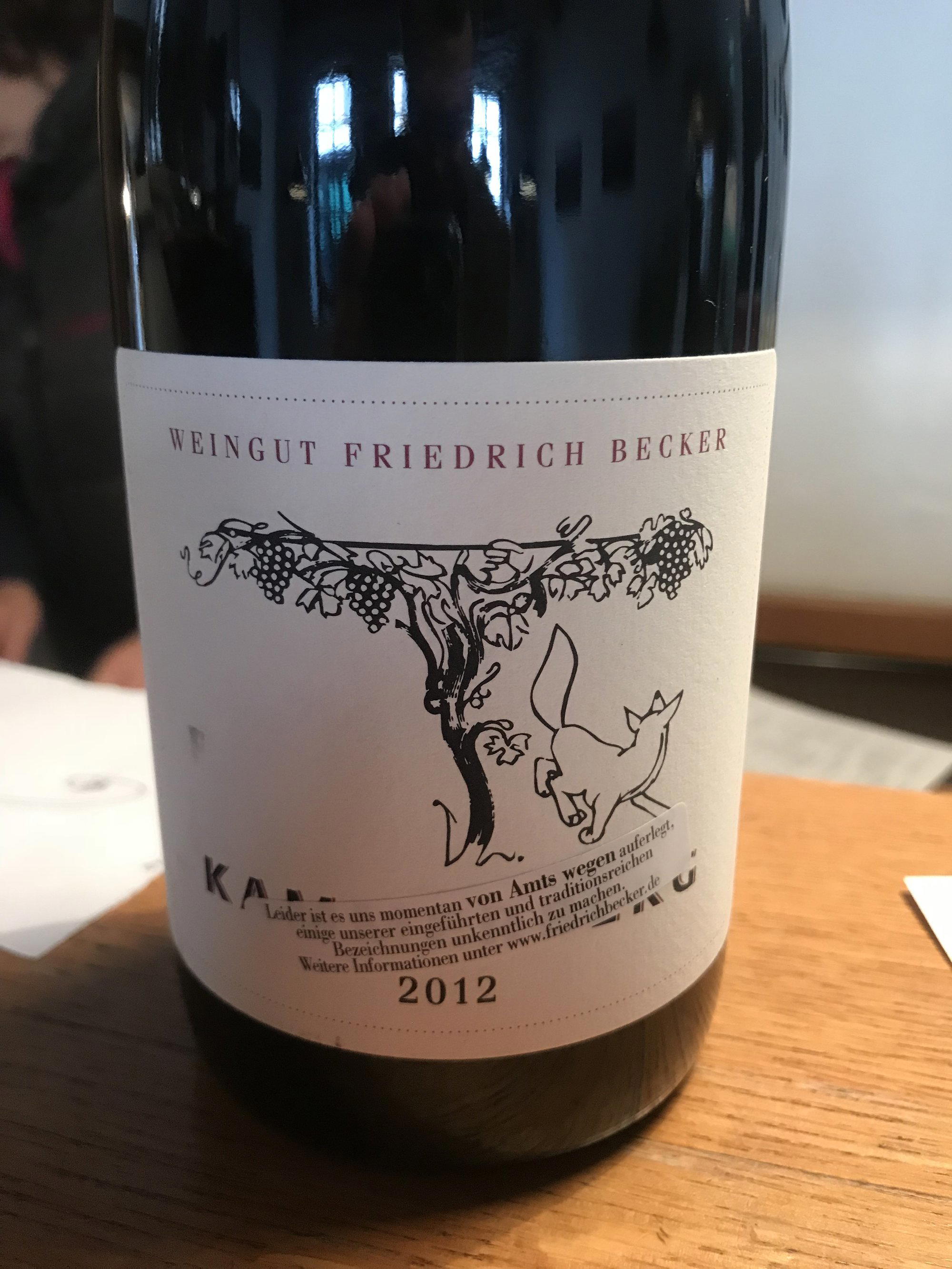
Weingut Friedrich Becker operates from the far southern tip of the Pfalz, where the vineyards cross into Alsace and the soils shift in ways that show clearly in the glass.
Where the Pfalz Ends and the Terroir Begins
The village of Schweigen-Rechtenbach sits at the very southern edge of the Pfalz, at a point where the German wine region technically ends but the vineyard geology does not. The soils here continue uninterrupted into Alsace, and that cross-border continuity is not incidental to what Weingut Friedrich Becker produces, it is the whole argument. Few estates in Germany occupy a geographic position so directly tied to their wines' character, and that position shapes every conversation about what Becker represents in the broader context of German premium viticulture.
The southern Pfalz receives more sunshine hours than most of Germany's wine regions, and the proximity to the Vosges mountains creates a rain shadow that concentrates ripeness in ways more comparable to eastern France than to the Mosel or Rheingau. For visitors approaching from the north along the Deutsche Weinstraße, the shift in landscape is gradual but unmistakable: the hills close in, the vegetation thickens, and the vineyards begin to read less like the open Rhine plains and more like something approaching Burgundy's Côte d'Or geography. That context matters when assessing what Becker does with Pinot Noir, a grape that, in the right hands and the right soils of this region, produces results that sit in a different conversation to Spätburgunder from further north.
It positions Becker within a peer group of estates, including others in the Pfalz such as Weingut A. Christmann in Neustadt an der Weinstraße, Weingut Bassermann-Jordan in Deidesheim, and Weingut Dr. Bürklin-Wolf in Wachenheim an der Weinstraße, where the benchmark is not regional adequacy but internationally competitive winemaking.
That competitive set matters for how you approach a visit or a purchase. Becker is not operating in the mid-level Pfalz market where crisp, crowd-pleasing wines dominate the tourist trade. The allocation patterns and critical attention that accumulate around prestige-rated estates tend to shift access: wines from producers at this level often move through specialist importers and dedicated mailing lists before reaching the open market. Anyone planning to visit the estate directly, rather than seek bottles through retail channels, should treat a visit to Schweigen-Rechtenbach as a purposeful trip rather than a casual detour.
The Terroir Argument: Soils, Borders, and Pinot Noir
The defining editorial point about Becker's position in German wine is the terroir argument it makes through Pinot Noir. Germany's premium wine identity has historically been organised around Riesling, and the country's classification systems, regional reputations, and export markets all reflect that priority. Estates working at the leading level with red varieties, particularly those making Spätburgunder with genuine structural ambition, occupy a smaller, less well-charted niche. Becker sits squarely in that niche, at a location where the soil composition and microclimate provide a legitimate basis for the comparison to Alsatian and, further by extension, Burgundian red wine traditions.
The vineyards that straddle the German-French border here include limestone and clay profiles that retain heat and provide drainage in proportions suited to Pinot Noir's requirements. This is not a claim unique to Becker; it is a characteristic of the entire sub-region. What distinguishes one estate from another in this context is the precision of site selection, the management of yields, and the decisions made in the cellar about extraction and ageing. At the prestige tier, those decisions are expected to be conservative in the leading sense: disciplined enough to let the site speak rather than the winemaker's intervention.
For context on how this approach compares across Germany's red wine producers, estates like Weingut Battenfeld-Spanier in Hohen-Sülzen are pursuing similarly site-led philosophies in the Rheinhessen, while in the Mosel, producers such as Weingut Clemens Busch in Pünderich and Weingut Heymann-Löwenstein in Winningen apply comparable rigour to their respective grape varieties and sites. The shared thread is a commitment to terroir expression over stylistic consistency, which means vintages at these estates vary meaningfully, and that variation is treated as information rather than a problem to be solved.
The Wider German Premium Context
Understanding Becker's position requires some orientation within Germany's wine geography. The Pfalz is Germany's second-largest wine region by area, and within it, the quality spread is wide. The prestige tier of Pfalz producers represents a small fraction of total output, and the southern Pfalz specifically has historically received less international attention than the Mittelhaardt to the north, where estates like Bassermann-Jordan and Dr. Bürklin-Wolf anchor the region's Riesling reputation.
That relative underexposure has consequences for how Becker is discovered. International collectors focused on German wine tend to start with Riesling in the Mosel or Rheingau, estates such as Weingut Fritz Haag in Brauneberg, Weingut Georg Breuer in Rüdesheim am Rhein, or the historic Kloster Eberbach in Eltville, before expanding outward. Becker tends to enter the picture for collectors already comfortable with German wine who are looking specifically at red varieties, or for those arriving from a Burgundy interest who are following the limestone-and-Pinot-Noir thread across borders. That self-selecting audience explains the relatively quiet international profile compared to the domestic critical standing, and it suggests that current access to Becker's wines may be easier than it will remain as the producer's international recognition builds.
For completeness in the broader German premium panorama, estates such as Weingut Allendorf in Oestrich-Winkel, Weingut Bürgerspital zum Heiligen Geist in Würzburg, and Weingut Grans-Fassian in Leiwen each represent different regional expressions within Germany's white wine tradition, and provide useful reference points for understanding how specialised Becker's red-wine focus actually is within the national context.
Planning a Visit to Schweigen-Rechtenbach
Schweigen-Rechtenbach is a small border village reached most directly from Karlsruhe via the A65 motorway, turning south toward the French border. The village itself marks the southern terminus of the Deutsche Weinstraße, a route that runs for approximately 85 kilometres through the heart of the Pfalz wine country. For visitors treating the area as a dedicated wine destination, the towns of Landau and Bad Bergzabern to the north provide accommodation and restaurant options that the village itself does not offer at any scale. The estate address is Hauptstraße 29, 76889 Schweigen-Rechtenbach. Contact and booking details for cellar visits are not currently listed publicly; reaching out in advance through the estate's own channels is advisable for anyone travelling specifically to taste or purchase, particularly given the prestige-level demand that attaches to estates at Becker's rating tier. Our full Schweigen-Rechtenbach restaurants guide covers the broader food and drink context for the area.
The southern Pfalz is at its most hospitable between late April and October, with harvest season in September and October bringing the most concentrated activity around the vineyards. Late summer visits allow access to both the landscape at its most expressive and the opportunity to observe the pre-harvest vineyard work that defines the vintage character of estates operating at this level.
Frequently asked questions
What should I expect atmosphere-wise at Weingut Friedrich Becker?
Schweigen-Rechtenbach is a small border village, and Becker operates within that agricultural, unhurried setting at Hauptstraße 29.
What do visitors recommend trying at Weingut Friedrich Becker?
The editorial case for Becker centres on its Pinot Noir, grown at the southern extreme of the Pfalz where the appellation borders Alsace. This cross-border terroir position is the estate's defining argument, and any tasting here should be oriented around how those site conditions express themselves in the Spätburgunder.
Where exactly is Weingut Friedrich Becker?
Weingut Friedrich Becker is located at Hauptstraße 29, 76889 Schweigen-Rechtenbach, Schweigen-Rechtenbach.
What's the defining thing about Weingut Friedrich Becker?
That dual-terroir argument is rare in German wine.
Side-by-Side Snapshot
Comparable venues nearby, for context on price, style, and recognition.
| Venue | Cuisine | Price | Awards | Notes |
|---|---|---|---|---|
| Weingut Friedrich BeckerThis venue (the venue you are viewing) | Pinot Noir, Chardonnay | Not listed | Falstaff Winery - 5 Stars | Not listed |
| Weingut Knipser | Spätburgunder, Pinot Noir | Not listed | Falstaff Winery - 5 Stars | Laumersheim |
| Weingut Prinz Salm | Riesling, Pinot Noir | $30–50 | Falstaff Winery - 3 Stars | Wallhausen |
| Weingut Philipp Kuhn | Riesling, Pinot Noir | Not listed | Falstaff Winery - 5 Stars | Laumersheim |
| Cristom Vineyards | Pinot Noir, Chardonnay | Not listed | Falstaff Winery - Listed | Eola-Amity Hills |
| Weingut Müller-Catoir | Riesling, Scheurebe | $50–100 | Falstaff Winery - Listed | Haardt |
Recognition history
Dated appearances from independent guides and award organizations, with the underlying list record or original source where available.
Falstaff Winery - 5 Stars
Falstaff
Enquire about visiting Weingut Friedrich Becker or buying its wine
Visits to Weingut Friedrich Becker are usually kept for the estate's regular buyers and the wine trade. Tell us when you would like to go and a little about how you buy, and we put the request to the estate and reply to you by email. For buying, we source directly from the producer or from a licensed seller we know and vouch for, and tell you the route before you pay.
Continue exploring
More in Schweigen-Rechtenbach
Wineries in Schweigen-Rechtenbach
All wineries in Schweigen-Rechtenbach →
Bars in Schweigen-Rechtenbach
Browse all →
Restaurants in Schweigen-Rechtenbach
Browse all →
Details
- Rustic
- Elegant
- Scenic
- Intimate
- Wine Education
- Solo Exploration
- Special Occasion
- Vineyard Tour
- Estate Grounds
- Sustainable
- Vineyard
- Pinot Noir
- Chardonnay
- Pinot Gris
- Pinot Blanc
- Riesling
- Silvaner
- Gewürztraminer
- Still Red
- Still White
- Sparkling
- Cave Tasting
- Private Tasting
Refined and classic winery atmosphere focused on high-quality Pinot varieties in a border location with traditional winemaking.