Saint Sépulcre
Our verdict
Located at 15 Rue des Orfèvres in Strasbourg's Grande Île, Saint Sépulcre occupies one of the city's most storied dining addresses. The restaurant draws a loyal local following that returns not for spectacle but for consistency, placing it within Strasbourg's quieter tier of serious neighbourhood tables. Detailed booking and menu information is best confirmed directly with the venue.

Pearl is the En Primeur Club membership app, where members save venues, book tables and use the concierge.

A Street That Earns Its Loyalty
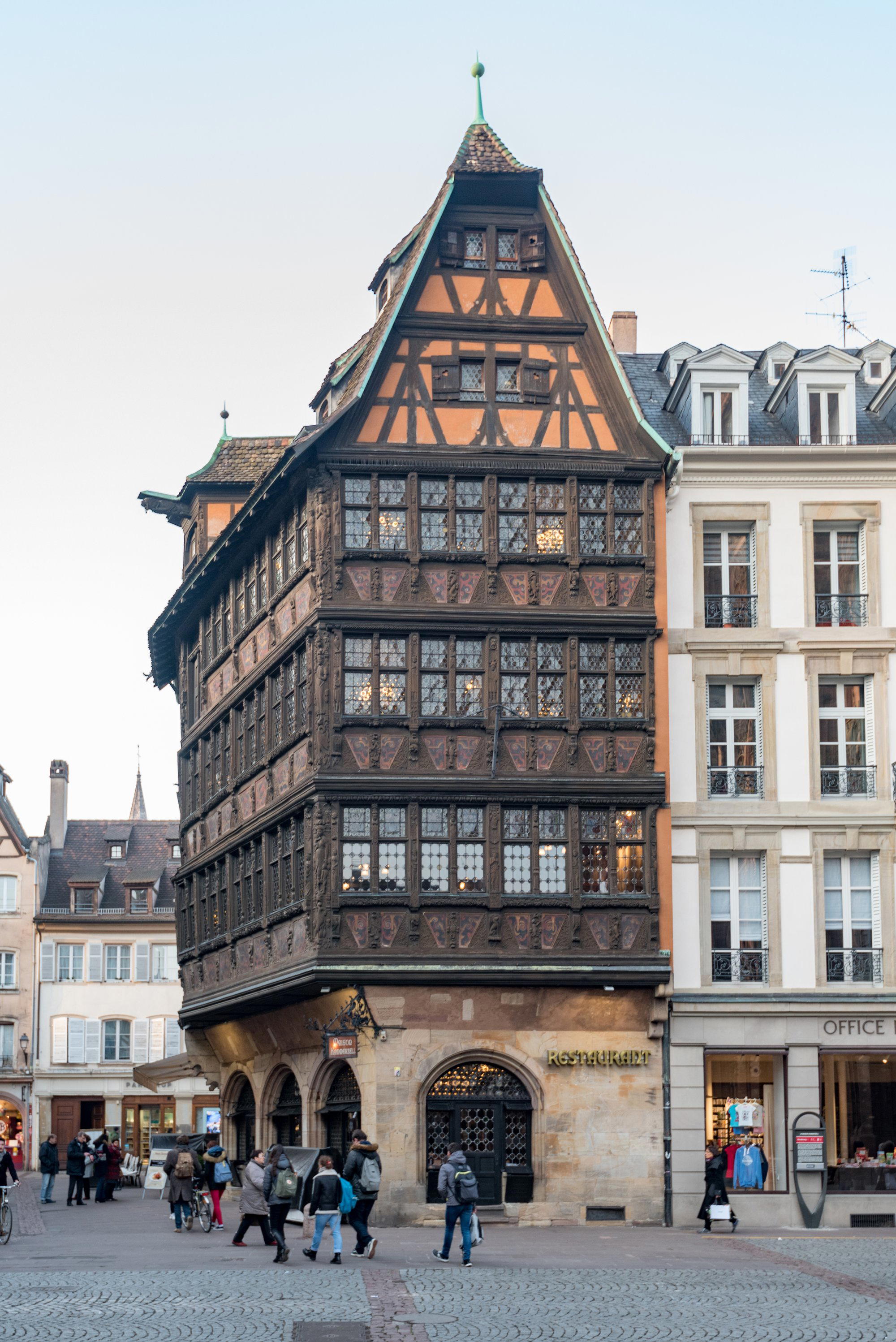
Rue des Orfèvres, the Street of Goldsmiths, runs through the heart of Strasbourg's Grande Île, the UNESCO-listed island district where the city's medieval fabric is most intact. This is not the tourist corridor that funnels visitors between the cathedral and the Christmas market stalls; it sits one or two turns removed from that circuit, and the restaurants along it tend to attract a different crowd: residents who live within walking distance, professionals who book the same table on the same day each month, and the kind of out-of-town visitors who have stopped asking hotel concierges for recommendations. Saint Sépulcre at number 15 belongs to this address, and the address does some of the editorial work before any dish arrives.
Strasbourg occupies a particular position in French dining. It is a city with genuine gastronomic range, from the grand Alsatian houses like Au Crocodile to the more quietly experimental rooms like de:ja and 1741, yet it rarely appears in the same breath as Lyon or Paris when serious French dining is discussed outside France. That undervaluation has its advantages: the restaurants that survive here do so on repeat business rather than on destination tourism, which creates a different discipline in the kitchen and a different atmosphere in the room.
What Regulars Know That First-Timers Don't
The logic of a regulars' restaurant operates differently from a destination restaurant. At a place built on repeat custom, the kitchen does not need to perform for strangers; it needs to stay consistent for people who have a reference point. That consistency pressure is, in its way, more demanding than the pressure of a one-off occasion. The table that has eaten here forty times knows exactly when the kitchen is on form and when it is not.
Strasbourg's dining culture has long supported this kind of loyalty. The winstub tradition, the convivial, wine-forward Alsatian tavern, established an expectation that a good local table should feel as though it belongs to its regulars as much as to its owners. Contemporary addresses like Saint Sépulcre inherit that cultural expectation even when the format is more modern. Repeat diners in this city tend to be opinionated about provenance (Alsace's position between France and Germany gives it access to strong regional produce on both sides), attentive to the wine list's Alsatian breadth, and quick to notice if the kitchen is cutting corners on technique.
For visitors approaching Saint Sépulcre without that accumulated knowledge, the practical implication is worth stating plainly: this is a room that rewards some preparation. Knowing the broader Strasbourg dining tier, where Les Funambules and Umami sit in relation to each other and to the upper bracket, gives a first-time visitor better tools for reading what Saint Sépulcre is doing and why its regulars return. Arriving cold, without that frame, risks mistaking consistency for simplicity.
Strasbourg and the Wider French Table
Placing Strasbourg within French dining at large requires acknowledging what the city is not competing for. The headline addresses of the French kitchen, Mirazur in Menton, Troisgros in Ouches, the long-established Auberge de l'Ill in nearby Illhaeusern, operate in a register where the meal is itself the destination, where booking windows extend months out and where the price reflects a global competitive set. The Alléno Paris au Pavillon Ledoyen model, or the ambition behind Bras in Laguiole, represents one end of the French dining spectrum. Saint Sépulcre operates at a different point on that axis: a neighbourhood-anchored table in a city that takes its food seriously without needing to announce that seriousness to the wider world.
That positioning is not a limitation. Some of the most instructive meals in any serious food city happen at addresses that never make the international awards circuits. The discipline required to hold a loyal local clientele across years, without the validation of Michelin stars, without the influx of destination diners to smooth over an off night, is its own form of credibility. Addresses like Paul Bocuse - L'Auberge du Pont de Collonges in Collonges-au-Mont-d'Or and Auberge du Vieux Puits in Fontjoncouse built their reputations on precisely that long-run consistency before wider recognition followed. The trajectory runs in both directions: recognition can follow consistency, but consistency can also exist without recognition, which is the more common and, in some respects, the more interesting condition.
For readers building a fuller picture of serious French dining beyond the Alsatian region, the EP Club covers the full range: from Assiette Champenoise in Reims and AM par Alexandre Mazzia in Marseille to Flocons de Sel in Megève, each representing a different way the French kitchen expresses regional identity at the top of its range.
Planning a Visit
Saint Sépulcre sits at 15 Rue des Orfèvres in Strasbourg's Grande Île, within comfortable walking distance of the cathedral quarter. For a room of this type, a neighbourhood table with a loyal local base, arriving without a reservation on a weekday evening is a reasonable proposition in quieter months, but Strasbourg's calendar is not evenly distributed: the Christmas market period from late November through December is one of the most heavily visited stretches in the French east, and tables that are easy to secure in February become considerably harder in December. Planning ahead during that window is not optional. For detailed current information on booking, hours, and any seasonal menu changes, contacting the venue directly remains the most reliable approach, as specific operational details for Saint Sépulcre are not available in verified form at the time of writing. The full EP Club Strasbourg guide covers the broader dining context across the city's neighbourhoods.
Frequently asked questions
What's Saint Sépulcre's location?
Saint Sépulcre is located at 15 Rue des Orfèvres, 67000 Strasbourg, France, Strasbourg.
Is Saint Sépulcre a good option for dinner near Strasbourg Cathedral?
Saint Sépulcre at 15 Rue des Orfèvres sits within the Grande Île, Strasbourg's UNESCO-listed island district and the same neighbourhood as the cathedral, making it one of the closer sit-down options to that landmark. Unlike many addresses in that immediate radius that lean on tourist footfall, Saint Sépulcre's profile as a regulars' table suggests a kitchen oriented toward local repeat custom rather than high-turnover covers.
What's the signature dish at Saint Sépulcre?
Saint Sépulcre sits on Rue des Orfèvres in Strasbourg's Grande Île, a neighbourhood with deep Alsatian culinary roots, so the kitchen likely draws on that regional tradition, but confirm the current menu directly with the restaurant before visiting.
Can I walk in to Saint Sépulcre?
At a regulars-oriented address like Saint Sépulcre, located at 15 Rue des Orfèvres, well within the tourist-heavy Grande Île, tables can fill through repeat custom rather than public booking flows. Contacting the restaurant directly before arrival is the safest approach.
What is Saint Sépulcre known for?
Saint Sépulcre is known as a loyalist's address on Rue des Orfèvres, one of the Grande Île's more characterful streets in Strasbourg's UNESCO-listed island district. Its reputation rests on repeat custom rather than destination-restaurant mechanics, which tends to shape both the menu and the atmosphere around familiar, returning guests.
How does Saint Sépulcre handle allergies?
Given the restaurant's address in central Strasbourg at 15 Rue des Orfèvres, the most reliable course is to contact them directly ahead of your visit to confirm what the kitchen can accommodate.
Pricing, Compared
Comparable venues nearby, for context on price, style, and recognition.
| Venue | Cuisine | Price | Notes |
|---|---|---|---|
| Saint SépulcreThis venue (the venue you are viewing) | Traditional Alsatian Winstub | $20–30 | Not listed |
| Au Cruchon | Traditional Alsatian Winstub | $20–30 | Centre, Traditional Alsatian Winstub |
| La Vignette | French Bistro | $30–50 | Robertsau, French Bistro |
| Pfifferbriader | Traditional Alsatian Winstub | $30–50 | Centre, Traditional Alsatian Winstub |
| Madeleine | Modern Alsatian-Breton Bistro | $30–50 | Bourse-Esplanade-Krutenau, Modern Alsatian-Breton Bistro |
| À la Tête de Lard | Traditional Alsatian Winstub | $20–30 | Centre, Traditional Alsatian Winstub |