Les Haras

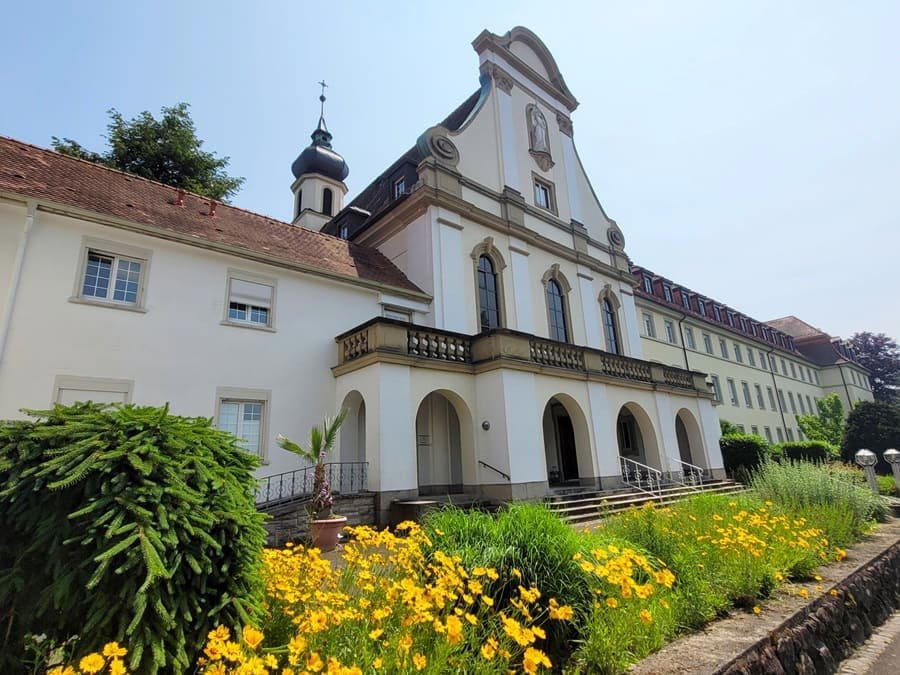
A former 18th-century royal stable complex just across the river from Strasbourg's Grande Île, Les Haras has been transformed by Parisian designers Patrick Jouin and Sanjit Manku into a 115-room design hotel that earned a Michelin Key in 2024. Minimalist interiors contrast with exposed historic timbers, and an on-site spa includes a 17-metre pool, hammam, and sauna. Rates from $452 per night position it in the upper tier of the city's independent hotel offering.
Pearl is the En Primeur Club membership app — saves, bookings, and concierge access live there. Same editors, same standards.
- Address
- 23 Rue des Glacières, 67000 Strasbourg
- Phone
- +33 3 90 20 50 00
- Website
- les-haras-hotel.com
- Directions
- Get directions
 Saves & bookings on Pearl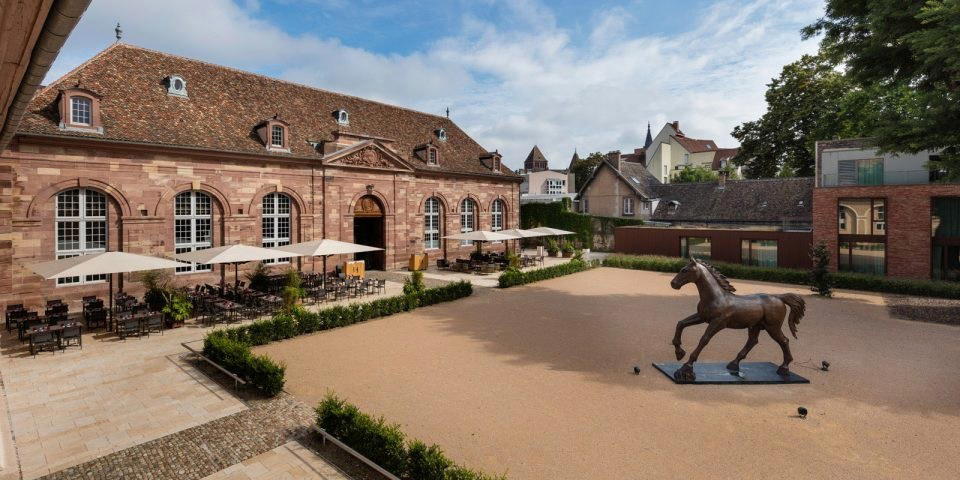
Where the Royal Stables Meet Contemporary Design
Les Haras, at 23 Rue des Glacières, takes a different approach: it sits just across the river from the old city core, near enough to be walkable into the historic centre but separated enough to operate on its own architectural and atmospheric terms.
The building has a specific claim that no amount of renovation can manufacture: an 18th-century royal stable complex, part of France's national haras network, a government-run breeding programme that operated from the early 1700s. The structure's bones, exposed timber frames, vaulted volumes, the particular proportions that come from designing spaces around horses rather than people, give the hotel a spatial quality that purpose-built luxury properties rarely achieve. The question was always what to do with them. The answer, delivered by Parisian studio Patrick Jouin and Sanjit Manku, is a design language that leans into contrast rather than restoration.
The Interior Logic
High-end adaptive reuse hotels in Europe tend to resolve the tension between old and new in one of two directions: either the historic fabric is preserved reverentially and the contemporary additions kept subordinate, or the intervention is so aggressive the original structure becomes mere backdrop. The interiors at Les Haras occupy a more considered position. The 115 rooms and suites use a minimalist palette that incorporates 1970s-inflected colour choices and a cool, forward-looking material language, placed directly alongside the exposed timbers and masonry that the building's history requires. The effect is less conflict than conversation, each register making the other more legible.
Room sizes trend large, and the restraint of the aesthetic amplifies that sense of space. This places Les Haras in a comparable set of European design hotels where scale and quiet understatement do more work than elaborate furnishing. For comparison, properties like Castelbrac in Dinard or Casadelmar in Porto-Vecchio operate in a similar register: distinctive architecture, controlled interiors, a deliberate refusal of conventional luxury signalling. Les Haras earned a Michelin Key in 2024, a recognition system launched that year to assess hotels specifically on the quality of the guest experience, placing it in credentialled company across France.
The Spa and the 17-Metre Pool
The wellness offering at the hotel follows the same spatial logic as the rooms. The spa occupies a similarly transformed volume within the historic complex, with a 17-metre pool as its centrepiece alongside a hammam, a sauna, and a gym that the property describes as impressively outfitted. In Strasbourg's hotel context, this scale of in-house wellness infrastructure is not the norm. The Le Bouclier d'Or Hotel & Spa offers a spa component, but the combination of pool length, hammam, and the architectural drama of the space at the hotel gives it a distinct position in the city's wellness-hotel category.
For guests who use spa access as a meaningful factor in hotel selection, rather than a box-checking amenity, this matters. The better reference points are further afield: the spa infrastructure at Les Sources de Caudalie in Bordeaux or Royal Champagne Hotel & Spa in Champillon set the standard for serious in-hotel wellness in northeastern and southwestern France. The hotel does not reach that level of specialisation, but it offers considerably more than the decorative spa common to city hotels in this price range.
The Brasserie des Haras: An Important Distinction
Alsatian dining occupies a particular niche in French gastronomy: Germanic in structure, French in technique, with a regional specificity that makes it one of the more coherent regional cuisines in the country. The on-site Brasserie des Haras operates under chefs Marc Haeberlin and François Baur, serving modern French classics with an Alsatian accent in what the hotel describes as an artful setting shaped by curving wood. Haeberlin is a name with weight in Alsatian food circles, connected to the Haeberlin family's long tenure at Auberge de l'Ill in Illhaeusern, one of the region's most durably recognised restaurants.
The architectural framing of the brasserie is considered among the more distinctive spaces in the building, and the combination of serious culinary lineage with a setting that rewards attention makes it a reasonable dinner choice on its own terms. However, one operational fact matters here: the Brasserie des Haras is an independent operation, not part of the hotel. The hotel team can assist with reservations for lunch and dinner during a stay, but guests should understand they are dealing with a separate business.
Service Architecture and the Guest Experience
The Michelin Key designation recognises hotels for their overall guest experience. For the hotel, that recognition signals something beyond the physical plant: an operational standard that the building alone cannot guarantee. Design hotels in converted historic structures can easily over-invest in interiors and under-deliver on the human side of hospitality.
Service model here is oriented toward anticipatory logistics rather than formal ceremony, consistent with the hotel's design sensibility. The building creates a mood of quiet rather than grandeur, and the guest experience appears calibrated to that register. The team's willingness to coordinate restaurant reservations at the independent brasserie is a small but telling signal: the hotel positions itself as a useful intermediary between its guests and the broader city, rather than a self-contained world. This is a particular service philosophy, and one that suits Strasbourg well. The city rewards exploration on foot, and a hotel that facilitates that rather than competing with it is a practical asset. The hotel differentiates itself through design depth and spa infrastructure rather than address.
Where Les Haras Sits in the Broader Design Hotel Conversation
France's design hotel sector has produced some genuinely ambitious properties over the past decade, and the reference points matter for calibrating expectations. At the upper end, Cheval Blanc Paris and Villa La Coste in Le Puy-Sainte-Réparade operate at a different price ceiling and resource level. Properties like La Bastide de Gordes in Provence or Baumanière Les Baux-de-Provence demonstrate how heritage structures can anchor a hotel's identity without overwhelming it. The hotel belongs to a comparable tradition of serious adaptive reuse, applied to a city rather than a rural or resort context.
At rates from $181 per night and 115 rooms, the hotel occupies a mid-to-upper position in Strasbourg's market. For travellers comparing it against alternatives in other French cities with a similar brief, Domaine Les Crayères in Reims offers a comparable exercise in placing a serious design and culinary proposition inside a heritage structure, though the operational models differ considerably.
Planning Your Stay
The hotel is located at 23 Rue des Glacières in Strasbourg, a short walk across the river from the Grande Île and the cathedral district. The hotel operates 115 rooms and suites, and the spa, including the 17-metre pool, hammam, and sauna, is available to guests. The Brasserie des Haras operates independently on-site; the hotel team can assist with reservations, but guests should book through the restaurant directly or via the hotel's concierge during their stay. Rates begin at approximately $181 per night.
Cuisine Lens
Comparable venues nearby, for context on price, style, and recognition.
| Venue | Cuisine | Price | Awards | Notes |
|---|---|---|---|---|
| Les HarasThis venue — the venue you are viewing | Historic luxury with contemporary furnishings in a former royal stud farm. | $$$$ | Michelin 1 Key | Not listed |
| Régent Petite France | Luxury boutique hotel in a historic building with modern amenities, positioned as a refined retreat in Strasbourg's most charming district. | $$$$ | 5-Star | Centre |
| Sofitel Strasbourg - Grande Île | Luxury boutique hotel blending Alsatian heritage with contemporary design, featuring individually decorated rooms inspired by regional artists and literature. | $$$$ | 5-Star | Centre |
| 5 Terres - MGallery | Historic 17th-century building with modern luxury comforts on Alsace wine route | $$$$ | 5-Star | Barr |
| Cour du Corbeau - MGallery | Historic Renaissance boutique hotel blending 16th-century architecture with contemporary luxury and Alsatian cultural heritage. | $$$ | 4-Star | Bourse-Esplanade-Krutenau |
| Le Bouclier d'Or Hotel & Spa | Historic 16th-century boutique hotel blending Alsatian heritage with modern luxury. | $$$$ | 4-Star | Centre |
Recognition history
Dated appearances from independent guides and award organizations, with the underlying list record or original source where available.
Michelin 1 Key
Michelin
Michelin 1 Key
Michelin
Continue exploring
More in Strasbourg
Hotels in Strasbourg
Browse all →
Bars in Strasbourg
Browse all →


Restaurants in Strasbourg
Browse all →

At a Glance
- Elegant
- Sophisticated
- Historic
- Quiet
- Cozy
- Romantic Getaway
- Anniversary
- Business Trip
- Weekend Escape
- Historic Building
- Terrace
- Spa
- Pool
- Fitness Center
- Room Service
- Concierge
- Business Center
- Valet Parking
- Street Scene
- Spa
- Pool
- Fitness Center
- Room Service
- Concierge
- Business Center
- Valet Parking
Calm and soothing atmosphere with serene courtyard, apaisante spa lighting, and elegant spaces emphasizing serenity and well-being.