In the village of Liesle in the Doubs department of Franche-Comté, Le P'tit Lieslois occupies a modest address on Rue des Artisans that puts it squarely in the tradition of rural French cooking anchored to local supply. The restaurant's setting speaks to a region where forested plateaus, river valleys, and farmstead production define what lands on the plate. Check our full guide for planning details.
Pearl is the En Primeur Club membership app — saves, bookings, and concierge access live there. Same editors, same standards.
- Address
- 9 Rue des Artisans, 25440 Liesle, France
- Phone
- +33381574443
- Website
- lepetitlieslois.fr
- Directions
- Get directions
 Saves & bookings on Pearl
A Village Table in Franche-Comté's Farming Country
The Doubs valley corridor in eastern France does not produce restaurants that chase metropolitan attention. What it produces, in market towns and stone-walled villages scattered across the Franche-Comté plateau, is a particular kind of table: small in scale, shaped by what the surrounding land offers, and oriented toward a local clientele that expects the kitchen to know its suppliers by name. Le P'tit Lieslois, at 9 Rue des Artisans in the village of Liesle, sits inside that tradition. The address is residential, the format is modest, and the context is one where regional identity carries more weight than decorative ambition.
Franche-Comté is one of the more legible food regions in France in the sense that its agricultural output is visible and named. Comté cheese, produced under strict AOC rules from the milk of Montbéliarde and French Simmental cattle grazing on specific highland pastures, is the region's most documented product. Morteau and Montbéliard sausages carry PDO status. Jura wines from just across the departmental boundary introduce oxidative whites and light reds that pair with the dairy-heavy, cured-meat-forward local table in ways that feel less like pairing theory and more like geographic inevitability. A village restaurant in this part of the Doubs is, almost by definition, working with ingredients that carry formal provenance markers before they even reach the kitchen.
What the Setting Communicates
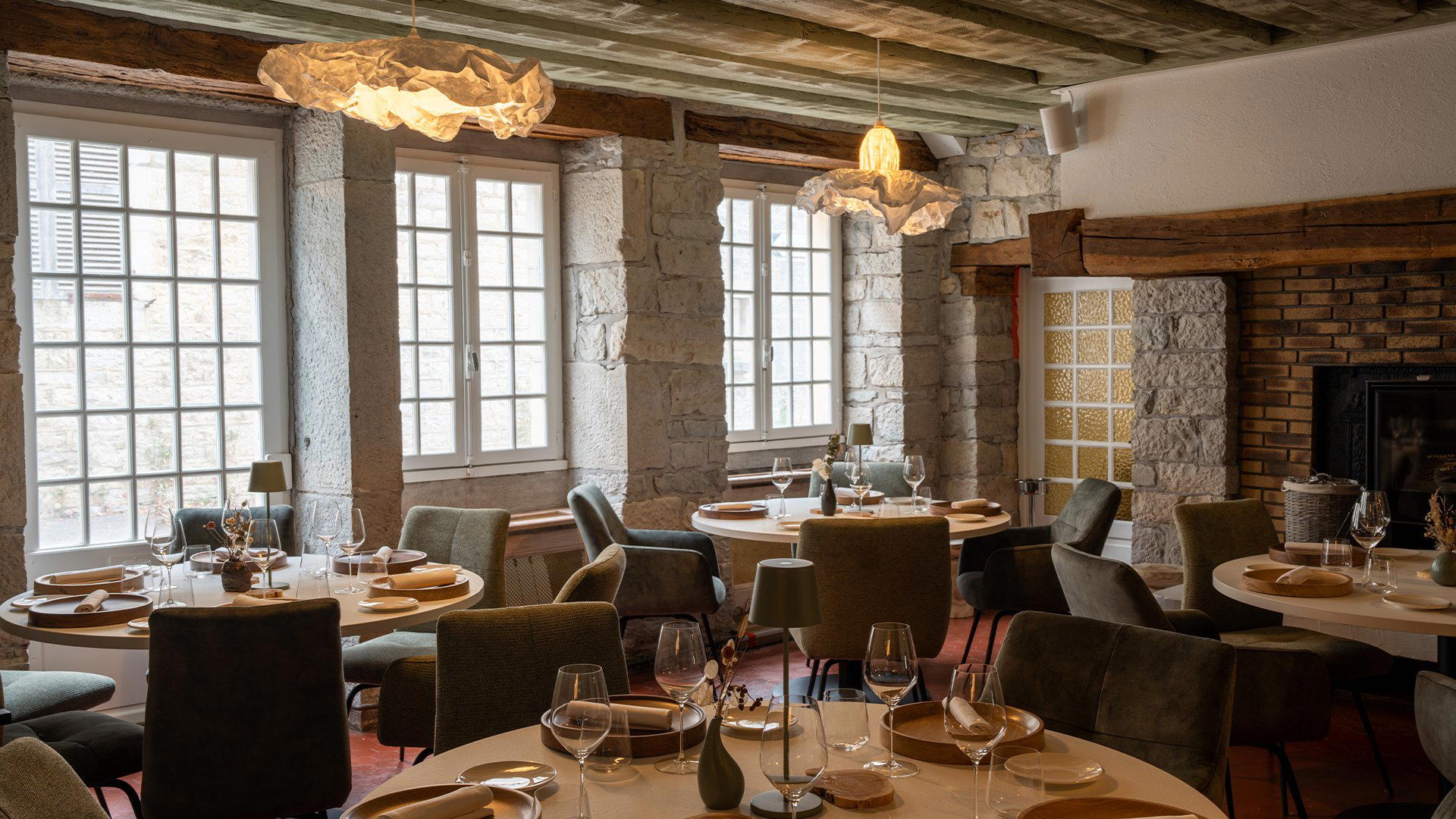
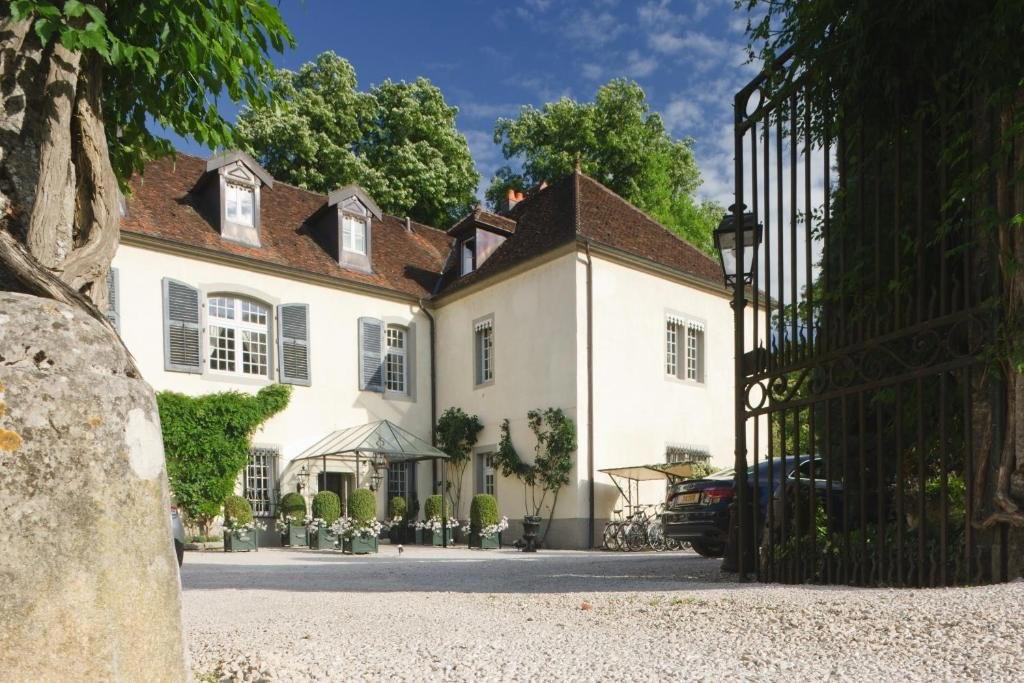
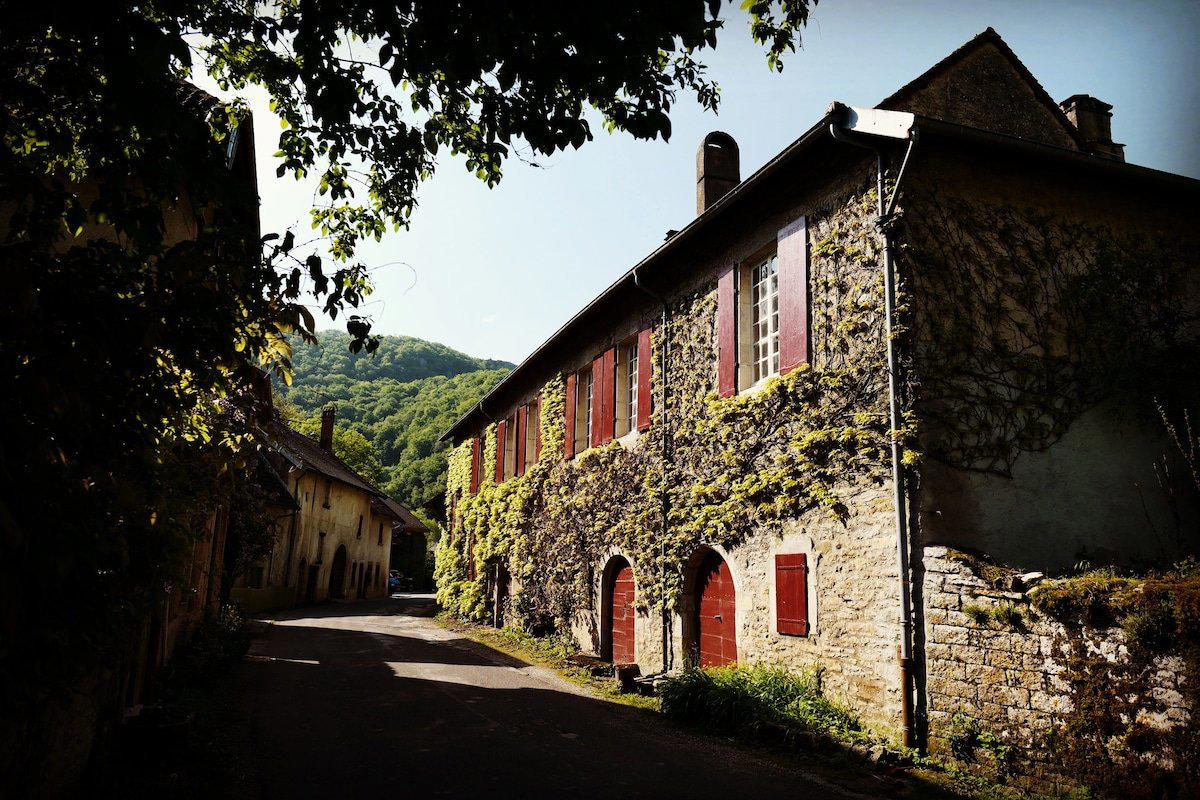
Arriving at a restaurant on a street named for artisans, in a commune of fewer than four hundred inhabitants, carries information. The building stock in Liesle is typical of the Doubs: stone construction, modest frontages, the kind of architecture that does not announce itself. That physical environment sets an expectation of a room that is functional rather than designed, where the work happens in the kitchen and the dining room serves as a meeting point for village life as much as a destination for outsiders. Restaurants at this scale across rural Franche-Comté often run with limited covers and a compressed menu that changes with supply, which means the experience is shaped less by a fixed concept and more by what arrived that week from the farm, the smokehouse, or the river.
The Loue river, one of the region's most celebrated chalk streams and a serious trout fishery, runs through this part of the Doubs department. River fish from clean, cold limestone-filtered water has a different texture and flavour profile than farmed equivalents, and kitchens in this corridor have historically had access to that supply in ways that restaurants even fifty kilometres away in Besançon do not always maintain. That geographic proximity to primary sources is the structural advantage of a rural village address that often goes unremarked when discussing French regional cooking.
The Ingredient Logic of Franche-Comté
French regional cooking at its most coherent is an expression of terroir applied beyond wine. In Franche-Comté, that means a kitchen built around aged cheese at multiple stages of production, cured pork products tied to specific smoke and drying traditions, foraged fungi from the forested plateau, and dairy fats that reflect highland grazing. The-known expressions of this in a fine-dining register appear at destination addresses across France: Flocons de Sel in Megève works with Alpine supply chains that share some of the same terroir logic, and Bras in Laguiole has made the philosophical case for plateau-rooted cooking as explicitly as any kitchen in the country. But those addresses operate at a price tier and a media profile that places them in a different competitive set entirely.
The village-restaurant tier, which Le P'tit Lieslois represents, operates on a different set of principles. The sourcing logic is the same, but the format is less about curation and more about continuity. These are kitchens that have served the same cheese producer's family for decades, that receive the first Morteau of the season because the relationship predates any formal supply agreement. That kind of embedded sourcing does not produce the photogenic precision of a three-star plate, but it does produce cooking that is difficult to replicate anywhere else, because the ingredients are not available anywhere else in quite the same form.
For readers who have tracked how France's leading addresses handle provenance, from Mirazur in Menton with its garden-to-table discipline to Christopher Coutanceau in La Rochelle with its fishery-first sourcing, the argument for village restaurants in supply-rich regions is a natural extension: the sourcing advantage is real, even if the format is quieter. The broader French tradition that produced kitchens like Auberge de l'Ill in Illhaeusern and Georges Blanc in Vonnas began in exactly this kind of rural, supply-adjacent setting before those addresses scaled into their current form.
How to Approach a Visit
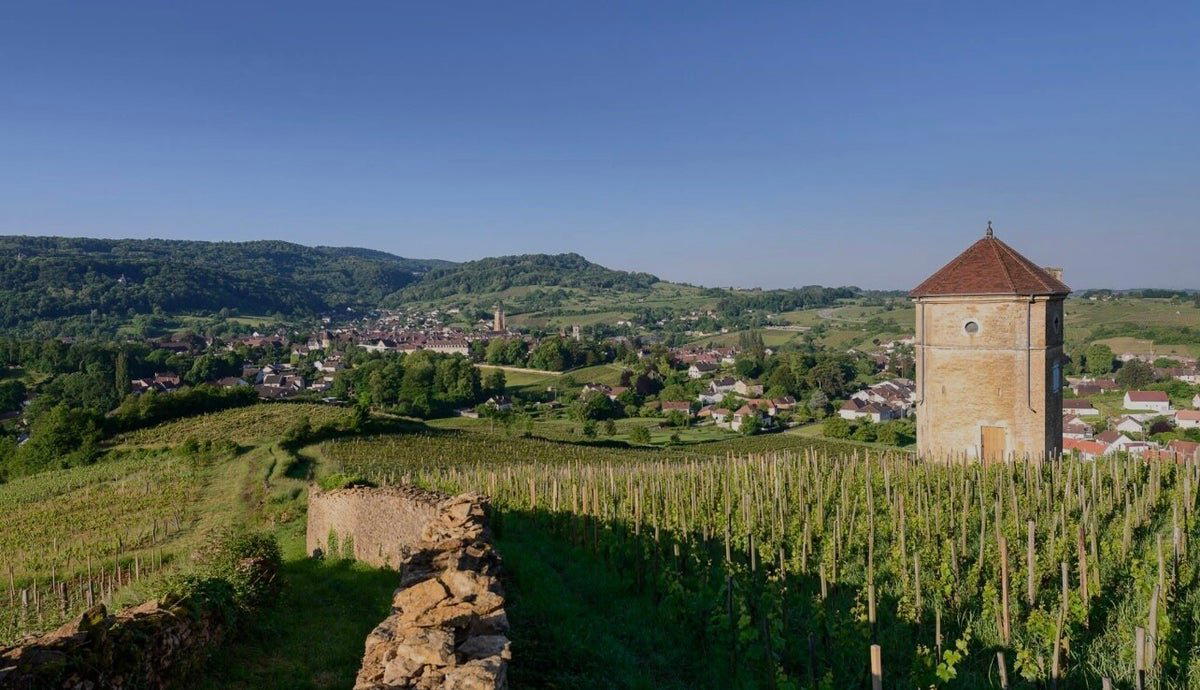
Liesle is a commune in the canton of Baume-les-Dames, roughly midway between Besançon and Montbéliard along the Doubs valley. Driving is the practical approach from either direction, with Besançon reachable by TGV from Paris in around two hours and twenty minutes, then a further thirty-minute drive east. The village is not a destination in isolation: the Doubs valley in this stretch offers enough to structure a half-day itinerary, with the river itself and the plateau villages above it worth the time for anyone serious about understanding the agricultural geography that informs the cooking.
Contact the restaurant directly at its Rue des Artisans address for current details. Rural village restaurants in France at this scale frequently operate on reduced weekly schedules, closing two or three days mid-week, and may require advance reservation on weekends. Arriving without confirmation in a commune this size is the kind of oversight that turns a good day into a missed meal.
For readers building a broader itinerary around eastern France's dining geography, the region sits within reach of addresses that anchor the country's most serious regional-cooking traditions: Auberge du Vieux Puits in Fontjoncouse, Assiette Champenoise in Reims, and Au Crocodile in Strasbourg each represent a different register of French regional ambition. On the global scale, Alléno Paris au Pavillon Ledoyen in Paris, AM par Alexandre Mazzia in Marseille, L'Oustau de Baumanière in Les Baux, La Marine in Noirmoutier-en-l'île, Paul Bocuse - L'Auberge du Pont de Collonges in Collonges-au-Mont-d'Or, Troisgros - Le Bois sans Feuilles in Ouches, and internationally Le Bernardin in New York City and Atomix in New York City offer reference points for what French culinary tradition produces at peak expression. Le P'tit Lieslois sits at a different point on that spectrum, not competing with those addresses but connected to the same root logic: that cooking rooted in a specific place and its specific supply is more interesting than cooking that could have been produced anywhere.
Fast Comparison
Comparable venues nearby, for context on price, style, and recognition.
| Venue | Cuisine | Price | Notes |
|---|---|---|---|
| Le P'tit LiesloisThis venue — the venue you are viewing | French Bistro with Wood-Fired Pizzas | $$ | Not listed |
| Le Cercle | Bistronomie Comtoise | $$ | historic center |
| Restaurant des Bains | Traditional French Jura Regional | $$ | Salins-les-Bains |
| La belle vie | Traditional French Bistro | $$ | Thoirette-Coisia |
| Auberge de Bellevie | French Seasonal Bistro with Natural Wines | $$ | Grozon |
| Auberge de la Distillerie | Traditional Jura Regional Cuisine | $$ | Chapelle-des-Bois |

At a Glance
- Cozy
- Rustic
- Family
- Casual Hangout
- Standalone
- Local Sourcing
Current opening hours
- Monday
- 11:45 AM–3 PM
- Tuesday
- 11:45 AM–3 PM
- Wednesday
- 11:45 AM–3 PM
- Thursday
- 11:45 AM–3 PM
- Friday
- 11:45 AM–3 PM
- Saturday
- Closed
- Sunday
- Closed
Hours can change for holidays and private events. Last verified .
Warm and friendly atmosphere with welcoming service as noted by guests.