On Perwez's Grand Place, Le 1900 occupies a position that says something about how Belgian market-town dining has evolved: a historic address repurposed for the table, where the architecture does half the work before a dish arrives. The venue sits within a small but growing dining scene in Walloon Brabant, a province that has quietly developed a reputation for serious cooking away from Brussels and the Flemish restaurant corridor.
Pearl is the En Primeur Club membership app — saves, bookings, and concierge access live there. Same editors, same standards.
- Address
- Grand Place 26, 1360 Perwez, Belgium
- Phone
- +3281226373
- Website
- restochezpauline.be
- Directions
- Get directions
 Saves & bookings on Pearl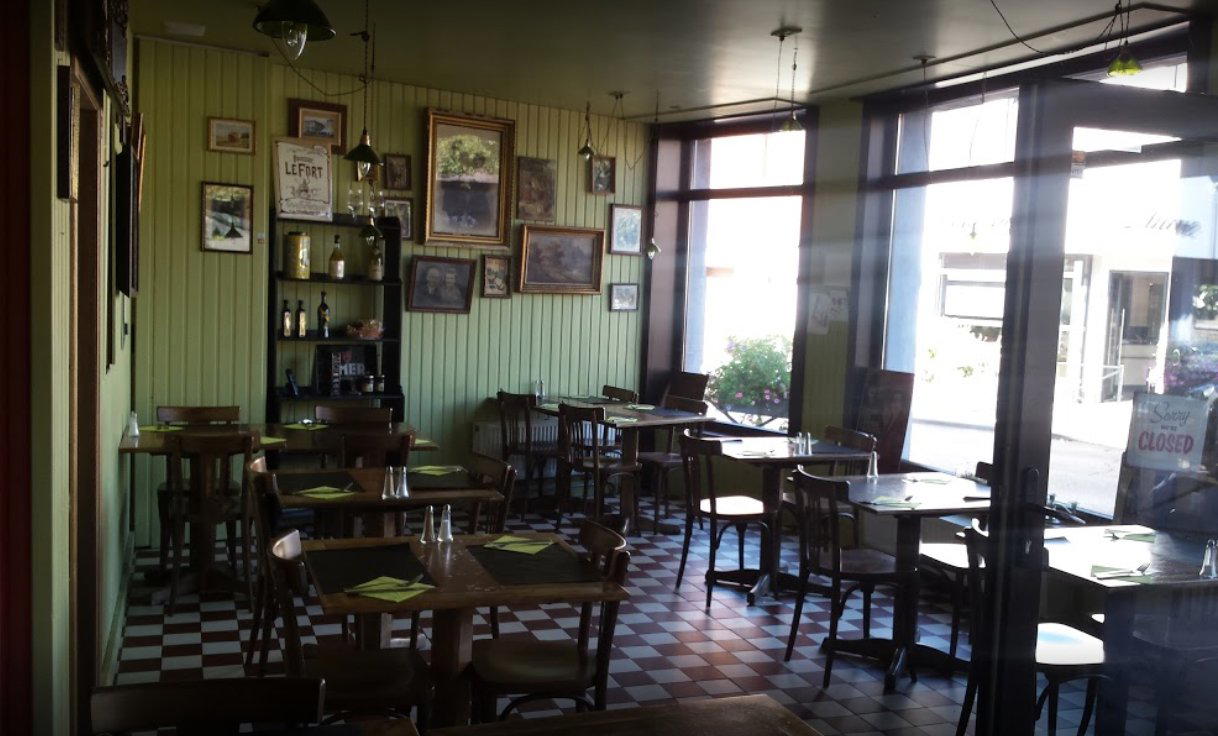
A Market Square Address and What It Signals
Grand Place addresses in Belgian towns carry a particular weight. They were built for commerce, civic life, and the kind of public gathering that predates the restaurant as a concept by centuries. When a dining room occupies one of these positions, as Le 1900 does at Grand Place 26 in Perwez, it inherits a visual grammar that no interior design budget can replicate: the proportioned facades, the cobbled sightlines, the particular quality of light that falls on a Walloon market square in the late afternoon. That physical context shapes how a meal is framed before a menu arrives.
Perwez is a small municipality in Walloon Brabant, roughly equidistant between Namur and Brussels, and it does not appear on the standard circuit of Belgian fine dining destinations. That is partly a function of scale and partly a function of how Belgium's restaurant culture has historically concentrated in its cities and coastal towns. The emergence of a venue with the address and ambition of Le 1900 in this setting reflects a broader pattern across provincial Belgium: serious hospitality moving into smaller markets where rents are lower, communities are tighter, and the dining room can become a genuine local institution rather than one option among dozens.
Belgian Dining Beyond the City Corridor
To understand where Le 1900 sits, it helps to understand how Belgian restaurant culture is structured geographically. The concentration of decorated tables runs through Brussels, through the Flemish cities, and along routes connecting kitchens like Hof van Cleve in Kruishoutem, Boury in Roeselare, and Zilte in Antwerp. The Walloon side of the country has its own nodes: L'air du Temps in Liernu is one of the most cited examples of serious cooking in the province, and La Table de Maxime in Our represents the southern Ardennes register. Walloon Brabant, the province containing Perwez, is less mapped in this context, which creates both an opportunity and a gap in available information for travelers planning around it.
What the province does offer is proximity to Brussels without the capital's price architecture and competition density. A venue in Perwez draws from a catchment that includes commuter towns across Walloon Brabant, and it operates in an environment where repeat local custom matters as much as destination dining traffic. That dynamic tends to produce a different kind of hospitality than a city restaurant: one oriented toward reliability, seasonal familiarity, and a relationship with the room rather than a showcase performance for first-time visitors.
The Cultural Register of French-Belgian Cooking
Belgian cuisine in the French-speaking regions sits in a tradition that resists easy summary. It is not French, though it shares techniques, ingredient logic, and a reverence for the table as social infrastructure. It draws on a larder shaped by the North Sea to the west, the Ardennes forests to the east, and centuries of cross-border agricultural exchange. The classic preparations of Walloon cooking include dishes built around game, freshwater fish, and root vegetables with a richness that reflects both climate and history. In this context, a restaurant on a market square in a small Brabant town is not an outlier: it is a direct descendant of the auberge tradition, the idea that serious cooking belongs to the provinces as much as the capital.
Contemporary Belgian restaurants operating in this register have made different choices about how much of that tradition to preserve versus how much to reframe through modern technique. The contrast is visible across the country: Willem Hiele in Oudenburg and Bartholomeus in Heist operate in coastal Flemish modes that reflect specific regional ingredients; Castor in Beveren and De Jonkman in Sint-Kruis work within creative modern frameworks. A venue in Perwez with a historic address like Le 1900 might reasonably occupy a position somewhere in that spectrum, though without current menu data or verified award records, placing it precisely in that hierarchy is not possible.
What the Name Signals
The name Le 1900 is a reference to an era rather than a year, and that framing matters. It evokes the Belle Époque, a period when Belgian bourgeois dining culture reached one of its high-water marks: elaborate service, formal room design, and a cuisine of stated ambition. Many Belgian restaurants that invoke this period do so architecturally, using original tile work, brass fittings, or gilded mirrors as a visual shorthand for a certain idea of the table.
For context on how Belgian venues at this kind of address can operate, Le Chalet de la Forêt in Uccle and d'Eugénie à Emilie in Baudour offer different examples of how Belgian kitchens at established addresses position themselves. Further afield, Bozar Restaurant in Brussels demonstrates how a heritage building can anchor a dining identity at the higher end of the capital's market. Internationally, the French-rooted tradition that informs this kind of cooking has its clearest external reference point in kitchens like Le Bernardin in New York City, where French technique is applied with a discipline that prioritizes the ingredient over the gesture.
Planning Around Le 1900
Perwez is accessible by road from Brussels in under an hour, placing it within reach for a half-day or evening trip from the capital. The town's scale means Le 1900 on Grand Place is straightforwardly located once you arrive: market squares in Belgian towns of this size are navigable on foot. Phone and booking details are not currently listed in publicly available records so approaching directly via the Grand Place address or checking locally sourced listings before visiting is the practical approach. La Frairie is another dining option in Perwez worth considering for the same trip, and Maison Colette in Tongerlo extends the regional picture if you are building an itinerary across Brabant. For the broader Perwez dining picture, see our full Perwez restaurants guide. La Durée in Izegem and Atomix in New York City represent contrasting points on the international spectrum of what formal tasting-format dining looks like when it is operating at its most deliberate, useful references for calibrating expectations across different price tiers and national traditions.
A Pricing-First Comparison
| Venue | Cuisine | Price | Awards |
|---|---|---|---|
| Le 1900 | Not listed | This venue | Not listed |
| Boury | Modern Frlemish, Creative French | €€€€ | Michelin 3 Star |
| Comme chez Soi | French - Belgian, Classic Cuisine | €€€€ | Michelin 1 Star |
| Castor | Modern European, Modern French | €€€€ | Michelin 2 Star |
| De Jonkman | Modern Flemish, Creative | €€€€ | Michelin 2 Star |
| L'air du temps | French - Asian, Creative | €€€€ | Michelin 2 Star |
Continue exploring
More in Perwez
Restaurants in Perwez
Browse all →
Bars in Perwez
Browse all →
Hotels in Perwez
Browse all →
Wineries in Perwez
Browse all →
At a Glance
- Cozy
- Classic
- Intimate
- Casual Hangout
- Date Night
- Business Dinner
- Special Occasion
- Terrace
- Historic Building
- Standalone
- Beer Program
- Extensive Wine List
- Local Sourcing
- Farm To Table
- Street Scene
Current opening hours
- Monday
- Closed
- Tuesday
- 6–9 PM
- Wednesday
- 12–1:45 PM, 6–9 PM
- Thursday
- 12–1:45 PM, 6–9 PM
- Friday
- 12–1:45 PM, 6–9:30 PM
- Saturday
- 6–9:30 PM
- Sunday
- Closed
Hours can change for holidays and private events. Last verified .
Warm, family-friendly bistro atmosphere with a relaxed, convivial feel; reviewers describe it as warm and pleasant, and the dining room is small and intimate.
Know Before You Go
- Getting there
- Grand Place 26, 1360 Perwez, Belgium