


1 Michelin Star · Tabelog Bronze #337
Our verdict
Ono sits in Osaka’s high-end Japanese dining tier, with Tabelog Bronze recognition from 2021 through 2026 and selection for Tabelog Japanese cuisine WEST 100 in 2021, 2023, and 2025. The appeal is less about spectacle than concentration: a small counter-led format, fish-focused cooking, sake and wine, and the after-dark rhythm that makes Kitashinchi one of Osaka’s serious dining zones.

Pearl is the En Primeur Club membership app — saves, bookings, and concierge access live there. Same editors, same standards.
- Address
- Japan, 〒530-0002 Osaka, Kita Ward, 2, 曽根崎新地1-2-22 北リンデンビル 6F
- Phone
- +81 6-6341-8171
- Hours
- Mon–Sat 6–11:30 p.m.Sun Closed
- Website
- tabelog.com
- Directions
- Get directions
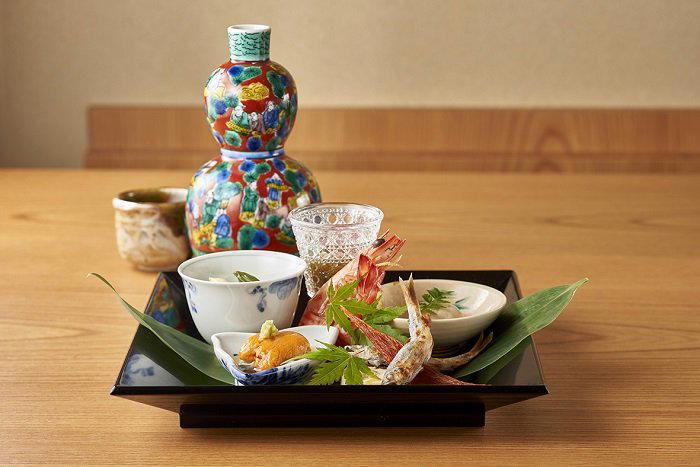
The menu
What to order
- Striped beakfish sashimi
- Straw-grilled wagyu
- Sea bream rice
In Osaka, serious dining often announces itself quietly: a lift ride, low voices, and courses paced around conversation rather than performance. The city’s stronger dining rooms are social instruments for hospitality, timing, and the calibrations that define Japan after dark. Ono belongs in that conversation: a composed Osaka restaurant, and the night best understood through measured exchanges rather than spectacle.
Osaka’s dining identity is often flattened into takoyaki, okonomiyaki, and street appetite, yet the city also has a deep culture of adult dining rooms. The city rewards formats with regulars, bottles, and teams who understand timing as much as technique. Ono reads as polished city grammar: close-range attention, a serious evening format, and hospitality that favors focus over volume.
Recognition, pacing, and the Osaka dining tradition
The Osaka dining tradition is not defined by informality alone. At higher levels, its influence appears in sequencing: the meal develops through small decisions, and attention accumulates. Ono sits inside that continuum as a serious Osaka address. The category is less important than the social structure familiar to anyone who understands Osaka after dark: the evening is never isolated from the rhythm around it.
The room matters because it shapes the meal. Osaka’s stronger restaurants often compress the distance between service and guest, and the city’s version prizes ease over ceremony. A focused setting makes service personal by nature and raises expectations: pacing must be disciplined, recommendations must match the meal, and the cooking has little room to hide behind architectural drama.
Award trail fixes Ono in the city’s hierarchy. For 2026, Tabelog lists Ono in The Tabelog Award bronze group, with a score of 4.25 and a group rank of 337. In Japan, where Tabelog scores can shape local booking behavior as much as international guide attention, that recognition signals a serious competitive tier rather than novelty.
Within Osaka’s dining field, the comparison set matters. Konishi, Washun Taiki, Kitashinchi Okurano, Iwaki, and Shinchi Yamamoto give useful reference points for readers thinking through the city’s stronger restaurants. The question is what evening is wanted: a polished meal, a more formal dinner, or a lower-friction local night with less ceremony.
Readers mapping the city’s dining range can use other formal Osaka dining rooms as reference points, while additional unnamed restaurants sketch the broader spectrum across Osaka. For a wider city scan, see Our full Osaka restaurants guide.
Why the format feels closer to a private drinking room than a dining hall
Osaka’s upscale dining often works through intimacy rather than grandeur. A focused room changes the tone before the first course: conversation lowers, the table becomes the visual center, and the evening depends on rapport between guest and service. The city’s adult dining lineage remains relevant because, even refined, the social purpose is still to eat in sequence and let rhythm build rather than rely on a single theatrical plate.
Ono’s positioning is sharpened by that close-format setting. These are not minor atmospheric details; they define how to think about the evening. The experience is public but contained, intimate but not secluded. For travelers used to Western tasting-menu rooms, the distinction matters. This is not a grand dining room production, but an Osaka night whose seriousness comes from pacing, attention, and the feel of the room.
The profile reflects a wider shift in premium dining outside Tokyo. International attention often concentrates on Tokyo and Kyoto, yet Osaka has its own grammar: more direct, conversational, and comfortable with the intersection of business dinner, regular-client culture, and serious seasonal meals. A restaurant here need not perform Osaka-ness through clichés; it participates by understanding how adults dine after work.
That makes Ono relevant for travelers who want a focused Osaka dinner without reducing the night to checklist prestige. The recognition is there, but fit is more important. This room is for diners who value measured service and an evening built around close attention. It is less suited to large groups, casual walk-ins, or menus built around explanation-heavy spectacle.
For a broader Osaka trip, the surrounding plan matters as much as the booking. Pair the dining search with Our full Osaka hotels guide for where to stay, Our full Osaka bars guide for late-night drinking, Our full Osaka experiences guide for cultural planning, and Our full Osaka wineries guide if wine is part of the itinerary. Strong Osaka evenings rarely come from a single booking; they come from matching room size, pace, and the wider plan.
How to place Ono in a Japan itinerary
For travelers moving beyond Osaka, Ono contrasts with restaurants shaped by other regional habits. Tokyo, Kyoto, and regional city restaurants reveal different assumptions about formality, product, and hospitality. A comparative itinerary can keep those references unnamed and still be useful: the point is to see how Osaka’s adult dining culture differs from other Japanese and international luxury dining markets.
The editorial case for Ono is not that it represents all of Osaka or all Japanese dining. It is narrower and more useful: the city’s serious dining culture, where quiet service can do work other restaurants assign to spectacle. In a city famous for appetite, this is the controlled end of the spectrum: recognized by Tabelog in 2026, priced by Tabelog at JPY 30,000 - JPY 39,999 for both dinner and lunch, and built for diners who understand that Osaka’s deeper pleasures often happen after the obvious meal has been dismissed.
Frequently asked questions
What should I budget for a meal at Ono?
Tabelog lists Ono at JPY 30,000 - JPY 39,999 for dinner and JPY 30,000 - JPY 39,999 for lunch.
What are Ono's hours?
Current hours are not specified here; confirm directly before booking.
What's the address for Ono?
Osaka.
What do critics highlight about Ono?
Ono is listed in The Tabelog Award 2026 bronze group, with a Tabelog score of 4.25 and a group rank of 337. Its Osaka setting and serious format give the room a clear editorial angle.
Cost Snapshot
Comparable venues by cuisine and price in the same metro.
| Venue | Cuisine | Price | Awards | Notes |
|---|---|---|---|---|
| OnoThis venue — the venue you are viewing | Awaji Island Kaiseki | $200–300 | 1 Michelin Star · Tabelog Bronze #337 | Not listed |
| Nishino | Traditional Japanese Kaiseki | $200–300 | 1 Michelin Star | Nishi, Traditional Japanese Kaiseki |
| Matsuzushi | Edomae Sushi Omakase | $150–200 | 1 Michelin Star · Tabelog 100 #86 | Abeno, Edomae Sushi Omakase |
| Katamachi Kawaguchi | Refined Japanese Kaiseki | $200–300 | 1 Michelin Star | Miyakojima, Refined Japanese Kaiseki |
| Hiraishi | Michelin-Starred Tempura Omakase | $150–200 | 1 Michelin Star · Tabelog 100 #39 | Kita, Michelin-Starred Tempura Omakase |
| Zeshin | Seasonal Kaiseki Omakase | $150–200 | 1 Michelin Star · Tabelog Bronze #536 | Kita, Seasonal Kaiseki Omakase |
Recognition history
Dated appearances from independent guides and award organizations, with the underlying list record or original source where available.
Michelin 1 Star
Michelin
Opinionated About Dining Top Restaurants in Japan Recommended
Opinionated About Dining
Tabelog Bronze #337
Tabelog
Full recognition history (6 entries)
Tabelog 100 #1 · No. 1
Tabelog · Tabelog 100 - Japanese cuisine - WEST - 2025
Tabelog Bronze
Tabelog
Michelin 1 Star
Michelin

Continue exploring
More in Osaka
Restaurants in Osaka
Browse all →



Bars in Osaka
Browse all →



Hotels in Osaka
Browse all →




Wineries in Osaka
Browse all →
Details
- Elegant
- Intimate
- Sophisticated
- Modern
- Special Occasion
- Date Night
- Chefs Counter
- Open Kitchen
- Sake Program
- Local Sourcing
- Omakase
- Counter Dining
- Sake
- Wine
Current opening hours
- Monday
- 6–11:30 p.m.
- Tuesday
- 6–11:30 p.m.
- Wednesday
- 6–11:30 p.m.
- Thursday
- 6–11:30 p.m.
- Friday
- 6–11:30 p.m.
- Saturday
- 6–11:30 p.m.
- Sunday
- Closed
Hours can change for holidays and private events. Last verified .
Dim lighting and wooden furniture create an enticing, gorgeous atmosphere around the wide lacquerware counter.