Kuroyuri (黒百合) occupies a counter inside Kanazawa's Hyakubangai Anto station complex, positioning it among the city's accessible yet serious dining options. The name, meaning 'black lily,' signals the considered aesthetic that runs through Kanazawa's culinary identity. For travellers passing through or arriving by Shinkansen, it offers a grounded introduction to the region's food culture without requiring a detour across the city.
Pearl is the En Primeur Club membership app — saves, bookings, and concierge access live there. Same editors, same standards.
- Address
- 木ノ新保町1-1 (金沢百番街 あんと), 金沢市, 石川県, 920-0858
- Directions
- Get directions
 Saves & bookings on Pearl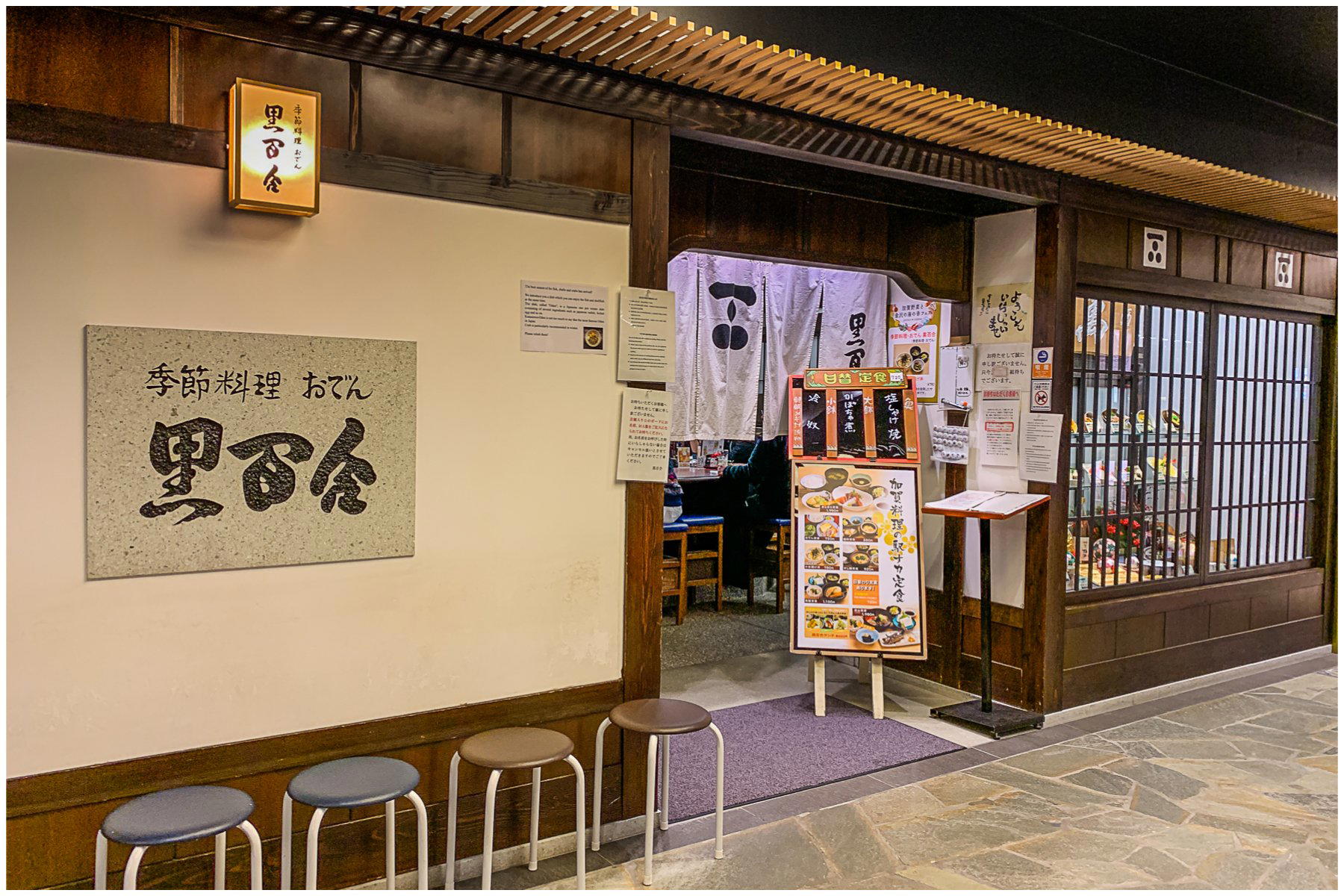
A Counter Inside Kanazawa's Gateway
Station dining in Japan occupies a different register than it does almost anywhere else. At Kanazawa's Hyakubangai Anto complex, attached directly to the Shinkansen terminus that opened the city to faster rail connections from Tokyo in 2015, the food offer reflects the civic pride that Kanazawa invests in its culinary identity. This is a city that takes Kaga ryori — the regional kaiseki tradition rooted in Edo-period court culture — as a baseline expectation rather than a special occasion. Kuroyuri (黒百合), positioned within that complex at 木ノ新保町1-1, inherits that context the moment a diner crosses the threshold.
The name translates as 'black lily,' a flower associated with the alpine regions of the Japanese Alps and historically prized in Japanese decorative arts. That botanical specificity is characteristic of Kanazawa's cultural register: precise, rooted in natural reference, resistant to generic branding. The city has spent decades cultivating a reputation as Japan's secondary cultural capital after Kyoto, and dining venues here tend to carry that self-awareness whether they occupy a kaiseki townhouse or a station-adjacent counter.
The Station Complex as Culinary Threshold
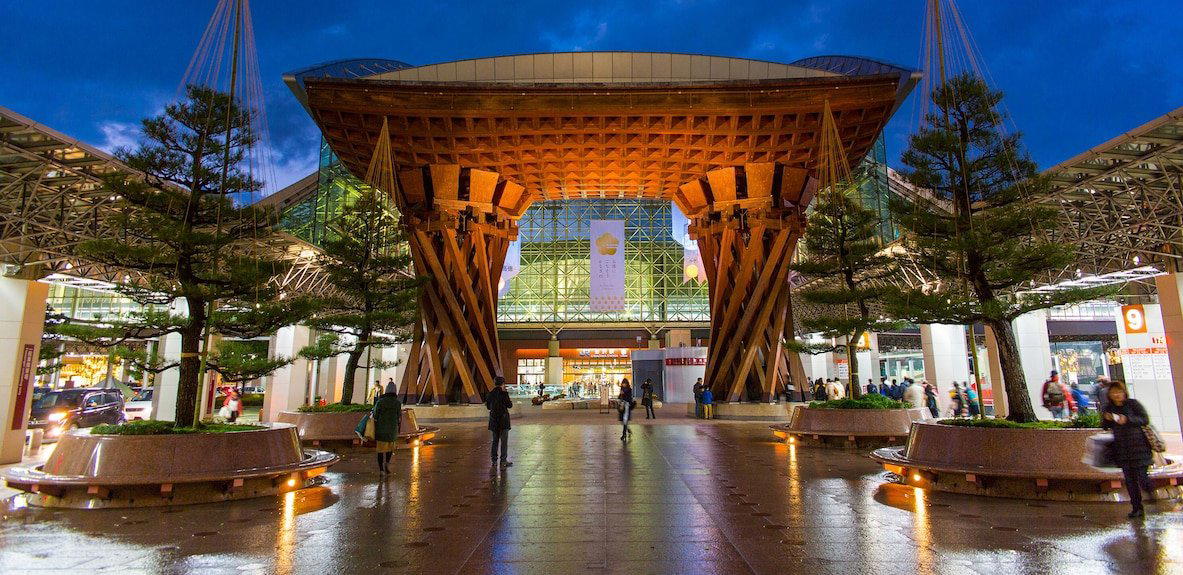
Hyakubangai Anto is worth understanding on its own terms before considering any individual venue inside it. The complex was designed partly as a showcase for Ishikawa Prefecture's food producers, artisans, and regional specialties, functioning as an edited entry point into the prefecture's material culture. Shops selling ji-nori (local dried seaweed), Kaga miso, and hand-lacquered goods sit alongside prepared food counters and sit-down restaurants. The architecture keeps sightlines open and noise levels low relative to most major station complexes in Japan, which gives the food section an atmosphere closer to a covered market than a transit hall.
Arriving from Tokyo on the Hokuriku Shinkansen, a roughly two-and-a-half-hour journey, and stepping directly into this environment creates a specific kind of sensory transition. The city's food identity announces itself immediately: regional produce is visible, named, and priced with the transparency that Japanese retail food culture demands. Kuroyuri sits within that curated environment, which shapes how a first-time visitor reads it before they've ordered anything.
Kanazawa's Culinary Position Among Japan's Regional Cities
To place Kuroyuri accurately, it helps to map Kanazawa against peer cities in Japan's regional dining hierarchy. The city lacks the Michelin concentration of Osaka or Kyoto, HAJIME in Osaka and Gion Sasaki in Kyoto represent the kind of starred recognition that those cities generate at volume, but it has built a different kind of authority. Kanazawa's claim rests on ingredient provenance: snow crab from the Sea of Japan, nodoguro (blackthroat seaperch), jibu-ni (duck simmered in a dashi thickened with wheat flour), and the cultivated sweetness of Kaga vegetables grown in the region's mineral-rich soil.
That ingredient quality supports a tiered dining scene. At the formal end, kaiseki restaurants like Kataori and Zeniya operate within the Kaga ryori tradition with the kind of multi-course seasonal discipline that demands advance reservation and a commitment of several hours. Yakitori counters like Hamagurizaka Maekawa occupy a different register, focused, informal, technically precise. Station-adjacent venues like Kuroyuri occupy a third tier: accessible without being casual, regionally grounded without requiring a deep prior knowledge of the tradition. Visitors who want a longer view of Kanazawa's dining range can find it mapped in our full Kanazawa restaurants guide.
For regional comparison beyond Kanazawa, the proximity of 三本松 川尻制 in nearby Nanao, a coastal city whose fish market supplies much of the Noto Peninsula's seafood trade, illustrates how tightly the Ishikawa culinary network is woven. What arrives at a Kanazawa counter often traveled a short distance from waters that Nanao fishermen worked that morning.
Seasonal Rhythm and the Right Time to Visit
Kanazawa's culinary calendar is governed more visibly by season than most Japanese cities of comparable size, because its key ingredients have pronounced seasonal windows. Winter, roughly November through February, is when the Sea of Japan crab season peaks. Zuwaigani (snow crab) dominates menus across the city during this period, and the price premium over other seasons is significant. Spring brings takenoko (bamboo shoots) and the first of the Kaga vegetable harvest. Autumn pulls in matsutake mushrooms and nodoguro at their richest.
A venue inside Hyakubangai Anto will reflect those seasonal shifts in what the surrounding market stalls are showing, which gives even a brief stop a temporal specificity that changes visit to visit. Travellers who arrive in Kanazawa during the crab window and move through the station complex will encounter that ingredient at virtually every food counter in some form, it is an ambient, city-wide seasonal signal rather than a single venue's marketing decision.
Positioning Among Kanazawa's Accessible Dining Options
Kanazawa's food scene has venues that reward deeper planning, Dokkan and Budoonomori Les Tonnelles both sit further into the city's dining fabric and require more deliberate routing. Others, like Go! Go! Curry (ゴーゴーカレー), a chain whose original location is in Kanazawa and which has become a point of local culinary pride in its own right, operate at a different price point and formality level entirely. Amanatto Kawamura and Hakuichi represent the city's artisan confectionery and craft traditions, which intersect with the dining scene through shared ingredient sourcing and aesthetic sensibility.
Kuroyuri's position inside Anto places it in conversation with all of these: it is reachable without routing effort, positioned as a regional food statement rather than a convenience stop, and set within a complex that understands its role as Kanazawa's first culinary impression for Shinkansen arrivals. That context is worth more than any single menu item.
Planning a Visit
Hyakubangai Anto sits directly inside Kanazawa Station, making Kuroyuri reachable within minutes of arriving by Shinkansen from Tokyo, Osaka, or Kyoto. The station complex keeps consistent hours tied to train schedules, though specific opening times for individual counters vary by day and season. Given the venue's station location and the foot traffic that Anto generates, walk-in visits are generally feasible, but arriving during peak meal hours on weekends, particularly in the crab season between November and February, means accepting that popular counters fill quickly. Contacting the complex directly or checking current hours before travel is advisable. For visitors building a fuller Kanazawa itinerary, pairing Anto with an evening reservation at one of the city's kaiseki houses or specialty counters gives a useful vertical slice through the city's food range, from accessible regional introduction to the formal depth that Kaga ryori demands at its highest register.
City Peers
| Venue | Cuisine | Price |
|---|---|---|
| Kuroyuri (黒百合)This venue — the venue you are viewing | This venue | Not listed |
| Kataori | Kaiseki | Kaiseki |
| Respiracion | Innovative Spanish | Innovative Spanish |
| Sushi Kibatani | Chinese | Chinese |
| Zeniya | Kaiseki | Kaiseki |
| Hamagurizaka Maekawa | Yakitori | Yakitori |
Continue exploring
More in Kanazawa
Restaurants in Kanazawa
Browse all →
Bars in Kanazawa
Browse all →
Hotels in Kanazawa
Browse all →
Wineries in Kanazawa
Browse all →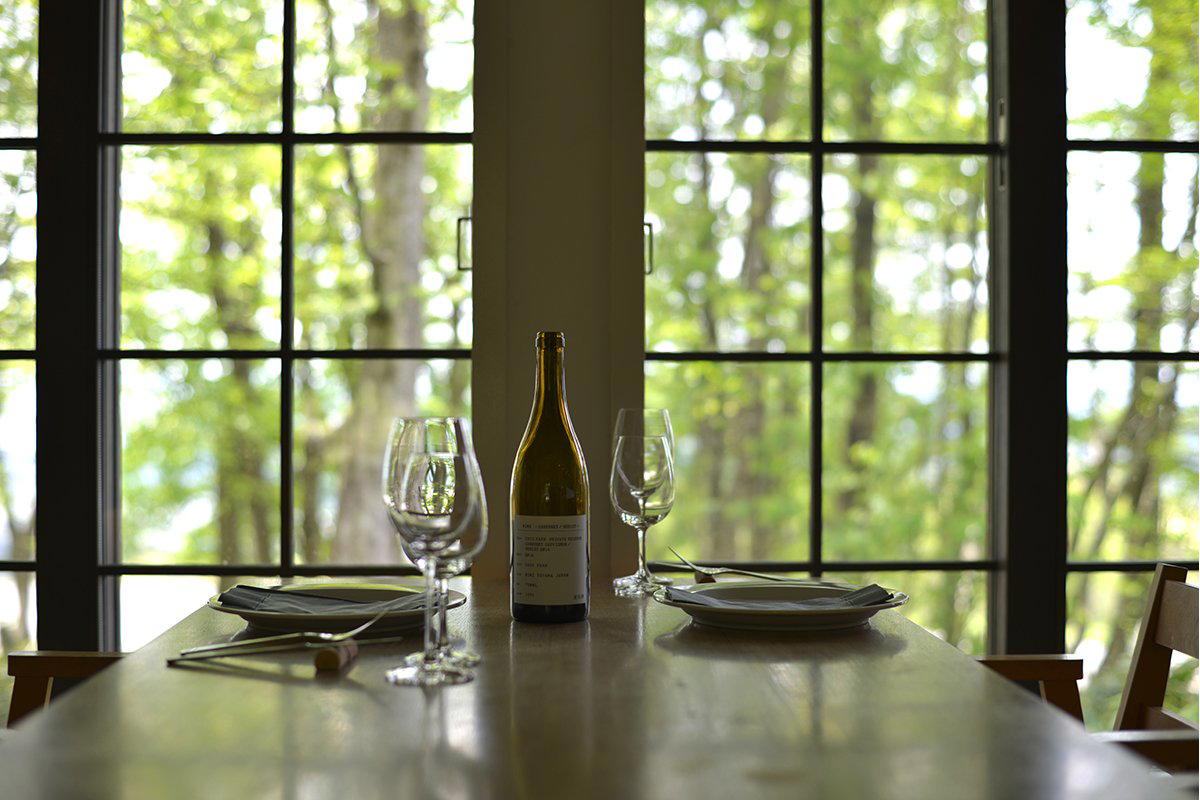
At a Glance
- Classic
- Cozy
- Casual Hangout
- After Work
- Standalone
- Sake Program
- Local Sourcing
Casual, welcoming atmosphere in a station-connected eatery with warm, comforting vibes from home-style cooking and local sake.
Know Before You Go
- Getting there
- 木ノ新保町1-1 (金沢百番街 あんと), 金沢市, 石川県, 920-0858