At Im Zollhafen in Cologne's redeveloped harbour district, Krasse Curry Vurst by Daniel Gottschlich applies fine-dining precision to Germany's most democratic street food. The concept places currywurst inside a framework more typically associated with tasting menus than paper trays, making it a useful reference point for understanding how casual German food culture intersects with chef-driven ambition in a post-industrial setting.
Pearl is the En Primeur Club membership app — saves, bookings, and concierge access live there. Same editors, same standards.
- Address
- Im Zollhafen 18, 50678 Köln, Germany
- Phone
- +491638528455
- Website
- curryvurst.com
- Directions
- Get directions
 Saves & bookings on Pearl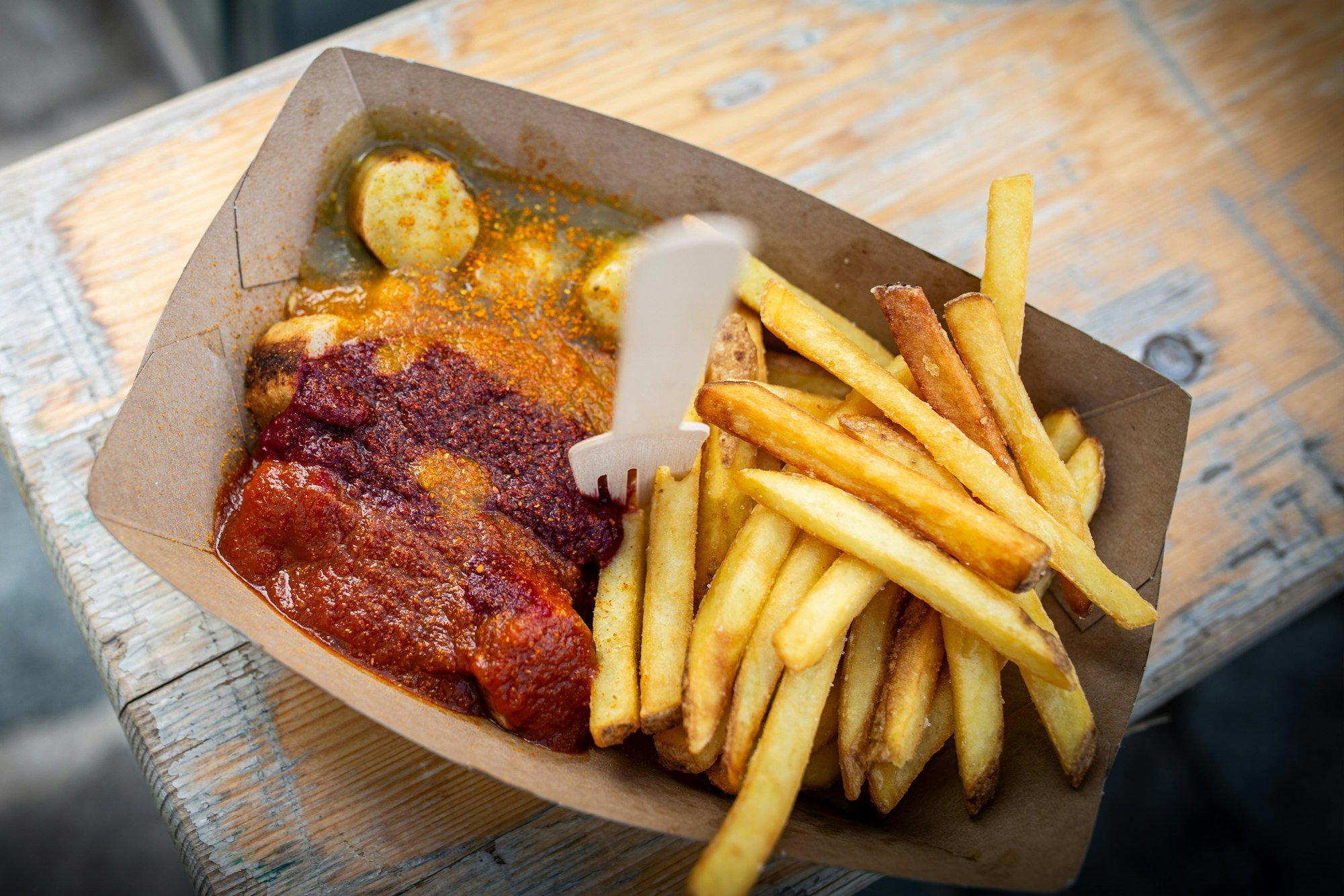
Where the Harbour Meets the Plate
Cologne's Zollhafen district has spent the better part of a decade converting warehouse shells and dockside lots into a neighbourhood with genuine urban texture. The address at Im Zollhafen 18 places Krasse Curry Vurst by Daniel Gottschlich inside that transformation, a part of the city where the Rhine's industrial past sits directly alongside new residential blocks and restaurant fit-outs that would not look out of place in Hamburg's HafenCity. Krasse Curry Vurst by Daniel Gottschlich is a casual Vegan German Currywurst spot in Cologne, priced at about $10 per person and suited to walk-in visits. The setting matters because it frames what you are about to eat: street food reconsidered not in a sterile test-kitchen context but in a district that still carries the visual memory of working infrastructure.
Currywurst is one of the few German dishes that functions simultaneously as fast food, cultural shorthand, and, increasingly, a subject of serious culinary attention. Berlin claims the invention; the rest of Germany has claimed the habit. What happens when a named chef applies genuine technique to that format is a question several operators across the country have begun asking. Cologne's answer, here in the harbour, is among the more direct.
The Ritual of a Simple Dish Done Seriously
The dining ritual around currywurst is deliberately abbreviated by design. There is no tableside theatre, no lengthy progression of courses, no sommelier. The format strips away the scaffolding of tasting-menu dining and leaves the craft exposed: the sausage itself, the sauce, the spice blend, and the quality of the cut. In this sense it inverts the logic of Germany's fine-dining tier, where restaurants like Ox & Klee or La Cuisine Rademacher in Cologne ask you to surrender an evening and significant budget to a chef's vision. The currywurst format asks instead for ten minutes of attention and the willingness to judge a dish on its fundamentals rather than its framing.
That compression of ritual is itself a form of culinary discipline. When nothing is hidden behind amuse-bouches or intermezzo palate cleansers, every variable in the main product is audible. The curry powder ratio, the tomato base depth, the snap of the casing: these details are the whole conversation rather than a supporting detail inside a longer one. Across Germany's more self-conscious food cities, a small cohort of operators has recognised that executing this correctly, at speed, in a casual setting, demands a different kind of precision than the long-form tasting menu, not a lesser one.
This is the tradition that Krasse Curry Vurst operates within: a chef-attributed casual concept that uses a nationally recognised dish as its vehicle. The model has precedent. Germany's broader fine-dining scene, which includes three-Michelin-star operations such as Aqua in Wolfsburg, Vendôme in Bergisch Gladbach, and Waldhotel Sonnora in Dreis, has for years operated in a register entirely separate from street food. The interesting cultural shift is when individual chefs from that world redirect energy toward simpler formats, not as a side project but as a statement about where flavour actually lives.
Cologne's Position in the German Dining Picture
Cologne is not Germany's most internationally profiled food city. Berlin draws the experimental openings; Munich holds the density of old-guard fine dining, with restaurants like JAN representing the city's contemporary ambition. The Black Forest corridor produces destination dining at addresses like Schwarzwaldstube in Baiersbronn. Hamburg has its own confident register, exemplified by Restaurant Haerlin. Cologne's culinary identity is more grounded: rooted in Rhineland hospitality, Kölsch culture, and a dining scene that prizes substance over statement.
That context is relevant to understanding Krasse Curry Vurst's positioning. In a city where La Société, Le Moissonnier Bistro, and maiBeck represent the more formal end of the dining register, a chef-branded currywurst concept occupies an entirely different tier, but the fact that a named chef operates in that space at all says something about the city's appetite for informal seriousness. Cologne diners are accustomed to quality without ceremony, and this format speaks to that preference directly.
The Zollhafen address also reflects a broader urban dining pattern visible across European port-adjacent redevelopments, from Copenhagen's Nordhavn to London's King's Cross: chefs and operators identifying post-industrial districts as sites where the combination of foot traffic, architectural interest, and slightly lower rents permits formats that would struggle in an established restaurant strip. Berlin has produced its own version of the chef-led casual concept in operations like CODA Dessert Dining, which applies fine-dining logic to a single-course format. The underlying logic is similar: constraint as creative framework.
Internationally, the chef-casual model has a longer track record. At the level of restaurants like Le Bernardin in New York City or concept-forward operations like Atomix, the conversation about what constitutes serious dining has been evolving for years. Germany's version of that conversation tends to happen more quietly and more quickly resolves into: does it taste right?
Planning a Visit to Im Zollhafen
The address at Im Zollhafen 18, 50678 Köln places the venue in the southern Zollhafen quarter.
For readers building a wider Cologne itinerary, the full Cologne restaurants guide covers the city's dining range from neighbourhood bistros to the fine-dining tier. Further afield within Germany, the Moselle region contributes Schanz in Piesport, and the Alpine south offers ES:SENZ in Grassau and Victor's Fine Dining by Christian Bau in Perl for those mapping a broader German dining circuit.
Cuisine Context
Comparable venues nearby, for context on price, style, and recognition.
| Venue | Cuisine | Price | Notes |
|---|---|---|---|
| Krasse Curry Vurst by Daniel GottschlichThis venue — the venue you are viewing | Vegan German Currywurst | $ | Not listed |
| Brauerei zur Malzmühle | Traditional Rhineland Brauhaus | $$ | Altstadt/Nord |
| Haus Töller | Traditional Rhenish German Brewery Pub | $$ | Altstadt/Süd |
| Mayer, M. u. M. | German Cafe Fast Food | $ | Neustadt/Nord |
| Kleine Glocke | Traditional German Gastropub | $$ | Altstadt/Nord |
| Markthalle Körnerstraße | German Market Hall Bistro with Turkish Döner | $$ | Ehrenfeld |
Continue exploring
More in Cologne
Restaurants in Cologne
Browse all →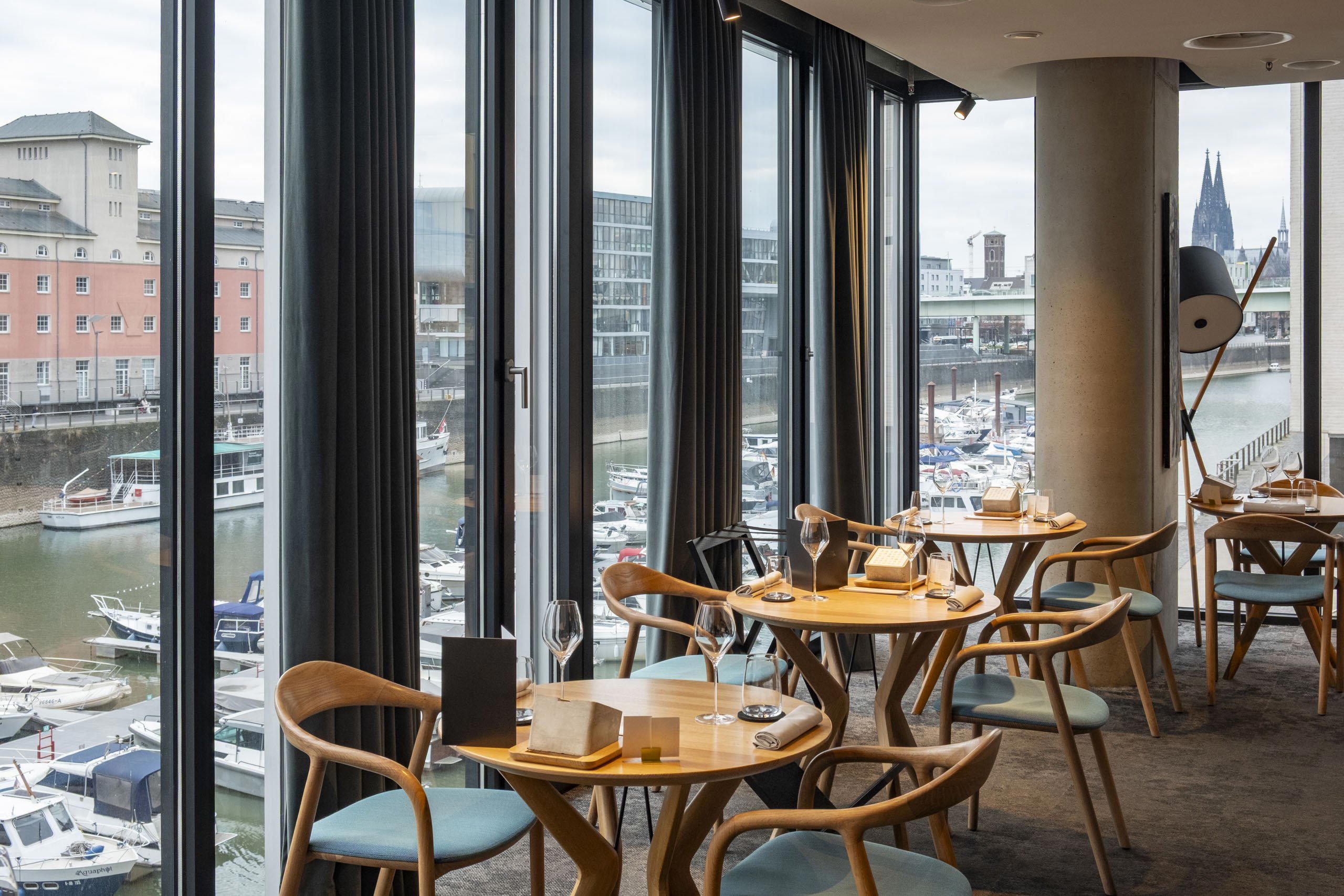
Bars in Cologne
Browse all →

Hotels in Cologne
Browse all →

At a Glance
- Trendy
- Lively
- Casual Hangout
- Open Kitchen
- Waterfront
Current opening hours
- Monday
- Closed
- Tuesday
- Closed
- Wednesday
- Closed
- Thursday
- Closed
- Friday
- Closed
- Saturday
- 5–10 PM
- Sunday
- 5–10 PM
Hours can change for holidays and private events. Last verified .
Rebellious punky street food vibe with innovative flavors in a casual harbor setting.