
Our verdict
A Shibuya-ward sushi counter that has climbed steadily through Opinionated About Dining's Japan rankings, from Recommended in 2023 to #438 in 2024 and #526 in 2025, Kozasa-zushi operates a focused lunch-and-dinner format Tuesday through Saturday in Shinsencho. It occupies the mid-tier of Tokyo's serious sushi conversation: credentialled enough to reward planning, approachable enough to remain off the loudest waiting lists.

Pearl is the En Primeur Club membership app, where members save venues, book tables and use the concierge.
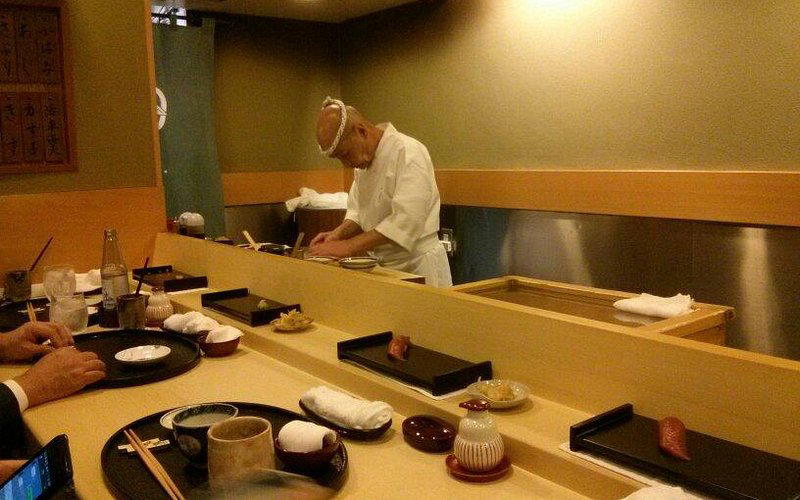
The menu
What to order
- Kohada
- Aji
- Hamaguri
- Anago
- Akagai
The Counter as the Room
In Tokyo's sushi culture, the counter is not merely a place to sit. It is the entire architecture of the meal. The chef works within arm's reach; the fish arrives from the case to the cutting board to the hand in a sequence measured in seconds. The diner's role is not passive. At a serious sushi counter, attention is the price of admission, and the room is arranged to ensure you pay it. Kozasa-zushi, on a residential side street in Shinsencho, the quieter, tree-lined pocket of Shibuya-ward that sits between the noise of Yoyogi-Uehara and the commercial sprawl of Sangenjaya, operates within this tradition without the crowds or the stratospheric price signals that attach to Tokyo's most publicised counters.
Shinsencho has a specific character in the Tokyo neighbourhood map. It is not a dining destination the way Ginza or Roppongi are; it is a place where people who live nearby eat well, quietly. Counters in this kind of neighbourhood tend to earn their reputation through repetition and local loyalty rather than through media attention. Kozasa-zushi fits that pattern, and it is part of what makes the Opinionated About Dining trajectory worth noting: from Recommended in 2023 to #438 in 2024, the recognition has come from critics who track this kind of room systematically, not from the venue announcing itself.
Where It Sits in the Tokyo Sushi Conversation
Tokyo's sushi scene stratifies sharply. At the ceiling are counters like Harutaka and Sukiyabashi Jiro Roppongiten, operating at three Michelin stars with booking timelines measured in months and price points that clear ¥¥¥¥ with no ambiguity. Just below that ceiling are counters with strong lineage signals, Sushi Kanesaka Then there is a larger, less-discussed tier: counters that operate with genuine technical seriousness, hold recognition from credible critics, and serve a clientele that returns not because the venue is famous but because the fish is good and the pacing is right.
Kozasa-zushi occupies this middle tier with an OAD ranking that places it among the leading six hundred restaurants in Japan, a list that runs to thousands of eligible venues. For context, OAD's Japan list is built on aggregated critic scores rather than popular voting, which means a position in the top 600 reflects repeated assessment from people who eat professionally. The 2025 ranking of #526 represents a slight recalibration from #438 in 2024, which is common for counters of this scale; year-on-year movement at this level reflects reviewer cohort changes as much as any shift in the kitchen.
For comparison, edomae counters with institutional name recognition, such as Edomae Sushi Hanabusa, tend to attract a different booking profile. Kozasa-zushi's lower public profile, its Shibuya-ward address rather than a Ginza or Nihonbashi postcode, and its absence from the major hotel concierge circuits all contribute to a room that functions more as a neighbourhood counter than as a destination booking for international visitors.
The Geometry of the Experience
The editorial angle that applies here is structural, not decorative. Counter sushi in the omakase format organises itself around a set of physical constraints: the chef's position, the temperature of the rice, the sequence of cuts, and the proximity between preparation and consumption. These constraints are not incidental, they define what edomae sushi is as a form. The rice is seasoned and shaped while warm, and the fish is cut to order, which means the window between assembly and eating is narrow by design. A counter of this type requires the diner to be present and attentive, not scrolling and distracted. That requirement is part of the experience, not a restriction imposed on it.
Counters in Tokyo's mid-tier, the space Kozasa-zushi inhabits, typically run smaller services than high-profile Ginza rooms. Lunch and dinner seatings with defined time windows (the Tuesday through Saturday format here covers a 12–2pm lunch and a 6–10pm dinner) reflect a deliberate capacity management that keeps the room from turning into a conveyor. The closed Monday and Sunday structure is standard for this class of counter, where sourcing happens around the Toyosu market schedule and rest days fall on the market's lower-activity days.
The Neighbourhood and Getting There
Shinsencho sits within Shibuya ward but reads as a residential address rather than a commercial one. The surrounding streets contain the kind of small, serious restaurants that Tokyo's inner wards produce with unusual density: no signage visible from a main road, no English menu in the window, a room that assumes a degree of familiarity with the format. For visitors arriving from outside Tokyo, the nearest transport access runs through the Keio and Odakyu line hubs at Shinjuku or the Shibuya station network, with Shinsencho accessible from either direction. The address at 10-12 Shinsencho, Shibuya, Tokyo 150-0045 is specific enough to navigate by map app without ambiguity.
Other serious counters worth cross-referencing in the broader city context include Hiroo Ishizaka, which operates in a similarly residential register in Hiroo. Both rooms represent the neighbourhood-counter end of Tokyo's premium sushi axis, as opposed to the hotel-adjacent or Ginza-postcode end. Visitors building a broader Japan itinerary can map Kozasa-zushi against the regional dining scene: HAJIME in Osaka, Gion Sasaki in Kyoto, akordu in Nara, Goh in Fukuoka, 1000 in Yokohama, and 6 in Okinawa each anchor the serious dining conversation in their respective cities. For those tracking how Tokyo-trained sushi culture has exported across Asia, Sushi Shikon in Hong Kong and Shoukouwa in Singapore are the closest regional reference points.
For a broader orientation to what Tokyo offers across dining, accommodation, and culture, see our full Tokyo restaurants guide, our full Tokyo hotels guide, our full Tokyo bars guide, our full Tokyo wineries guide, and our full Tokyo experiences guide.
Planning Reference
Kozasa-zushi operates Tuesday through Saturday, with lunch from 12–2pm and dinner from 6–10pm. The venue is closed Monday and Sunday. The address is 10-12 Shinsencho, Shibuya, Tokyo 150-0045.
- Address: 10-12 Shinsencho, Shibuya, Tokyo 150-0045
- Hours: Tue–Sat, 12–2pm and 6–10pm; closed Mon and Sun
- Recognition: Opinionated About Dining Leading Restaurants in Japan #526 (2025), #438 (2024), Recommended (2023)
Frequently asked questions
What do regulars order at Kozasa-zushi?
What the venue's format and OAD recognition suggest is an edomae-rooted omakase structure, where the sequence is set by the kitchen rather than chosen by the diner. In this format, the question of what to order is largely resolved by the chef: the progression from lighter, cured, or vinegar-seasoned pieces toward richer cuts follows a logic built into the tradition itself. The counter's consistent critic recognition across 2023, 2024, and 2025 points to a kitchen that executes this sequence reliably. For cuisine-specific intelligence, cross-referencing with OAD's Japan coverage or a Japan specialist concierge will yield more precise guidance than generalised assumptions.
What is Kozasa-zushi leading at?
The shift from Recommended in 2023 to a ranked position in 2024 signals that repeated professional assessment has found the kitchen worth tracking. The venue sits in a tier where the craft of rice seasoning, fish sourcing, and counter pacing typically defines quality, and those are the dimensions against which a room at this ranking level earns its position. For comparison within Tokyo's broader sushi conversation, counters with Michelin recognition at the two- and three-star level, such as those referenced above, operate with a different price and booking architecture; Kozasa-zushi's credentials are more modest in scale but no less deliberate in their accumulation.
Fast Comparison
| Venue | Cuisine | Price | Awards | Notes |
|---|---|---|---|---|
| Kozasa-zushiThis venue (the venue you are viewing) | Traditional Edomae Sushi | $100–150 | Not listed | Not listed |
| Harutaka | Edo-Style Omakase Sushi | $200–300 | 3 Michelin Stars · World's 50 Best #76 | Sushi |
| RyuGin | Modern Kaiseki | $500+ | 3 Michelin Stars · World's 50 Best #41 | Kaiseki, Japanese |
| L'Effervescence | Modern French with Japanese Influences | $200–300 | 3 Michelin Stars · World's 50 Best #69 | French |
| HOMMAGE | Modern French with Japanese Influences | $150–200 | 2 Michelin Stars · World's 50 Best #78 | Innovtive French, French |
| MAZ | Innovative Peruvian-Japanese Fusion | $150–200 | 2 Michelin Stars · World's 50 Best #28 | Innovative |
Recognition history
Dated appearances from independent guides and award organizations, with the underlying list record or original source where available.
Opinionated About Dining Top Restaurants in Japan Recommended
Opinionated About Dining
Full recognition history (4 entries)
Opinionated About Dining Top Restaurants in Japan Ranked #526
Opinionated About Dining
Opinionated About Dining Top Restaurants in Japan Ranked #438
Opinionated About Dining
Opinionated About Dining Top Restaurants in Japan Recommended
Opinionated About Dining
Continue exploring
More in Tokyo
More from Chef Various
Browse all →
Restaurants in Tokyo
All restaurants in Tokyo →


Bars in Tokyo
All bars in Tokyo →





Details
- Classic
- Rustic
- Intimate
- Solo
- Casual Hangout
- Chefs Counter
- Sake Program
- Counter Dining
- Omakase
- Sake
Current opening hours
- Monday
- 6–11 PM
- Tuesday
- 6–11 PM
- Wednesday
- 6–11 PM
- Thursday
- 6–11 PM
- Friday
- 6–11 PM
- Saturday
- 6–11 PM
- Sunday
- Closed
Hours can change for holidays and private events. Hours as of .
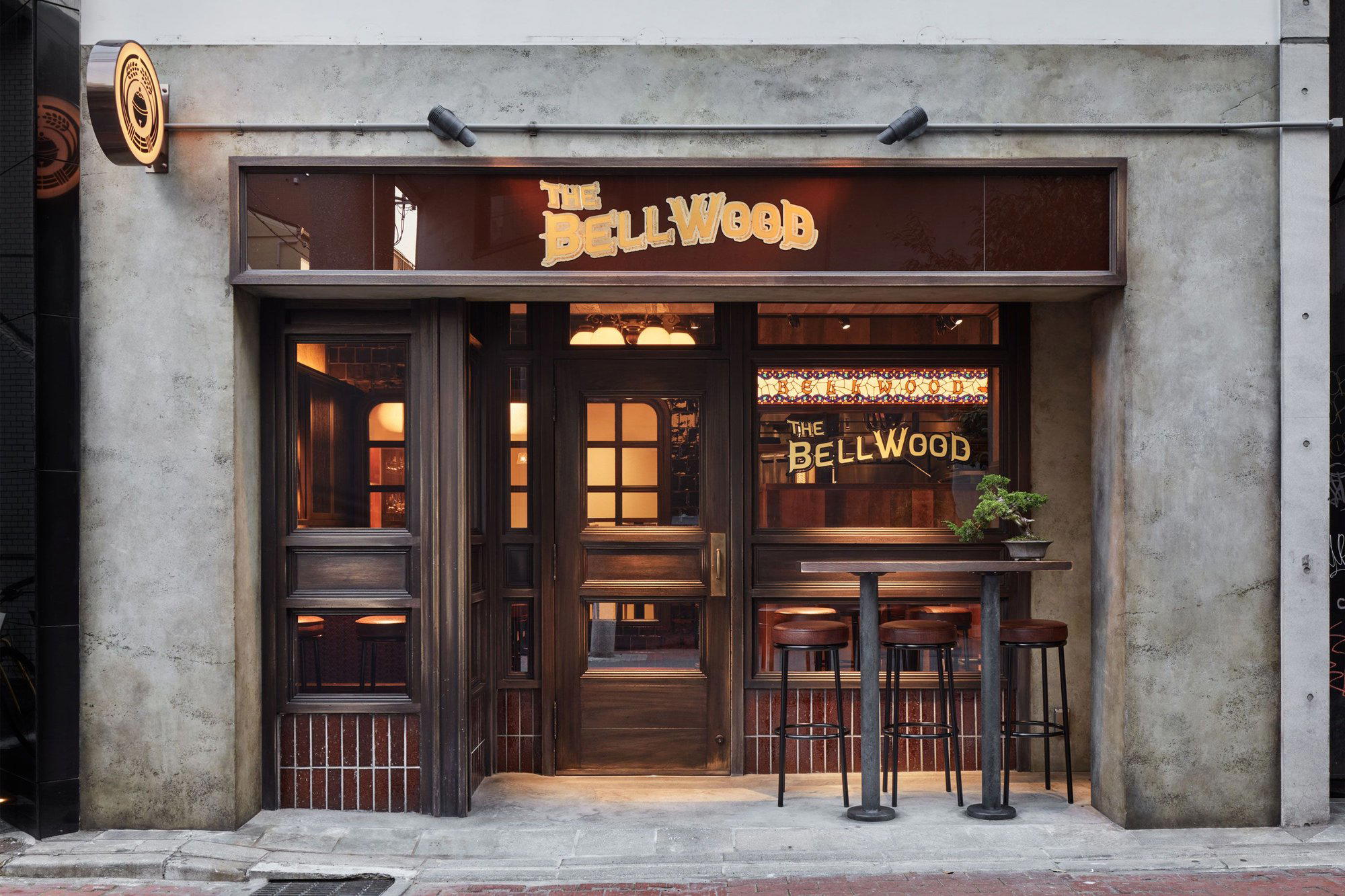
Rustic, old-school atmosphere with warm lighting and a nostalgic feel; intimate 8-10 seat counter manned by elderly sushi chefs in a hole-in-the-wall setting.