
A nine-seat counter by Nishidai Station places fish-led ramen, abura-soba, maze-soba and tsukemen inside Tokyo’s serious low-price noodle tier. Repeated selection for Tabelog Ramen TOKYO “Tabelog 100” from 2019 through 2025 gives Kotobuki Seimen Yoshikawa Nishidai ekimae ten a stronger signal than its modest spend suggests.
Pearl is the En Primeur Club membership app — saves, bookings, and concierge access live there. Same editors, same standards.
- Address
- 3 Chome-8-14 Hasune, Itabashi City, Tokyo 174-0046, Japan
- Phone
- +81 3-5948-7695
- Website
- x.com
 Saves & bookings on Pearl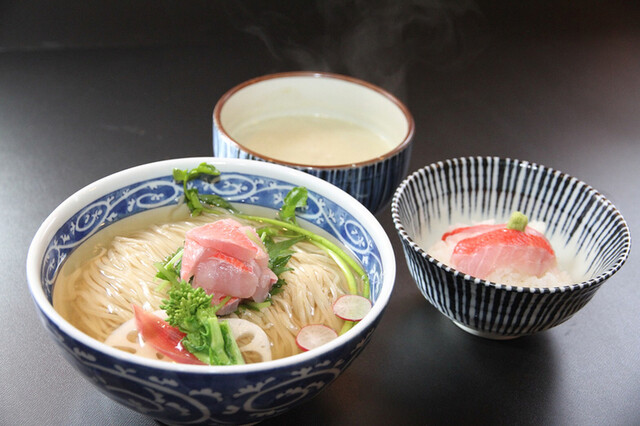
At Nishidai, the ramen map changes texture. Central Tokyo’s ramen queues often orbit spectacle, collector bowls and station-adjacent convenience; out in Itabashi, the experience tightens into a counter, a ticket-machine rhythm and a neighbourhood cadence. Kotobuki Seimen Yoshikawa Nishidai ekimae ten belongs to that second Tokyo: small, practical, highly ranked by local diners, and priced in the everyday bracket rather than the special-occasion one.
The address matters because Tokyo ramen has never been only a Shinjuku, Ginza or Ikebukuro story. The city’s serious noodle culture is distributed along rail lines, with destination shops appearing in residential wards where rent, repeat custom and local patience shape the format. Nishidai is not a tourist-default stop, which is precisely why the signal here is useful: a nine-seat counter earning repeat Tabelog Ramen TOKYO “Tabelog 100” selection from 2019 through 2025 is not trading on footfall alone.
Fish-led ramen in Tokyo's low-price serious tier
Tokyo’s ramen scene has split into several lanes: chicken-clear shoyu bowls, pork-heavy tonkotsu variants, shellfish-inflected broths, niboshi intensity, oil noodles, maze-soba and dipping noodles. This shop’s listed categories cover ramen, abura-soba, maze-soba and tsukemen, while its food note points specifically to fish. That combination places it in a flexible modern ramen format rather than a single-bowl orthodoxy.
The price band is part of the story. With average spend listed at JPY 999 or below, Kotobuki Seimen Yoshikawa Nishidai ekimae ten sits alongside Tokyo ramen peers such as Chuka Soba Ibuki and Ishida Ya in the sub-JPY 1,000 bracket, not in the premium counter category represented by places such as Shimura Tokujuen. The comparison is not about luxury versus austerity; it is about how much technical expectation Tokyo diners now attach to inexpensive noodle shops. A low ticket no longer implies a casual standard.
Tabelog gives the shop a 3.78 score and selected it for the Ramen TOKYO “Tabelog 100” list in 2025, with prior selections running back to 2019. That run suggests consistency across multiple cycles, which is a better editorial signal than a single burst of online attention. In ramen, where opening-year heat can fade quickly, repeated recognition matters because the format depends on daily execution: broth management, noodle timing, turnover and restraint.
A counter format built for solo dining, not ceremony
The room is counter-only, with nine seats. That format defines the pace. Tokyo ramen at this scale is not designed for lingering conversation, broad tables or tasting-menu theatre; it is built around quick ordering, focused eating and efficient turnover. The listing also marks it as friendly for solo dining, a useful detail in a city where many of the strongest casual meals are easier alone than in a group.
Reservations are unavailable, which keeps the decision practical: arrive prepared to wait if timing collides with the lunch or dinner rush. The shop opened on 21 November 2018, and its continued presence on the Tabelog list through 2025 places it past the novelty stage. That evolution is the point. What began as another small ramen counter near Nishidai Station has become part of Tokyo’s broader proof that serious bowls often develop outside the city’s prestige dining corridors.
There are also hard constraints. Private rooms and private use are unavailable, smoking is not permitted, and parking is unavailable. Payment is cash-oriented in the strict sense listed: credit cards, electronic money and QR code payments are not accepted. For visitors used to Tokyo’s increasingly cashless hotels and department stores, ramen remains one of the categories where small-shop habits can be less forgiving.
How to place it within a Tokyo eating itinerary
This is not the restaurant to pair with a long formal evening. It works better as a deliberate ramen detour in the northwestern side of Tokyo, especially for travellers tracking the city through everyday specialists rather than dining rooms with international polish. The counter scale, low spend and no-reservation system make it a different decision from booking a high-end sushi counter or a chef’s tasting menu. The reward is a closer read on how Tokyo’s ramen culture sustains quality at a price level that remains accessible to regulars.
Readers building a wider Tokyo plan can compare the city’s casual and specialist range through Our full Tokyo restaurants guide, from places such as 12/10 Shinjuku ten, 124. KAGURAZAKA (Yakitori), 3 Chome no Curry Ya San, 2D Cafe and. 鮪と炭火焼き うお炭 秋葉原店. For the rest of the trip, use Our full Tokyo hotels guide, Our full Tokyo bars guide, Our full Tokyo wineries guide and Our full Tokyo experiences guide.
For a broader Japan and diaspora food itinerary, the same appetite for tightly focused specialists can extend to -Grilled beef Sukiyaki- KAMAKURA TANUKIAN 鎌倉 たぬき庵 in Kamakura.cafe in Osaka.know in Kumamoto, (Shoku) Vietnam in Kawasaki, [Curry Senmon Ten] Maruyama Kyoju. in Sapporo, [ki:] in Kyoto, Jōdo Saké Bar in Los Angeles and Onigiri Time in Pasadena.
Comparison Snapshot
Comparable venues at the same tier for side-by-side context.
| Venue | Cuisine | Price | Notes |
|---|---|---|---|
| Kotobuki Seimen Yoshikawa Nishidai ekimae tenThis venue — the venue you are viewing | Fish-forward niboshi ramen & tsukemen | $ | Not listed |
| Umemura | Japanese Soul Food | $ | Koto |
| Oiwake Dango Honpo Shinjuku honten | Traditional Japanese dango & wagashi cafe | $ | Shinjuku |
| Baika Tei Kagurazaka honten | Japanese Traditional Sweets | $ | Shinjuku |
| Imojin | Traditional Japanese sweets & ice cream café | $ | Bunkyō |
| Amai Ko | Japanese sweets & kakigori cafe | $ | Suginami |
Recognition history
Dated appearances from independent guides and award organizations, with the underlying list record or original source where available.
Tabelog 100 #30 · No. 30
Tabelog · Tabelog 100 - Ramen - TOKYO - 2025











At a Glance
- Cozy
- Lively
- Solo
- Casual Hangout
- After Work
- Standalone
- Local Sourcing
- Sustainable Seafood
Current opening hours
- Monday
- 11 AM–8:30 PM
- Tuesday
- 11 AM–8:30 PM
- Wednesday
- 11 AM–8:30 PM
- Thursday
- 11 AM–8:30 PM
- Friday
- 11 AM–8:30 PM
- Saturday
- 11 AM–8:30 PM
- Sunday
- 11 AM–7:30 PM
Hours can change for holidays and private events. Last verified .
A compact, counter-only neighborhood ramen shop with a bustling but friendly atmosphere, bright functional lighting, and a focus on the open kitchen and steaming bowls rather than decor.