
Our verdict
Koie Ramen on Osterhaus' gate has earned back-to-back recognition on Opinionated About Dining's Cheap Eats in Europe list, ranking 61st in 2024 and 87th in 2025. In a city better known for New Nordic tasting menus, it represents Oslo's more casual, import-fluent side, a ramen counter drawing.

Pearl is the En Primeur Club membership app, where members save venues, book tables and use the concierge.

The menu
What to order
- Tonkotsu Ramen
- Miso Ramen
- Chicken Karaage
- Gyoza
A Grünerløkka Side Street and What It Says About Oslo Eating Now
Osterhaus' gate is not the address anyone mentions when they talk about Oslo's fine-dining circuit. That conversation runs through Maaemo's three-Michelin-star kitchen, through Kontrast and Hot Shop, and occasionally down to Bar Amour and Mon Oncle for something looser and more wine-forward. But Grünerløkka, the neighbourhood that brackets Osterhaus' gate, has been Oslo's most consistent incubator of non-Nordic formats for the better part of a decade, and the type of place that succeeds here tends to earn it. Koie Ramen, at number 13, belongs to that pattern.
The significance of that number is worth pausing on.
How Ramen Travels, and Where Oslo Fits
Japanese ramen has become one of the more successfully exported food formats of the past two decades. Unlike sushi, which requires sourcing infrastructure and technical years to execute at any serious level, ramen offers enough flexibility in broth base, noodle style, and regional variation that skilled kitchens outside Japan can build credible versions without misrepresenting the form. Cities like London, New York, and Paris developed ramen scenes before Scandinavian capitals, which arrived later but with an audience already attuned to product quality and provenance.
Oslo's version of that shift has been slower and more selective than in larger European cities. The cost of running a kitchen here is high, labour, rent, and ingredient costs all compress margins in ways that make the cheap-eats tier genuinely difficult to sustain at quality. That context makes Opinionated About Dining's recognition more pointed. OAD's Cheap Eats in Europe list does not rank on price alone; it reflects a critical community's assessment of quality relative to cost. Koie Ramen appeared at number 61 in 2024 and number 87 in 2025, both years placing it in the top tier of value-driven European restaurants as assessed by that network. For a ramen counter in Oslo, a city where cheap and serious rarely share the same address, that is a specific and meaningful credential.
The Neighbourhood as Context
Grünerløkka sits north-east of Oslo's centre, separated from the waterfront fine-dining corridor by the Akerselva river and a different kind of commercial energy. The neighbourhood grew as Oslo's creative and independent dining district over the 2000s and 2010s, and it now hosts a density of non-Nordic formats, Vietnamese, Korean, Japanese, Middle Eastern, that the more polished western districts do not match. The logic is partly demographic and partly economic: rents that allow independent operators to take risks, a foot-traffic base that eats out frequently and across formats, and a tolerance for the kind of unpretentious room that a serious ramen counter requires.
Koie Ramen fits that neighbourhood logic. It is not trying to replicate what Maaemo does, or to position itself against the tasting-menu tier at all. It operates in a different register entirely, one that Oslo's food culture has historically underserved compared to its Nordic peers in Copenhagen and Stockholm. The OAD recognition suggests the execution is there to justify the position.
Planning a Visit
The kitchen runs from 11 am on weekdays and midday on weekends, closing at 10 pm seven days a week, hours that accommodate both lunch and late dinner without the compressed service windows that characterise Oslo's more formal rooms. Osterhaus' gate 13 is reachable by tram from central Oslo, with Grünerløkka's main artery, Thorvald Meyers gate, a short walk north.
For travellers building a broader Oslo itinerary, the city's dining range runs considerably further in both directions. At the leading end, Maaemo and Kontrast represent the New Nordic fine-dining tier; Bar Amour and Mon Oncle anchor the mid-tier creative and wine-bar scene. Our full Oslo restaurants guide maps the full spread, and separate guides cover Oslo bars, Oslo hotels, Oslo wineries, and Oslo experiences.
Travellers extending further into Norway will find the country's most recognised fine-dining distributed across smaller cities: RE-NAA in Stavanger, FAGN in Trondheim, Gaptrast in Bergen, Iris in Rosendal, Under in Lindesnes, and Boen Gård in Tveit. For ramen specifically, comparison points outside Norway include Afuri in Tokyo and Afuri Ramen in Portland, both of which sit in the same broader conversation about how Japanese ramen formats adapt outside their origin context.
What the Rankings Signal
Back-to-back OAD Cheap Eats appearances are not a common outcome for Oslo restaurants, particularly in a format with no Scandinavian precedent. The list's methodology relies on a self-reporting critic and enthusiast network, which means the venue has to be eating well enough that people who care about food are actively nominating it. Appearing in consecutive years at positions that place it among Europe's leading hundred value restaurants confirms that the 2024 ranking was not an anomaly.
That kind of sustained recognition matters differently than a single award. It suggests the kitchen is operating consistently rather than peaking for a guide cycle, and it positions Koie Ramen as the reference point for serious casual eating in Oslo in a format that the city's Nordic-dominant dining narrative rarely foregrounds. For a visitor whose itinerary already covers the tasting-menu tier, this is where the day's other meals should probably land.
Frequently asked questions
What kind of recognition has Koie Ramen received?
Koie Ramen has received recognition including: Opinionated About Dining Cheap Eats in Europe Ranked #87 (2025); Opinionated About Dining Cheap Eats in Europe Ranked #61 (2024).
What dish is Koie Ramen famous for?
The kitchen's focus is ramen, and back-to-back appearances on the Opinionated About Dining Cheap Eats in Europe list, ranked #61 in 2024 and #87 in 2025, point to consistent execution rather than a single signature bowl. OAD rankings in this category are driven by repeat visits and peer assessment, which suggests the broader menu holds up rather than one standout item carrying the room.
What are Koie Ramen's hours?
Hours at Koie Ramen: Hours: Monday 11 am–10 pm Tuesday 11 am–10 pm Wednesday 11 am–10 pm Thursday 11 am–10 pm Friday 11 am–10 pm Saturday 12–10 pm Sunday 12–10 pm.
Is Koie Ramen chef-led?
The chef associated with Koie Ramen is Various.
Cuisine and Awards Snapshot
A compact comparison to help you place this venue among nearby peers.
| Venue | Cuisine | Price | Awards | Notes |
|---|---|---|---|---|
| Koie RamenThis venue (the venue you are viewing) | Authentic Japanese Ramen | $20–30 | Not listed | Not listed |
| Maaemo | New Nordic Fine Dining | $300–500 | 3 Michelin Stars · World's 50 Best #47 | New Nordic, Modern Cuisine |
| Kontrast | Modern Nordic Fine Dining | $200–300 | 2 Michelin Stars · La Liste Top Restaurants | New Nordic, Scandinavian |
| Hot Shop | Modern Nordic Tasting Menu | $100–150 | 1 Michelin Star · Star Wine List | New Nordic, Modern Cuisine |
| Statholdergaarden | Classic Norwegian-French Fine Dining | $200–300 | 1 Michelin Star · La Liste Top Restaurants | Modern European, Classic Cuisine |
| Arakataka | Modern Nordic | $50–100 | Michelin Plate · Star Wine List | Nordic, Norwegian |
Recognition history
Dated appearances from independent guides and award organizations, with the underlying list record or original source where available.
Opinionated About Dining Cheap Eats in Europe Ranked #146
Opinionated About Dining
Full recognition history (3 entries)
Opinionated About Dining Cheap Eats in Europe Ranked #87
Opinionated About Dining
Opinionated About Dining Cheap Eats in Europe Ranked #61
Opinionated About Dining
Continue exploring
More in Oslo
Restaurants in Oslo
All restaurants in Oslo →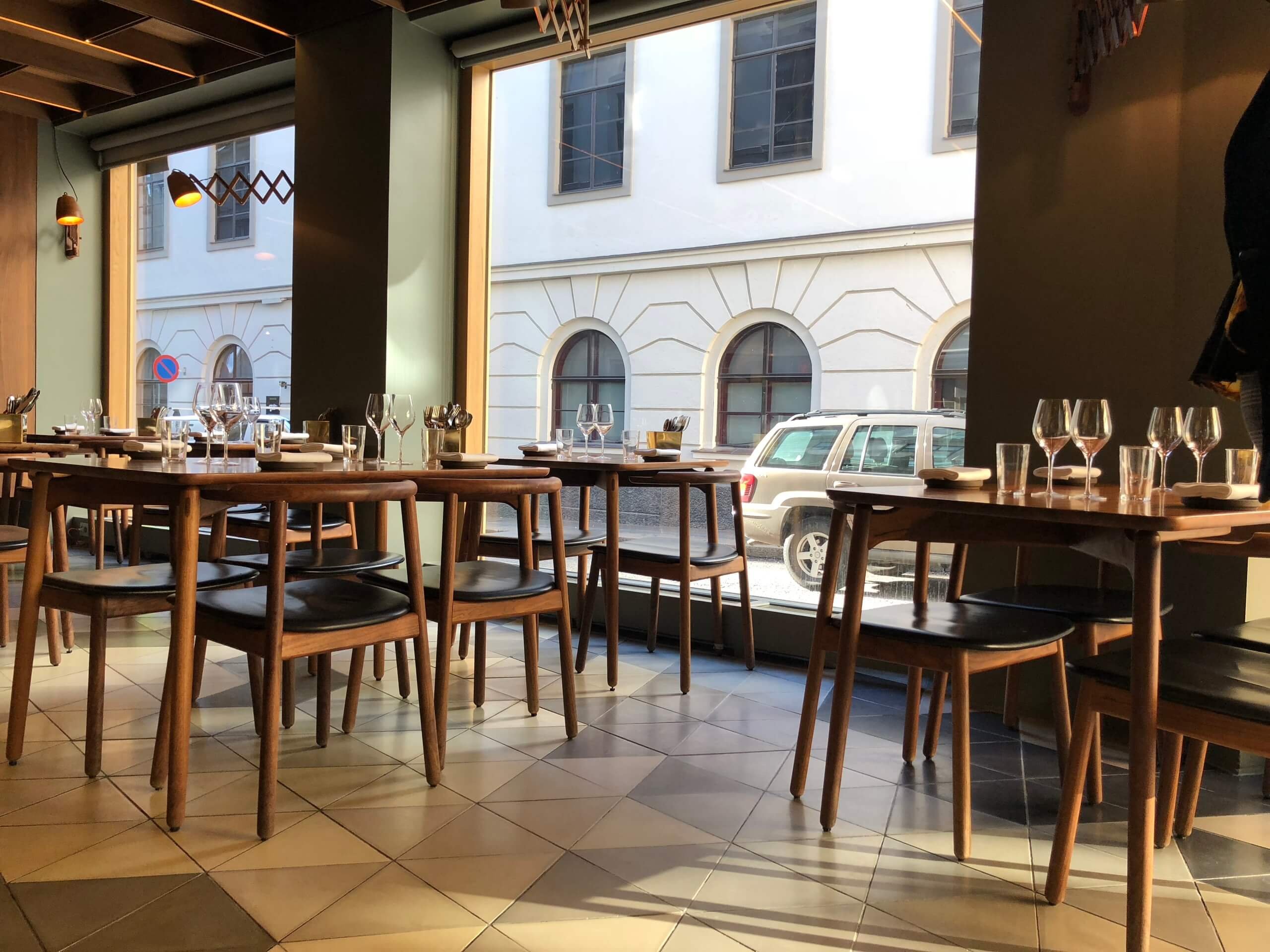
Bars in Oslo
All bars in Oslo →

Details
- Casual
- Trendy
- Minimalist
- Casual Hangout
- After Work
- Open Kitchen
- Sake Program
- A La Carte
- Vegetarian Friendly
Spartan industrial interior with tiled floors and bare walls creating an echoey, fast-paced atmosphere.