





1 Michelin Star · Star Wine List · Falstaff Restaurant - 93 Falstaff Points
Our verdict
Inside a gleaming steel structure moored on Hardangerfjord, Iris holds a Michelin star and an Opinionated About Dining ranking of #119 in Europe for 2025. Chef Anika Madsen's kitchen draws on foraged Norwegian produce alongside creative Greek and Turkish influences, arriving by short boat ride from Rosendal. The format is ambitious and the setting demands planning, but the combination of technical cooking and fjord surroundings is difficult to replicate anywhere on the continent.
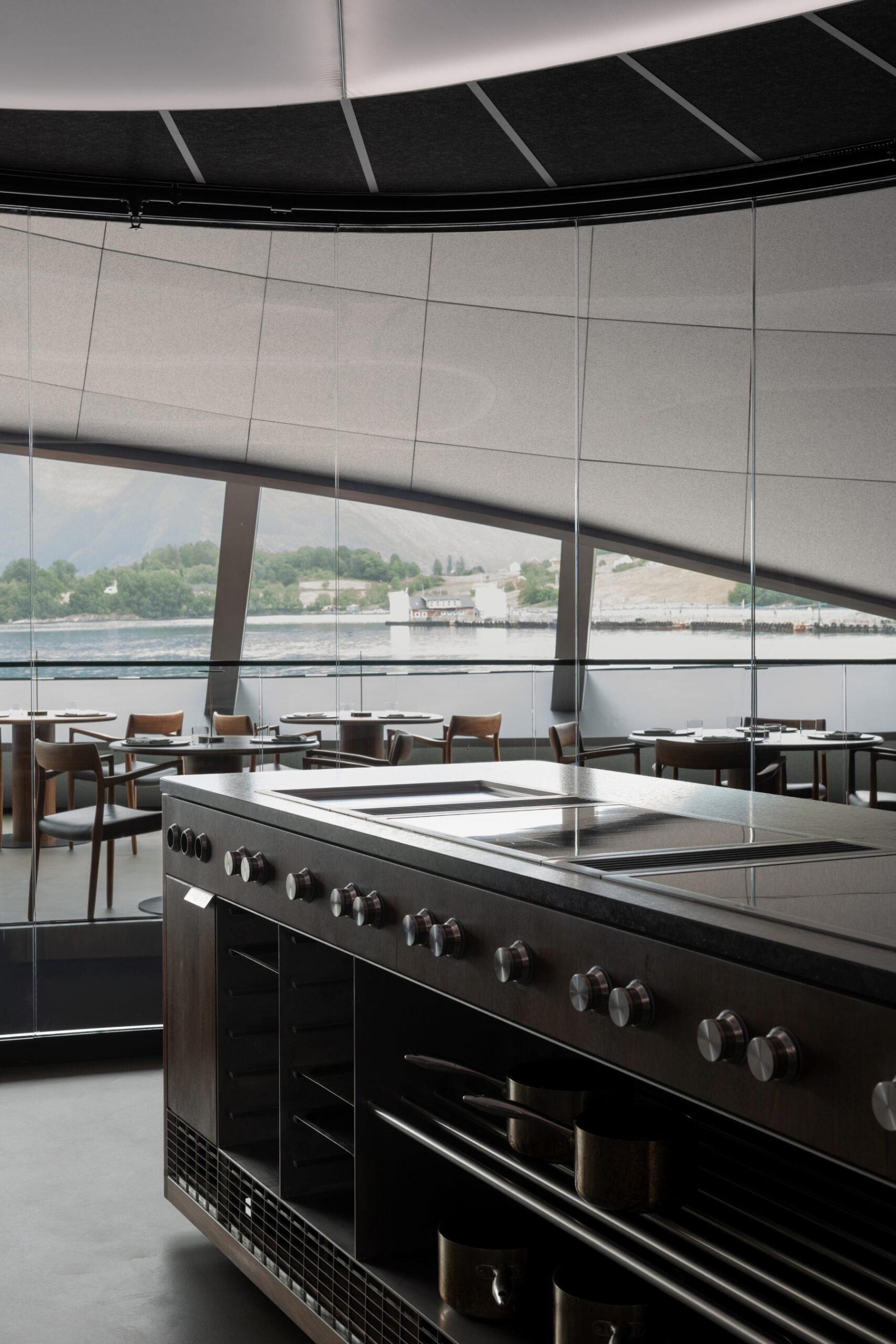
A Floating Structure on Hardangerfjord
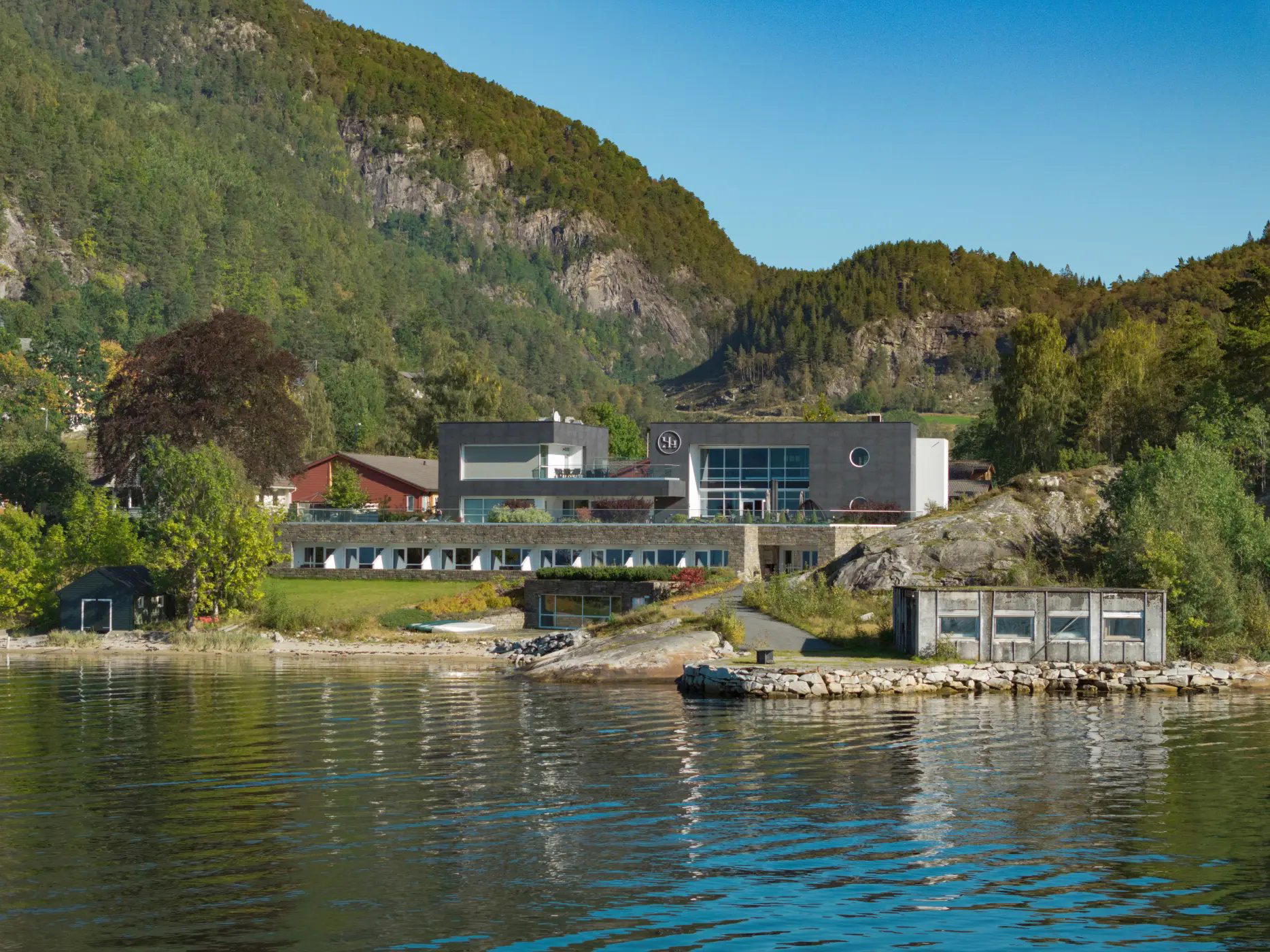
The approach to Iris sets the terms for everything that follows. A short boat ride from Rosendal deposits you at the Salmon Eye, a gleaming orb-shaped steel structure moored in Hardangerfjord, its curved exterior reflecting the grey-green water and the steep valley walls rising behind it. Norway has produced several destination restaurants that use dramatic geography as part of the offer Under in Lindesnes sits ten metres below the surface of the sea; Conservatory in Norangsfjorden frames its service around mountain seclusion. Iris belongs to that same category of restaurant where the logistics of arrival are deliberate, not incidental. Before a single dish lands on the table, the act of getting there has already oriented the diner toward what is being argued: that this part of the Norwegian coast, and the produce pulled from it, is worth serious attention.
The Salmon Eye was conceived as a salmon farming observation facility, which explains its industrial precision and its relationship to the fjord. As a dining venue it functions differently from purpose-built fine dining rooms in urban centres. There is no street-level approach, no neighbourhood context, no adjacent bars to drift into afterward. The structure is the context, and Iris occupies it with a format that runs Thursday through Sunday from 5:30 pm to 1 am, closed the rest of the week. That schedule, combined with the boat transfer requirement, makes Iris a booking that requires forward planning, not a walk-in decision.
Where the Menu Stands in the Norwegian Fine Dining Conversation
Norway's upper tier of restaurants has, over the past decade, settled into a recognisable pattern: New Nordic technique applied to hyper-local ingredients, with Michelin recognition as the benchmark of peer acceptance. Maaemo in Oslo and RE-NAA in Stavanger operate at three Michelin stars and represent the category's ceiling. FAGN in Trondheim holds one star at a lower price point. Iris, with its Michelin star awarded in 2024 and an Opinionated About Dining ranking of #119 in Europe in 2025 (up from #130 in 2024), sits in the single-star bracket but with a competitive set that extends well beyond Norway's borders. A European ranking at that level places it alongside restaurants in Paris, Copenhagen, and London operating at comparable ambition.
What separates Iris from the bulk of Norway's starred dining is the kitchen's declared cuisine type: creative, with Greek and Turkish reference points layered onto a foundation of Norwegian produce. That combination is not common at this price tier anywhere in Scandinavia. The culinary traditions of the eastern Mediterranean, where shared plates, layered dips, and the interplay of acid, fat, and char are structural rather than decorative, sit in productive tension with the austerity of a Norwegian fjord larder. The editorial angle here is worth stating plainly: the mezze tradition, where the opening spread of cold and warm dishes carries as much weight as any main course, has a logic that translates surprisingly well to a menu built around foraged and preserved Nordic produce. Both traditions treat the table as a place of accumulation rather than sequence.
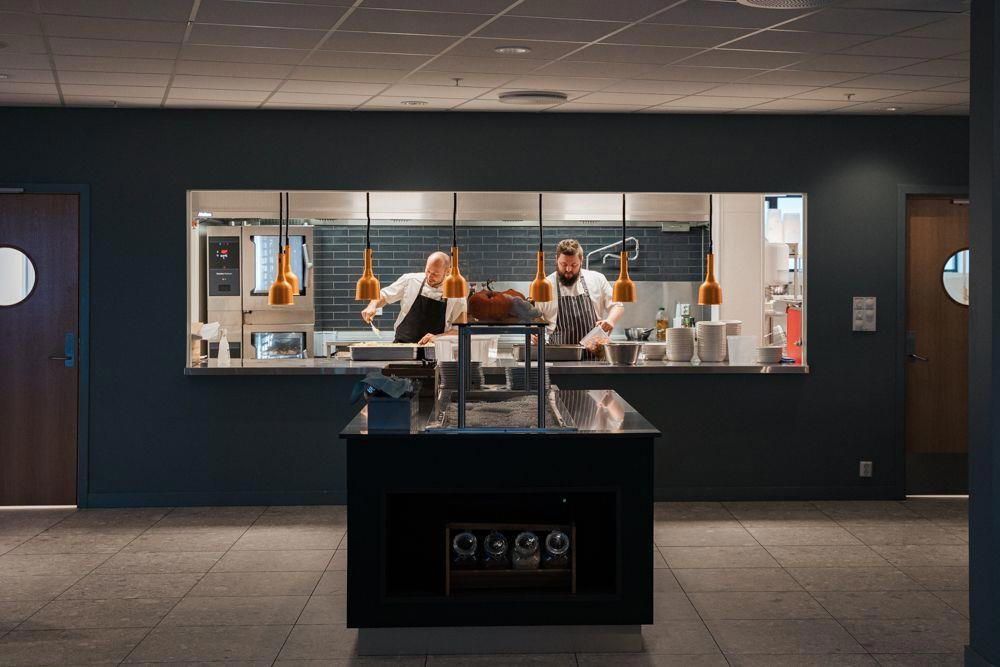
Iris's kitchen, under chef Anika Madsen, works with ingredients that include lumpsucker fish and Norwegian cuttlefish, produce that sits outside the premium seafood categories usually associated with high-end tasting menus. In the Greek and Turkish cooking traditions, unglamorous ingredients transformed through technique and seasoning are entirely orthodox. Anchovies, offal, preserved lemons, charred vegetables: the point is never the prestige of the raw material but what the cook does with it. Applied to a Norwegian context, that philosophy opens up a much wider palette of the coast and the forest than a strictly New Nordic programme might allow.
Setting the Table: What the Opening Courses Signal
In the mezze tradition, the first wave of a meal communicates the cook's position on flavour, generosity, and restraint before any formal course arrives. A spread of baba ganoush, fattoush, and hummus in a serious Greek or Turkish kitchen is a technical statement as much as a hospitality gesture, the smokiness of the aubergine, the balance of the tahini, the freshness of the herbs are all evaluated before the main dishes appear. When that structural logic is applied inside a Michelin-starred kitchen working with northern European foraged produce, the implications shift. Cold preparations that showcase preserved, fermented, or raw ingredients from the fjord region can carry the same argumentative weight as a classic Mediterranean cold table.
The Esquire recognition as one of the leading new restaurants globally in 2021, ranked at #13, arrived early in Iris's life and established its international frame of reference before the Michelin inspectors had finished deliberating. That kind of early critical attention in a major English-language title positions a restaurant differently from one that builds reputation solely through local dining culture. The Star Wine List White Star, published August 2025, adds a wine programme credential to the picture, suggesting the beverage side of the offer has been developed to match the food's ambition.
Iris in the Broader Context of Remote Fine Dining
The growth of destination restaurants in remote or difficult-to-access Norwegian locations reflects a broader international pattern. Diners willing to travel for a meal have increasingly decoupled the act of eating from urban convenience. Kvitnes Gård in Kvitnes, Storfjord Hotel Restaurant in Glomset, and Boen Gård in Tveit all operate on similar logic: the journey is part of the meal's meaning. International comparisons exist too. Le Bernardin in New York City and Atomix in New York City represent the urban high-ambition model, where the restaurant's address is a destination in itself. Emeril's in New Orleans shows how a regional food identity can anchor a dining programme over decades. Iris operates at the opposite extreme: maximally remote, maximally specific to its geography, with a cuisine framework that reaches far outside Scandinavia to make sense of what it finds locally.
Gaptrast in Bergen and Huset Restaurant in Longyearbyen both demonstrate how Norwegian restaurants at different latitudes and contexts have built credibility through specificity rather than universality. The lesson for anyone building an itinerary around Hardanger is that Iris should be understood as the anchor, not an addition. Plan the accommodation, the transport, and the surrounding days around the reservation rather than the reverse. For broader context on what the region offers, our full Rosendal restaurants guide, hotels guide, bars guide, wineries guide, and experiences guide cover the full picture.
Planning the Visit
Iris operates Thursday through Sunday, with service beginning at 5:30 pm and running to 1 am. Monday through Wednesday the kitchen is dark. The boat transfer from Rosendal to the Salmon Eye is integral to the visit rather than optional, which means timing and weather awareness matter in a way they simply do not for urban restaurants. The price range sits at the top of the Norwegian fine dining scale, comparable to the four-bracket pricing of Maaemo and RE-NAA. Booking well in advance is advisable given the constrained weekly hours and the logistical commitment the experience requires.
Frequently asked questions
Does Iris work for a family meal?
At the €€€€ price point, Iris is adult-oriented fine dining rather than a family restaurant. The boat-access-only location at Salmon Eye on Hardangerfjord, combined with a kitchen programme built around foraged and unfamiliar produce like lumpsucker fish, makes it a poor fit for younger diners. Book it for adults with a serious interest in where Norwegian fine dining is heading.
Is Iris formal or casual?
Iris holds one Michelin star and ranked 119th in Europe on the Opinionated About Dining list for 2025, which places it in formal fine dining territory. The remote fjord setting and boat transfer add a sense of occasion before you arrive at the table. Dress accordingly, this is not a relaxed neighbourhood dinner.
Is Iris award-winning?
Iris has received recognition including: Restaurant Iris is a restaurant in Hardanger Fjord, Norway. It was published on Star Wine List on August 21, 2025 and is a White Star.; Opinionated About Dining Top Restaurants in Europe Ranked #119 (2025); Chef: Anika Madsen Dining Experie….
What do regulars order at Iris?
Chef Anika Madsen's kitchen runs a forage-led programme, so the answer shifts with the season and what the surrounding Hardangerfjord region yields. Dishes built around lumpsucker fish and Norwegian cuttlefish have defined the kitchen's identity. Follow the menu as it is presented rather than arriving with specific requests.
What does dinner at Iris typically cost?
Pricing at Iris is listed as €€€€.
Side-by-Side Snapshot
| Venue | Cuisine | Price | Awards | Notes |
|---|---|---|---|---|
| IrisThis venue (the venue you are viewing) | Modern Norwegian Expedition Dining | Not listed | 1 Michelin Star · Star Wine List | Not listed |
| Maaemo | New Nordic Fine Dining | $300–500 | 3 Michelin Stars · World's 50 Best #47 | New Nordic, Modern Cuisine |
| RE-NAA | Modern Nordic Coastal Tasting Menu | $500+ | 3 Michelin Stars · La Liste Top Restaurants | New Nordic, Creative |
| Kontrast | Modern Nordic Fine Dining | $200–300 | 2 Michelin Stars · La Liste Top Restaurants | New Nordic, Scandinavian |
| FAGN | Modern Nordic Fine Dining | $200–300 | 1 Michelin Star · Star Wine List | Nordic, Modern Cuisine |
| Speilsalen | Contemporary Norwegian Seafood Fine Dining | $200–300 | 1 Michelin Star · Star Wine List | Nordic, Contemporary |
Recognition history
Dated appearances from independent guides and award organizations, with the underlying list record or original source where available.
Michelin 1 Star
Michelin
Star Wine List
Star Wine List
Falstaff Restaurant - 93 Falstaff Points
Falstaff
Opinionated About Dining Top Restaurants in Europe Ranked #119
Opinionated About Dining
The Best Chef Two Knives
The Best Chef
Full recognition history (8 entries)
Michelin 1 Star
Michelin
Opinionated About Dining Top Restaurants in Europe Ranked #130
Opinionated About Dining
Esquire Best New Restaurants #13
Esquire
Continue exploring
More in Rosendal
Restaurants in Rosendal
Browse all →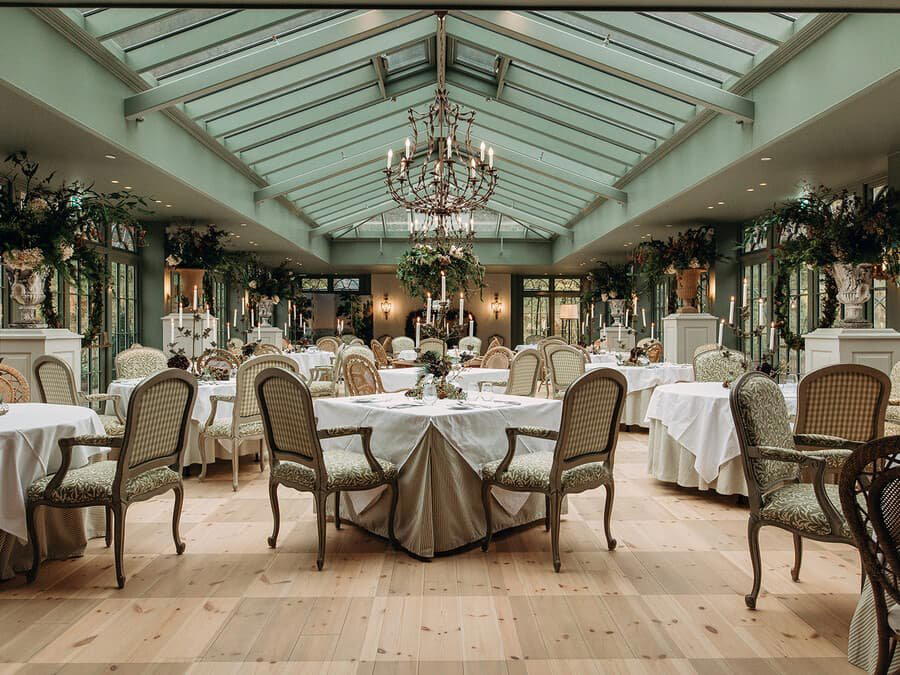
Details
- Modern
- Scenic
- Sophisticated
- Intimate
- Date Night
- Special Occasion
- Waterfront
- Panoramic View
- Extensive Wine List
- Farm To Table
- Local Sourcing
- Sustainable Seafood
- Waterfront
- Mountain
- Tasting Menu
Current opening hours
- Monday
- Closed
- Tuesday
- Closed
- Wednesday
- 1–8 PM
- Thursday
- 1–8 PM
- Friday
- 1–8 PM
- Saturday
- 1–8 PM
- Sunday
- Closed
Hours can change for holidays and private events. Hours as of .
Minimalist Scandi design with huge curved windows offering unusual fjord and mountain views, cool yet sophisticated atmosphere.