


Michelin Plate · Star Wine List · Wine Spectator Best of Award of Excellence
Our verdict
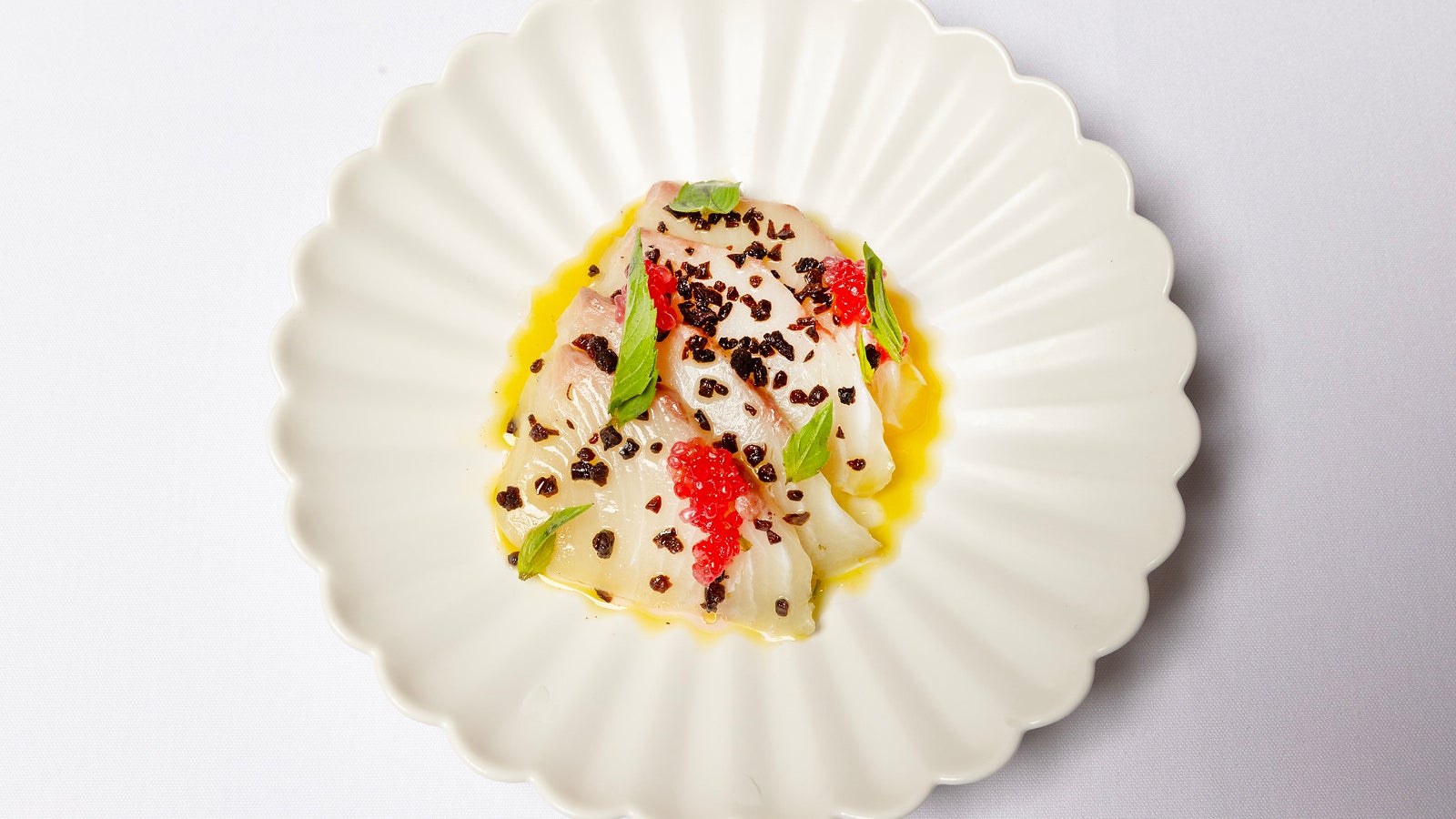
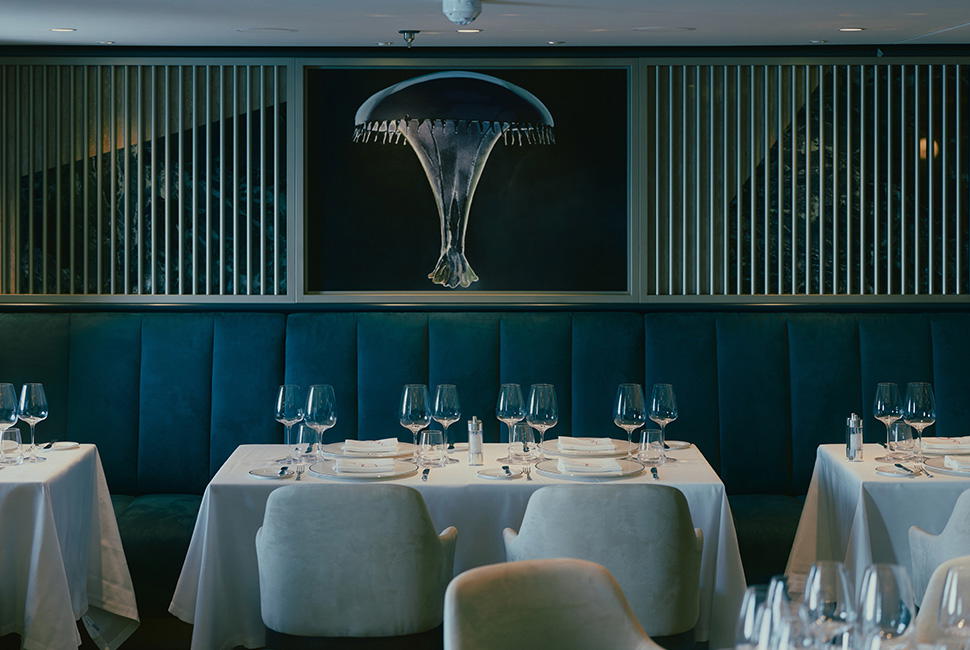
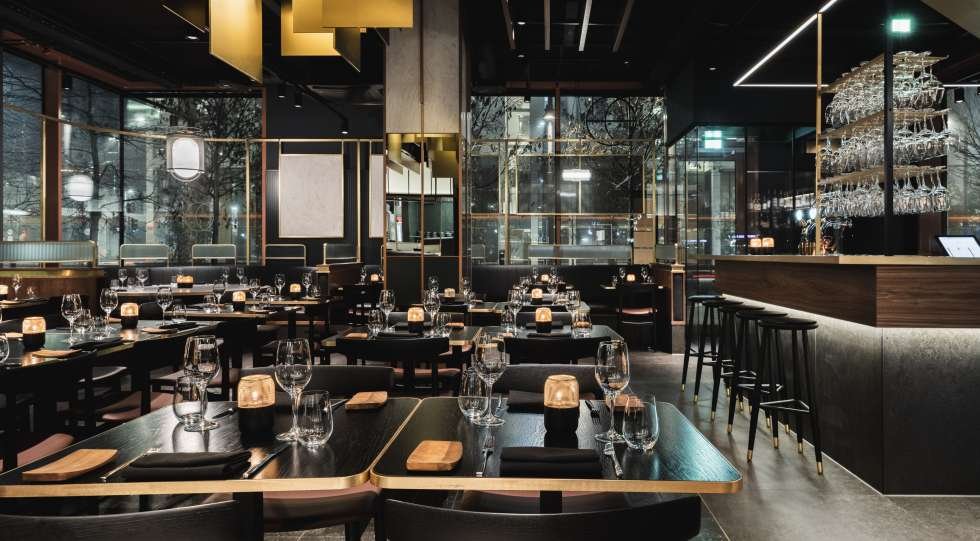
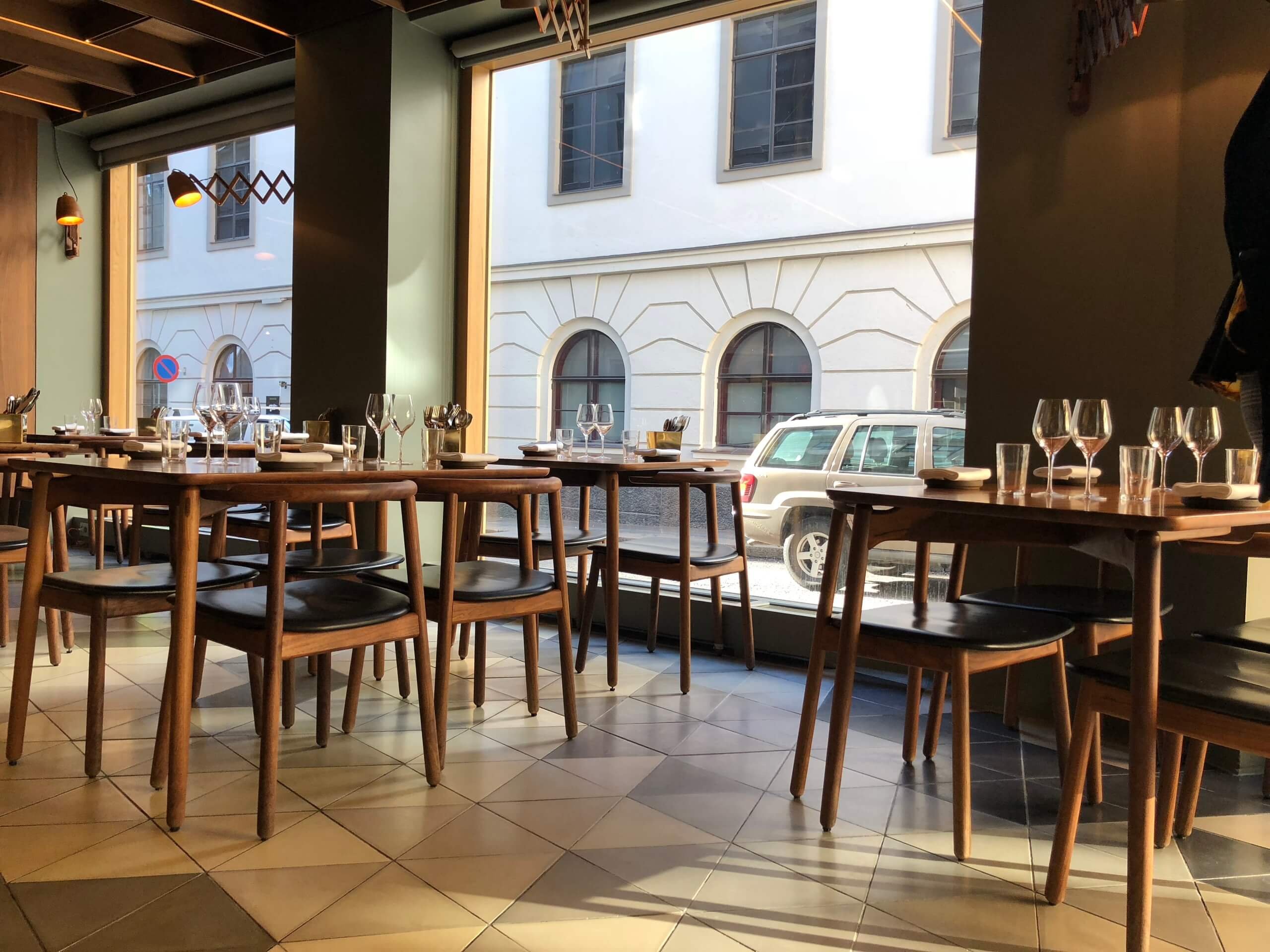
At Cru, the romance of French gastronomy is elegantly reimagined through the prism of Norwegian terroir. An exceptional wine program—rich in French pedigrees and rare vintages—anchors the experience, while dishes like pâté en croûte with cornichons and mustard or a luxuriant chicken vol-au-vent with morels, peas, asparagus, and tarragon speak to a kitchen fluent in classic technique and local seasonality. Set within a high-ceilinged dining room in serene shades of green and grey, guests sink into plush banquettes with a privileged view of the open kitchen’s choreography, savoring a curated journey where refinement, warmth, and precision harmonize.

Pearl is the En Primeur Club membership app, where members save venues, book tables and use the concierge.
The menu
See the current menu on cru.no →From Majorstuen to the Barcode: A New Address for Oslo's Wine-Led Dining
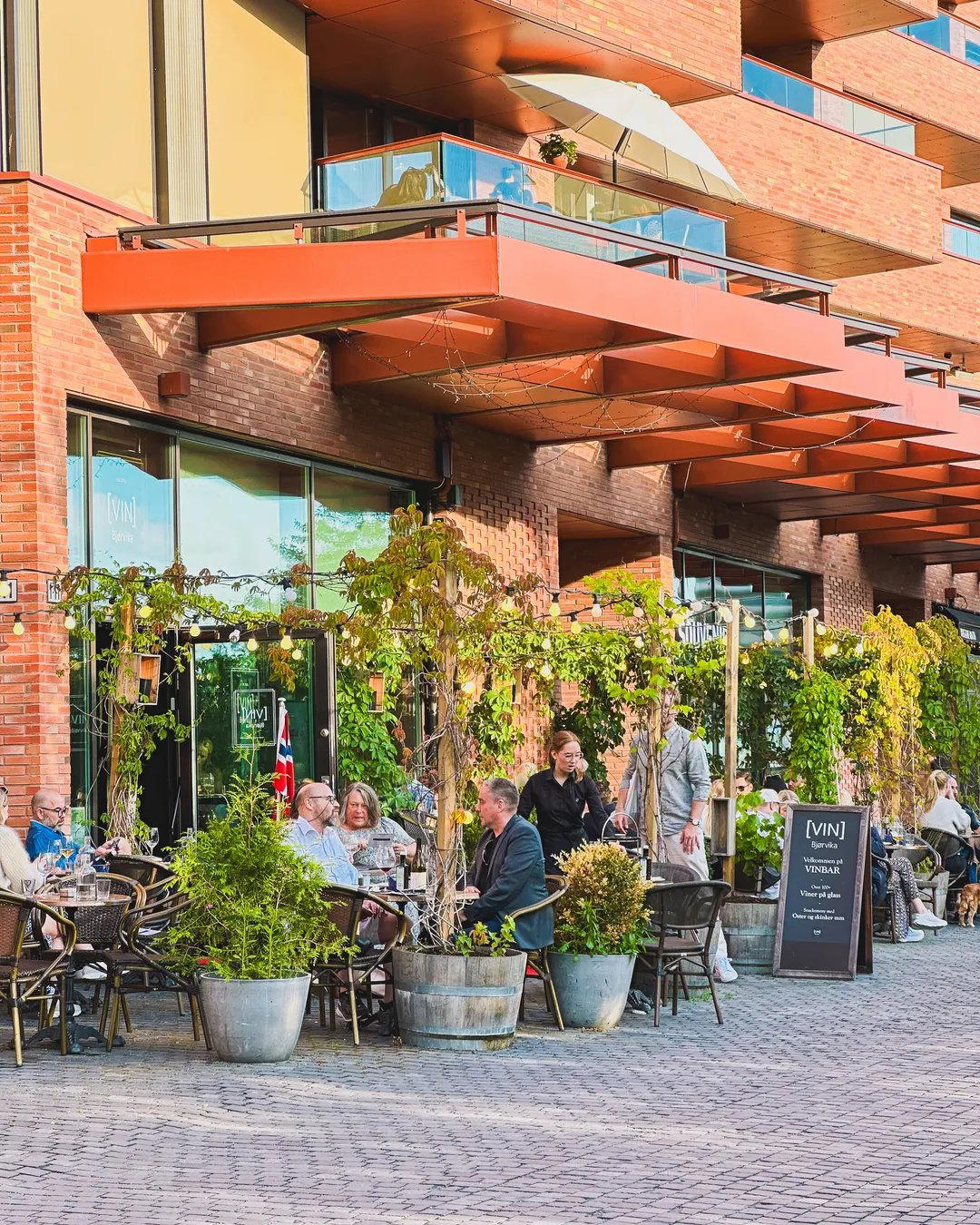
The Barcode district in Bjørvika occupies a stretch of Oslo's reclaimed waterfront where the architecture tilts toward the future: tall, narrow towers alternating like book spines along the fjord's edge. Spring 2025 brought a notable addition to its food and drink roster when Cru relocated here from its longstanding position as the preferred wine hub of Majorstuen, in western Oslo. The move repositioned Cru inside the city's newest concentration of restaurants and bars, and placed it in direct conversation with a generation of dining rooms that treat the bottle and the plate as equal partners.
That pairing instinct is central to how French-accented Norwegian cooking functions at its more ambitious end. Where many Oslo addresses either subordinate wine to a prestige tasting menu or build a wine list purely for commercial margin, Cru operates in a narrower lane: a kitchen capable of lunch and dinner service at a €€€ price point, supported by a wine inventory of 2,650 bottles across 900 selections, with particular strength in Burgundy, Germany, France, and Italy. The list carries significant $100-plus bottle presence, which places it closer to the wine programs at Maaemo or Kontrast in depth and pricing ambition, even if the dining format sits at a different register.
Nordic Kitchens and the Sourcing Imperative
The editorial framing around Nordic food in 2025 has moved past the early New Nordic manifesto language, but the practical sourcing discipline it established has not gone anywhere. Oslo kitchens that hold a Michelin Plate, the guide's signal that cooking quality merits attention without yet reaching star level, tend to operate within a set of expectations around seasonality, local produce, and minimal waste that the original movement embedded into the professional culture here. Chef Erik Tufte's kitchen at Cru works within that inherited discipline, applied to a French-leaning cuisine that borrows freely from classical technique while keeping the larder rooted in Norwegian supply chains.
This combination is more common in Scandinavia than elsewhere in Europe. The tension between French culinary grammar and Nordic ingredient provenance has produced a generation of Oslo restaurants that speak French fluently but shop Norwegian. The result, across the city, is cooking that references Burgundian preparation logic while plating aged Norwegian dairy, coastal fish, and foraged elements that French kitchens would source differently. At Smalhans or Stallen, this registers at a more casual price tier. At Cru, it appears in a wine-bar-meets-bistro format where the glass list and the plate are designed to move together.
The zero-waste imperative in Nordic professional kitchens is, by now, less a marketing claim than a structural default. Norwegian food culture has long operated with practical resource consciousness tied to geography and climate: a short growing season, limited cultivated land, and a fishing economy that made whole-animal and whole-catch thinking a matter of logistics before it became an ethical position. Cru's French cuisine operates within that same constraint environment, which shapes what arrives at the table even when the dish references Lyon or Burgundy rather than Bergen or Lofoten.
What 900 Selections and 2,650 Bottles Actually Mean
Wine lists of this depth in Oslo occupy a specific market position. The city has several addresses where a serious cellar exists primarily to serve a prestige tasting menu, Maaemo's three-star program being the most prominent example. A separate, smaller group of venues treats the list as the primary draw, with food calibrated to match rather than the reverse. Cru sits in the second category. James Maxwell-Stewart, who serves simultaneously as wine director, general manager, and owner, has built a list with the kind of Burgundy and German depth that signals long-term collector purchasing rather than a wholesale-led, margin-first approach.
For the reader thinking about when and how to visit: a 900-selection list with 2,650 bottles in inventory means that off-list requests and deep verticals are realistic conversations to have. This is not a venue where the list refreshes quarterly based on supplier availability. It is closer to the model operated by serious independent wine restaurants across London, Paris, and Copenhagen, where the cellar is the institution's long-term intellectual project.
Bjørvika's Emerging Wine and Dining Circuit
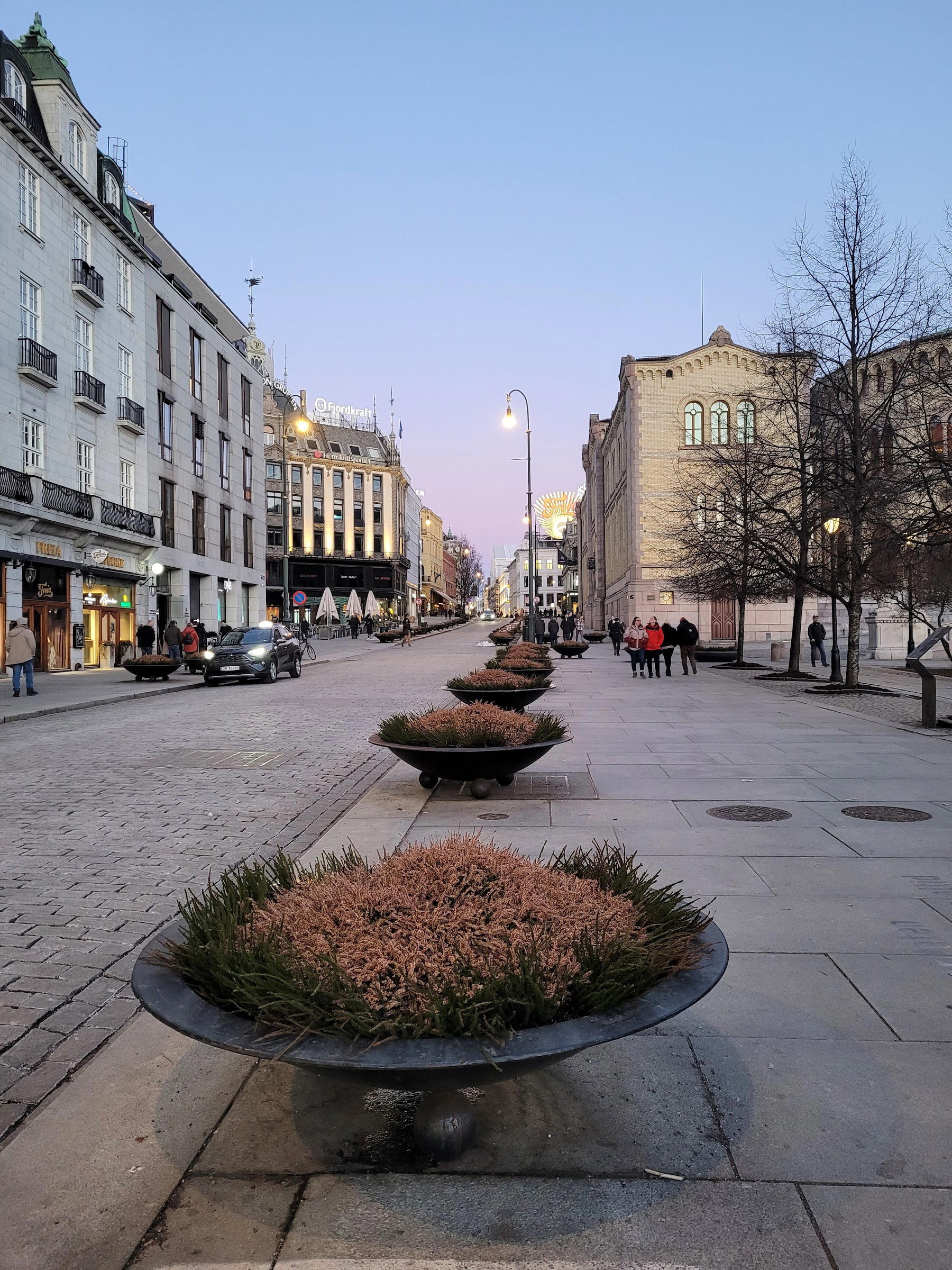
Cru's relocation to Bjørvika in spring 2025 places it inside a district that is still establishing its dining identity. The Barcode's architectural drama can tip toward corporate anonymity at street level, but the cluster of wine-focused and chef-driven rooms moving into the area is shifting that perception. For visitors who use our full Oslo restaurants guide as a starting point, Bjørvika now warrants its own loop rather than a single destination stop.
The broader Oslo wine scene has benefited from a generation of sommeliers and wine professionals who trained in London, Copenhagen, and Paris before returning to build programs at home. Maxwell-Stewart's dual role as director and owner concentrates creative authority in a way that gives Cru's list coherence and a clear point of view, rather than the committee-built comprehensiveness that larger hotel restaurant programs produce. Visitors exploring the city's bar culture can cross-reference with our full Oslo bars guide; those tracking the wine side should check our full Oslo wineries guide for regional context.
Norway's wider restaurant geography extends well beyond Oslo, and travelers moving through the country's cities can add serious eating stops at several points: RE-NAA in Stavanger, FAGN in Trondheim, Gaptrast in Bergen, Iris in Rosendal, and Under in Lindesnes represent the range from tasting-menu formalism to destination dining in coastal settings. More casual regional options include Bravo in Stavanger and FAGN-Bistro in Trondheim. For an Oslo-specific cultural program around food and drink, our full Oslo experiences guide and our full Oslo hotels guide cover the surrounding logistics. The creative bar programming at Bar Amour offers a natural adjacent stop in the city's late-evening circuit. For rural estate dining in the south, Boen Gård in Tveit provides a distinct counterpoint to the urban concentration of addresses like Cru.
Planning Your Visit
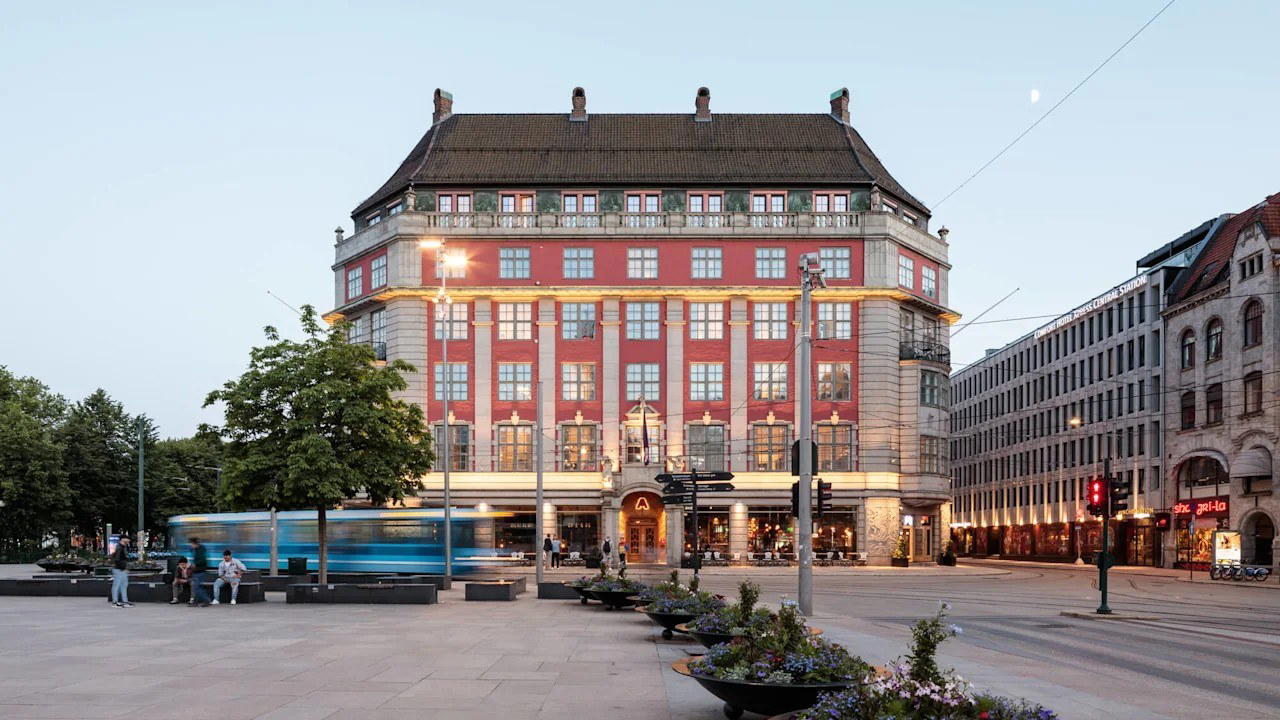
Cru is located at Dronning Eufemias gate 6, 0191 Oslo, in the Bjørvika Barcode district, easily walkable from Oslo Central Station. The restaurant serves lunch and dinner, and holds a 2025 Michelin Plate. Given the depth of the wine list and the venue's established following carried over from its Majorstuen years, booking ahead is sensible, particularly for dinner service, where guests wanting serious engagement with the cellar benefit from the time to work through options with the team.
Frequently asked questions
What's the address for Cru?
Cru is located at Dronning Eufemias gate 6, 0191 Oslo, Norway, Oslo.
How hard is it to get a table at Cru?
Cru relocated from its longstanding Majorstuen address to the Bjørvika Barcode district in spring 2025, which means its booking pattern is actively resetting as a new local audience forms. Securing a table in the near term is likely easier than it was at the original western Oslo location, though that window will narrow as the Barcode's dining circuit matures. Checking availability directly through the venue is the most reliable approach.
What's Cru best at?
The wine program is the primary reason to visit. A 2,650-bottle inventory across 900 selections, with declared depth in Burgundy, Germany, France, and Italy, places Cru in a category of its own within Oslo's restaurant scene. The French-Norwegian kitchen, Michelin Plate-recognised in 2025, is built to support that list rather than compete with it.
Comparison Snapshot
| Venue | Cuisine | Price | Awards | Notes |
|---|---|---|---|---|
| CruThis venue (the venue you are viewing) | French Wine & Kitchen | $50–100 | Michelin Plate · Star Wine List | Not listed |
| Maaemo | New Nordic Fine Dining | $300–500 | 3 Michelin Stars · World's 50 Best #47 | New Nordic, Modern Cuisine |
| Kontrast | Modern Nordic Fine Dining | $200–300 | 2 Michelin Stars · La Liste Top Restaurants | New Nordic, Scandinavian |
| Hot Shop | Modern Nordic Tasting Menu | $100–150 | 1 Michelin Star · Star Wine List | New Nordic, Modern Cuisine |
| Statholdergaarden | Classic Norwegian-French Fine Dining | $200–300 | 1 Michelin Star · La Liste Top Restaurants | Modern European, Classic Cuisine |
| Arakataka | Modern Nordic | $50–100 | Michelin Plate · Star Wine List | Not listed |
Recognition history
Dated appearances from independent guides and award organizations, with the underlying list record or original source where available.
Michelin Plate
Michelin
Star Wine List
Star Wine List
Wine Spectator Best of Award of Excellence
Wine Spectator
Full recognition history (5 entries)
Michelin Plate
Michelin
Wine Spectator Best of Award of Excellence
Wine Spectator
Continue exploring
More in Oslo
Restaurants in Oslo
All restaurants in Oslo →
Bars in Oslo
All bars in Oslo →

Cru
The wine
Cru holds the Wine Spectator Best of Award of Excellence, which Wine Spectator gives to lists of usually 350 or more selections.
- Wine program
- Deep wine list
- Wine Spectator
- Wine Spectator Best of Award of Excellence
- Selections
- 900
- Bottles in cellar
- 2,650
- List strengths
- Burgundy, Germany, France, Italy
- Wine director
- James Maxwell-Stewart
- Extensive wine list
- Sommelier-led
Details
- Cozy
- Elegant
- Intimate
- Sophisticated
- Date Night
- Business Dinner
- Special Occasion
- Open Kitchen
- Wine Cellar
- Extensive Wine List
- Sommelier Led
- Local Sourcing
Current opening hours
- Monday
- 5–11:30 PM
- Tuesday
- 11 AM–3 PM, 5–11:30 PM
- Wednesday
- 11 AM–3 PM, 5–11:30 PM
- Thursday
- 11 AM–3 PM, 5–11:30 PM
- Friday
- 11 AM–3 PM, 5–11:30 PM
- Saturday
- 12–3 PM, 5–11:30 PM
- Sunday
- Closed
Hours can change for holidays and private events. Hours as of .
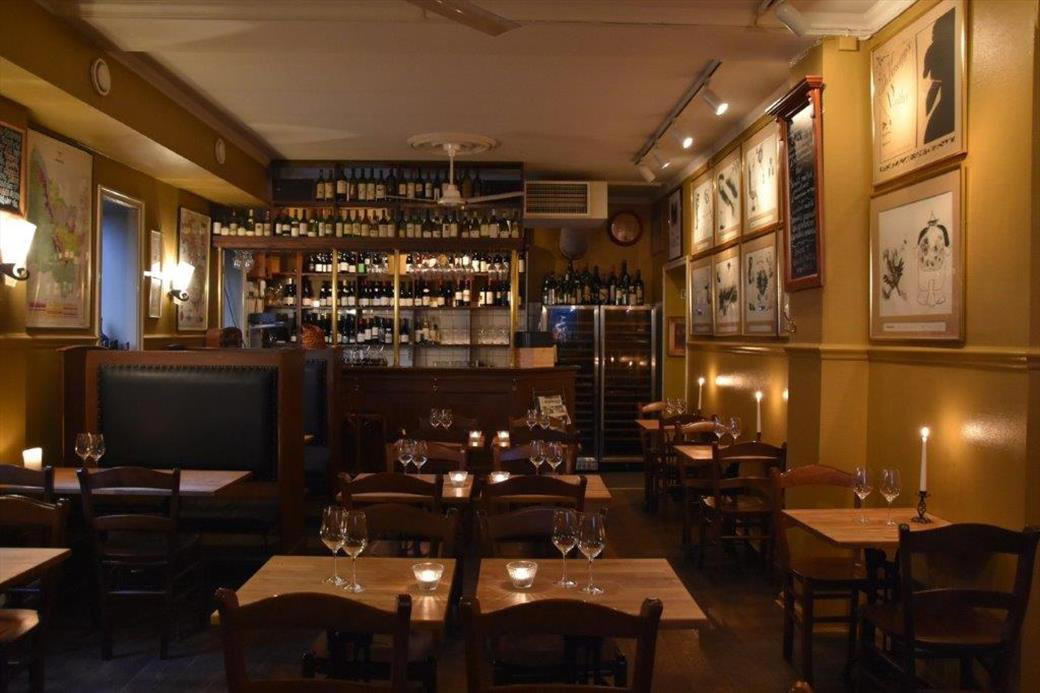
Rustic and cozy dining room upstairs with candlelight and homey feel; cosy wine bar in the cellar, though can get noisy with groups.