Our verdict
In the small county town of Türi, Kohvik-Resto Ajatu occupies a quietly purposeful place in central Estonia's sparse dining scene. The café-restaurant format, common to smaller Estonian towns, anchors daily life here in ways that urban venues rarely do. For travellers passing through Järva maakond, it represents a practical and locally rooted stop worth understanding on its own terms.

Pearl is the En Primeur Club membership app, where members save venues, book tables and use the concierge.
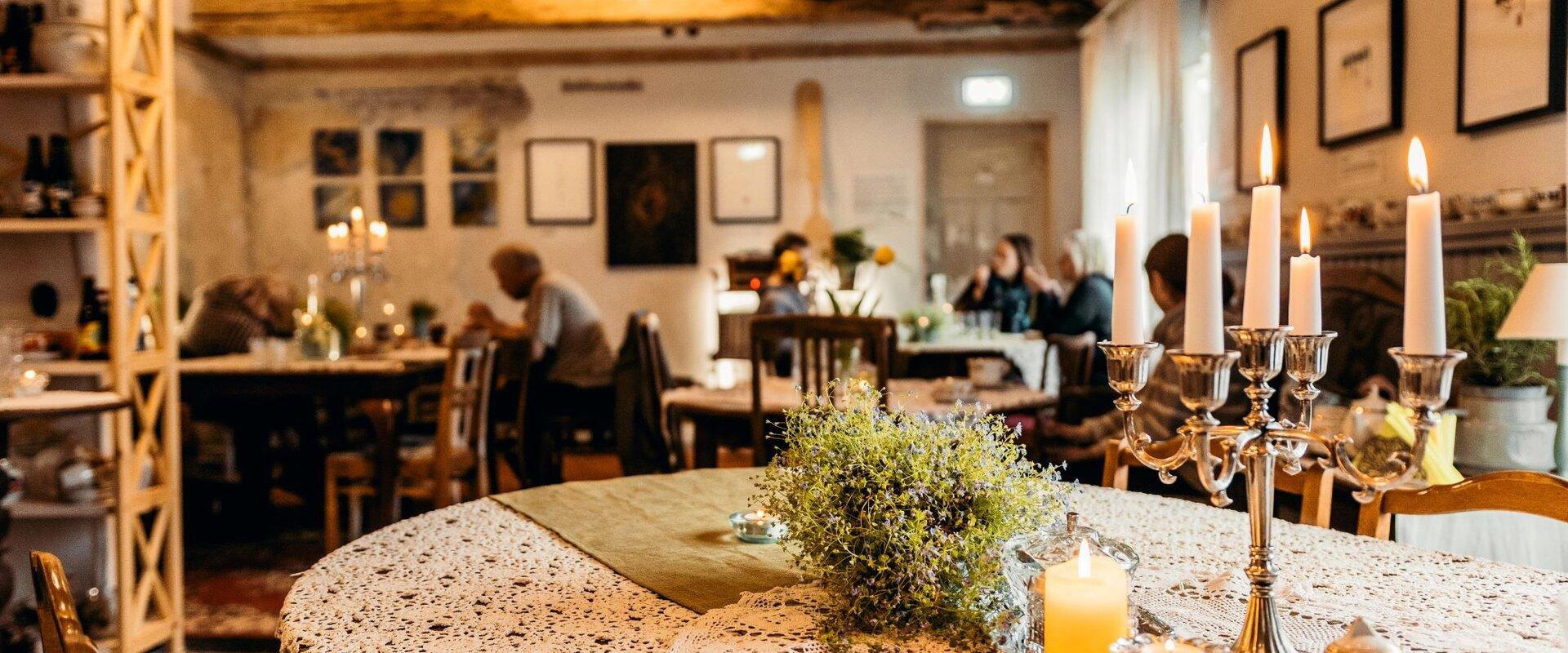
Türi and the Estonian Small-Town Café Tradition
Small Estonian towns operate on a different hospitality logic than Tallinn or Tartu. Where the capital has developed a recognisable tier of chef-driven restaurants, places like 180° by Matthias Diether working within a clear European fine-dining framework, towns like Türi rely on the kohvik format: the café-restaurant hybrid that has functioned as community anchor, lunch canteen, and informal gathering point for generations. Kohvik-Resto Ajatu, located at Viljandi 60 in Türi's Järva maakond, fits within that tradition rather than departing from it.
Türi itself is the administrative centre of Järva County, a predominantly agricultural region in central Estonia. The town sits along the Pärnu River and is known primarily among Estonians for its flower festivals and its role as a market hub for surrounding rural communities. For visitors arriving from Tallinn or Pärnu, it registers as a transit point rather than a destination, which is precisely why understanding what local dining actually looks like here matters more than a curated shortlist of tasting menus. The dining options in small central Estonian towns are shaped by local supply chains, seasonal rhythms, and community function, not by trend cycles.
Ingredient Sourcing in Central Estonia's Agricultural Belt
Järva County's agricultural character is not incidental context, it directly shapes what ends up on plates in venues like Kohvik-Resto Ajatu. Central Estonia's farms produce rye, root vegetables, dairy, and pork in quantities that have historically sustained the region through long winters. The kohvik tradition in this part of the country grew up around exactly these ingredients: hearty, preservation-friendly, and tied to the land in ways that the Estonian food revival of the past decade has both celebrated and reinterpreted.
Across Estonia's smaller towns, the most credible local restaurants source regionally by default rather than by marketing strategy. In Viljandi, just south of Türi, venues like Kohvik in Viljandi operate within the same supply logic. The proximity to farms, the absence of complex cold-chain infrastructure, and the economic reality of small-town dining all push menus toward what is locally and seasonally available. This is sourcing driven by geography and practicality, not by the farm-to-table rhetoric that urban restaurants pay consultants to construct.
In Järva County specifically, this means that autumn and winter menus in local establishments lean heavily on root vegetables, preserved fish, smoked meats, and dairy-based preparations. Spring brings the short but intense Estonian asparagus and early greens season. Summer, which draws visitors to the flower festival, is when local produce is at its widest variety. The café-restaurant format, with its rotating daily specials and limited menu depth, is structurally well-suited to this kind of seasonal cooking: the kitchen adjusts to what is available rather than holding a fixed menu year-round.
The Physical Setting and What It Tells You
The address, Viljandi 60, places Kohvik-Resto Ajatu on one of Türi's main thoroughfares, the road that connects the town southward toward Viljandi city. This is a functional location rather than a scenic one: the kind of address that serves commuters, market-day visitors, and locals running errands rather than tourists arriving with a reservation. In smaller Estonian towns, this positioning along a transit route is typical of the kohvik format, which historically served travellers and workers rather than positioning itself as a destination.
The physical environment of Türi's main streets reflects the town's Soviet-era administrative past layered over older market-town infrastructure. Brick buildings, modest storefronts, and open municipal spaces define the character. Dining venues in this context tend toward practicality in their interiors: direct furniture, natural light where available, and an atmosphere closer to a community hall than to the design-conscious spaces that define venues like Kuur in Vihtra or coastal spots such as KABE Beach in Kaberneeme.
For travellers accustomed to the more curated end of Estonian hospitality, this contrast is worth naming directly. Kohvik-Resto Ajatu operates in a register that has nothing to do with the premium coastal or urban dining circuits. It belongs instead to the inland, agricultural, everyday Estonia that most visitors who stay on the Tallinn-Pärnu axis never encounter. That is either a reason to seek it out or a reason to calibrate expectations accordingly, depending on what kind of traveller you are.
Placing Türi in Estonia's Broader Dining Map
Estonia's dining scene has developed unevenly. Tallinn's old town and Kalamaja district host the concentration of award-tracked and internationally recognised venues. University city Tartu has its own distinct café culture, with spots like Eva Sushi representing the kind of international cuisine that medium-sized Estonian cities now sustain. Pärnu, as Estonia's summer capital, sees seasonal dining traffic that supports a wider range of options, including Everest Thai/Nepalese Restaurant.
Türi sits outside all of these circuits. It is not a culinary destination and does not position itself as one. What it offers instead is the kind of dining that reflects how most Estonians actually eat when they are not in a city: locally sourced, seasonally driven, and oriented around the rhythms of agricultural community life. For travellers interested in that dimension of the country, venues in smaller towns along routes like the Tallinn-to-Viljandi corridor, see also Kolm. Restoran in Võru for the southeastern equivalent, offer something that no amount of fine dining in Tallinn replicates.
Other reference points for understanding Estonia's distributed dining geography include Kohvik Kaar in Narva, which operates in the country's northeastern border city, and Ilmaveere in Obinitsa, a rural community venue in Setomaa. Each of these represents a different node in the national dining map that exists well beyond the Tallinn-centric frame. For a broader orientation to what Türi's local scene looks like, see our full Türi restaurants guide.
Coastal and lakeside venues such as Wana Kala Kõrts in Neeme, Valgeranna Veinitall in Audru, and Kalana ÄÄR in Kalana draw on different ingredient traditions, specifically freshwater and sea fish, that central inland Estonia cannot replicate. Meanwhile, casual formats like Burger Bros in Rakvere and Kärme Küülik in Haapsalu occupy the quick-service tier in their respective towns. Kohvik-Resto Ajatu sits somewhere between these poles: more grounded than fast casual, but operating within the practical constraints of a small-town dining economy rather than the aspirational tier represented by venues like Atomix in New York City or Le Bernardin.
Planning a Visit
Türi is accessible by train from Tallinn on the Pärnu line, with journey times of roughly 90 minutes depending on the service. The town is also easily reached by car from Pärnu (approximately 75 kilometres north) or from Viljandi (around 40 kilometres south). For travellers building an itinerary through central Estonia, Türi functions leading as a midday stop rather than an overnight base, given the limited accommodation infrastructure in the town. Kohvik-Resto Ajatu's address on Viljandi street places it within walking distance of the train station and the town centre.
Frequently asked questions
Is Kohvik-Resto Ajatu child-friendly?
The kohvik format that defines venues like Kohvik-Resto Ajatu across smaller Estonian towns is built around everyday community use rather than occasion dining, which in practice means families are a natural part of the room. Türi's scale and agricultural character reinforce this, café-restaurants here function closer to neighbourhood canteens than to chef-driven destination spots. Expect a relaxed, unpretentious environment where children fit without friction.
What's the vibe at Kohvik-Resto Ajatu?
In a town of Türi's size, set within Järva County's farming landscape, café-restaurants occupy a role closer to community infrastructure than to dining as event. The atmosphere at Kohvik-Resto Ajatu on Viljandi 60 reflects that function: locals stopping in during the day, straightforward service, and none of the performative hospitality that marks Tallinn's chef-driven rooms. It is workday Estonia, not weekend Tallinn.
Is Kohvik-Resto Ajatu worth visiting if you're passing through Türi by train?
Türi sits on the Tallinn-Pärnu rail line with journey times of roughly 90 minutes from the capital, making it a plausible stop rather than a detour. Kohvik-Resto Ajatu on Viljandi 60 is positioned on one of Türi's main through-roads, placing it within reasonable reach of the town centre and station. For travellers wanting a grounded, non-touristy read on central Estonian daily life and food culture, a café-resto of this format in Järva County delivers that without embellishment.
What's the must-try dish at Kohvik-Resto Ajatu?
In the broader context of central Estonian café-restaurants in agricultural counties like Järva, daily specials built around seasonal local produce, root vegetables, pork, dairy, are the norm rather than fixed à-la-carte menus. What the kitchen offers on a given day is likely a more reliable guide than any fixed recommendation.
What's the address for Kohvik-Resto Ajatu?
Kohvik-Resto Ajatu is located at Viljandi 60, Türi, 72212 Järva maakond, Estonia, Turi.
What's the best way to book Kohvik-Resto Ajatu?
Smaller Estonian café-restaurants operating in towns the size of Türi typically run on a walk-in basis rather than advance reservations. Arriving during standard midday service hours is the most practical approach until contact details can be confirmed directly.
Comparable Spots, Quickly
Comparable venues nearby, for context on price, style, and recognition.
| Venue | Cuisine | Price | Notes |
|---|---|---|---|
| Kohvik-Resto AjatuThis venue (the venue you are viewing) | Authentic Estonian | Not listed | Not listed |
| Soo Uulits Tänavagurmee | Estonian Street Gourmet Burgers | $10–20 | Kalamaja |
| Kraft | Artisan Microbakery & Pizzeria | Not listed | Keila |
| Hutorok trahter | Traditional Ukrainian | $10–20 | Kadaka |
| Brööder | Homemade Kebab | $10–20 | Balti Jaama Turg |
| Kaspervik | Estonian Seasonal Seaside | Not listed | Käsmu |
Continue exploring
More in Turi
Details
- Cozy
- Casual Hangout
- Family
- A La Carte
Current opening hours
- Monday
- Closed
- Tuesday
- Closed
- Wednesday
- Closed
- Thursday
- Closed
- Friday
- 12–8 PM
- Saturday
- 12–8 PM
- Sunday
- 12–8 PM
Hours can change for holidays and private events. Hours as of .
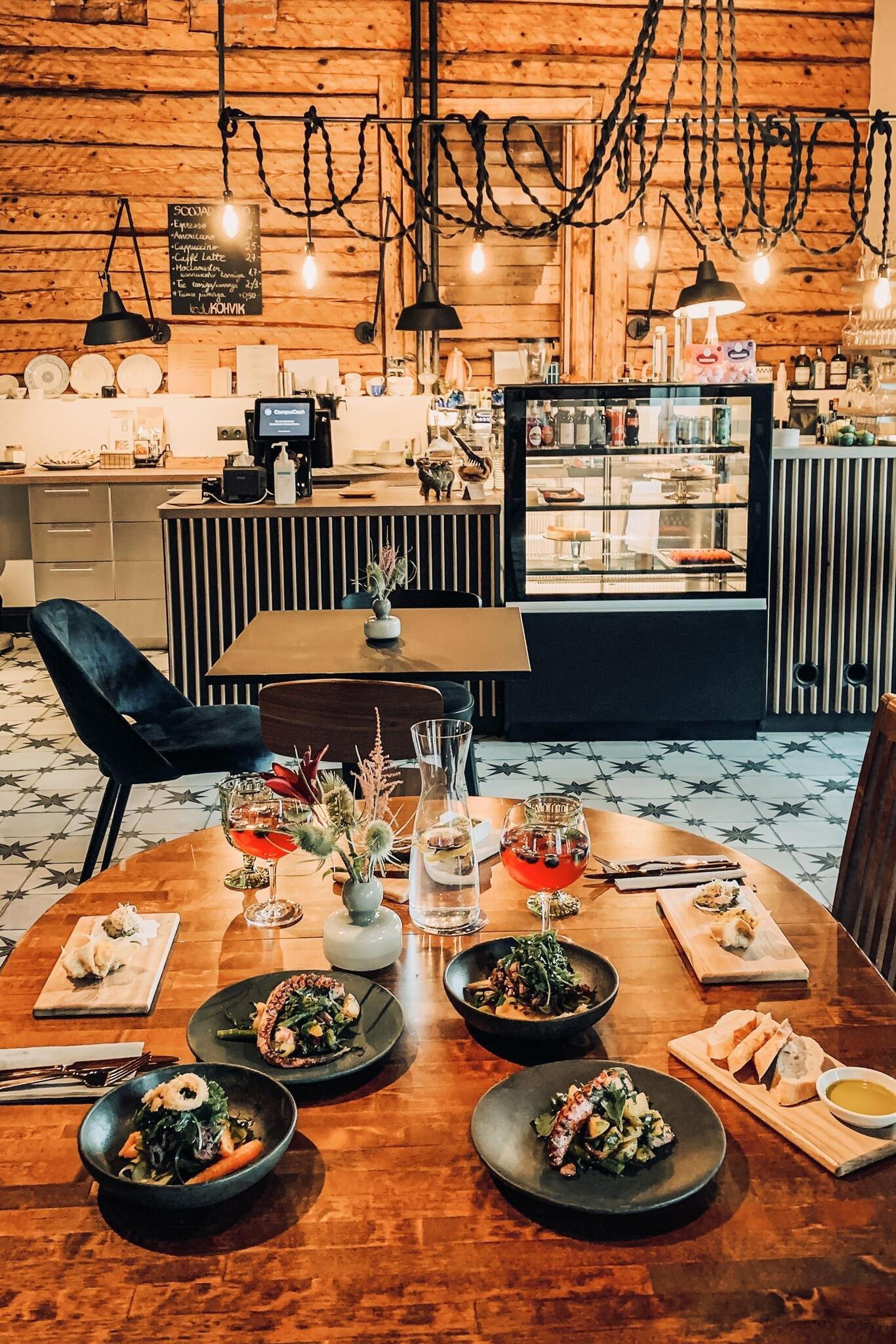
Cozy and magical atmosphere with warm hospitality.