Our verdict
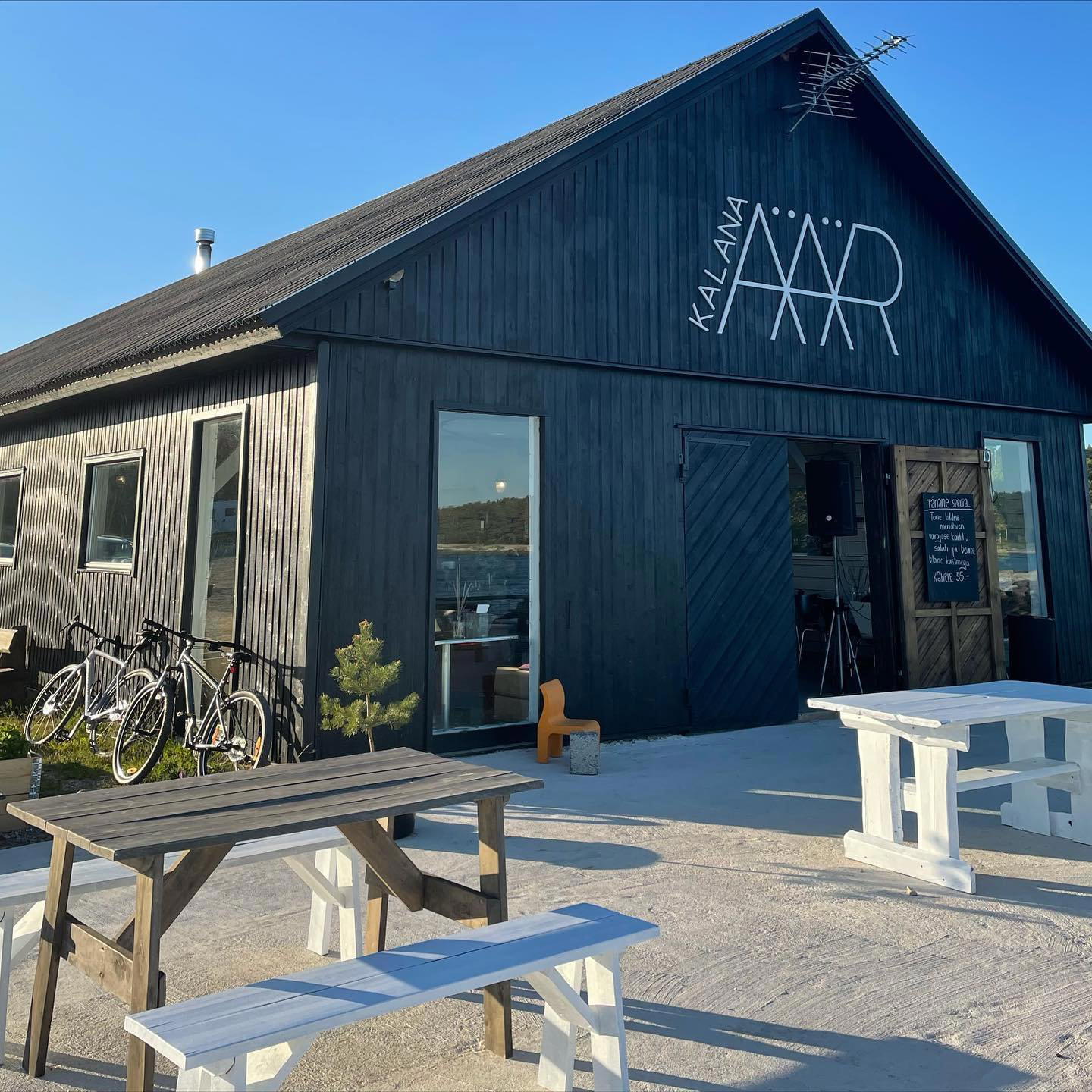
Kalana ÄÄR sits at the harbour edge of Kalana village on Hiiumaa island, where the working waterfront and the table occupy the same unhurried rhythm. The kitchen draws from the immediate coastline and the island's farming traditions, placing it among Estonia's quieter but more purposeful dining destinations. For travellers already making the crossing to Hiiumaa, it is a natural stop on any serious tour of the island's food.

Pearl is the En Primeur Club membership app, where members save venues, book tables and use the concierge.
The menu
What to order
- Äär’e Särts pizza
- Chili over jacket potatoes
Where the Harbour Ends and the Kitchen Begins
Hiiumaa is Estonia's second-largest island, and it remains far less visited than Saaremaa despite sharing the same West Estonian Archipelago biosphere. The crossing from Rohuküla on the mainland takes roughly an hour and a half by ferry, and that physical distance has shaped how Hiiumaa's food culture developed: with limited freight infrastructure and a small permanent population, the island's kitchens have historically relied on what the surrounding sea and the island's own farms could supply. That practical constraint, over time, became a culinary identity. Kalana ÄÄR, positioned at Kalana harbour on the island's western edge, operates squarely inside that tradition.
Arriving at Kalana Sadam, the working harbour at the village of Kalana, you are already at the outer margin of what most Estonian food travellers reach. The harbour is functional rather than decorative, the kind of place where fishing boats return with actual catches rather than serve as scenic backdrop. That context matters when thinking about what ends up on the plate here. Coastal restaurants in Estonia's more accessible towns can perform proximity to the sea without genuinely depending on it. At this distance from Tallinn's supply chains, the relationship between the water and the kitchen is structural, not theatrical.
Ingredient Sourcing as the Defining Logic
Estonian coastal cooking at its most coherent is built around a short list of ingredients: Baltic fish, foraged greens and mushrooms from the surrounding forests, rye in its various forms, dairy from island farms, and seasonal berries. On Hiiumaa specifically, the lower population density and the island's protected natural areas mean that wild ingredients remain genuinely accessible rather than over-harvested. The foraging tradition here is not a menu concept imported from Nordic fine dining trend cycles, it is a continuation of how islanders have always supplemented what they grow and fish.
For a venue at Kalana harbour, the sourcing logic starts with the water. The West Estonian Archipelago produces sprat, flounder, perch, and pike-perch, among others, and the seasonality of each catch is real rather than managed. This is a different relationship with fish than you find in urban Estonian restaurants, even well-regarded ones like 180° by Matthias Diether in Tallinn, where the Estonian fusion format operates with the supply flexibility that city logistics allow. Kalana ÄÄR's position at the harbour edge suggests a kitchen working with what arrives, which produces a different kind of menu discipline.
Across Estonia's smaller regional venues, this sourcing proximity tends to produce cooking that rewards patience from the diner. You are not ordering from a fixed menu designed months in advance; you are eating what the season and the sea have made available this week. Comparable dynamics appear at places like Wana Kala Kõrts in Neeme and KABE Beach in Kaberneeme, both coastal Estonian venues where the waterfront location is genuinely determinative rather than decorative. The contrast with inland Estonian dining, represented by venues like Kohvik in Viljandi or Kolm. Restoran in Voru, reflects how differently the cuisine reads when the sea is the primary larder.
Hiiumaa in the Wider Estonian Dining Picture
Estonia's dining attention concentrates heavily in Tallinn, where the Old Town and Kalamaja neighbourhoods hold the majority of the country's recognised restaurants. Outside the capital, the regional picture is thinner in terms of formal recognition but often more interesting in terms of ingredient fidelity. Pärnu has developed a secondary hospitality scene, and places like Valgeranna Veinitall in Audru or Kuur in Vihtra show that the southwestern coast has its own coherent food identity. The islands, by contrast, remain largely outside the editorial conversation despite having some of the country's most direct farm-to-table and sea-to-table conditions.
Hiiumaa's permanent population sits below 10,000 people, and tourist infrastructure is deliberately limited compared to Saaremaa. That limits the number of venues that can sustain year-round operation, and it means that the restaurants which do operate tend to reflect real local demand rather than the tourist-facing format that can flatten regional cooking into something more generic. For travellers with a serious interest in Estonian food beyond what Tallinn's restaurant scene offers, this is the more honest signal. You can read our full Kalana restaurants guide for broader context on what the village and its immediate surroundings offer.
The comparison set for Kalana ÄÄR within Estonia's formal dining tiers is less relevant than its position within the archipelago's food culture. Where Tallinn venues like Kraft in Keila or regional spots like Ilmaveere in Obinitsa each carry a distinct regional character, Kalana ÄÄR's character is coastal-archipelago: defined by tidal rhythms, limited land transport, and a food culture that has not been widely exported or packaged for outside audiences.
Planning a Visit
Reaching Kalana requires taking the Rohuküla to Heltermaa ferry, which runs multiple times daily with vehicle capacity, followed by a drive across Hiiumaa to the island's western side. Kalana village is small, and Kalana Sadam is the harbour at its centre. Given the island's remote position and the venue's harbour-side location, visiting during the summer months, roughly June through August, aligns with both peak ferry frequency and the strongest period for local produce and coastal activity. Autumn brings different forage and fish possibilities for travellers willing to manage the quieter schedule. For comparison on what other Estonian coastal and regional venues require in terms of planning, Franzia in Narva Jõesuu and Kärme Küülik in Haapsalu offer useful reference points for the western Estonian coast's general hospitality rhythm.
Frequently asked questions
Is Kalana ÄÄR child-friendly?
Kalana ÄÄR sits at Kalana Sadam, a working harbour on Hiiumaa island, which by its nature is a relaxed, open setting rather than a formal dining room. That context generally suits families.
Is Kalana ÄÄR better for a quiet night or a lively one?
Kalana is a small harbour village on Hiiumaa, Estonia's second-largest island and one of its least-visited. The pace here is deliberate rather than animated, Kalana ÄÄR at Kalana Sadam reflects that setting, making it a stronger fit for those after calm over crowd. If a lively evening is the priority, Tallinn's Kalamaja neighbourhood offers a denser concentration of options.
What makes Kalana ÄÄR worth the journey from Tallinn to Hiiumaa?
Reaching Kalana requires the Rohuküla to Heltermaa ferry followed by a drive across Hiiumaa to the island's western harbour, a journey most visitors to Estonia never make. Kalana ÄÄR at Kalana Sadam sits at the end of that route, in a coastal setting where the sourcing logic of Baltic and foraged island ingredients is dictated by geography rather than menu concept. For anyone tracing Estonian food beyond the Tallinn circuit, the address alone, Kalana Sadam, 92230 Hiiu maakond, signals a deliberate detour into a less-documented corner of the country's dining picture.
What's the best thing to order at Kalana ÄÄR?
Estonian coastal cooking in this part of the West Estonian Archipelago centres on Baltic fish, foraged greens, and seasonal mushrooms, the ingredients that define the region rather than any single restaurant.
Where exactly is Kalana ÄÄR?
Kalana ÄÄR is located at Kalana Sadam, Kalana, 92230 Hiiu maakond, Estonia, Kalana.
Should I book Kalana ÄÄR in advance?
Hiiumaa sees significantly fewer visitors than Saaremaa, but Kalana ÄÄR's position at Kalana Sadam means it likely draws both island residents and travellers arriving via the Rohuküla–Heltermaa ferry.
A Quick Peer Check
| Venue | Cuisine | Price | Awards | Notes |
|---|---|---|---|---|
| Kalana ÄÄRThis venue (the venue you are viewing) | Local Seafood with Mediterranean Influences | Not listed | Not listed | Not listed |
| NOA | Modern International | $50–100 | Michelin Bib Gourmand · White Guide Baltic Restaurants - Very Fine Level | Modern European, Modern Cuisine |
| 180° by Matthias Diether | Modern Creative Fine Dining | $300–500 | 2 Michelin Stars · La Liste Top Restaurants | Estonian Fusion |
| NOA Chef’s Hall | Modern European Fine Dining | $150–200 | 1 Michelin Star · La Liste Top Restaurants | Creative |
| Alexander | Nordic Islands’ Cuisine | $150–200 | Michelin Plate · La Liste Top Restaurants | Modern Cuisine |
| Fellin | European Café-Bistro | Not listed | Michelin Bib Gourmand · White Guide Baltic Restaurants - Fine Level | Traditional Cuisine |
Details
- Cozy
- Trendy
- Scenic
- Casual Hangout
- Special Occasion
- Waterfront
- Terrace
- Local Sourcing
- Waterfront
- A La Carte
- Vegan Options
Charming and warm seaside atmosphere with dramatic coastal views in a cozy, trendy setting.