Our verdict
Kraft occupies a quietly purposeful position on Keila's central square, operating in a town that sits just beyond the reach of Tallinn's restaurant circuit. The kitchen draws on Estonia's short-season larder, where the gap between source and plate is measured in kilometres rather than supply chains. For travellers willing to step outside the capital, it represents the kind of grounded, ingredient-led cooking that defines Estonia's smaller-town dining scene.

Pearl is the En Primeur Club membership app, where members save venues, book tables and use the concierge.
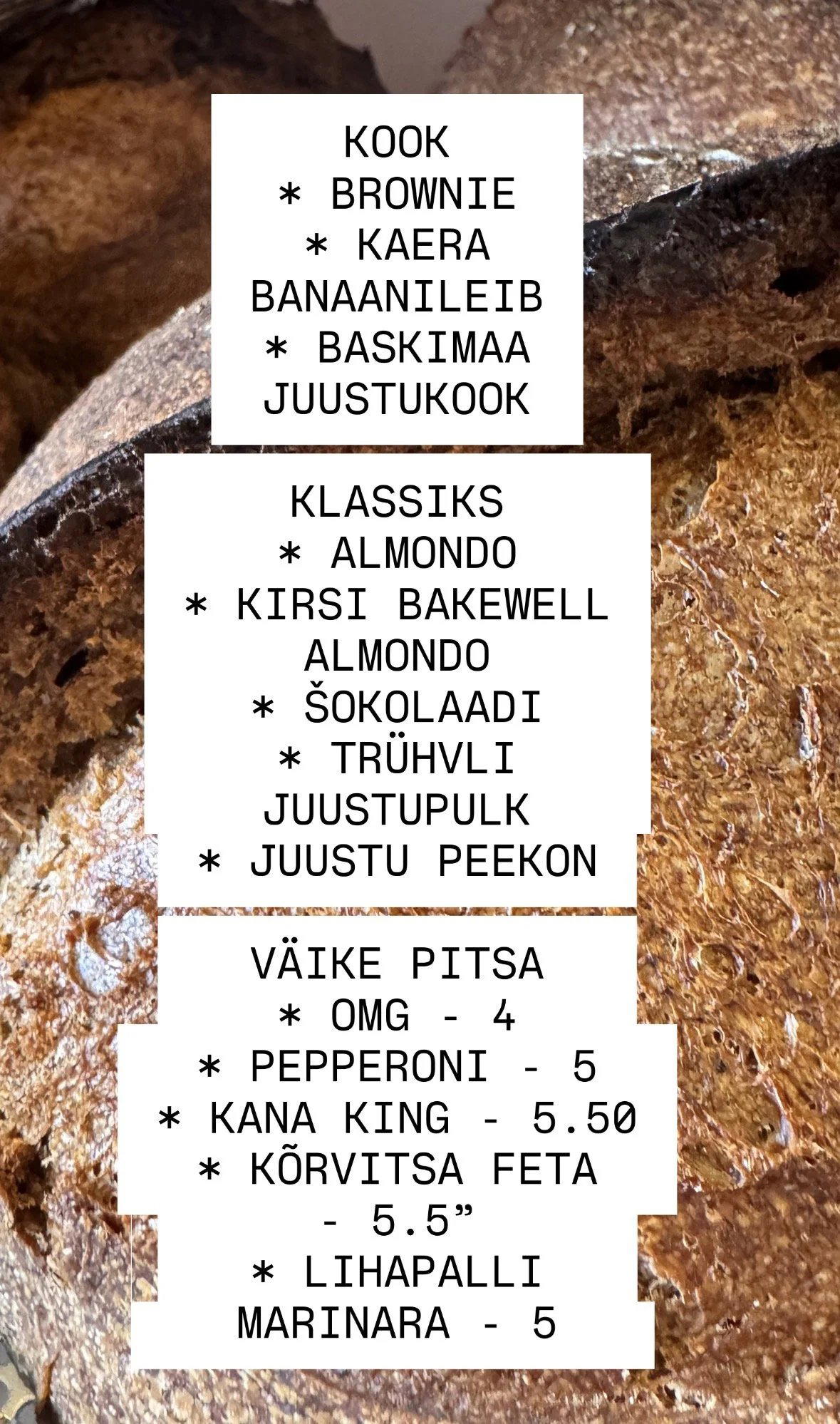
Keila's Central Square and the Logic of Small-Town Estonian Kitchens
Estonia's most instructive dining happens at a remove from Tallinn. In the capital, kitchens like 180° by Matthias Diether operate at the formal end of the spectrum, with tasting menus priced to compete with northern European peers. The further you travel from Tallinn, the more the food tends to contract around what is locally achievable: shorter menus, more direct sourcing, less performance. Kraft, addressed at Keskväljak 5 in Keila, sits inside that quieter register. Keila is the administrative centre of Harju County and sits roughly 25 kilometres southwest of Tallinn, close enough to pull from the capital's supply networks but far enough to operate without the pressure of a tourist-facing dining economy.
Approaching Keila's central square, the architecture is functional Estonian provincial: low-rise civic buildings, a market rhythm that has not been repackaged for visitors. This is not a destination engineered around hospitality, which is precisely what shapes the restaurants that choose to operate here. A kitchen on a square like this one is writing for a local audience first, and that tends to enforce a certain discipline around value and repetition.
Ingredient Sourcing as a Northern Estonian Default
Estonian cuisine has undergone a gradual recalibration over the past fifteen years, driven partly by the Nordic food movement's influence on the region and partly by domestic producers gaining enough scale to supply restaurant kitchens consistently. The short growing season, which runs from late May through early September, places a hard constraint on what any serious Estonian kitchen can claim to source locally. Within that window, the larder is substantial: foraged mushrooms and berries from Harju County's forests, cold-water fish from the Gulf of Finland, root vegetables, rye, and dairy from the farms scattered across western Estonia.
Kitchens operating in towns like Keila are, by geography, closer to those sources than most Tallinn restaurants. The distance from farm or forest to a kitchen on Keila's central square is frequently shorter than the distance from the same source to a Tallinn delivery dock. That proximity does not guarantee quality, but it does remove one layer of logistical attrition between harvest and plate. Comparable dynamics appear at Kohvik in Viljandi and Kolm. Restoran in Voru, where the conversation about Estonian cooking outside the capital tends to be anchored in similar short-supply-chain arguments.
The Estonian model here contrasts with approaches further afield. At Kuur in Vihtra or Valgeranna Veinitall in Audru, the sourcing conversation is inseparable from the venue's rural positioning. Kraft's urban-square address means it operates in a slightly different mode: a town kitchen rather than a countryside retreat, with the purchasing behaviour that implies.
The Competitive Tier Kraft Occupies
Estonia's restaurant tier structure outside Tallinn is less stratified than visitors familiar with Nordic capitals might expect. The formal tasting-menu format represented by 180° by Matthias Diether or the creative end of the Tallinn scene does not reliably translate to provincial towns, where the economics of multi-course menus are difficult to sustain without a critical mass of high-spending diners. What does translate is the mid-range Estonian café-restaurant format: a flexible menu spanning lunch and dinner, a price point accessible to local residents, and a cooking style that draws on traditional Estonian foundations without being rigidly folkloric.
Fellin in Viljandi, rated €€ with a traditional cuisine classification, occupies a recognisable position in this tier. Kraft's Keila address places it in a comparable peer group, operating in a county town rather than a tourist circuit. They are working kitchens that serve a local population consistently, with occasional visitors arriving because the food is considered genuinely accomplished by regional standards.
For a sense of how the Estonian restaurant scene fragments across geography, KABE Beach in Kaberneeme, Wana Kala Kõrts in Neeme, and Kalana ÄÄR in Kalana each represent the coastal variant of this dispersed dining culture, where water access shapes the menu in ways a town-square kitchen cannot replicate.
Getting to Keila and Timing a Visit
Keila is served by regular rail connections from Tallinn's Balti jaam station, with the journey running approximately 30 minutes on the Paldiski line. The central square is walkable from Keila station. Driving from Tallinn via the E67 takes a comparable amount of time under normal conditions. For visitors already touring western Estonia, Keila functions as a logical stopping point before continuing toward Haapsalu, where Kärme Küülik represents another node in this distributed regional dining pattern.
Estonia's dining season in provincial towns follows the academic and agricultural calendar more closely than tourism peaks. Late spring and early autumn tend to surface the most interesting seasonal ingredients, while midwinter kitchens lean into preserved, cured, and fermented preparations that are integral to Estonian food culture regardless of location. Visiting Kraft in the summer months means the sourcing argument for local produce is at its strongest; the gap between field and kitchen is at its narrowest. Our full Keila restaurants guide covers the broader options for those spending more time in the area.
How Kraft Fits the Wider Estonian Picture
Placing Kraft in a national frame rather than a purely local one requires acknowledging how limited the published record on small-town Estonian restaurants tends to be. The venues that attract extended critical attention are concentrated in Tallinn and, to a lesser extent, Tartu, where Eva Sushi and similar addresses operate within a university-city dining ecosystem. Keila's kitchens operate largely without that critical infrastructure, which means their reputation is built through sustained local patronage rather than press cycles.
The relevant questions are not about awards or chef lineage, the kind of credentials that position Le Bernardin in New York or Atomix within their respective competitive sets. They are about whether the kitchen is cooking with the materials available to it in an honest and considered way. In provincial Estonian dining, that is the baseline expectation and, when met, is sufficient reason to make the trip from Tallinn.
Visitors exploring Estonia's wider provincial scene will find related reference points at Franzia in Narva Joesuu, Kohvik Kaar in Narva, Burger Bros in Rakvere, Everest Thai/Nepalese Restaurant in Parnu, and Ilmaveere in Obinitsa, each operating within the same dispersed logic of Estonian provincial hospitality.
Frequently asked questions
Can I bring kids to Kraft?
Nothing in the available record positions Kraft as adults-only. Its location on Keila's central square, Keskväljak 5, suggests a neighbourhood setting where families are a natural part of the clientele. check the venue's official channels to confirm seating arrangements before visiting with young children.
Is Kraft in Keila worth the trip from Tallinn for food alone?
The rail journey from Tallinn's Balti jaam station to Keila runs approximately 30 minutes on the Paldiski line, making Kraft at Keskväljak 5 accessible as a standalone excursion rather than a detour. Estonia's most instructive small-town cooking often operates outside the published award circuit, and Keila sits in Harju maakond, the same county as the capital, so the logistics are lower than the geographic remove might suggest. Whether the kitchen merits a dedicated trip depends on documentation that isn't yet in the public record.
What do regulars order at Kraft?
The body of Estonian small-town cooking outside Tallinn tends to follow seasonal and locally sourced logic, shaped by the same Nordic-influenced ingredient shift that has moved through the region over the past fifteen years. For the current menu, reaching out to Kraft at Keskväljak 5, Keila is the direct route.
What's Kraft's location?
Kraft is located at Keskväljak 5, Keila, 76608 Harju maakond, Estonia, Keila.
What's the best way to book Kraft?
No phone number or website is currently indexed for Kraft at Keskväljak 5, Keila. Arriving during service hours or checking local Estonian dining directories are the most practical options until contact details are publicly confirmed. Keila is a small enough town that walk-in is often viable outside peak weekend periods.
What's the defining dish or idea at Kraft?
Kraft operates in the tier of Estonian restaurants outside Tallinn where the kitchen's relationship to local produce tends to define the offer more than any single signature dish. The broader shift in Estonian cooking over the past fifteen years, toward Northern European sourcing discipline, is the lens through which kitchens like this one in Keila are most usefully read. No specific signature item is documented for Kraft at this time.
How It Stacks Up
Comparable venues nearby, for context on price, style, and recognition.
| Venue | Cuisine | Price | Notes |
|---|---|---|---|
| KraftThis venue (the venue you are viewing) | Artisan Microbakery & Pizzeria | Not listed | Not listed |
| The Kurze | Authentic Dagestani | $20–30 | Kopli |
| Soo Uulits Tänavagurmee | Estonian Street Gourmet Burgers | $10–20 | Kalamaja |
| Kuur | Fast Food | Not listed | Vihtra village |
| Kohvik-Resto Ajatu | Authentic Estonian | Not listed | Türi |
| Viru Burger | Modern Burgers | $10–20 | Kesklinna linnaosa |
Continue exploring
More in Keila
Restaurants in Keila
All restaurants in Keila →
Bars in Keila
Browse all →
Details
- Cozy
- Casual Hangout
- Standalone
- Local Sourcing
- A La Carte
- Vegetarian Friendly
Current opening hours
- Monday
- Closed
- Tuesday
- Closed
- Wednesday
- 10 AM–3 PM
- Thursday
- 10 AM–3 PM
- Friday
- 10 AM–6 PM
- Saturday
- 10 AM–3 PM
- Sunday
- 10 AM–3 PM
Hours can change for holidays and private events. Hours as of .
Warm and cozy atmosphere in a small space with just one table, evoking a hidden London gem.