
2 Michelin Stars
Our verdict
A two-Michelin-starred ryotei in Chiyoda's Kioicho district, Kioicho Fukudaya carries a lineage that traces directly to legendary epicure Kitaoji Rosanjin. Chef Shunichi Matsushita maintains the Fukuda family's ceremonial approach to kaiseki, where ingredient selection drives every decision. At the ¥¥¥¥ tier, it sits among Tokyo's most formally structured Japanese dining rooms.

Pearl is the En Primeur Club membership app, where members save venues, book tables and use the concierge.
The menu
What to order
- Uni from Kitasanriku Uni Farm
- Grilled Japanese Kuroge beef with wasabi soy sauce
A Ryotei Tradition in Kioicho
Tokyo's highest tier of Japanese dining has long been divided between the accessible drama of omakase counters and the more formal, architecturally serious world of the ryotei. The ryotei format asks something different of its guests: a willingness to move at the kitchen's tempo, to read a room structured by centuries of hospitality protocol, and to find meaning in restraint rather than spectacle. In Chiyoda's Kioicho district, a neighbourhood that has historically housed political power and the quiet authority that accompanies it, this format reaches one of its more considered expressions.
Kioicho Fukudaya holds two Michelin stars in both the 2024 and 2025 guides, placing it consistently below the three-star peak occupied by peers such as RyuGin but firmly within the upper register of Tokyo kaiseki. That positioning is not incidental. Two stars at this level of formality signals a deliberate choice about scale and intimacy over maximised recognition, a distinction the Michelin inspectors themselves have noted when characterising the house's depth of impression.
The Weight of Lineage
Among Tokyo's senior ryotei, few carry a provenance as specific and verifiable as this one. The original owner-chef trained under Kitaoji Rosanjin, the early twentieth-century artist and epicure whose influence on Japanese food culture is documented across culinary history. Rosanjin's central argument, that the quality of ingredients selected determines the quality of a dish eight or nine times out of ten, was not mere philosophy but a working principle that restructured how serious Japanese kitchens sourced their produce. Chef Shunichi Matsushita, as the current steward of the Fukuda family's traditions, keeps that principle operational rather than decorative.
This kind of documented lineage functions differently from the chef-biography narratives that animate many contemporary tasting-menu restaurants. It places the house inside a longer argument about what Japanese cuisine is and where its authority comes from. For context, Kagurazaka Ishikawa and Azabu Kadowaki both carry comparable Michelin recognition in Tokyo's kaiseki tier, but the Rosanjin lineage at Fukudaya is a specific credential that sits outside the standard training-under-a-modern-master narrative most contemporary kitchens offer.
The Editorial Angle: What the Wine List Reveals About the House
In Tokyo's high-end Japanese dining rooms, the approach to beverage service is often as revealing as the food itself. The ryotei format traditionally centres sake, shochu, and seasonal teas, selecting them with the same ingredient-led rigour applied to the kitchen. A house grounded in Rosanjin's philosophy of ingredient primacy tends to extend that logic to what fills the glass: the beverage selection at a serious ryotei is not for wine-list awards or international breadth, but for coherence with the meal's seasonal arc.
This is a meaningfully different orientation from the French-influenced ¥¥¥¥ restaurants operating in the same price tier. At Ginza Fukuju or within the French-leaning houses at the top of Tokyo's market, wine lists carry European depth as a competitive signal. At a ryotei of Fukudaya's character, the sommelier equivalent is a sake professional whose selections track rice varietal, brewery region, and seasonal appropriateness rather than vintage year and appellation. The discipline is comparable in rigour; the reference system is entirely separate.
For guests arriving from a Western fine dining background, this requires recalibration. The pairing logic here is not designed to be decoded through a European framework. Sake temperature, vessel choice, and the sequence in which pours accompany each course are decisions made with the same care applied to the kitchen's ingredient sourcing. The Michelin commentary on this house specifically references the ceremonial furnishings and service as inseparable from the cuisine itself, which means the drink service is part of the total composition, not an optional add-on.
Visitors who want to engage with the beverage program at depth should communicate this intention at the time of booking. Ryotei service in this register is not designed for improvised requests at the table; the staff builds the experience around declared preferences in advance. This is logistical intelligence that applies broadly across Tokyo's formal Japanese dining tier, and it holds here with particular force given the house's emphasis on holistic ceremony.
Kioicho as a Setting for This Kind of Dining
The neighbourhood context matters. Kioicho is not a dining quarter in the way that Ginza or Minami-Aoyama function as gastronomic clusters. It is an administrative and political district, home to embassies, government offices, and the kind of institutional architecture that signals proximity to power rather than commerce. This is, historically, exactly where Tokyo's formal ryotei have positioned themselves: adjacent to the political and business relationships that traditional kaiseki hospitality was designed to facilitate.
That context shapes what a visit to Fukudaya feels like at the environmental level, even before entering. The approach is quiet by Tokyo standards. There is no ambient street-level restaurant energy of the kind you find around Jingumae Higuchi's neighbourhood or the concentrated blocks around Myojaku. Kioicho's quietness is structural, a product of land use rather than hour of day, and it sets a particular register for the meal that follows.
How Fukudaya Compares Within Tokyo's ¥¥¥¥ Tier
At the ¥¥¥¥ price point in Tokyo, the guest is choosing between formats as much as between restaurants. RyuGin and Harutaka represent the theatricality end of the high-end Japanese dining spectrum, where technique and transformation are part of the experience's explicit argument. Den, operating at ¥¥¥, offers a more playful, less formally structured version of innovative Japanese.
That group is smaller and less well-known internationally than Tokyo's counter-format stars, which is partly a function of how ryotei traditionally operate: they are not designed for discovery tourism, and their booking infrastructure has historically favoured established relationships and introductions. This is changing slowly across the category, but the ryotei format still rewards guests who approach with preparation and a specific interest in the form rather than general fine dining curiosity.
For those building a broader Japan itinerary, the ryotei and kaiseki traditions extend well beyond Tokyo. Gion Sasaki in Kyoto and Isshisoden Nakamura in Kyoto sit within the same formal Japanese dining tradition, as does Kashiwaya Osaka Senriyama in Osaka. Understanding how Fukudaya positions itself within this national context, rather than only within Tokyo's competitive set, gives the experience more analytical weight.
Further afield, HAJIME in Osaka, akordu in Nara, Goh in Fukuoka, 1000 in Yokohama, and 6 in Okinawa represent the geographic breadth of Japan's serious dining circuit, each operating within a distinct regional tradition.
Planning Your Visit
Kioicho Fukudaya is located at 1-13 Kioicho, Chiyoda City, Tokyo 102-0094. The ¥¥¥¥ price range positions it at the upper end of Tokyo's kaiseki market, consistent with its two-Michelin-star standing. Reservations should be approached well in advance and ideally through an established channel; guests unfamiliar with ryotei booking conventions may find a hotel concierge or specialist service useful here.
For broader Tokyo planning, EP Club's dedicated guides cover the full dining and travel picture: our full Tokyo restaurants guide, our full Tokyo hotels guide, our full Tokyo bars guide, our full Tokyo wineries guide, and our full Tokyo experiences guide.
Quick reference: Two Michelin stars (2024, 2025) | ¥¥¥¥ | 1-13 Kioicho, Chiyoda City | Advance reservations recommended.
What to Order at Kioicho Fukudaya
Kioicho Fukudaya does not operate a menu in the Western sense. The kaiseki progression is set by the kitchen, driven by what Chef Shunichi Matsushita determines to be the season's finest available ingredients. The most useful frame for understanding what arrives at the table is the Rosanjin principle built into the house's two-Michelin-star identity: ingredient selection is the primary act of cooking, not a precondition for it. Guests who arrive expecting to direct the experience toward specific dishes will find the format resistant. Those who arrive willing to follow the kitchen's seasonal logic, and who communicate dietary requirements clearly at the time of booking, will find the meal structured with considerable internal coherence. The beverage pairing, whether sake-led or otherwise, is worth committing to in full rather than ordering piecemeal; the sequence is designed as a whole.
Frequently asked questions
What part of town is Kioicho Fukudaya in?
Kioicho Fukudaya is located at 1-13 Kioicho, Chiyoda City, Tokyo 102-0094, Japan, Tokyo.
Is Kioicho Fukudaya award-winning?
Kioicho Fukudaya has received recognition including: The totality of this ryotei’s art—the cuisine, the ceremonial furnishings, the service—makes a deep impression. The original owner-chef learned the basics of cooking under the guidance of legendary epicure Kitaoji Rosanjin. The current chef….
What should I order at Kioicho Fukudaya?
Kioicho Fukudaya does not offer a menu in the Western sense. Chef Shunichi Matsushita sets the kaiseki progression based on seasonal ingredients, following the principle attributed to Kitaoji Rosanjin, the culinary figure under whom the original owner-chef trained, that ingredient quality determines dish quality. At the ¥¥¥¥ price point, guests receive a full multi-course sequence; there is nothing to select or substitute within the ryotei format.
What's the pricing like at Kioicho Fukudaya?
Pricing at Kioicho Fukudaya is listed as ¥¥¥¥.
Who runs the kitchen at Kioicho Fukudaya?
The chef associated with Kioicho Fukudaya is Shunichi Matsushita.
Price and Recognition
| Venue | Cuisine | Price | Awards | Notes |
|---|---|---|---|---|
| Kioicho FukudayaThis venue (the venue you are viewing) | Traditional Kaiseki | $300–500 | 2 Michelin Stars | Not listed |
| Harutaka | Edo-Style Omakase Sushi | $200–300 | 3 Michelin Stars · World's 50 Best #76 | Sushi |
| RyuGin | Modern Kaiseki | $500+ | 3 Michelin Stars · World's 50 Best #41 | Kaiseki, Japanese |
| L'Effervescence | Modern French with Japanese Influences | $200–300 | 3 Michelin Stars · World's 50 Best #69 | French |
| HOMMAGE | Modern French with Japanese Influences | $150–200 | 2 Michelin Stars · World's 50 Best #78 | Innovtive French, French |
| MAZ | Innovative Peruvian-Japanese Fusion | $150–200 | 2 Michelin Stars · World's 50 Best #28 | Innovative |
Recognition history
Dated appearances from independent guides and award organizations, with the underlying list record or original source where available.
Michelin 2 Stars
Michelin
Full recognition history (3 entries)
Michelin 2 Stars
Michelin
Michelin 2 Stars
Michelin
Continue exploring
More in Tokyo
Restaurants in Tokyo
All restaurants in Tokyo →


Bars in Tokyo
All bars in Tokyo →




Details
- Elegant
- Intimate
- Classic
- Sophisticated
- Quiet
- Business Dinner
- Special Occasion
- Date Night
- Private Dining
- Historic Building
- Chefs Counter
- Sake Program
- Sommelier Led
- Farm To Table
- Local Sourcing
- Tasting Menu
- Set Menu
- Counter Dining
- Sake
- Gluten Free Options
- Allergy Accommodating
Current opening hours
- Monday
- 11:30 AM–2:30 PM, 5–7:30 PM
- Tuesday
- 11:30 AM–2:30 PM, 5–7:30 PM
- Wednesday
- 11:30 AM–2:30 PM, 5–7:30 PM
- Thursday
- 11:30 AM–2:30 PM, 5–7:30 PM
- Friday
- 11:30 AM–2:30 PM, 5–7:30 PM
- Saturday
- Closed
- Sunday
- Closed
Hours can change for holidays and private events. Hours as of .
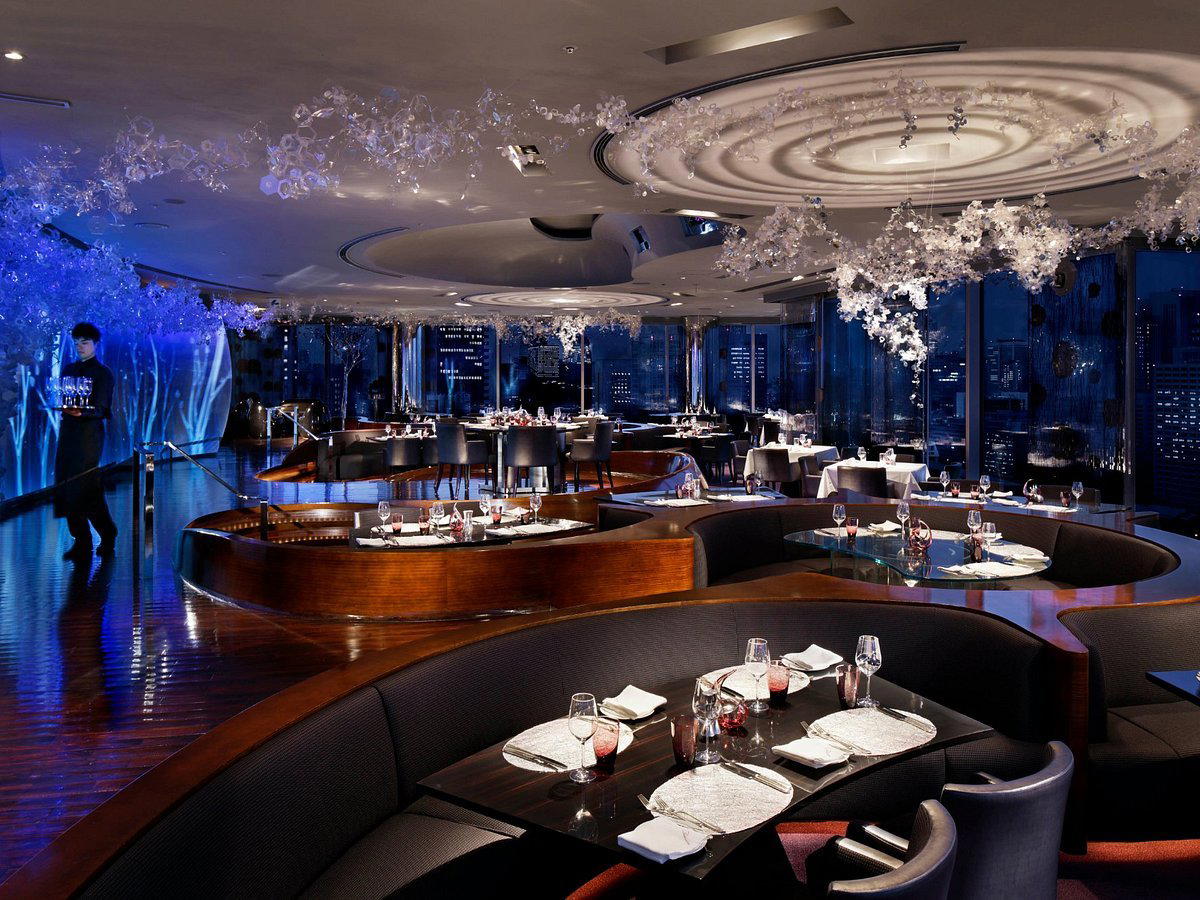
Serene and peaceful traditional Japanese setting with tatami mats, paper screens, and lacquered furnishings that exude timeless elegance and tranquility.