Kéhli Vendéglő on Mókus utca in Budapest's Óbuda district represents the older stratum of Hungarian vendéglő culture: a neighbourhood dining room anchored in the cooking traditions that predate the city's modern fine-dining wave. Where much of Budapest's restaurant scene has moved toward tasting menus and international technique, Kéhli holds to the register of slow-braised meats, bone marrow, and house-made preparations that Gyula Krúdy, the Hungarian writer, reportedly frequented.
Pearl is the En Primeur Club membership app — saves, bookings, and concierge access live there. Same editors, same standards.
- Address
- Budapest, Mókus u. 22, 1036 Hungary
- Phone
- +3613680613
- Website
- kehli.hu
- Directions
- Get directions
 Saves & bookings on Pearl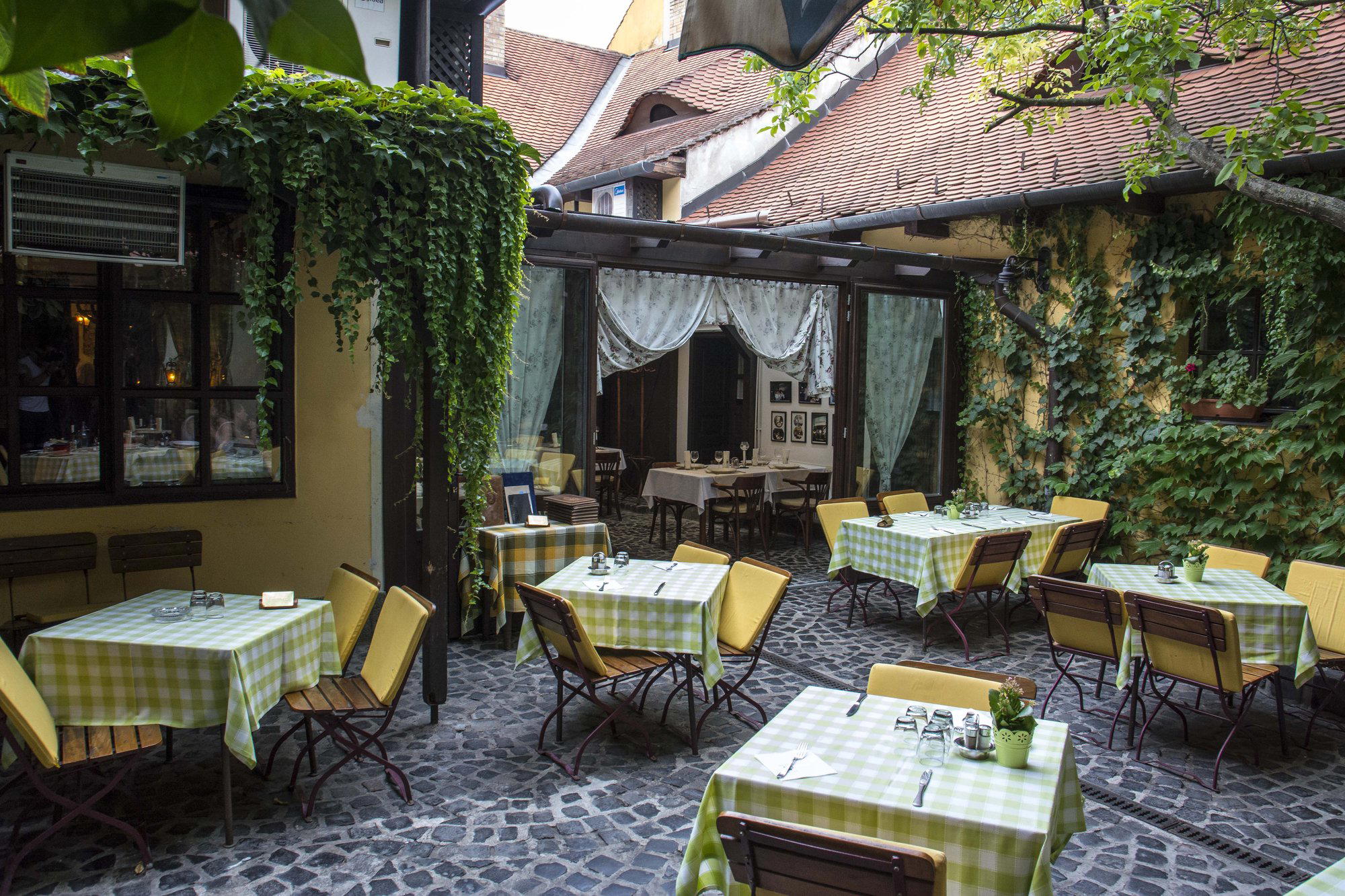
Óbuda's Dining Register and Where Kéhli Sits Within It
Kéhli Vendéglő is a traditional Hungarian restaurant in Budapest's Óbuda district. Pest commands the density of Michelin-recognised tables: Costes, Stand, and Babel cluster in the Fifth and Eighth districts, drawing travellers who treat the city as a Central European stop on a fine-dining circuit. Buda and Óbuda operate at a different frequency. The third district, where Kéhli Vendéglő occupies a corner of Mókus utca, is residential, quieter, and still shaped by the kind of cooking that predates the city's modern tasting-menu era by several generations.
A vendéglő is a specific Hungarian dining category: not a formal étterem, not a csárda tied to folk-tourist staging, but a mid-register neighbourhood house with a fixed kitchen logic, usually built around braised meats, paprika-heavy sauces, bone marrow, and the kind of preparations that require time rather than technique in the modernist sense. Kéhli sits squarely in that tradition, and that positioning is the point. In a city where Borkonyha Winekitchen and essência represent the upward pull of contemporary cooking, the vendéglő format is a counterweight worth understanding on its own terms.
The Krúdy Connection and What It Actually Means for the Kitchen
Kéhli's association with Gyula Krúdy is the restaurant's most cited credential, and it is worth examining what that association implies rather than simply repeating it. Krúdy, writing in the early twentieth century, produced some of Hungarian literature's most precise prose about eating: the specific gravity of bone marrow on toast, the colour of a good gulyás, the hour at which a dish should arrive. His work is a document of Óbuda food culture at a particular historical moment, and Kéhli's claim to that lineage is a claim about continuity of place and approach, not about performance or nostalgia staging.
That matters because the sustainability of a traditional kitchen depends on exactly this kind of rootedness. Sourcing decisions in a vendéglő that has operated in the same neighbourhood for decades tend to be built on long supplier relationships rather than seasonal trend-chasing. The cuts used in slow-braised preparations, the bone-marrow dishes Krúdy described, the offal preparations that appear in this cooking register: these reflect a whole-animal approach to the table that predates contemporary sustainability language but aligns with it practically. Nothing about this kitchen's logic requires the performative signalling of farm-name drops; the cooking itself is the argument.
What the Format Implies About Sourcing and Preparation
Traditional Hungarian vendéglő cooking is structurally low-waste in ways that modernist restaurants have had to consciously construct. Braising uses secondary cuts. Bone marrow dishes use what factory-scale hospitality discards. Lard-based cooking, paprika-preserved sauces, and long fermentation traditions all reflect a pre-industrial food economy that was, of necessity, resourceful. When this register is sustained authentically, rather than reconstructed as a concept, it carries those efficiencies forward.
The contrast with Budapest's upper tier is informative. At Costes or at restaurants of comparable format and price, the kitchen constructs sustainability as a visible part of the proposition: documented sourcing, seasonal menus rotated on declared schedules, chef statements about producer relationships. A vendéglő like Kéhli operates the same principles through habit and economy rather than through editorial framing. Whether that makes the approach more or less legible to a contemporary traveller is a matter of expectation management, but the practical outcome is similar: a kitchen that wastes little and sources close.
Across Hungary, this pattern holds at other regional houses that have stayed in their lane. Aranysárkány Vendéglő in Szentendre operates on comparable logic north of the capital, and Platán Gourmet in Tata shows how regional Hungarian cooking can carry these same efficiencies into a more contemporary presentation without abandoning the sourcing habits. Pajta in Őriszentpéter and BoriMami in Gyöngyös represent similar commitments in western and northern Hungary respectively, while Forst-Ház Étterem és Kávézó in Eger and Halasi Pince Panzió in Villány anchor the wine-region dining circuit in the east and south.
The Neighbourhood as Context
Mókus utca sits in the quieter residential grid of Óbuda, away from the riverside promenade and the Roman ruins that draw tourists to the district's western edge. The physical approach is instructive: this is a dining room for people who live nearby or who seek it out specifically, not a table that captures passing foot traffic. That self-selection shapes the room's character. The guests tend to be local or to have been sent by someone who knows the address. In cities like New York, where restaurants at the level of Le Bernardin or Atomix operate on broad international awareness, a room like Kéhli's functions on an entirely different reputation economy: word of mouth, literary association, neighbourhood loyalty.
For Budapest more broadly, Óbuda's dining scene remains underrepresented in international coverage relative to Pest.
Planning a Visit
Kéhli Vendéglő is located at Mókus utca 22 in the 1036 postal district of Budapest, in Óbuda. Reaching it from central Pest requires crossing to the Buda side: the HÉV suburban rail line from Batthyány tér to Árpád híd station covers the distance in under fifteen minutes, after which the address is a short walk into the residential grid. The restaurant's format, a traditional vendéglő with a kitchen built around slow preparations and seasonal Hungarian produce, means that timing matters: arriving at lunch rather than dinner generally means shorter waits and a quieter room, since this is a neighbourhood table rather than a destination booking in the Michelin-tracked sense. Hours are Monday through Friday from 12 to 10 PM, Saturday from 12 to 10:30 PM, and Sunday from 12 to 9 PM. Reservations are recommended, and the price tier is about $25 per person.
For travellers building a broader Budapest itinerary that spans the fine-dining tier and the traditional register, useful reference points at the upper end include Stand and Babel in Pest, alongside Borkonyha Winekitchen for a mid-tier contemporary option. Further afield in the region, Classic Grill Serbian Restaurant Underground in Szeged, Astro Tea & Kávéház in Gyor, La Pizza Del Lupo in Onga, and Almalomb in Hosszúhetény each represent the range of regional Hungarian dining outside the capital.
Pricing, Compared
Comparable venues nearby, for context on price, style, and recognition.
| Venue | Cuisine | Price |
|---|---|---|
| Kéhli VendéglőThis venue — the venue you are viewing | Obuda, Traditional Hungarian | $$ |
| Múzeum Étterem | Belvaros, Traditional Hungarian | $$ |
| Gettó Gulyás | Belvaros, Authentic Hungarian Stews | $$ |
| Retek Bisztro | Varhegy, Traditional Hungarian Bistro | $$ |
| HILDA Budapest | Varhegy, Modern Hungarian Bistro | $$ |
| Mattarello | Belvaros, Croissant Bakery & Restaurant | $$$ |
Continue exploring
More in Budapest
Restaurants in Budapest
Browse all →
Bars in Budapest
Browse all →
Hotels in Budapest
Browse all →

At a Glance
- Classic
- Rustic
- Cozy
- Well Known
- Group Dining
- Special Occasion
- Casual Hangout
- Live Music
- Historic Building
- Extensive Wine List
Current opening hours
- Monday
- 12–10 PM
- Tuesday
- 12–10 PM
- Wednesday
- 12–10 PM
- Thursday
- 12–10 PM
- Friday
- 12–10 PM
- Saturday
- 12–10:30 PM
- Sunday
- 12–9 PM
Hours can change for holidays and private events. Last verified .
Cozy and authentic old-world atmosphere preserving 19th-century charm, enhanced by live music from 18:30-22:30 except Mondays.