Our verdict
Khan Chacha in Khan Market occupies a specific tier of Delhi's kebab culture: the kind of counter-service spot where the food earns its reputation without the help of a tasting menu or a dining room. Operating from one of Delhi's most frequented commercial precincts, it draws a cross-section of the city united primarily by an interest in well-made rolls and grilled meat, served fast and without ceremony.

Pearl is the En Primeur Club membership app — saves, bookings, and concierge access live there. Same editors, same standards.
- Address
- 50, Khan Market Walking Plaza, Khan Market, Sujan Singh Park, New Delhi, Delhi 110003, India
- Phone
- +91 92055 92801
- Hours
- Daily 11 AM–11 PM
- Website
- khanchacha.com
- Directions
- Get directions
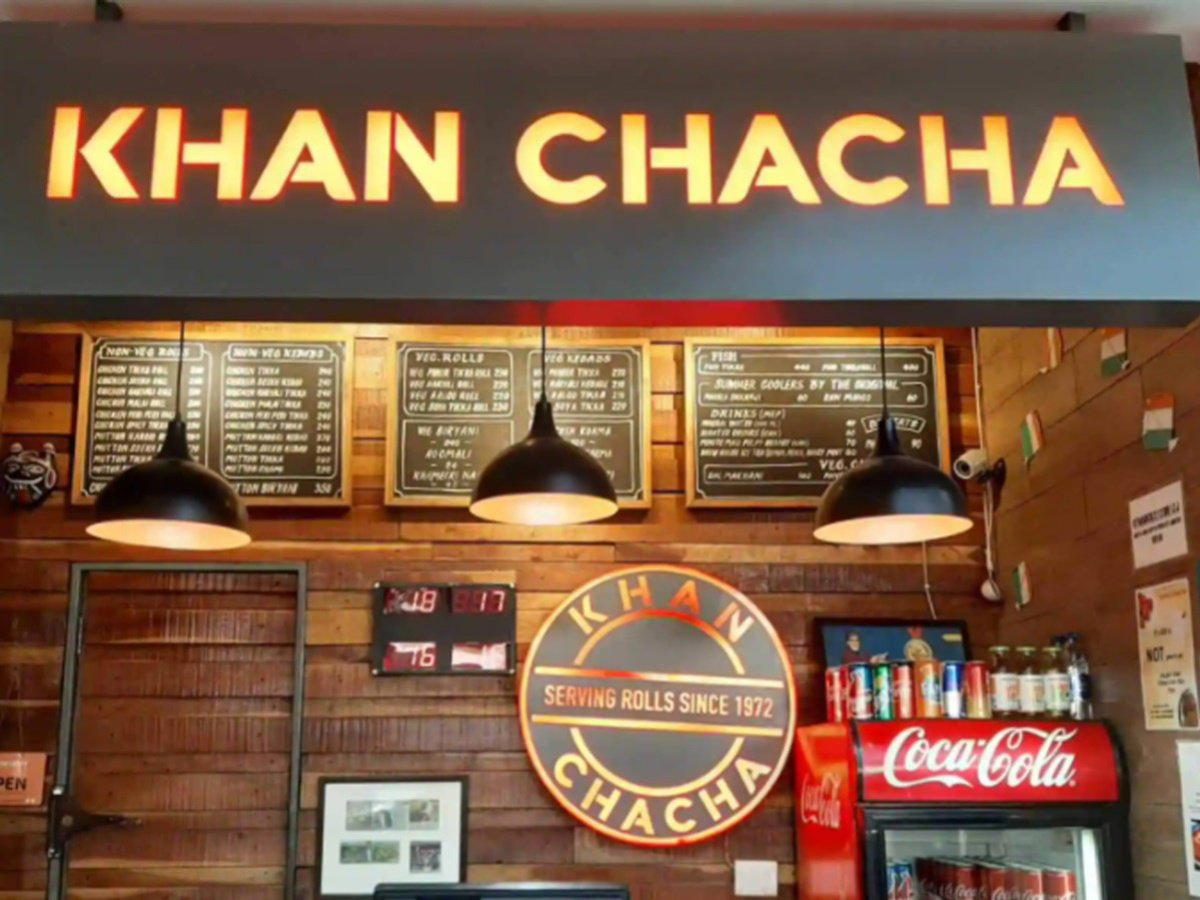
The menu
What to order
- Mutton Roll
- Seekh Kebab
- Kakori Kebab Roll
- Rumali Roti
Khan Market and the Counter-Service Tradition
Khan Market operates on a different register than most of Delhi's premium retail and dining corridors. The plaza draws a mix of government officials, diplomats, students, and long-term South Delhi residents who treat it less as a destination and more as a neighbourhood utility. Within that context, the food counter has historically held a specific place: not a restaurant in the tablecloth sense, but a fixed point in a regular circuit. Khan Chacha fits that pattern precisely. The address at 50, Khan Market Walking Plaza places it on the pedestrian spine of the market, where foot traffic is dense and the format is unapologetically transactional. You queue, you order, you eat, often standing or perched on minimal seating. The physical container here is the street-front stall format translated into a semi-enclosed space, which shapes the entire experience before a single item arrives.
The Space as Argument
Delhi's kebab tradition has always had an ambivalent relationship with formal dining. The city's great kebab lineages, from Mughal-era courtly cooking through the post-Partition transplantation of Lucknowi and Punjabi techniques, were largely developed in domestic and street contexts rather than restaurant ones. The open-fire counter, the hand-rolled roti, the direct transaction between cook and customer: these are the spatial grammar of that tradition, and Khan Chacha's format adheres to it. The absence of elaborate interior design is not an oversight; it is a position. Across Delhi, you can track a spectrum from the wood-panelled, tandoor-lined grandeur of Bukhara at one end to the bare-bones counter operations of places like Chache Di Hatti at the other. Khan Chacha sits closer to the utilitarian end of that range while occupying a more premium postcode than most of its counterparts in that tier.
The walking plaza setting matters more than it might initially appear. Khan Market's pedestrianised central strip means the boundary between the interior and the street is functionally porous. Seating spills outward, queues form on the pavement, and the transaction is partly a public performance. This is consistent with how Delhiites have always consumed street-adjacent food: eating is social, visible, and quick. The space reinforces the food's identity rather than softening it into something more aspirational.
Within Khan Market specifically, the food options range from international chains to refined modern Indian, but the roll-and-kebab category occupies a loyal, specific niche. The core offering at Khan Chacha centres on what the city calls a "roll": charcoal-grilled or tandoor-cooked protein wrapped in a thin roti or paratha, typically with onion, chutney, and sometimes egg. This format is common across Delhi's street food register, but the Khan Market iteration draws on a slightly more affluent customer base with expectations around consistency and quality that differ from the city's most budget-focused counters.
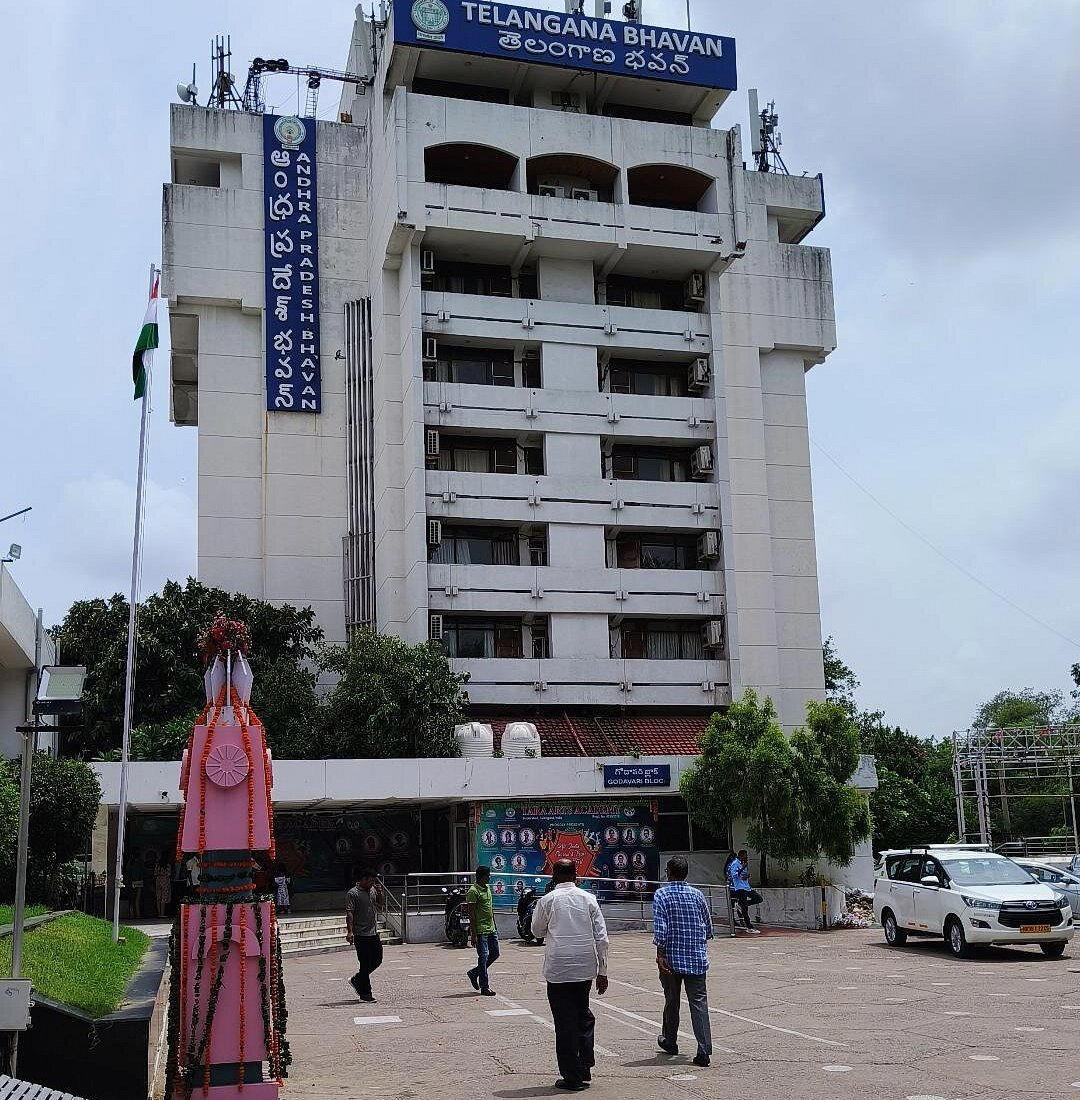
For a broader comparison of how Delhi's diverse food traditions operate across formats and price points, the full Delhi restaurants guide maps the city's dining across neighbourhoods and cuisines. India's regional food range extends well beyond the capital: Kappa Chakka Kandhari in Chennai anchors Kerala cuisine in a formal restaurant context, while Adaa at Falaknuma Palace in Hyderabad frames Hyderabadi cooking inside a heritage property. Andhra Pradesh Bhavan in Delhi itself shows how a government-run canteen can anchor regional identity in the capital. These comparisons clarify where Khan Chacha sits: resolutely in the street-adjacent, fast-format tradition rather than the formal or heritage-dining tier.
Khan Market in the Delhi Food Circuit
The market's food culture is worth understanding as a microcosm of South Delhi eating habits more broadly. This is an area where the working lunch, the post-school snack, and the between-meeting bite all coexist in a compressed geography. The density of options within the market's small footprint means that repeat customers are the norm, and reputation is built on consistency across hundreds of repeat visits rather than on a single peak-performance occasion. Khan Chacha's longevity in this environment is itself an editorial signal: markets like this are unforgiving of inconsistency, and the long-running operations tend to have earned their position through that reliability rather than through novelty.
Delhi's broader kebab and grilled-meat tradition sits alongside a wide range of regional Indian cooking. Bikanervala in Chandni Chowk represents the sweet and snack end of Old Delhi's food culture; Curry Kitchen covers a different register of North Indian cooking. Further afield, Inja in New Delhi shows what happens when Korean-Indian fusion reaches a more composed format. Each of these maps to a distinct tier of Delhi dining, and Khan Chacha's place among them is specifically as the fast, reliable, neighbourhood-adjacent option that the market's daily traffic sustains.
India's food scene in general has diversified sharply in the last decade. Farmlore in Bangalore represents the farm-to-table, tasting-menu format at the other end of the formality spectrum; Bomras in Anjuna shows Burmese-influenced coastal cooking in an entirely different setting; Dining Tent in Jaisalmer and Naar in Kasauli anchor regional specificity in destination formats. Even beyond India, Americano in Mumbai and Leela Kerala Terrace in Trivandrum illustrate the range of what the country's food culture now encompasses. By contrast, Neel in Patiala points to how Punjab's own food traditions operate outside the capital. Globally, the gap between a precision counter like Le Bernardin in New York City or a ticketed format like Lazy Bear in San Francisco and Khan Chacha's walk-up roll counter is vast, but the principle of a format perfectly matched to its context applies across all of them.
Planning a Visit
Khan Chacha operates within the Khan Market walking plaza, accessible from the market's main pedestrian axis. The format is counter-service and the pace is quick, which means this is not a venue that requires or accommodates a long booking window in the traditional sense. The peak window tends to align with the market's busiest foot-traffic periods: lunchtime and the late afternoon into early evening. For first-time visitors orienting to the market, the walking plaza format makes the venue findable on foot without difficulty.
Frequently asked questions
What's Khan Chacha - Khan Market's location?
Khan Chacha - Khan Market is located at 50, Khan Market Walking Plaza, Khan Market, Sujan Singh Park, New Delhi, Delhi 110003, India, Delhi.
How does Khan Chacha at Khan Market fit into Delhi's broader kebab roll tradition?
Delhi's kebab roll lineage draws from both Mughal-era courtly cooking and the street-side counter formats that spread across the city through the twentieth century. Khan Chacha's placement inside Khan Market, at 50, Khan Market Walking Plaza, New Delhi, puts that tradition inside a precinct more commonly associated with upscale retail and international dining. The counter-service format operating in that context is itself a statement about how deeply the roll has embedded itself across Delhi's eating culture, irrespective of neighbourhood register.
What's the must-try dish at Khan Chacha - Khan Market?
Khan Chacha's reputation in Delhi's food conversation is anchored to its kebab rolls, a format that places spiced, grilled meat inside a layered paratha or roomali roti wrap. Within Khan Market's food circuit, this is the dish that draws repeat visitors across the working-lunch and late-afternoon crowds. The roll format here represents one of Delhi's most durable counter-service traditions.
What's the best way to book Khan Chacha - Khan Market?
Khan Chacha operates on a walk-in, counter-service basis from its location at 50, Khan Market Walking Plaza, New Delhi. No reservation system or website booking is in place, which is standard for this format in Delhi. Arriving outside peak lunch hours typically means shorter queues.
What's the standout thing about Khan Chacha - Khan Market?
The address inside Khan Market, one of Delhi's most commercially dense and consistently trafficked precincts, sets this counter apart from comparable roll venues operating on less prominent footpaths. Counter-service kebab at this location puts the format in front of a cross-section of South Delhi's working and professional population daily. That footfall, sustained over years, is the venue's clearest credential.
Is Khan Chacha - Khan Market good for vegetarians?
Delhi's roll-and-kebab counter tradition includes a strong vegetarian strand, with paneer tikka and vegetable preparations standard alongside meat options at venues across this category. Khan Chacha, operating within that same tradition at Khan Market, follows the format's established pattern. Vegetarians eating in this category have workable options, though the venue's primary reputation is built around its meat preparations.
Does Khan Chacha - Khan Market justify its prices?
Within Khan Market's food context, counter-service roll venues in this tier typically price below the market's sit-down restaurants while drawing from the same high-footfall precinct. That positioning generally makes the format competitive on value relative to the address.
The Minimal Set
Comparable venues nearby, for context on price, style, and recognition.
| Venue | Cuisine | Price | Notes |
|---|---|---|---|
| Khan Chacha - Khan MarketThis venue — the venue you are viewing | Authentic Mughlai Kebabs & Rolls | $10–20 | Not listed |
| Curry Kitchen | Traditional Indian Curry House | Not listed | Aerocity, Traditional Indian Curry House |
| SodaBottleOpenerWala | Authentic Parsi & Bombay Street Food | Not listed | Khan Market, Authentic Parsi & Bombay Street Food |
| Andhra Pradesh Bhavan | Authentic Andhra South Indian | Not listed | near India Gate, Authentic Andhra South Indian |
| Bikanervala | Chandni Chowk Delhi | Indian Sweets and Snacks | $1–10 | Chandni Chowk, Indian Sweets and Snacks |
| Moti Mahal - Greater Kailash part 1 | Authentic Mughlai & North Indian | $10–20 | Greater Kailash 1, Authentic Mughlai & North Indian |
Continue exploring
More in Delhi
Restaurants in Delhi
Browse all →
Details
- Lively
- Well Known
- Cozy
- Casual Hangout
- Late Night
- Standalone
- A La Carte
- Vegetarian Friendly
- Vegan Options
- Halal
Current opening hours
- Monday
- 11 AM–11 PM
- Tuesday
- 11 AM–11 PM
- Wednesday
- 11 AM–11 PM
- Thursday
- 11 AM–11 PM
- Friday
- 11 AM–11 PM
- Saturday
- 11 AM–11 PM
- Sunday
- 11 AM–11 PM
Hours can change for holidays and private events. Last verified .
Casual and bustling with simple seating, counter service, and a welcoming neighborhood atmosphere.