Kamenice occupies one of Dubrovnik's most recognisable squares, Gundulićeva poljana, where the tradition of eating local shellfish and Adriatic seafood at honest prices has persisted for decades. The restaurant is a reference point for Dalmatian coastal cooking in its least complicated form: oysters, mussels, and grilled fish served in the open air, surrounded by the Old Town's stone architecture.
Pearl is the En Primeur Club membership app — saves, bookings, and concierge access live there. Same editors, same standards.
- Address
- Gundulićeva poljana 8, 20000, Dubrovnik, Croatia
- Phone
- +385 20 323 682
- Directions
- Get directions
 Saves & bookings on Pearl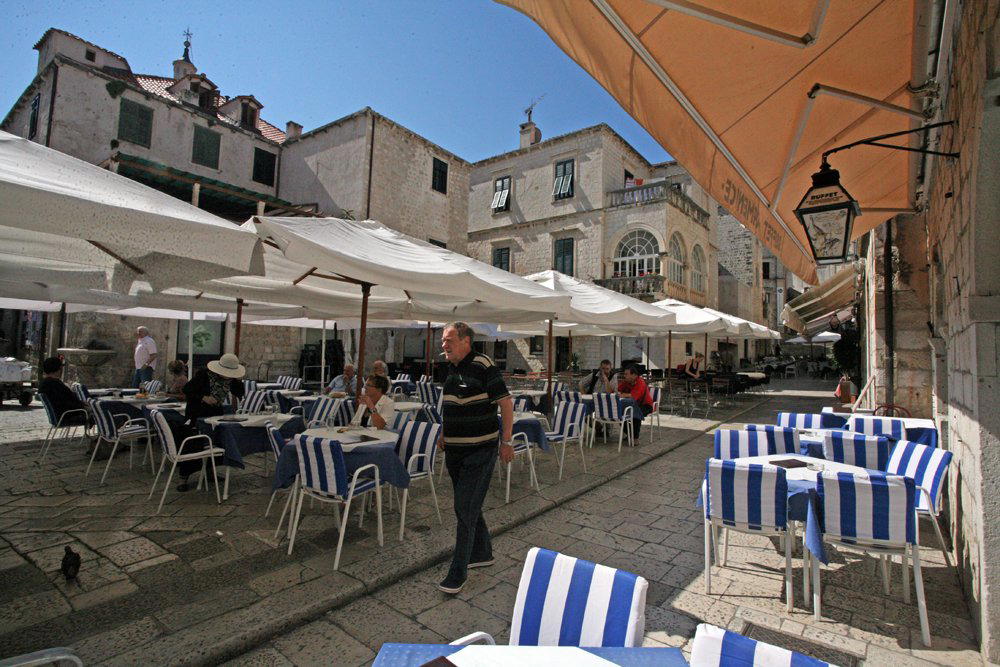
A Square That Defines How Dubrovnik Eats
Kamenice is a restaurant in Dubrovnik's Old Town, serving traditional Croatian seafood at Gundulićeva poljana 8. The square named for the Baroque poet Ivan Gundulić has functioned as the city's morning market and social centre for centuries, its stone paving worn smooth by generations of vendors, fishermen, and locals who still come here before the cruise ships dock. Kamenice, at number 8, is less a destination imposed on the square than a natural outgrowth of it, a place that has absorbed the logic of the market and turned it into a menu.
In cities with serious tourist economies, squares like this tend to drift toward the generic: laminated menus, frozen fish, wine poured without care. What keeps Gundulićeva poljana from that fate, at least in part, is that the vendors and the restaurant still operate within the same supply orbit. The Adriatic is close, the fishing community around Dubrovnik and the Pelješac peninsula remains active, and the oyster beds of Mali Ston are among the region's most important shellfish sources. That geography is the real protagonist here.
The Dalmatian Shellfish Tradition Kamenice Sits Inside
The name itself signals the category: kamenica is the Croatian word for oyster, specifically the flat European oyster (Ostrea edulis) that has been cultivated in the Malostonski zaljev, the bay behind the Pelješac peninsula, since at least the Roman period. Mali Ston oysters carry a reputation across the Adriatic that is well-documented: the combination of fresh karst spring water mixing with salt water in the bay produces shellfish with a mineral intensity and clean salinity that separates them from farmed Atlantic varieties. They are not a local curiosity, they are a serious regional product that commands attention at restaurants well beyond Croatia's borders.
Eating oysters in Dubrovnik's Old Town, therefore, is not simply a tourist activity. It connects to a supply chain with genuine historical depth and to a culinary tradition, Dalmatian coastal cooking, that prizes restraint and freshness over technical complexity. The dominant mode of that tradition is to do as little as possible to what comes out of the water: grill it, poach it, or serve it raw, with lemon and local olive oil as the primary flavourings. Kamenice operates squarely within that tradition, and that is a credential, not a limitation.
For context on where this sits within Dubrovnik's broader dining range: at the upper end, Restaurant 360 and venues like Above 5 represent the city's modern international register, with tasting menus and panoramic settings that price themselves accordingly. Bistro Tavulin occupies the traditional cuisine bracket at a moderate price point. Kamenice functions in a different category still, seafood-focused, market-adjacent, and oriented toward the kind of eating that is less about occasion and more about the quality of the ingredient in front of you.
The Experience: Open Air, Stone, and Shellfish
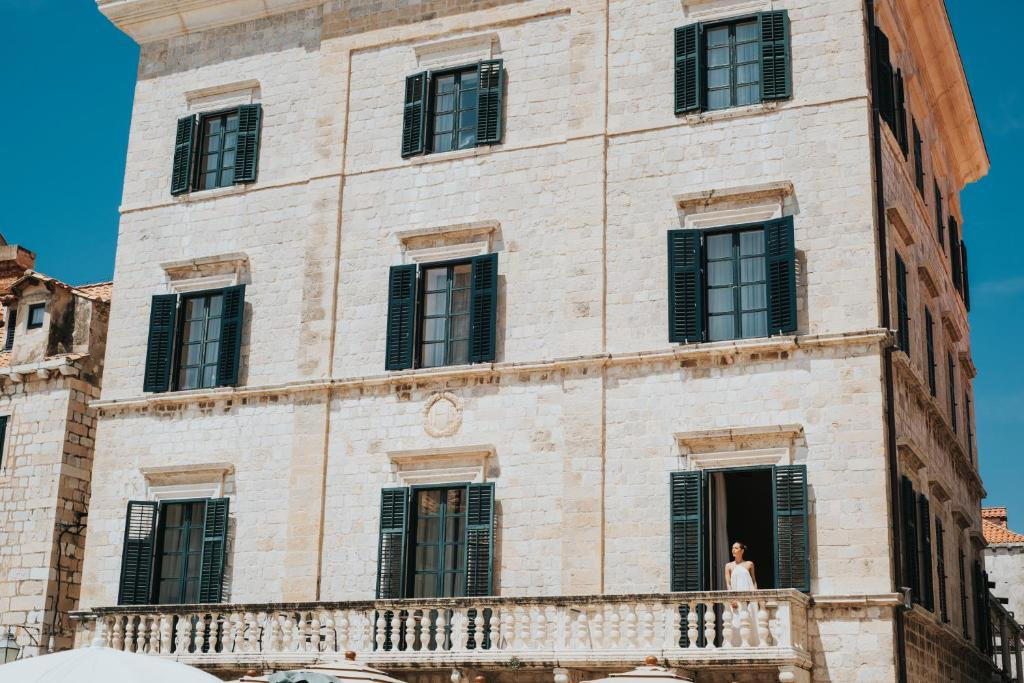
Sitting at a table on Gundulićeva poljana during the evening, when the market stalls have closed and the square settles into a quieter rhythm, is one of the more honest ways to be in Dubrovnik's Old Town. The setting is not manufactured: the stone buildings that ring the square are the same ones that survived the 1991-1992 siege and the centuries of trade before it. The atmosphere is architectural rather than designed.
The menu at Kamenice is organised around what the Adriatic and the bay at Mali Ston reliably provide: oysters served in the flat-shell manner of the region, mussels prepared in ways that range from the simple to the locally inflected, grilled fish, and the kind of direct seafood dishes that Dalmatian cooking has repeated for generations without needing to update. The wine list, in this context, functions as a regional pairing exercise, Pošip from Korčula and Grk from Lumbarda are the white wines that Dalmatian restaurants reach for when the fish is fresh and the preparation is light.
Visitors coming from markets like New York or San Francisco, where raw bar culture has its own elaborate grammar, think Le Bernardin's precise sourcing protocols or the communal format of Lazy Bear's producer-focused menus, will find Kamenice operating at the opposite register: direct, unadorned, and dependent entirely on the quality of its ingredients rather than technique. That is exactly what it should be.
Kamenice in the Croatian Coastal Context
Croatia's Adriatic coast has produced a number of restaurants that engage with the same raw material, Adriatic fish and Dalmatian shellfish, at different levels of ambition and price. LD Restaurant in Korčula and Pelegrini in Sibenik represent the fine-dining end of that spectrum, where the same regional ingredients are filtered through more contemporary technique and longer tasting formats. Agli Amici Rovinj and Nebo by Deni Srdoč in Rijeka do similar work in Istria and Kvarner. Further afield, Alfred Keller in Mali Lošinj, Boskinac in Novalja, Korak in Jastrebarsko, San Rocco in Brtonigla, and Dubravkin Put in Zagreb each engage with Croatian produce in ways shaped by their own regional contexts.
Kamenice does not belong in that fine-dining conversation, and it does not need to. Its comparable set is the category of market-adjacent, seafood-led restaurants that European coastal cities do well when they resist the pressure to become something more polished: the kind of place where the quality of the oyster, not the architecture of the dish, is the point. Within Dubrovnik specifically, that is a less crowded position than the fine-dining tier occupied by 360 or the mid-market traditional register where Barba and Bistro 49 operate.
Planning Your Visit
Gundulićeva poljana 8 is within the Old Town walls, reachable on foot from the Pile Gate or the Ploče Gate in under ten minutes. The square is a public market in the morning, which means the venue comes to life in a different way at lunch and dinner. Dubrovnik's high season runs from June through August, when the Old Town operates at maximum tourist density and outdoor tables on any square with a view fill quickly. Arriving early for lunch or timing dinner for the shoulder hours around opening tends to reduce wait times. For a broader map of where Kamenice sits within the city's dining options, the EP Club Dubrovnik restaurants guide covers the full range from market-level to tasting menu.
Booking and Cost Snapshot
Comparable venues nearby, for context on price, style, and recognition.
| Venue | Cuisine | Price | Notes |
|---|---|---|---|
| KameniceThis venue — the venue you are viewing | Old Town, Traditional Croatian Seafood | $$ | Not listed |
| Porat | Gruž, Modern Croatian Seafood Grill | $$ | Not listed |
| Trattoria Carmen | Not listed | $$ | Old City, Traditional Italian Trattoria with Local Croatian Flavors |
| Mandrac | Lopud, Traditional Croatian Seafood | $$ | Not listed |
| Konoba Tauris | Not listed | $$$ | Sipanska Luka, Traditional Dalmatian Seafood Grill |
| Obala | Lopud, Seafood Mediterranean | $$ | Not listed |
Continue exploring
More in Dubrovnik
Restaurants in Dubrovnik
Browse all →
Bars in Dubrovnik
Browse all →

At a Glance
- Lively
- Casual
- Casual Hangout
- Terrace
- Local Sourcing
- Street Scene
Current opening hours
- Monday
- 8 AM–11 PM
- Tuesday
- 8 AM–11 PM
- Wednesday
- 8 AM–11 PM
- Thursday
- 8 AM–11 PM
- Friday
- 8 AM–11 PM
- Saturday
- 8 AM–11 PM
- Sunday
- 8 AM–10 PM
Hours can change for holidays and private events. Last verified .
Lively terrace atmosphere on bustling Gundulić Square with blue-and-white decor and pigeons, offering a casual, lively dining experience amid the market energy.